Pope and Imam of Southeast Asia's Largest Mosque Make Joint Call to Fight Violence, Protect Planet

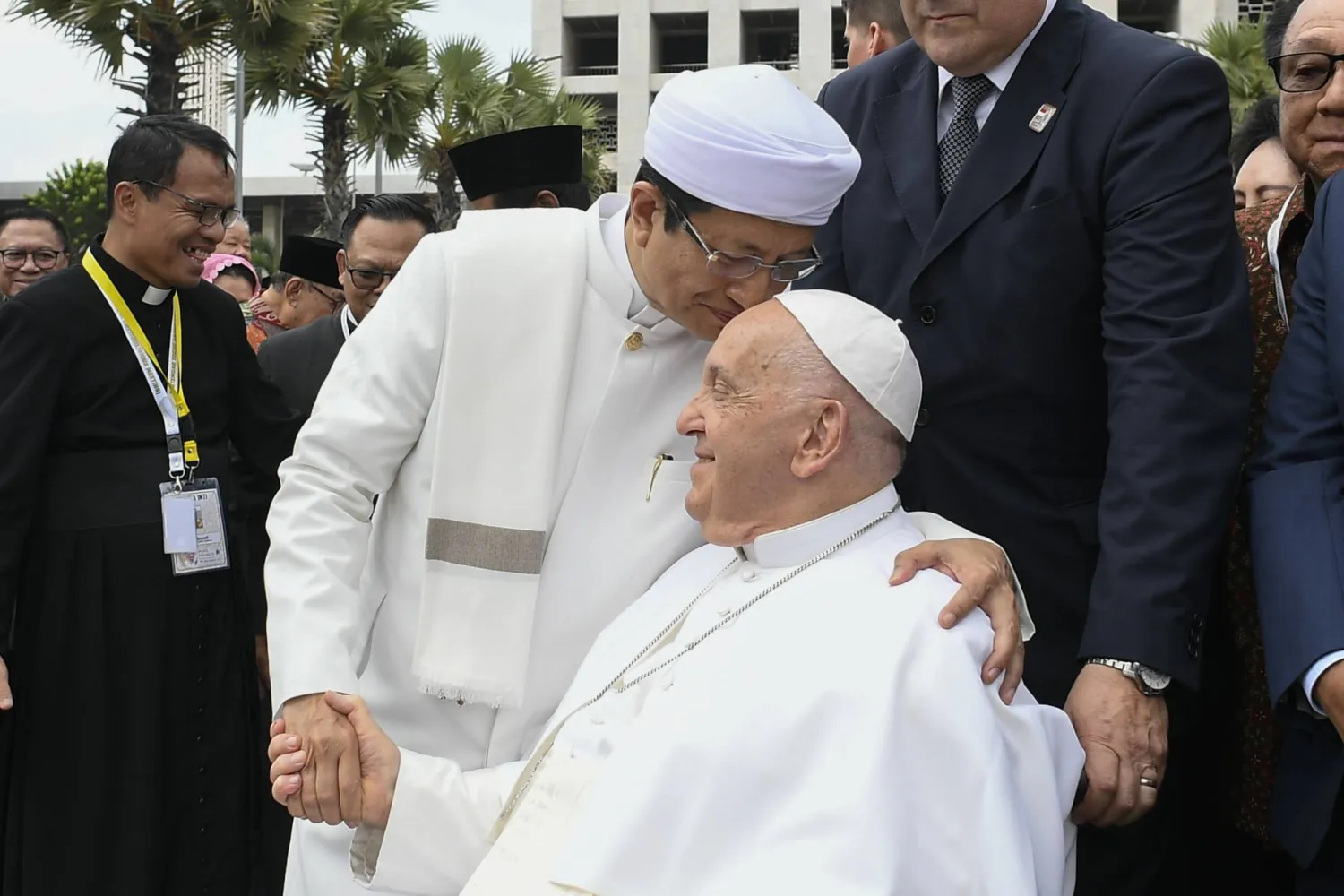
05 September 2024, Indonesia, Jakarta: Imam Nasaruddin Umar greets Pope francis as they meet at the Istiqlal Mosque in Jakarta. Photo: Vatican Media/IPA via ZUMA Press/dpa
TT

Pope and Imam of Southeast Asia's Largest Mosque Make Joint Call to Fight Violence, Protect Planet

05 September 2024, Indonesia, Jakarta: Imam Nasaruddin Umar greets Pope francis as they meet at the Istiqlal Mosque in Jakarta. Photo: Vatican Media/IPA via ZUMA Press/dpa

Pope Francis and the grand imam of Southeast Asia’s largest mosque vowed Thursday to fight religiously inspired violence and protect the environment, issuing a joint call for interfaith friendship and common cause at the heart of Francis’ visit to Indonesia.
In an encounter rich with symbolic meaning and personal touches, Francis traveled to Jakarta’s iconic Istiqlal Mosque for an interreligious gathering with representatives of the six religions that are officially recognized in Indonesia: Islam, Buddhism, Confucianism, Hinduism, Catholicism and Protestantism.
There, he and the grand imam, Nasaruddin Umar, stood at the ground-level entrance to the “Tunnel of Friendship,” an underpass which connects the mosque compound with the neighboring Catholic cathedral, Our Lady of the Assumption.
Indonesia, which has the world’s largest Muslim population, has held out the tunnel as a tangible sign of its commitment to religious freedom, which is enshrined in the constitution but has been challenged by repeated instances of discrimination and violence against religious minorities.
Approaching the elevator to the tunnel, Francis said it was a potent sign of how different religious traditions “have a role to play in helping everyone pass through the tunnels of life with our eyes turned towards the light.”
He encouraged all Indonesians of every religious tradition to “walk in search of God and contribute to building open societies, founded on reciprocal respect and mutual love, capable of protecting against rigidity, fundamentalism and extremism, which are always dangerous and never justifiable.”
Francis traveled to Indonesia, at the start of an 11-day, four-nation trip to Asia and Oceania, to encourage Indonesia to combat religiously inspired violence and pledge the Catholic Church’s commitment to greater fraternity.
The meeting at the mosque showed the personal side of that policy, with Francis and Umar — the 87-year-old pope and the more youthful 65-year-old imam — showing a clear affinity for one another. As Francis was leaving in his wheelchair, Umar bent down and kissed Francis on the head. Francis then grasped Umar's hand, kissed it and held it to his cheek.
The event began with a similarly moving moment, as a visually impaired Indonesian teenage girl, Kayla Nur Syahwa, chanted verses from the Quran about tolerance among believers of different faiths.
Francis has made improving Catholic-Muslim ties a hallmark of his papacy and has prioritized travel to majority Muslim nations to further the agenda.
The interfaith gathering was the highlight of Francis’ visit to Indonesia, which concludes later Thursday with a giant Mass in Jakarta’s stadium expected to draw some 60,000 people.
Francis is seeking to encourage their faith by becoming the third pope to visit Indonesia, after Paul VI in 1970 and John Paul II in 1989.
On Friday, Francis heads to Papua New Guinea for the second leg of his trip, one of the longest and farthest in papal history, which will also take him to East Timor and Singapore before it ends Sept. 13.



Iran Reviewing US Proposal as Trump Pressures Tehran for Agreement on Deal to End War

US and Iran flags are seen in this illustration taken June 18, 2025. REUTERS/Dado Ruvic/Illustration/File Photo
TT

Iran Reviewing US Proposal as Trump Pressures Tehran for Agreement on Deal to End War

US and Iran flags are seen in this illustration taken June 18, 2025. REUTERS/Dado Ruvic/Illustration/File Photo

Iran said it was reviewing the latest American proposals to end the war after US President Donald Trump threatened the country with a new wave of bombing unless a deal is reached that includes reopening the crucial Strait of Hormuz to international shipping.

Hope that the two-month conflict could soon be over buoyed international markets Thursday, a day after the US military fired on an Iranian oil tanker attempting to breach the American blockade of Iran’s ports. The developments followed days of mixed messages from the Trump administration over its strategy to end the war, according to The AP news.

Meanwhile, US Secretary of State Marco Rubio discussed peace efforts in the Middle East at the Vatican. Rubio met with Pope Leo XIV, whose opposition to the Iran war has led to open sparring with Trump.

Trump posted on social media Wednesday that ending the war and resuming oil and natural gas shipments disrupted by the conflict depends on Iran accepting an agreement, which he did not detail.

“If they don’t agree, the bombing starts,” Trump wrote.

A fragile ceasefire between the US and Iran has largely held since April 8. But in-person talks between the two countries hosted by Pakistan last month failed to reach an agreement. The war began Feb. 28, when the US and Israel launched strikes against Iran.

Pakistan says it expects a deal soon “We expect an agreement sooner rather than later,” Pakistani Foreign Ministry spokesperson Tahir Andrabi said Thursday.

“We hope the parties will reach a peaceful and sustainable solution that will contribute not only to peace in our region but to international peace as well.” But he declined to give a timeline, saying Pakistan would not disclose details of the ongoing diplomatic efforts.

Asked whether Pakistan was expecting any response from Iran later Thursday, Andrabi said: “I will not comment on specifics or the movement of the messages.”

Pakistani Prime Minister Shehbaz Sharif, speaking in televised remarks, said Islamabad remained in “continuous contact with Iran and the United States, day and night, to stop the war and extend the ceasefire.”


Pakistan Warns of Strong Response to Any Attack on Anniversary of Clash with India

The Pakistani flag is seen in Islamabad. AP file photo
TT

Pakistan Warns of Strong Response to Any Attack on Anniversary of Clash with India

The Pakistani flag is seen in Islamabad. AP file photo

Pakistan’s military warned Thursday it would respond strongly against any attack as it marked the anniversary of last year’s four-day conflict with neighboring India that brought the nuclear-armed rivals to the brink of war before a US-brokered ceasefire halted the fighting.

The military said that any “hostile design” against Pakistan would be countered with “greater strength, precision and resolve” than what India witnessed during the May 2025 conflict, which Islamabad named “Marka-e-Haq,” or “Battle of Truth.”

Pakistan and India had exchanged tit-for-tat strikes following an attack by gunmen in the Indian-controlled part of the disputed Himalayan region of Kashmir that killed 26 people, most of them Hindu tourists. India blamed Pakistan-backed militants for the massacre in the town of Pahalgam, an allegation Islamabad denied while calling for an independent investigation, The AP news reported.

India launched strikes inside Pakistan on May 7, triggering retaliatory attacks by Pakistan that included drone incursions, missile strikes and artillery fire. Dozens of people were killed on both sides before a ceasefire was reached on May 10 following US mediation.

Pakistan at the time claimed it shot down at least seven Indian military aircraft, including a French-made Rafale fighter jet. India acknowledged suffering some losses but did not provide details.

US President Donald Trump has repeatedly taken the credit for helping avert a wider war.

Speaking at a televised news conference, army spokesperson Lt. Gen. Ahmad Sharif Chaudhry said India had blamed Pakistan for the attack on tourists in Kashmir within minutes of the shooting without presenting evidence.

“It has been one year since the Pahalgam incident, yet the questions Pakistan raised remain unanswered,” he said. Chaudhry said Pakistan did not underestimate India’s military capability but was fully prepared to respond to any “misadventure.”

“We are prepared; if anyone wishes to test us, they are more than welcome,” he said alongside Deputy Chief of Naval Staff Rear Adm. Shifaat Ali and Deputy Chief of Air Staff (Projects) Air Vice Marshal Tariq Ghazi. However, Chaudhry added: “We are not seeking conflict, we are not seeking war. But we know how to defend ourselves with honor and dignity.”

Ali said the Indian navy had attempted to deploy vessels in the northern Arabian Sea during the fighting in an effort to target Pakistan’s naval assets and disrupt maritime trade routes. “But due to the effective strategy of the Pakistan Navy, maritime traffic in all our waterways remained uninterrupted,” he said.

At Thursday’s briefing, Ghazi said Pakistan had downed eight Indian fighter jets during the conflict. He added that Pakistan had exercised restraint and that its air force had the capability to inflict greater damage on the enemy.

Pakistan and India have long had strained relations and have fought two of their three wars over Kashmir, which is claimed by both in its entirety.


Pezeshkian Says he Recently Met with the Supreme Leader

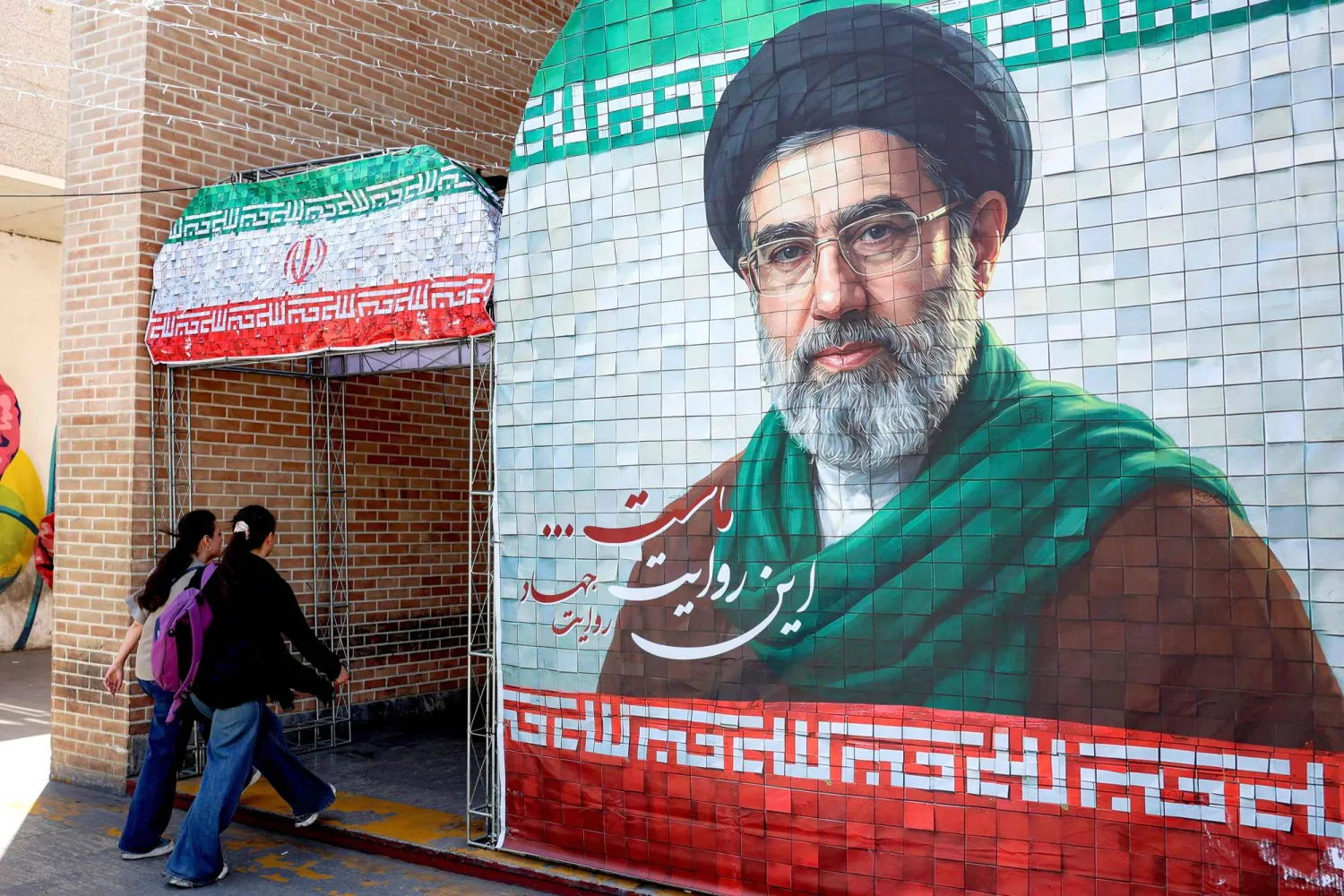
Women walk past a banner depicting Iran's current supreme leader Mojtaba Khamenei along a street Tehran on May 6, 2026. (Photo by AFP)
TT

Pezeshkian Says he Recently Met with the Supreme Leader

Women walk past a banner depicting Iran's current supreme leader Mojtaba Khamenei along a street Tehran on May 6, 2026. (Photo by AFP)

Iran’s President Masoud Pezeshkian said he met recently with Supreme Leader Mojtaba Khamenei, state media reported ⁠on Thursday, offering ⁠a first public account of him ⁠meeting Khamenei after the latter suffered severe wounds at the start of the US-Israeli war on Iran.

The ⁠meeting ⁠was marked by a "humble and deeply cordial" atmosphere, Pezeshkian was reported as saying.

Khamenei, reportedly wounded in strikes on the first day of the Middle East war that claimed the life of his father and predecessor Ali Khamenei, has released only written statements since his appointment.

"What struck me most during this meeting was the vision and the humble and sincere approach of the supreme leader of the Islamic revolution," Pezeshkian said in a video broadcast by state television.