Iran's Guards Ban Communications Devices after Strike on Hezbollah

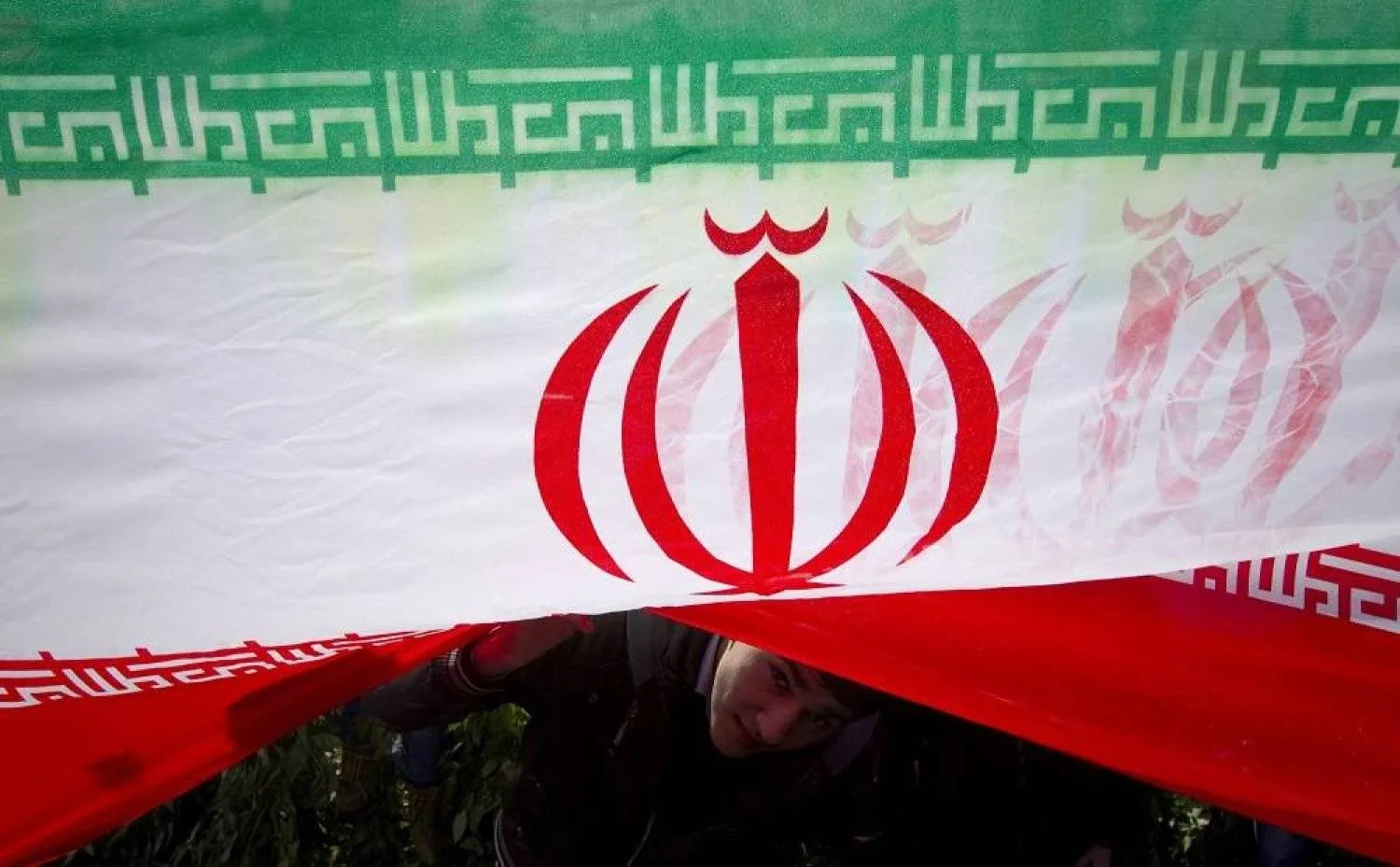
Iranian flag (Reuters)
TT

Iran's Guards Ban Communications Devices after Strike on Hezbollah

Iranian flag (Reuters)

Iran's elite Revolutionary Guards Corps (IRGC) has ordered all members to stop using any type of communication devices after thousands of pagers and walkie-talkies used by its Hezbollah allies in Lebanon blew up in deadly attacks last week, two senior Iranian security officials told Reuters.
One of the security officials said a large-scale operation is underway by the IRGC to inspect all devices, not just communication equipment. He said most of these devices were either homemade or imported from China and Russia.
Iran was concerned about infiltration by Israeli agents, including Iranians on Israel's payroll and a thorough investigation of personnel has already begun, targeting mid and high-ranking members of the IRGC, added the official, who declined to be identified because of the sensitivity of the matter.
"This includes scrutiny of their bank accounts both in Iran and abroad, as well as their travel history and that of their families," the security official said.
Iran's Foreign, Defense and Interior Ministries were not immediately available to respond to the comments made by the security officials to Reuters.
In a coordinated attack, the pager devices detonated on Tuesday across Hezbollah's strongholds. On Wednesday, hundreds of Hezbollah walkie-talkies exploded. The attacks killed 39 people and injured more than 3,000 people.
Lebanon and Hezbollah say Israel was behind the attacks. Israel has neither denied nor confirmed involvement.
The security official declined to give details on how the IRGC force, comprising 190,000 personnel, are communicating. "For now, we are using end-to-end encryption in messaging systems," he said.
According to the same official, there is widespread concern among Iran's ruling establishment. IRGC officials have reached out to Hezbollah for technical assessments, and several examples of exploded devices have been sent to Tehran for examination by Iranian experts.
MISSILE, NUCLEAR FACILITIES
Another Iranian official said Iran’s main concern was the protection of the country's nuclear and missile facilities, particularly those underground.
"But since last year, security measures at those sites have increased significantly," he said in reference to stepped up measures after what Iranian authorities said was Israel's attempt to sabotage Iran's missile program in 2023. Israel has never commented on this.
"There has never, ever been such tight security and extreme measures in place as there are now," he added, suggesting that security has been significantly increased beyond previous levels after the pager explosions in Lebanon.
The IRGC is a powerful political, military and economic force in Iran with close ties to the Supreme Leader Ali Khamenei. Set up after the 1979 Iranian Revolution to protect the clerical ruling system, it has its own ground force, navy and air force that oversee Iran's strategic weapons.
It exerts influence in the Middle East through its overseas operations arm, the Al Quds Force, by providing money, weapons, technology and training to allied groups: Hezbollah in Lebanon, Hamas in Gaza, Yemen's Houthis and militias in Iraq.
Iran's military uses a range of encrypted communication devices, including walkie-talkies, for secure communication, said the first Iranian source. While specific models and brands might vary, Iranian military communications equipment was often developed domestically or sourced from a combination of local and foreign suppliers, he said.
He said Iran's armed forces have stopped using pagers for over two decades.
Tehran has developed its own military-grade radio transmissions through its defense industry to avoid reliance on foreign imports, especially due to Western sanctions imposed on Tehran over its nuclear program, he added.
However, in the past, Iran has imported communication devices from countries such as China and Russia and even Japan.
Iran and Israel have been locked in a shadow war for decades, with mutual allegations of sabotage and assassination plots.
The conflict, including between Israel and Hezbollah, has intensified in the past year in parallel with the Gaza war, which erupted after the Palestinian Hamas group attacked southern Israeli communities on Oct. 7.
Iran and Hezbollah have blamed Israel for assassinating Hamas leader Ismail Haniyeh in Tehran and Hezbollah's most senior military commander, Fuad Shukr, in Beirut a few hours earlier in July. Israel said it killed Shukr but it has not confirmed it was behind Haniyeh's death.
Iran does not recognize Israel's right to exist. Khamenei has previously called Israel a "cancerous tumor" that "will undoubtedly be uprooted and destroyed".
Israel believes that Iran poses an existential threat. It also accuses Iran of secretly trying to develop nuclear weapons, though Iran denies seeking to build a nuclear bomb.



US Judge Blocks Deportation of Columbia University Palestinian Activist

Mohsen Mahdawi at a press conference in Vermont last year - Photo by Alex Driehaus/AP
TT

US Judge Blocks Deportation of Columbia University Palestinian Activist

Mohsen Mahdawi at a press conference in Vermont last year - Photo by Alex Driehaus/AP

A US immigration judge has blocked the deportation of a Palestinian graduate student who helped organize protests at Columbia University against Israel's war in Gaza, according to US media reports.

Mohsen Mahdawi was arrested by immigration agents last year as he was attending an interview to become a US citizen.

Mahdawi had been involved in a wave of demonstrations that gripped several major US university campuses since Israel began a massive military campaign in the Gaza Strip.

A Palestinian born in the occupied West Bank, Mahdawi has been a legal US permanent resident since 2015 and graduated from the prestigious New York university in May. He has been free from federal custody since April.

In an order made public on Tuesday, Judge Nina Froes said that President Donald Trump's administration did not provide sufficient evidence that Mahdawi could be legally removed from the United States, multiple media outlets reported.

Froes reportedly questioned the authenticity of a copy of a document purportedly signed by Secretary of State Marco Rubio that said Mahdawi's activism "could undermine the Middle East peace process by reinforcing antisemitic sentiment," according to the New York Times.

Rubio has argued that federal law grants him the authority to summarily revoke visas and deport migrants who pose threats to US foreign policy.

The Trump administration can still appeal the decision, which marked a setback in the Republican president's efforts to crack down on pro-Palestinian campus activists.

The administration has also attempted to deport Mahmoud Khalil, another student activist who co-founded a Palestinian student group at Columbia, alongside Mahdawi.

"I am grateful to the court for honoring the rule of law and holding the line against the government's attempts to trample on due process," Mahdawi said in a statement released by his attorneys and published Tuesday by several media outlets.

"This decision is an important step towards upholding what fear tried to destroy: the right to speak for peace and justice."


Fire Breaks out Near Iran's Capital Tehran, State Media Says

Smoke rises from a fire caused by an explosion in Tehran (File photo - Reuters)
TT

Fire Breaks out Near Iran's Capital Tehran, State Media Says

Smoke rises from a fire caused by an explosion in Tehran (File photo - Reuters)

A fire broke out in Iran's Parand near the capital city Tehran, state media reported on Wednesday, publishing videos of smoke rising over the area which is close to several military and strategic sites in the country's Tehran province, Reuters reported.

"The black smoke seen near the city of Parand is the result of a fire in the reeds around the Parand river bank... fire fighters are on site and the fire extinguishing operation is underway", state media cited the Parand fire department as saying.


Pakistan PM Sharif to Seek Clarity on Troops for Gaza in US Visit

US President Donald Trump looks at Pakistan's Prime Minister Shehbaz Sharif speaking following the official signing of the first phase of the Gaza ceasefire agreement between Israel and Hamas, during a world leaders' summit on ending the Gaza war, in Sharm El-Sheikh, Egypt, October 13, 2025. REUTERS/Evelyn Hockstein/File Photo
TT

Pakistan PM Sharif to Seek Clarity on Troops for Gaza in US Visit

US President Donald Trump looks at Pakistan's Prime Minister Shehbaz Sharif speaking following the official signing of the first phase of the Gaza ceasefire agreement between Israel and Hamas, during a world leaders' summit on ending the Gaza war, in Sharm El-Sheikh, Egypt, October 13, 2025. REUTERS/Evelyn Hockstein/File Photo

Before Pakistan commits to sending troops to Gaza as part of the International Stabilization Force it wants assurances from the United States that it will be a peacekeeping mission rather than tasked with disarming Hamas, three sources told Reuters.

Pakistan's Prime Minister Shehbaz Sharif is set to attend the first formal meeting of President Donald Trump's Board of Peace in Washington on Thursday, alongside delegations from at least 20 countries.

Trump, who will chair the meeting, is expected to announce a multi-billion dollar reconstruction plan for Gaza and detail plans for a UN-authorized stabilization force for the Palestinian enclave.

Three government sources said during the Washington visit Sharif wanted to better understand the goal of the ISF, what authority they were operating under and what the chain of command was before making a decision on deploying troops.

"We are ready to send troops. Let me make it clear that our troops could only be part of a peace mission in Gaza," said one of the sources, a close aide of Sharif.

"We will not be part of any other role, such as disarming Hamas. It is out of the question," he said.

Analysts say Pakistan would be an asset to the multinational force, with its experienced military that has gone to war with arch-rival India and tackled insurgencies.

"We can send initially a couple of thousand troops anytime, but we need to know what role they are going to play," the source added.

Two of the sources said it was likely Sharif, who has met Trump earlier this year in Davos and late last year at the White House, would either have an audience with him on the sidelines of the meeting or the following day at the White House.

Initially designed to cement Gaza's ceasefire, Trump sees the Board of Peace, launched in late January, taking a wider role in resolving global conflicts. Some countries have reacted cautiously, fearing it could become a rival to the United Nations.

While Pakistan has supported the establishment of the board, it has voiced concerns against the mission to demilitarize Gaza's militant group Hamas.