


Death Toll from Spanish Floods Climbs to 205 as Shock Turns to Anger and Frustration

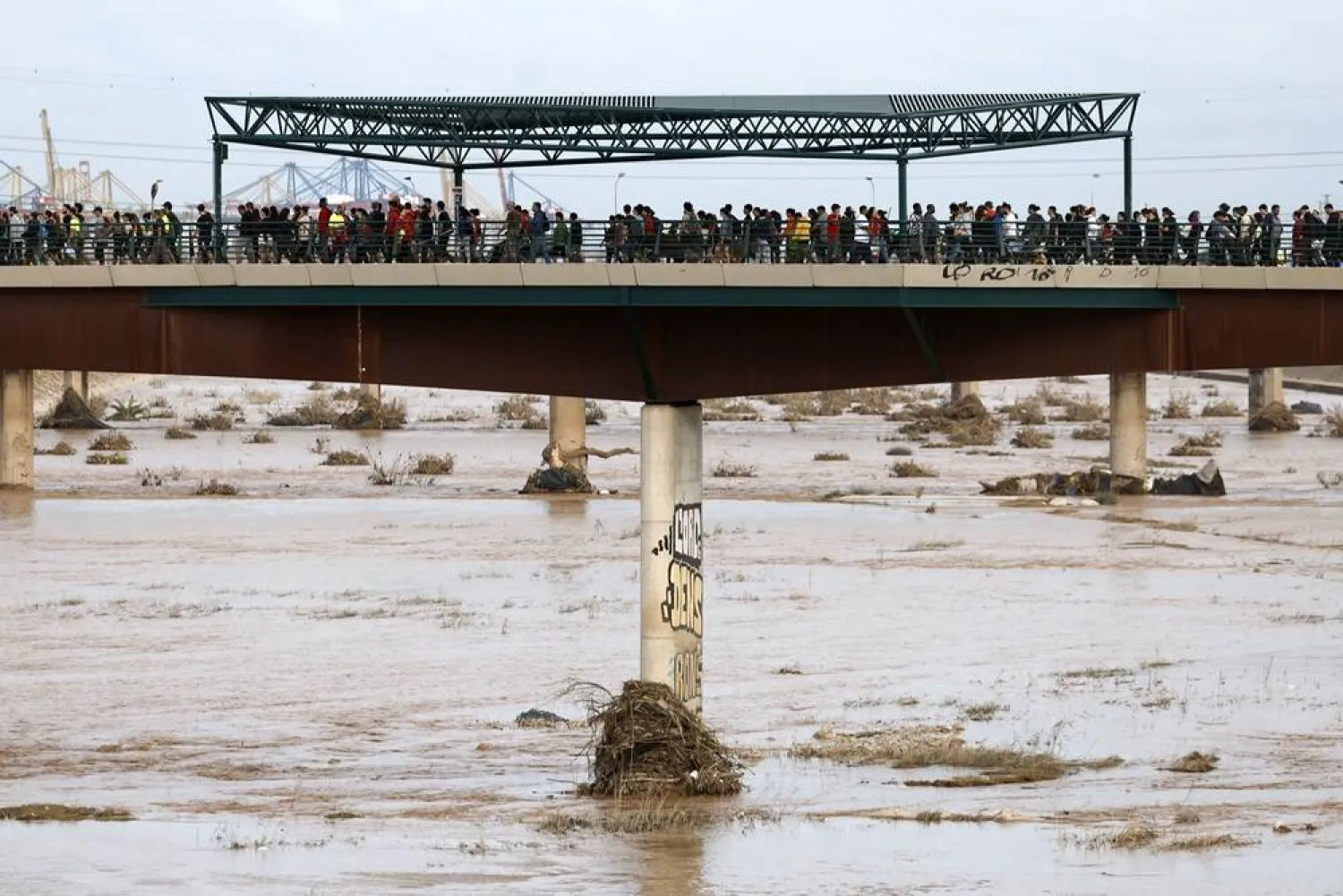
People cross the Turia river to help flood-affected neighborhoods in Valencia, Spain, 01 November 2024. (EPA)
TT

Death Toll from Spanish Floods Climbs to 205 as Shock Turns to Anger and Frustration

People cross the Turia river to help flood-affected neighborhoods in Valencia, Spain, 01 November 2024. (EPA)

The death toll from historic flash floods in Spain climbed to least 205 people Friday, with many more believed to be missing, as the initial shock gave way to anger, frustration and a wave of solidarity.

Spanish emergency authorities said 202 of the victims were in the eastern region of Valencia, and officials warned that more rain is expected in the coming days.

The damage from the storm Tuesday and Wednesday recalled the aftermath of a tsunami, with survivors left to pick up the pieces as they mourn loved ones lost in Spain’s deadliest natural disaster in living memory. Many streets were still blocked by piled-up vehicles and debris, in some cases trapping residents in their homes. Some places still don’t have electricity, running water, or stable telephone connections.

"The situation is unbelievable. It’s a disaster and there is very little help," said Emilio Cuartero, in Masanasa, on the outskirts of Valencia city. "We need machinery, cranes, so that the sites can be accessed. We need a lot of help. And bread and water."

In Chiva, residents were clearing debris from mud-filled streets. The Valencian town received more rain in eight hours on Tuesday than it had in the preceding 20 months, and water overflowed a gully that crosses the town, tearing up roads and homes.

The mayor, Amparo Fort, told RNE radio that "entire houses have disappeared, we don’t know if there were people inside or not."

So far, 205 bodies have been recovered — 202 in Valencia, two in neighboring Castilla La Mancha and one in Andalusia in the south. Members of the security forces and 1,700 soldiers from the emergency unit are searching for an unknown number of missing people. Officials fear more bodies could be found in wrecked vehicles and flooded garages.

Guardia Civil has rescued more than 4,500 people trapped by the floods, said Interior Minister Fernando Grande-Marlaska in a news conference from Valencia.

The regional authorities, who are in charge of the response to the tragedy, asked the central government to mobilize an additional 500 soldiers, who will be deployed on Saturday.

"I have been there all my life, all my memories are there, my parents lived there ... and now in one night it is all gone," Chiva resident Juan Vicente Pérez told The Associated Press near the place he lost his home. "If we had waited five more minutes, we would not be here in this world."

Before-and-after satellite images of the city of Valencia illustrated the scale of the catastrophe, showing the transformation of the Mediterranean metropolis into a landscape inundated with muddy waters. The V-33 highway was completely covered in a thick, brown layer of mud.

The tragedy has unleashed a wave of solidarity across the country. Throughout the morning, hundreds of residents have been arriving on foot in the worst affected areas, carrying water, essential products, shovels and brooms to help remove the mud. The number of people coming to help is so high that the authorities have asked them not to drive or walk there, because they are blocking the roads needed by the emergency services.

"It is very important that you return home," said regional president Carlos Mazón, who thanked the volunteers for their goodwill.

Other than volunteer contributions, local governments have begun distributing water, food and basic products in schools, town halls and sports venues.

The Red Cross used its vast network of aid to help those affected by the floods. Since Tuesday, it has carried out more than 3,500 interventions, half of them in 13 of the shelters set up by the authorities, to distribute food, blankets and hygiene products, and to provide internet access.

"There will be quite serious consequences. People who were already vulnerable will be even more, and we are going to find new needs because there are people who have lost their livelihoods," said Ana Gómez, spokesperson for the Red Cross in Valencia.

And more storms are expected. Skies in Valencia were partially sunny on Friday, but the Spanish weather agency issued alerts for strong rains in the region as well as the coast of Huelva, Andalusia; Tarragona, in Catalonia; and part of the Balearic Islands.

The storm cut power and water services on Tuesday night, but about 85% of 155,000 affected customers had their power back on by Friday, the utility said in a statement.

"This is a disaster. There are a lot of elderly people who don’t have medicine. There are children who don’t have food. We don’t have milk, we don’t have water. We have no access to anything," a resident of Alfafar, one of the most affected towns in south Valencia, told state television station TVE. "No one even came to warn us on the first day."

Juan Ramón Adsuara, the mayor of Alfafar, said the aid isn't nearly enough for residents trapped in an "extreme situation."

"There are people living with corpses at home. It’s very sad. We are organizing ourselves, but we are running out of everything," he told reporters. "We go with vans to Valencia, we buy and we come back, but here we are totally forgotten."

Rushing water turned narrow streets into death traps and spawned rivers that tore through homes and businesses, leaving many uninhabitable. Authorities have arrested ``people accused of looting shops.

Social networks have channeled the needs of those affected. Some posted images of missing people in the hope of getting information about their whereabouts, while others launched initiatives such as Suport Mutu — or Mutual Support — which connects requests for help with people who are offering it. Others organized collections of basic goods nationwide and launched fundraisers.

Pope Francis offered prayers for "the deceased, and their loved ones, and for all the destitute families," as well as the rescuers working in Valencia during the traditional Angelus blessing on the Catholic All Saint’s holiday.

Spain’s Mediterranean coast is used to autumn storms that can cause flooding, but this was the most powerful flash flooding in recent memory. Scientists link it to climate change, which is also behind increasingly high temperatures and droughts in Spain and the heating up of the Mediterranean Sea.

"Climate change is turbocharging extreme weather. We can expect to see more of the devastation and the despair that we have been seeing this week as a warming atmosphere brings more energy into our climate system", said Clare Nullis, a spokesperson for the World Meteorological Organization.

"As a result of rising temperatures, the hydrological cycle has accelerated. It’s also become more erratic, more unpredictable", she added. "We are facing growing problems of either too much water or too little. And that’s what we’re seeing playing out in Spain at the moment."

Spain has suffered through an almost two-year drought, making the flooding worse because the dry ground was so hard that it could not absorb the heavy rain.

In August 1996, a flood swept away a campsite along the Gallego river in Biescas, in the northeast, killing 87 people.


Venezuela: Amnesty Law Excludes those who Promoted Military Action

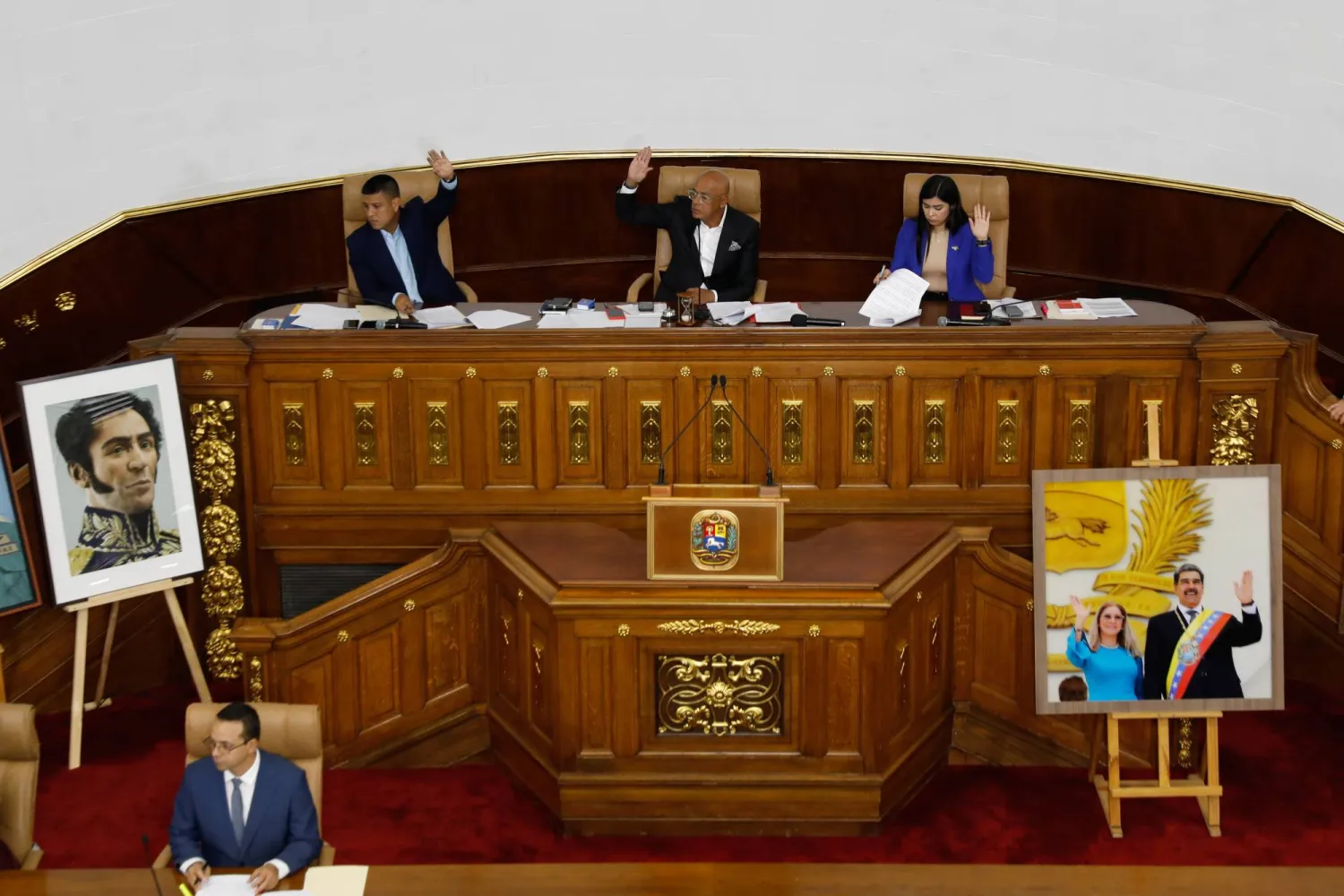
National Assembly President Jorge Rodriguez, center, presides over a session debating an amnesty bill in Caracas, Venezuela, Thursday, Feb. 19, 2026. (AP Photo/Crisitian Hernandez)
TT

Venezuela: Amnesty Law Excludes those who Promoted Military Action

National Assembly President Jorge Rodriguez, center, presides over a session debating an amnesty bill in Caracas, Venezuela, Thursday, Feb. 19, 2026. (AP Photo/Crisitian Hernandez)

Venezuela's parliament unanimously approved an amnesty law on Thursday that could free political prisoners, almost two months after President Nicolas Maduro was captured by US forces.

“The law on democratic coexistence has been approved. It has been forwarded to acting president Delcy Rodriguez for announcement,” said National Assembly President, Jorge Rodriguez, before parliament.

Acting president Delcy Rodriguez signed the legislation after it was handed to her by Jorge Rodrigez, her brother.

The passage of the law led to the end of a hunger strike by relatives of political prisoners.

Ten women have participated in a hunger strike outside the Zona 7 police facility in the capital Caracas last Saturday, setting up camps outside the prison and demanding the release of their relatives, according to AFP.

Because they experienced health problems, nine of them stopped the protest on Wednesday evening. Only one woman continued until Thursday, ending “136 hours,” or more than five days, of strike.

But the amnesty law excludes those who have been prosecuted or convicted of promoting military action against the country – which could include opposition leaders like Nobel Peace Prize winner Maria Corina Machado, who has been accused by the ruling party of calling for international intervention like the one that ousted Maduro.

Article 9 of the bill lists those excluded from amnesty as “persons who are being prosecuted or may be convicted for promoting, instigating, soliciting, invoking, favoring, facilitating, financing or participating in armed actions or the use of force against the people, sovereignty, and territorial integrity” of Venezuela “by foreign states, corporations or individuals.”


Türkiye’s Approval of Peace Roadmap is Important Step, PKK Source Says

A Turkish parliamentary commission’s approval of a report setting out a roadmap for legal reforms alongside the disbandment of the Kurdistan Workers Party (PKK) group is an important step and the beginning of a fundamental change in Turkish policy, a PKK source said Thursday. (AFP/File)
TT

Türkiye’s Approval of Peace Roadmap is Important Step, PKK Source Says

A Turkish parliamentary commission’s approval of a report setting out a roadmap for legal reforms alongside the disbandment of the Kurdistan Workers Party (PKK) group is an important step and the beginning of a fundamental change in Turkish policy, a PKK source said Thursday. (AFP/File)

A Turkish parliamentary commission's approval of a report setting out a roadmap for legal reforms alongside the disbandment of the Kurdistan Workers Party (PKK) group is an important step and the beginning of a fundamental change in Turkish policy, a PKK source told Reuters on Thursday.

The commission voted overwhelmingly on Wednesday to approve the report, advancing a peace process designed to end decades of conflict.

"The vote is considered an achievement and an important ‌step toward consolidating democracy ‌in Türkiye," said the PKK source.

The PKK - designated a ‌terrorist ⁠organization by Türkiye, ⁠the United States and the European Union - halted attacks last year and said in May it had decided to disband and end its armed struggle.

The parliamentary vote shifts the peace process to the legislative theatre, as President Tayyip Erdogan, Türkiye’s leader of more than two decades, bids to end a conflict focused in mainly Kurdish southeast Türkiye.

The insurgency began in 1984 and has killed more than 40,000 people, sowing deep discord at home and ⁠spreading violence across borders into Iraq and Syria.

IMPORTANT ISSUES OUTSTANDING

The PKK ‌source said there were foundations for resolving ‌the Kurdish issue, but there was a lack of clarity on the issue in the report.

"There also ‌remain other important issues, such as initiating constitutional amendments, especially in aspects related to ‌the Kurdish language as well as amendments to the anti-terrorism law," the source said.

Another issue was legislation concerning the return of PKK militants to Türkiye and their integration into society, the source said.

A key element of Wednesday's report recommended strengthening mechanisms to ensure compliance with decisions by the ‌European Court of Human Rights (ECHR) and the Constitutional Court.

Among key ECHR decisions related to Türkiye are rulings that the rights of ⁠jailed former pro-Kurdish ⁠party leader Selahattin Demirtas had been violated and that he should be released immediately.

Ankara's final appeal against that was rejected in November.

SIGN OF INTENT

Demirtas' lawyer Mahsuni Karaman told Reuters the report's comments on the ECHR were important as a sign of intent.

"We hope this will be reflected in judicial practice—that is our wish and expectation,” Karaman said.

Demirtas was detained in November 2016 on terrorism-related charges, which he denies. In May 2024, a court convicted him in connection with deadly 2014 protests and sentenced him to more than 40 years in prison.

Turkish nationalist leader Devlet Bahceli, a key Erdogan ally whose call in 2024 triggered the current PKK peace process, said in November that it "would be beneficial" to release Demirtas from prison.

The opposition pro-Kurdish DEM Party — the successor party of Demirtas' HDP — remains parliament's third-largest bloc and has cooperated closely with the parliamentary commission.


US Renews Threat to Leave IEA

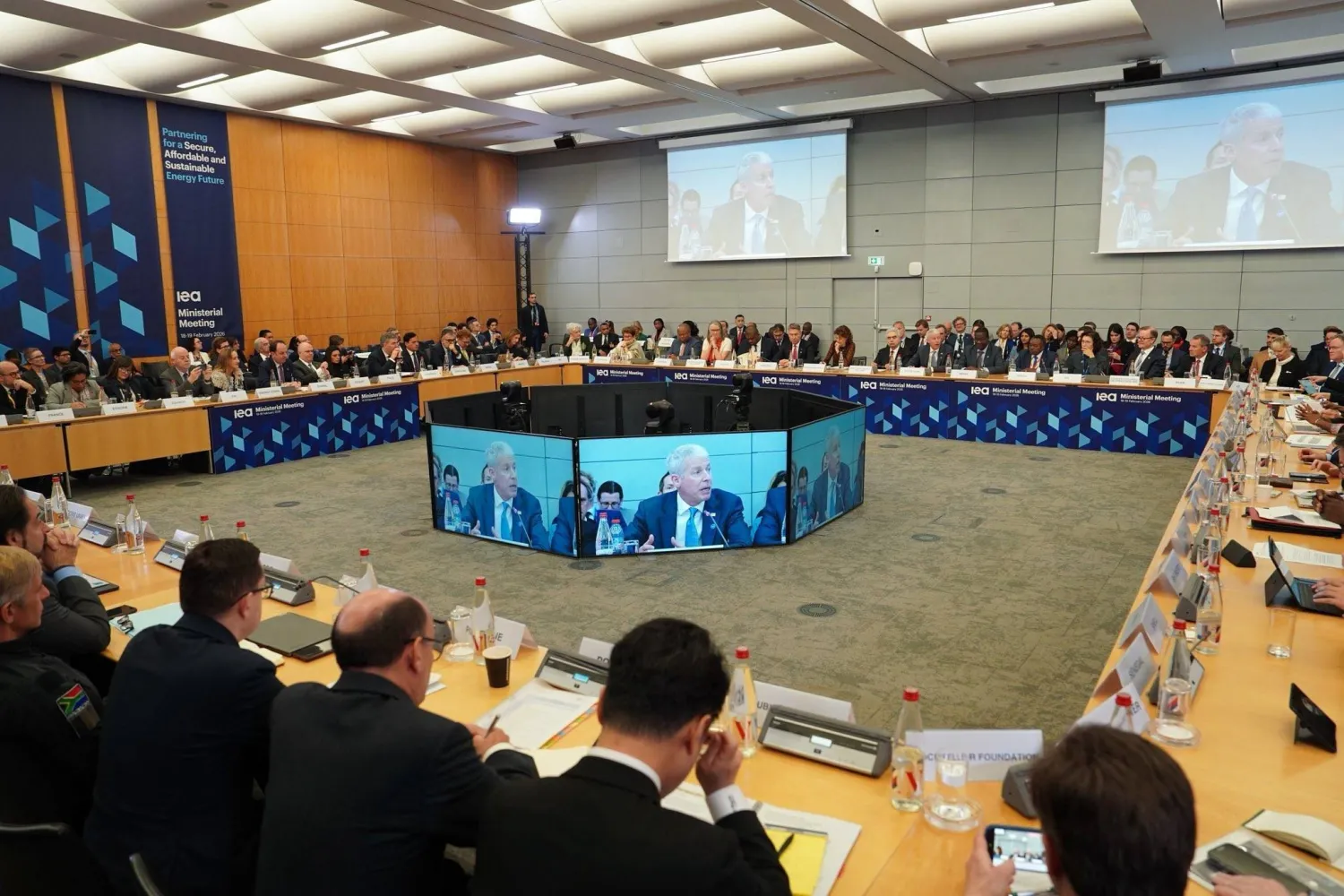
US Energy Secretary Chris Wright speaks at an IEA ministerial meeting in Paris (X)
TT

US Renews Threat to Leave IEA

US Energy Secretary Chris Wright speaks at an IEA ministerial meeting in Paris (X)

US Energy Secretary Chris Wright renewed his threat Thursday to pull out of the International Energy Agency, saying Washington would press the organization to abandon a net-zero agenda “in the next year or so.”

Speaking on the last day of an IEA ministerial meeting in Paris, Wright said the 52-year-old agency should return to its founding mission of ensuring energy security.

“The US will use all the pressure we have to get the IEA to eventually, in the next year or so, move away from this agenda,” Wright said in a news conference.

“But if the IEA is not able to bring itself back to focusing on the mission of energy honesty, energy access and energy security, then sadly we would become an ex-member of the IEA,” he added.

Meaning of Wright’s Warning

A US exit means a deep cut to IEA’s budget undermining the agency’s global influence.

Washington is not just a member of the agency but its largest funder. It alone contributes to 25% of the IEA core budget (equivalent to between $25 and $30 million annually) and therefore its exit would “dry up” a quarter of the agency’s financial resources.

Also, Washington is the world's largest oil and gas producer, meaning the US exit will affect the agency's reports and their credibility in markets.

The IEA was created to coordinate responses to major disruptions of supplies after the 1973 oil crisis. But in recent years, it became the main advocate of green transition policies, which the US considers as “politicized.”

The IEA produces monthly reports on oil demand and supply as well as annual world energy outlooks that include data on the growth of solar and wind energy, among other analyses.

Wright praised IEA Executive Director Fatih Birol for reinserting in November 2025’s annual outlook a Current Policies Scenario in which oil and gas demand would grow in the next decades. That scenario had been dropped for the past five years.

But the report still included a scenario where the world reaches net zero emissions by mid-century.

Birol’s current four-year term ends in 2027, but Wright demurred when asked who he would like to head the IEA, which has over 30 member nations.

“We remain today undecided or neutral on who the leadership is. We care about the mission much more than the individual leaders,” the US energy chief said.

If Birol can make the agency “get out the politics and get out the anti-energy part of it, that's great by us,” said Wright, who first warned last year that the US could leave the IEA if it did not reform.

For his part, Birol insisted that the Paris-based agency was “data-driven.” He said, “We are a non-political organization.”

The IEA was created “to focus on energy security,” Wright said on Wednesday at a ministerial meeting of the agency in Paris.

“That mission is beyond critical and I'm here to plead to all the members (of the IEA) that we need to keep the focus of the IEA on this absolutely life-changing, world-changing mission of energy security,” he said.

The Energy Secretary said he wanted to get support from “all the nations in this noble organization to work with us, to push the IEA to drop the climate. That's political stuff.”

His comments come just a day after he publicly threatened to quit the organization unless it abandoned its focus on the energy transition— a call that several countries rejected, including the UK, Austria and France.