Countries at UN Climate Summit Under Pressure with No Finance Deal Entering Final Day

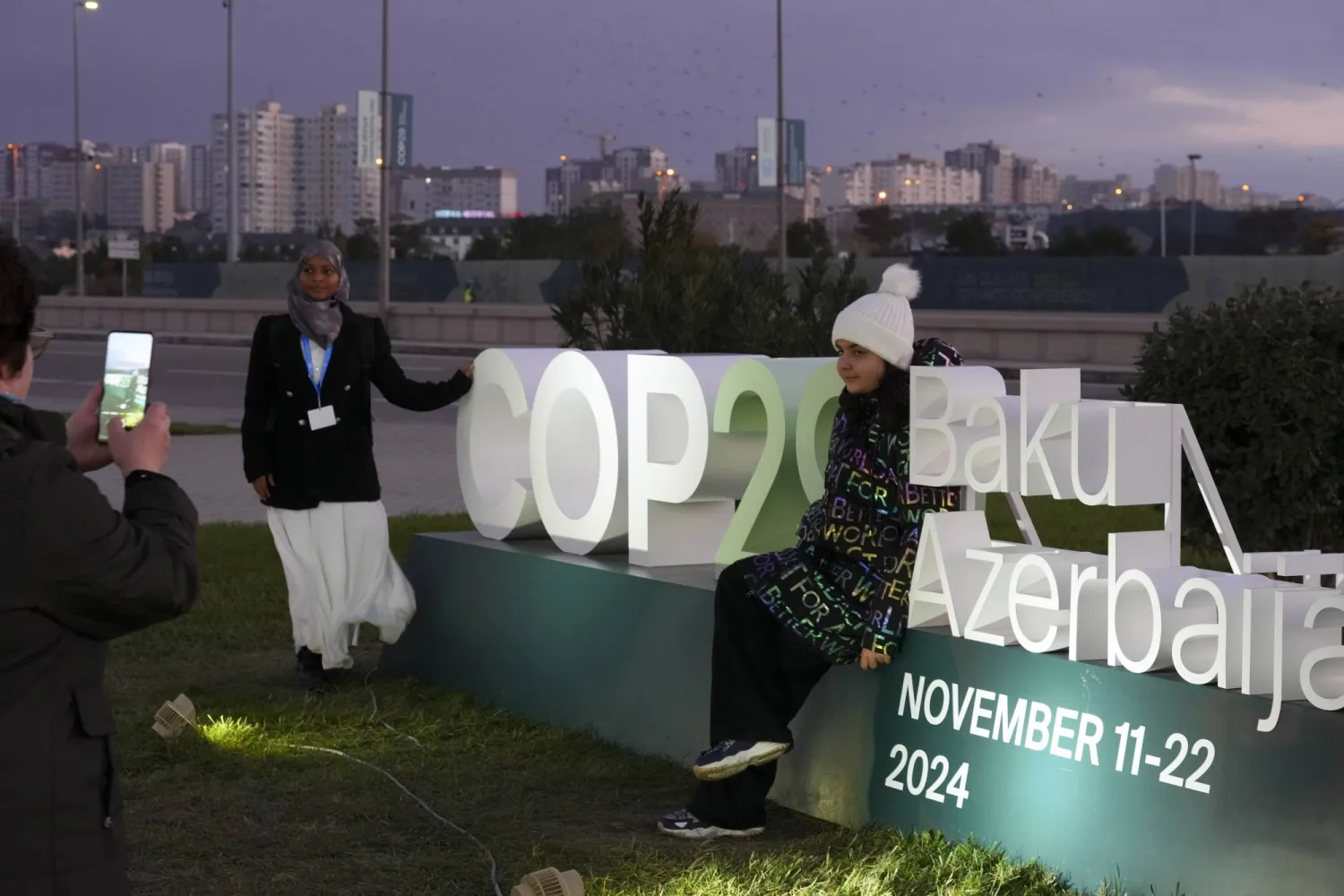
People pose for a photo during the COP29 UN Climate Summit, Thursday, Nov. 21, 2024, in Baku, Azerbaijan. (AP Photo/Peter Dejong)
TT

Countries at UN Climate Summit Under Pressure with No Finance Deal Entering Final Day

People pose for a photo during the COP29 UN Climate Summit, Thursday, Nov. 21, 2024, in Baku, Azerbaijan. (AP Photo/Peter Dejong)

Countries at the United Nations climate summit amped up the pressure on themselves Friday by entering the last scheduled day of talks with no visible progress on their chief goals.
From the start, COP29 has been about climate finance — money that wealthy nations are obligated to pay to developing countries to cover damages resulting from extreme weather and to help those nations adapt to a warming planet. Experts put the figure at $1 trillion or more, but draft texts that emerged Thursday after nearly two weeks of talks angered the developing world by essentially leaving blank the financial commitment.
The talks often run into overtime as wealthier nations are pressed to pay for impacts caused largely by their emissions from centuries of burning fossil fuels. The late finish also adds pressure on Azerbaijan, the oil-rich nation presiding over this year's COP, or Conference of Parties.
In a statement late Thursday, the presidency struck an optimistic tone, saying the outlines of a financial package “are starting to take shape” and promised new draft texts on Friday, The Associated Press said.
“COP29 urges all parties to engage urgently and constructively in order to reach the ambitious outcome that we all need,” the statement said.
Frustrated delegates wait to see a new draft deal As negotiators, observers and civil society organization representatives waited for a new draft text to be released on Friday, many said they were frustrated and disappointed with the talks so far.
“No deal is better than a bad deal,” said Harjeet Singh of the climate advocacy group, Fossil Fuel Non Proliferation Treaty.
Singh said the key bottleneck is rich countries’ reluctance to say how much they are willing to pay for countries to transition away from fossil fuels and toward clean energy, adapt to the drought, storms and extreme heat and pay for losses and damages caused by climate change. Independent experts put the figure needed at $1 trillion per year.
“Things are absolutely stuck," he said. “It’s negotiation in bad faith by developed countries.”
Bryton Codd, part of Belize's negotiating team, said there is a lot of frustration felt by participants at the climate talks.
“I’m just waiting to see if that (climate finance goal) will actually be presented,” he said.
“Year after year our people come here and we dance this dance and play this game. No one comes here out of excitement, we come because we have no choice. Because we cannot let this process fail," said Tongan climate activist Joseph Sikulu with the environmental group 350.org. “Nothing less than $1 trillion in grants per year will be enough to see those most impacted by climate change on a just transition towards a safe, equitable future.”
‘Slap in the face’ for text to have no financial figure On Thursday, COP29 President Mukhtar Babayev convened a Qurultay — a traditional Azerbaijani meeting — where negotiators spoke to hear all sides. He promised to find “a way forward regarding future iterations” of the deal.
Panama's Juan Carlos Monterrey Gomez said the “lack of commitment transparency feels like a slap in the face to the most vulnerable."
"It is just utter disrespect to those countries that are bearing the brunt of this crisis,” he said. “Developed countries must stop playing games with our life and put a serious quantified financial proposal on the table.”
Other areas that are being negotiated include commitments to slash planet-warming fossil fuels and how to adapt to climate change. But they’ve seen little movement.
European nations and the United States criticized the package of proposals for not being strong enough in reiterating last year’s call for a transition away from fossil fuels.
US climate envoy John Podesta said he was surprised that “there is nothing that carries forward the ... outcomes that we agreed on last year in Dubai.” The United States, the world’s biggest historic emitter of greenhouse gasses, has played little role in the talks as it braces for another presidency under Donald Trump.
Days earlier, the 20 largest economies met in Brazil and didn't mention the call for transitioning away from fossil fuels. UN Secretary General Antonio Guterres, who was at that meeting, said official language is one thing, but reality is another.
“There will be no way” the world can limit global warming to 1.5 degrees Celsius "if there is not a phase out of fossil fuels,” Guterres said at a Thursday news conference.



N. Korea Flexes Nuclear-capable Rocket Launcher Ahead of Key Congress

A photo released by the official Korean Central News Agency (KCNA) shows North Korean leader Kim Jong Un (C), accompanied by his daughter Kim Ju Ae (R), overseeing a test-fire of a large-caliber multiple-rocket launcher system at an unknown location in North Korea, 27 January 2026 (issued 28 January 2026). EPA/KCNA  EDITORIAL USE ONLY
A photo released by the official Korean Central News Agency (KCNA) shows North Korean leader Kim Jong Un (C), accompanied by his daughter Kim Ju Ae (R), overseeing a test-fire of a large-caliber multiple-rocket launcher system at an unknown location in North Korea, 27 January 2026 (issued 28 January 2026). EPA/KCNA EDITORIAL USE ONLY
TT

N. Korea Flexes Nuclear-capable Rocket Launcher Ahead of Key Congress

A photo released by the official Korean Central News Agency (KCNA) shows North Korean leader Kim Jong Un (C), accompanied by his daughter Kim Ju Ae (R), overseeing a test-fire of a large-caliber multiple-rocket launcher system at an unknown location in North Korea, 27 January 2026 (issued 28 January 2026). EPA/KCNA  EDITORIAL USE ONLY
A photo released by the official Korean Central News Agency (KCNA) shows North Korean leader Kim Jong Un (C), accompanied by his daughter Kim Ju Ae (R), overseeing a test-fire of a large-caliber multiple-rocket launcher system at an unknown location in North Korea, 27 January 2026 (issued 28 January 2026). EPA/KCNA EDITORIAL USE ONLY

North Korean leader Kim Jong Un has unveiled a battery of huge nuclear-capable rocket launchers ahead of a key congress of the nation's ruling party, state media said Thursday.

Kim is expected to detail the next phase in North Korea's nuclear weapons program when he opens a rare congress of the ruling Workers' Party in coming days.

The 600-mm multiple launch rocket system was front and center as preparations ramped up for the once-in-five-years gathering, widely viewed as North Korea's most important political event.

"When this weapon is used actually, no force would be able to expect God's protection," Kim said, according to the Korean Central News Agency.

"It is really a wonderful and attractive weapon."

Photos released by state media showed dozens of launch vehicles parked in neat rows on the plaza of Pyongyang's House of Culture, which will host the congress.

The weapon was "appropriate for a special attack, that is, for accomplishing a strategic mission", Kim told a ceremony on Wednesday, using a common euphemism for nuclear weapons.

He said the weapons system -- which was presented to the congress as a gift from munitions workers -- would deter unnamed enemies.

"There is no need to further explain about its destructive power and military value," AFP quoted Kim as saying.

"This is because it can reduce the aimed target to ashes through surprise and simultaneous attack by focusing its destructive energy."

The launch system could fire rockets with an estimated range of 400 kilometers (250 miles), covering all of South Korea, said analyst Hong Min from the Korea Institute for National Unification.

"Its primary purpose is to neutralize the combined air power of South Korea and the United States," he told AFP.

"If equipped with tactical nuclear warheads, a single battery firing four to five rounds could devastate an entire airbase."

South Korea's capital Seoul is less than 50 kilometers (30 miles) from the border at its nearest point.

Analysts believe North Korea would use its vast artillery arsenal to launch saturation strikes on the South should fighting break out.

Kim ordered the expansion and modernization of missile production in the months leading up to the Workers' Party congress.

Pyongyang has also significantly stepped up missile testing.


Iran Says No Country Can Deprive it of Enrichment Rights

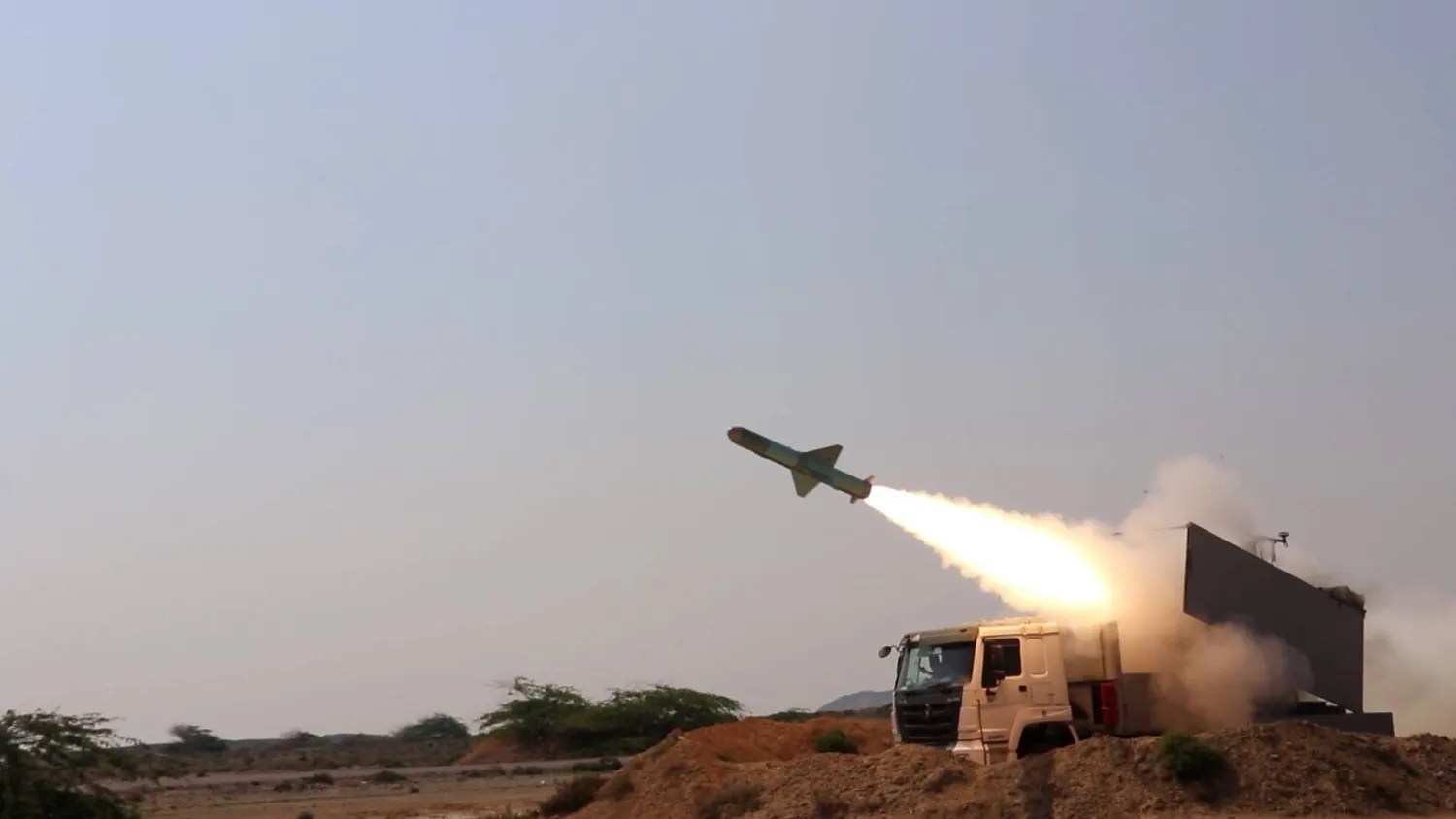
A handout photo made available by Iran's Revolutionary Guard Corps (IRGC)'s official website Sepahnews on 17 February 2026 shows IRGC conducting a military drill in the Strait of Hormuz, in the Arabian gulf, southern Iran. EPA/SEPAHNEWS HANDOUT
TT

Iran Says No Country Can Deprive it of Enrichment Rights

A handout photo made available by Iran's Revolutionary Guard Corps (IRGC)'s official website Sepahnews on 17 February 2026 shows IRGC conducting a military drill in the Strait of Hormuz, in the Arabian gulf, southern Iran. EPA/SEPAHNEWS HANDOUT

Iran's atomic energy chief Mohammad Eslami said no country can deprive the Iranian republic of its right to nuclear enrichment, after US President Donald Trump again hinted at military action following talks in Geneva.

"The basis of the nuclear industry is enrichment. Whatever you want to do in the nuclear process, you need nuclear fuel," said Eslami, according to a video published by Etemad daily on Thursday.

"Iran's nuclear program is proceeding according to the rules of the International Atomic Energy Agency, and no country can deprive Iran of the right to peacefully benefit from this technology."

The comments follow the second round of Oman-mediated talks between Tehran and Washington in Geneva on Tuesday.

The two foes had held an initial round of discussions on February 6 in Oman, the first since previous talks collapsed during the 12-day Iran-Israel war in June.

The United States briefly joined the war alongside Israel, striking Iranian nuclear facilities.

On Wednesday, Trump again suggested the United States might strike Iran in a post on his Truth Social site.

He warned Britain against giving up sovereignty over the Chagos Islands in the Indian Ocean, saying that the archipelago's Diego Garcia airbase might be needed were Iran not to agree a deal, "in order to eradicate a potential attack by a highly unstable and dangerous regime".

Washington has repeatedly called for zero enrichment, but has also sought to address Iran's ballistic missile program and its support for militant groups in the region -- issues which Israel has pushed to include in the talks.

Western countries accuse the Iranian republic of seeking to acquire nuclear weapons.

Tehran denies having such military ambitions but insists on its right to this technology for civilian purposes.

Trump, who has ratcheted up pressure on Iran to reach an agreement, has deployed a significant naval force to the region, which he has described as an "armada".

After sending the aircraft carrier USS Abraham Lincoln and escort battleships to the Gulf in January, he recently indicated that a second aircraft carrier, the Gerald Ford, would depart "very soon" for the Middle East.

Separately, the Iranian and Russian navies were conducting joint drills in the Sea of Oman and the northern Indian Ocean on Thursday.


Karachi Building Collapse after Blast Kills 16

Rescue workers and people gather at the site of a residential compound following a suspected gas leakage blast in Karachi, Pakistan, 19 February 2026. EPA/REHAN KHAN
TT

Karachi Building Collapse after Blast Kills 16

Rescue workers and people gather at the site of a residential compound following a suspected gas leakage blast in Karachi, Pakistan, 19 February 2026. EPA/REHAN KHAN

A building collapse caused by an explosion in Pakistan's southern megacity of Karachi killed at least 16 people on Thursday, including children, officials said.

More than a dozen people were injured in the incident in the Soldier Bazaar neighborhood of Karachi at around 4:00 am, when Muslim families start preparing Sehri, the pre-sunrise meal eaten during Ramadan.