President Donald Trump said Friday that only Iran's "unconditional surrender" would bring an end to the Middle East war, as Tehran was rocked by some of the heaviest US-Israeli strikes of the spiraling, week-long conflict.
Now in its seventh day, the war has embroiled nations beyond the region, upended the world's energy and transport sectors, and brought chaos to even usually peaceful areas around the Gulf.
It has spread to Lebanon, whose prime minister warned of an impending humanitarian disaster as tens of thousands fled heavy Israeli strikes on Beirut's southern suburbs.
Trump, who has given varying reasons for starting the war that killed Iran's supreme leader Ali Khamenei last weekend, promised to help rebuild the country's economy if Tehran installed an "acceptable" new leader.
"There will be no deal with Iran except UNCONDITIONAL SURRENDER," Trump wrote on his Truth Social platform.
"MAKE IRAN GREAT AGAIN (MIGA!)," he added.
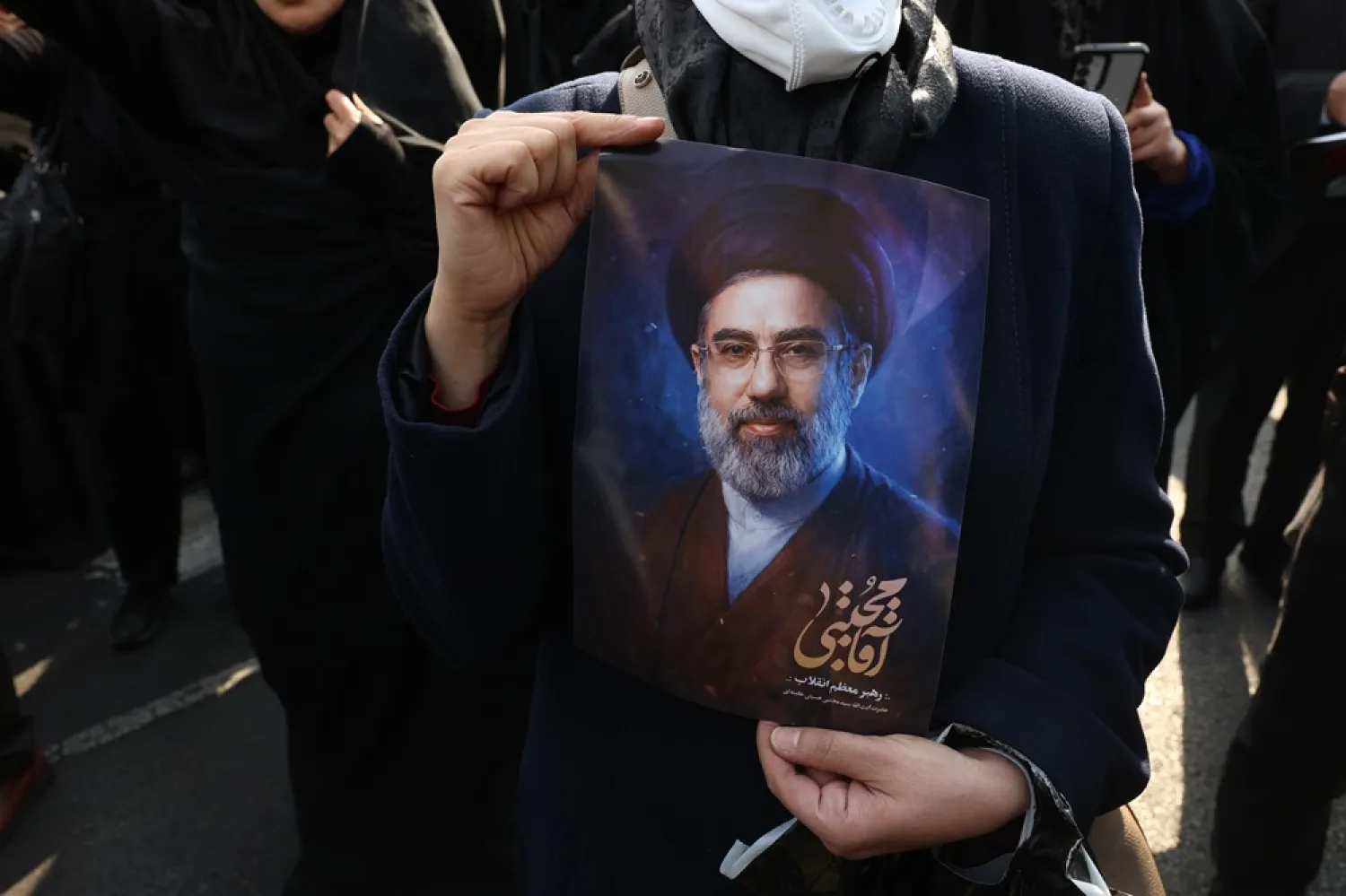
In Tehran, crowds of men and women dressed in black, some carrying Iranian flags, gathered for the first Friday prayers since the start of the war, online footage showed.
Several loud explosions sent clouds of black smoke into Tehran's sky, according to AFP journalists who described the day's strikes as the heaviest yet on the capital.
"It's really very scary," a Tehran businessman who gave his first name as Robert told AFP.
"Checkpoints have been put up in place in the city to prevent looting and ensure control," the 60-year-old said at the Armenian border with Iran.
- 'Additional surprises' -
Both Israel and the US warned on Friday they were escalating their attacks on Iran.
"We have additional surprises ahead which I do not intend to disclose," Israel's military chief Lieutenant General Eyal Zamir said.
According to Iran's health ministry, the US and Israeli strikes on the country have killed 926 people.
Iranian government spokeswoman Fatemeh Mohajerani said on Friday that 30 percent of the dead were children. AFP could not independently verify either toll.
Iran has launched missile and drone attacks at Israel and Gulf states since the war began, with AFP journalists in Tel Aviv reporting hearing several blasts on Friday.
In Israel, at least 10 people have been killed, according to first responders there.
The US military has reported the deaths of six of its personnel.
- 'We'll sleep on the road' -
The conflict has sucked in Israel's neighbor Lebanon after Tehran's proxy group Hezbollah launched missiles at Israel.
Israeli air strikes hit sites in Lebanon's south and east on Friday.
There has been widespread destruction in the southern Beirut suburbs, considered a Hezbollah stronghold and home to an estimated 600,000 to 800,000 people.
AFP correspondents on the ground saw scenes of panic on Thursday as residents massively fled after an unprecedented Israeli order to evacuate immediately if they wanted to save their lives.
Hundreds of families milled around on a Beirut beach, left with nowhere to go.
"We'll sleep on the road tonight and God alone knows what will happen to us," one man told AFP, declining to give his name.
Lebanon's Prime Minister Nawaf Salam warned that a "humanitarian disaster is looming" from the displacement.
On Friday, Hezbollah told Israeli residents to evacuate areas within five kilometers (three miles) of the Lebanese border.
The death toll in Lebanon rose to 217 on Friday, according to the country's health ministry.
Israel's army meanwhile said it had killed more than 70 Hezbollah militants.
AFP could not independently verify either toll.
Iraq, long a proxy battleground between the US and Iran, has also been dragged into the war. Drones struck an airport and two oil facilities in southern Iraq on Friday, a security official told AFP.
Earlier in the day, oil prices surged after Kurdish authorities in Iraq said crude production had been halted by a previous attack.
- 'Extraordinary mistake' -
The United Nations refugee agency said Friday it had declared the crisis a major humanitarian emergency, stressing the need for an immediate response.
The UN's rights chief also called for "impartial investigations" after Iran said a strike on a school that it blamed on the US and Israel killed more than 150 people.
Neither the US nor Israel has said it was behind the strike. US Secretary of State Marco Rubio said Monday that the Pentagon was investigating.
AFP has neither been able to access the site nor obtain independent confirmation of the toll.
The war has also come under increasing scrutiny in Europe, with Spanish Prime Minister Pedro Sanchez calling the US-Israeli strikes an "extraordinary mistake" and "not in accordance with international law".
European Union chiefs are scheduled to hold talks about the war on Monday.
The war has not spared the rich countries of the Gulf, formerly seen as a tourist hot spot and a rare Middle East safe haven.
Qatar intercepted a drone attack on a US air base on its territory early Friday, while Saudi Arabia shot down three drones east of its capital Riyadh.
Thirteen people, seven of them civilians, have been killed in Gulf countries since the war began, including an 11-year-old girl in Kuwait.
New explosions were heard in the Kuwaiti capital on Friday, an AFP journalist said.
The conflict has also expanded as far afield as the Sri Lankan coast, off of which a US submarine torpedoed an Iranian frigate, and Azerbaijan, which threatened retaliation after a drone hit an airport.
Nations have scrambled to repatriate holidaymakers in the Gulf caught up in the fighting, with air traffic severely limited as missiles and drones dominate the skies above the region.
The war has also hammered global markets and sent crude oil prices soaring by about a fifth in the week since it erupted, all but blocking shipping in the critical Strait of Hormuz.
A fire broke out on the latest ship to suffer an attack in the Strait on Friday, Iranian television reported.