


Trump Nominee Pete Hegseth Weathers Democrats’ Grilling to Emerge Largely Unscathed

US Secretary of Defense nominee Pete Hegseth during his confirmation hearing before the Senate Armed Services Committee in the Dirksen Senate Office Building in Washington, DC, USA, 14 January 2025. (EPA)
TT

Trump Nominee Pete Hegseth Weathers Democrats’ Grilling to Emerge Largely Unscathed

US Secretary of Defense nominee Pete Hegseth during his confirmation hearing before the Senate Armed Services Committee in the Dirksen Senate Office Building in Washington, DC, USA, 14 January 2025. (EPA)

President-elect Donald Trump's pick to lead the Pentagon, Pete Hegseth, endured fierce Democratic grilling over everything from his inexperience and his past opposition to women in combat to emerge largely unscathed among Republicans at his confirmation hearing on Tuesday.

Hegseth, a former Fox News host and decorated veteran, is one of the most controversial figures ever nominated to be Secretary of Defense and any vote to confirm him is expected to be very close.

But he weathered the four-hour hearing without making any major gaffe that might have alienated Republicans and even won critical backing from Republican Senator Joni Ernst, who holds sway in her party.

Several other committee Republicans, to laughter from a friendly audience packed with supporters wearing Hegseth hats, praised the 44-year-old, who has slammed diversity, equity and inclusion initiatives in the military, and, in his latest book, questioned whether the top US general has the job because he's Black.

Asked if he would fire the chairman of the Joint Chiefs of Staff, General C.Q. Brown, if he takes over the military, a possibility first reported by Reuters, Hegseth declined to rule it out, saying he would be carrying out a broad review.

"Every single senior officer will be reviewed based on meritocracy, standards, lethality and commitment to lawful orders they will be given," Hegseth said.

Hegseth had strongly opposed women in combat roles but walked back that stance during the hearing.

"Mr. Hegseth, I do not believe that you are qualified to meet the overwhelming demands of this job," said Senator Jack Reed, ranking member of the Senate Armed Services Committee.

A number of episodes have sparked concern, including a 2017 sexual assault allegation against Hegseth that did not result in charges and which he denies. He has also been accused of excessive drinking and financial mismanagement at veterans' organizations. Hegseth has vowed to abstain from alcohol if confirmed and said he made financial errors but denied wrongdoing.

Democratic Senator Kirsten Gillibrand slammed Hegseth's past remarks about women, saying he would have to fundamentally change how he sees women who constitute 18% of the US military.

"We have hundreds - HUNDREDS - of women who serve in the infantry, lethal members of our military ... But you degrade them," Gillibrand said in a heated exchange.

"Please explain these types of statements because they're brutal, and they're mean."

Despite strong support from Trump's Republicans, Hegseth's confirmation will likely be by a narrow margin, compared with the 93-2 vote for President Joe Biden's defense secretary, Lloyd Austin, and 98-1 for Jim Mattis, Trump's first nominee for the position.

After the hearing, Ernst, who pundits speculated could vote against Hegseth and perhaps convince others to do the same, said she supported Hegseth.

"Our next commander in chief selected Pete Hegseth to serve in this role, and after our conversations, hearing from Iowans, and doing my job as a United States Senator, I will support President Trump’s pick for Secretary of Defense," Ernst said in a statement.

As Hegseth walked into the packed hearing room, he was greeted with cheers and a standing ovation, with chants of "USA, USA, USA" and a shout of "Get 'em, Petey."

Senator Roger Wicker, the Republican who leads the committee, endorsed Hegseth, calling him "unconventional," and adding, "Regarding his personal conduct, Mr. Hegseth has admitted to falling short, as we all do from time to time."

Republican senators, including Markwayne Mullin and Tim Sheehy, strongly backed Hegseth. Mullin dismissed concerns about him, particularly his personal life, as political theater.

"It's all for show," Mullin said.

ACCOUNTABILITY IS COMING

Hegseth's opening remarks, praising Trump, were repeatedly interrupted by protesters. He vowed to restore a "warrior culture" to the US military and said accountability was coming for those who fall short.

"Everyone from the top, from the most senior general to the most lowly private, (we) will ensure that they're treated fairly," Hegseth said.

When asked about remarks opposing women in combat, Hegseth cited the need to eliminate quotas for frontline roles. Gillibrand fired back that no such quotas exist.

During the hearing he told Ernst, herself a veteran, that he would support women in combat "given the standards remain high, and we will have a review to ensure the standards have not been eroded."

Democratic Senator Tammy Duckworth, a veteran who lost both legs during combat in Iraq, chided Hegseth over gaps in his knowledge of foreign policy and lack of management experience.

"You say you care about keeping our armed forces strong ... then let's not lower the standards for you. You sir, are a no-go at this station," Duckworth said.

In a 2021 incident first reported by Reuters, Hegseth was branded an "insider threat" by a fellow member of the Army National Guard over his tattoos. Hegseth noted the incident during the hearing, which led him to be pulled from Guard duty in Washington during Biden's inauguration.

In recent weeks, Trump's party has coalesced around his pick.

Still, the slim Republican Senate majority means that Hegseth can lose support from no more than three senators to be confirmed, if Democrats and independents unite against him.

Cabinet nominees almost never lose Senate votes. The last nominee who was defeated was former Senator John Tower, a nominee to be Secretary of Defense, in 1989. Tower was investigated over claims of drunkenness and inappropriate behavior with women.

If confirmed, Hegseth could make good on Trump's promises to rid the military of generals he accuses of pursuing progressive diversity policies.

The next secretary of defense faces huge challenges, including active conflicts in Ukraine and Gaza and the expansion of China's military, which received only glancing attention during a hearing focused far more on culture war issues.

The committee is expected to vote on Hegseth's nomination as soon as Monday, the day of Trump's inauguration, paving the way for his consideration by the full Senate.
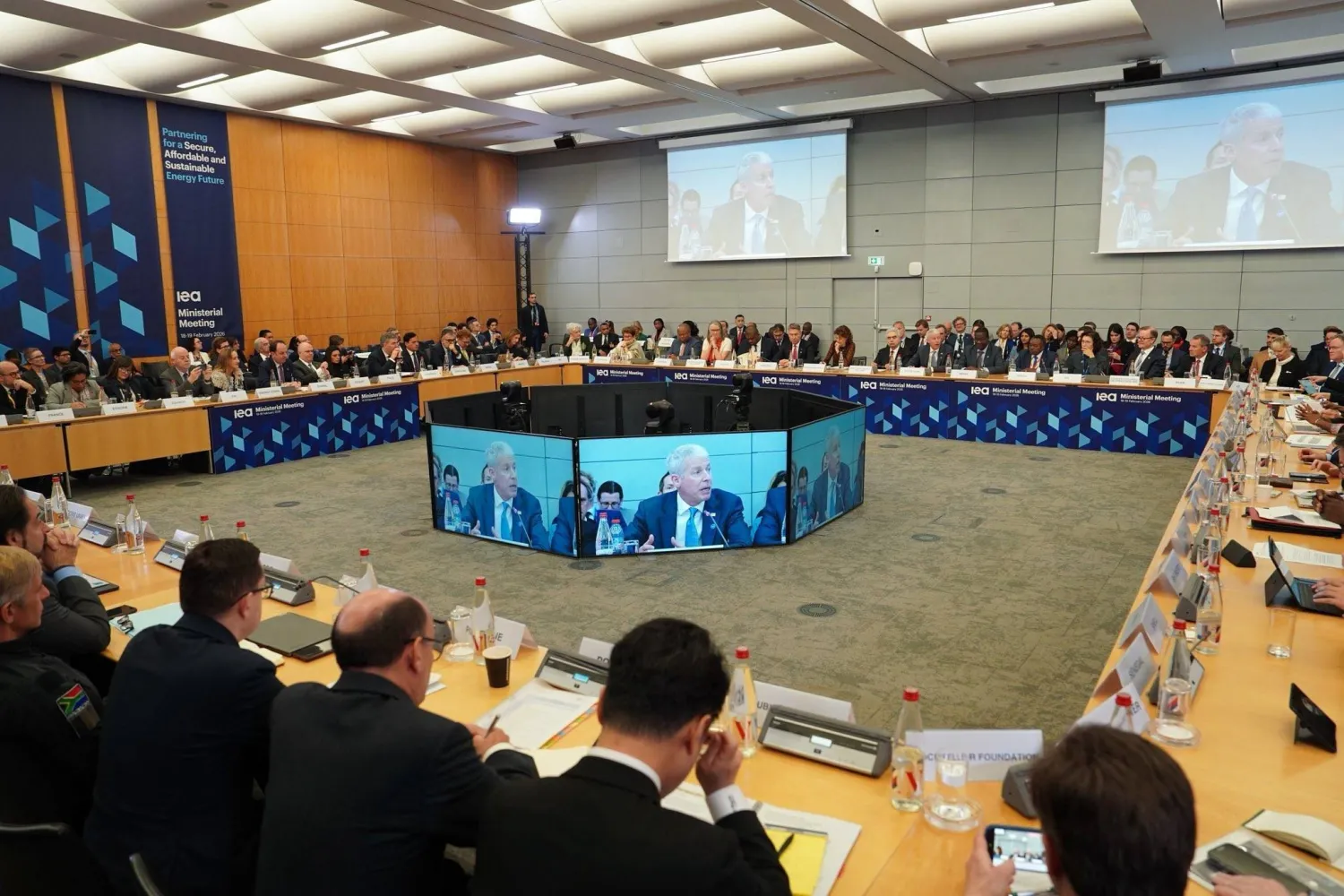



US Renews Threat to Leave IEA

US Energy Secretary Chris Wright speaks at an IEA ministerial meeting in Paris (X)
TT

US Renews Threat to Leave IEA

US Energy Secretary Chris Wright speaks at an IEA ministerial meeting in Paris (X)

US Energy Secretary Chris Wright renewed his threat Thursday to pull out of the International Energy Agency, saying Washington would press the organization to abandon a net-zero agenda “in the next year or so.”

Speaking on the last day of an IEA ministerial meeting in Paris, Wright said the 52-year-old agency should return to its founding mission of ensuring energy security.

“The US will use all the pressure we have to get the IEA to eventually, in the next year or so, move away from this agenda,” Wright said in a news conference.

“But if the IEA is not able to bring itself back to focusing on the mission of energy honesty, energy access and energy security, then sadly we would become an ex-member of the IEA,” he added.

Meaning of Wright’s Warning

A US exit means a deep cut to IEA’s budget undermining the agency’s global influence.

Washington is not just a member of the agency but its largest funder. It alone contributes to 25% of the IEA core budget (equivalent to between $25 and $30 million annually) and therefore its exit would “dry up” a quarter of the agency’s financial resources.

Also, Washington is the world's largest oil and gas producer, meaning the US exit will affect the agency's reports and their credibility in markets.

The IEA was created to coordinate responses to major disruptions of supplies after the 1973 oil crisis. But in recent years, it became the main advocate of green transition policies, which the US considers as “politicized.”

The IEA produces monthly reports on oil demand and supply as well as annual world energy outlooks that include data on the growth of solar and wind energy, among other analyses.

Wright praised IEA Executive Director Fatih Birol for reinserting in November 2025’s annual outlook a Current Policies Scenario in which oil and gas demand would grow in the next decades. That scenario had been dropped for the past five years.

But the report still included a scenario where the world reaches net zero emissions by mid-century.

Birol’s current four-year term ends in 2027, but Wright demurred when asked who he would like to head the IEA, which has over 30 member nations.

“We remain today undecided or neutral on who the leadership is. We care about the mission much more than the individual leaders,” the US energy chief said.

If Birol can make the agency “get out the politics and get out the anti-energy part of it, that's great by us,” said Wright, who first warned last year that the US could leave the IEA if it did not reform.

For his part, Birol insisted that the Paris-based agency was “data-driven.” He said, “We are a non-political organization.”

The IEA was created “to focus on energy security,” Wright said on Wednesday at a ministerial meeting of the agency in Paris.

“That mission is beyond critical and I'm here to plead to all the members (of the IEA) that we need to keep the focus of the IEA on this absolutely life-changing, world-changing mission of energy security,” he said.

The Energy Secretary said he wanted to get support from “all the nations in this noble organization to work with us, to push the IEA to drop the climate. That's political stuff.”

His comments come just a day after he publicly threatened to quit the organization unless it abandoned its focus on the energy transition— a call that several countries rejected, including the UK, Austria and France.


Trump Warns of 'Bad Things' if Iran Doesn't Make a Deal, as Second US Carrier Nears Mideast

The US Navy's Nimitz-class aircraft carrier USS Abraham Lincoln leads its strike group during a photo exercise in the Arabian Sea, February 6, 2026.  US Navy/Mass Communication Specialist 1st Class Jesse Monford/Handout via REUTERS
The US Navy's Nimitz-class aircraft carrier USS Abraham Lincoln leads its strike group during a photo exercise in the Arabian Sea, February 6, 2026. US Navy/Mass Communication Specialist 1st Class Jesse Monford/Handout via REUTERS
TT

Trump Warns of 'Bad Things' if Iran Doesn't Make a Deal, as Second US Carrier Nears Mideast

The US Navy's Nimitz-class aircraft carrier USS Abraham Lincoln leads its strike group during a photo exercise in the Arabian Sea, February 6, 2026.  US Navy/Mass Communication Specialist 1st Class Jesse Monford/Handout via REUTERS
The US Navy's Nimitz-class aircraft carrier USS Abraham Lincoln leads its strike group during a photo exercise in the Arabian Sea, February 6, 2026. US Navy/Mass Communication Specialist 1st Class Jesse Monford/Handout via REUTERS

Iran held annual military drills with Russia on Thursday as a second American aircraft carrier drew closer to the Middle East, with both the United States and Iran signaling they are prepared for war if talks on Tehran's nuclear program fizzle out.

President Donald Trump said Thursday he believes 10 to 15 days is “enough time” for Iran to reach a deal. But the talks have been deadlocked for years, and Iran has refused to discuss wider US and Israeli demands that it scales back its missile program and sever ties to armed groups. Indirect talks held in recent weeks made little visible progress, and one or both sides could be buying time for final war preparations.

Iran’s theocracy is more vulnerable than ever following 12 days of Israeli and US strikes on its nuclear sites and military last year, as well as mass protests in January that were violently suppressed.

In a letter to the UN Security Council on Thursday, Amir Saeid Iravani, the Iranian ambassador to the UN, said that while Iran does not seek “tension or war and will not initiate a war,” any US aggression will be responded to “decisively and proportionately.”

“In such circumstances, all bases, facilities, and assets of the hostile force in the region would constitute legitimate targets in the context of Iran’s defensive response,” Iravani said.

Earlier this week, Iran conducted a drill that involved live-fire in the Strait of Hormuz, the narrow opening of the Arabian Gulf through which a fifth of the world's traded oil passes.

Tensions are also rising inside Iran, as mourners hold ceremonies honoring slain protesters 40 days after their killing by security forces. Some gatherings have seen anti-government chants despite threats from authorities.

Trump again threatens Iran

The movements of additional American warships and airplanes, with the USS Gerald R. Ford aircraft carrier near the mouth of the Mediterranean Sea, don't guarantee a US strike on Iran — but they bolster Trump's ability to carry out one should he choose to do so.

He has so far held off on striking Iran after setting red lines over the killing of peaceful protesters and mass executions, while reengaging in nuclear talks that were disrupted by the war in June.

Iran has agreed to draw up a written proposal to address US concerns raised during this week’s indirect nuclear talks in Geneva, according to a senior US official who was not authorized to comment publicly and spoke on the condition of anonymity.

The official said top national security officials gathered Wednesday to discuss Iran, and were briefed that the “full forces” needed to carry out potential military action are expected to be in place by mid-March. The official did not provide a timeline for when Iran is expected to deliver its written response.

“It’s proven to be, over the years, not easy to make a meaningful deal with Iran, and we have to make a meaningful deal. Otherwise, bad things happen,” Trump said Thursday.

With the US military presence in the region mounting, one senior regional government official said he has stressed to Iranian officials in private conversations that Trump has proven that his rhetoric should be taken at face value and that he’s serious about his threat to carry out a strike if Iran doesn’t offer adequate concessions.

The official, who spoke on the condition of anonymity to discuss delicate diplomatic conversations, said he has advised the Iranians to look to how Trump has dealt with other international issues and draw lessons on how it should move forward.

The official added that he’s made to case to the Trump administration it could draw concessions from Iran in the near-term if it focuses on nuclear issues and leaves the push on Tehran to scale back its ballistic missile program and support for proxy group for later.

The official also said that Trump ordering a limited strike aimed at pressuring Iran could backfire and lead to Supreme Leader Ali Khamenei withdrawing Iran from the talks.

Growing international concern Polish Prime Minister Donald Tusk urged his nation's citizens to immediately leave Iran as “within a few, a dozen, or even a few dozen hours, the possibility of evacuation will be out of the question.” He did not elaborate, and the Polish Embassy in Tehran did not appear to be drawing down its staff.

The German military said that it had moved “a mid-two digit number of non-mission critical personnel” out of a base in northern Iraq because of the current situation in the region and in line with its partners’ actions. It said that some troops remain to help keep the multinational camp running in Irbil, where they train Iraqi forces.

Iran holds drill with Russia Iranian forces and Russian sailors conducted the annual drills in the Gulf of Oman and the Indian Ocean aimed at “upgrading operational coordination as well as exchange of military experiences,” Iran's state-run IRNA news agency reported.

Footage released by Iran showed members of the paramilitary Revolutionary Guard's naval special forces board a vessel in the exercise. Those forces are believed to have been used in the past to seize vessels in key international waterways.

Iran also issued a rocket-fire warning to pilots in the region, suggesting it planned to launch anti-ship missiles in the exercise.

Meanwhile, tracking data showed the Ford off the coast of Morocco in the Atlantic Ocean midday Wednesday, meaning the carrier could transit through Gibraltar and potentially station in the eastern Mediterranean with its supporting guided-missile destroyers.

It would likely take more than a week for the Ford to be off the coast of Iran.

Netanyahu warns Iran Israel is making its own preparations for possible Iranian missile strikes in response to any US action.

“We are prepared for any scenario,” Israeli Prime Minister Benjamin Netanyahu said Thursday, adding that if Iran attacks Israel, “they will experience a response they cannot even imagine.”

Netanyahu, who met with Trump last week, has long pushed for tougher US action against Iran and says any deal should not only end its nuclear program but curb its missile arsenal and force it to cut ties with militant groups like Hamas and Hezbollah.

Iran has said the current talks should only focus on its nuclear program, and that it hasn't been enriching uranium since the US and Israeli strikes last summer. Trump said at the time that the strikes had “obliterated” Iran's nuclear sites, but the exact damage is unknown as Tehran has barred international inspectors.

Iran has always insisted its nuclear program is peaceful. The US and others suspect it is aimed at eventually developing weapons. Israel is widely believed to have nuclear weapons but has neither confirmed nor denied that.


US Pays $160 Million of More than $4 Billion Owed to UN

US President Donald Trump during the Board of Peace meeting at the Donald J. Trump US Institute of Peace in Washington, USA, 19 February 2026. EPA/ALESSANDRO DI MEO
TT

US Pays $160 Million of More than $4 Billion Owed to UN

US President Donald Trump during the Board of Peace meeting at the Donald J. Trump US Institute of Peace in Washington, USA, 19 February 2026. EPA/ALESSANDRO DI MEO

The United States has paid about $160 million of the more than $4 billion it owes to the UN, a United Nations spokesperson said on Thursday as President Donald Trump hosted the first meeting of his "Board of Peace" initiative that experts say could undermine the United Nations.

"Last week, we received about $160 million from the United States as a partial payment of its past dues for the UN regular budget," the UN spokesperson said ‌in a ‌statement.

Trump said during his comments at the opening "Board of Peace" ‌meeting ⁠that Washington would ⁠give the United Nations money to strengthen it.

The US is the biggest contributor to the UN budget, but under the Trump administration it has refused to make mandatory payments to regular and peacekeeping budgets, and slashed voluntary funding to UN agencies with their own budgets.

Washington has withdrawn from dozens of UN agencies.

UN officials say the US owed $2.19 billion to the regular UN budget as of the start ⁠of February, more than 95% of the total owed by ‌countries globally. The US also owes another $2.4 billion ‌for current and past peacekeeping missions and $43.6 million for UN tribunals.

"We're going to help ‌them (UN) money-wise, and we're going to make sure the United Nations is viable," ‌Trump said.

"I think the United Nations has great potential, really great potential. It has not lived up to (that) potential."

Countries, including major powers of the Global South and key US allies in the West, have been reluctant to join Trump's "Board of Peace" where ‌Trump himself is the chair. Many experts have said such an initiative undermines the United Nations.

Trump launched the board ⁠last month ⁠and proposed it late last year as part of his plan to end Israel's war in Gaza.

A UN Security Council resolution recognized the board late last year through 2027, limiting its scope to Gaza, the Palestinian territory it was meant to oversee following Israel's devastating more than two-year assault. Under Trump's plan to end Israel's war in Gaza, the board was meant to oversee Gaza's temporary governance. Trump subsequently said the board will tackle global conflicts and look beyond Gaza as well.

UN experts say that Trump's oversight of a board to supervise a foreign territory's affairs resembles a colonial structure and criticized the board for not having Palestinian representation. There was no UN representative at the "Board of Peace" meeting on Thursday.