


New Israeli Strikes Hit Tehran as Iran Warns That US Involvement Would Risk ‘All-Out War’ 

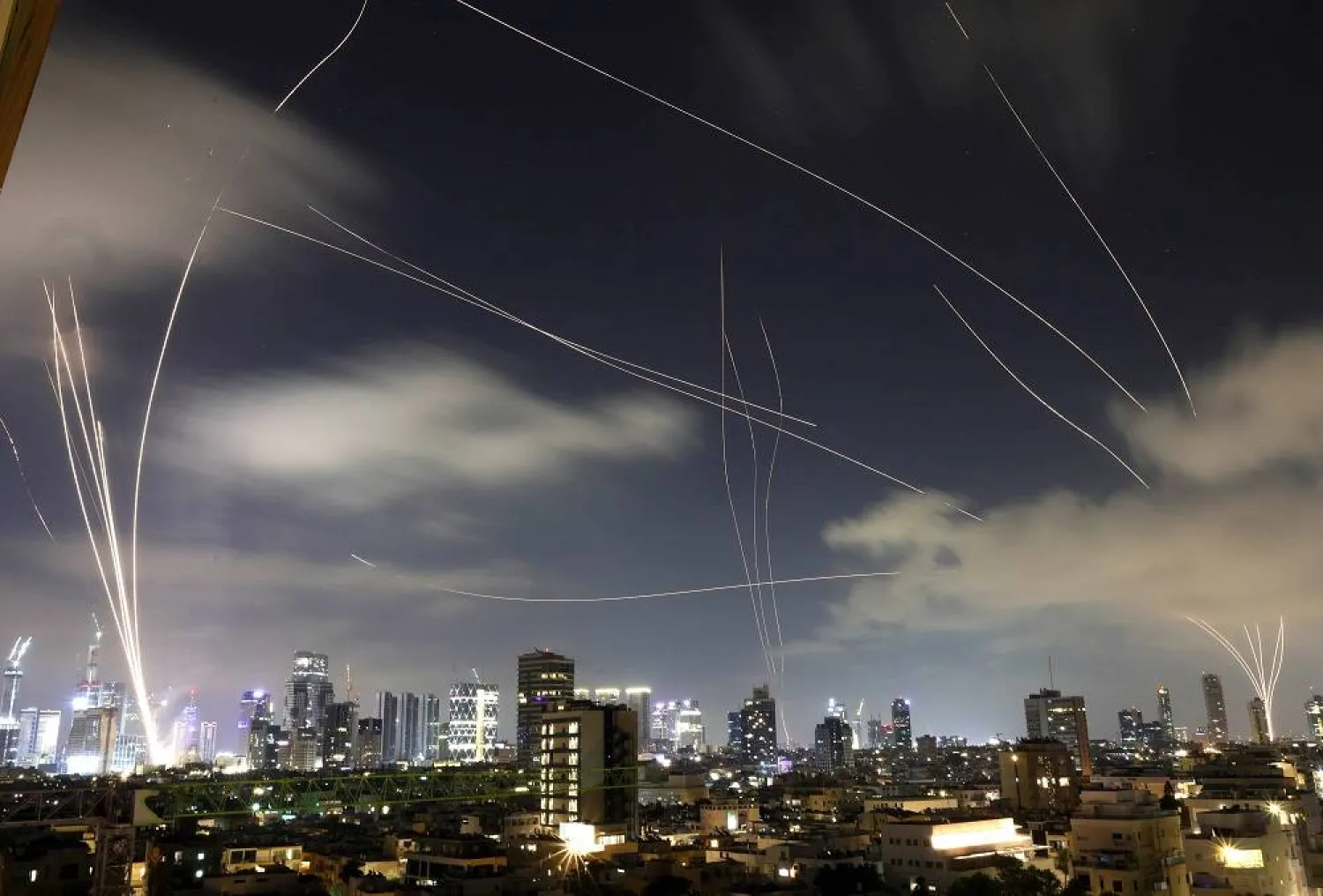
The Iron Dome, the Israeli air defense system, intercepts missiles fired from Iran, over Tel Aviv, Israel, 17 June 2025. (EPA) 
TT

New Israeli Strikes Hit Tehran as Iran Warns That US Involvement Would Risk ‘All-Out War’ 

The Iron Dome, the Israeli air defense system, intercepts missiles fired from Iran, over Tel Aviv, Israel, 17 June 2025. (EPA) 

Israeli warplanes pounded Iran's capital overnight and into Wednesday as Iran launched a small barrage of missiles at Israel with no reports of casualties. An Iranian official warned Wednesday that that any US intervention in the conflict would risk “all-out war.” 

Foreign Ministry spokesman Esmail Baghaei delivered the warning in an interview with Al Jazeera English, saying “any American intervention would be a recipe for an all-out war in the region.” He did not elaborate, but thousands of American troops are based in nearby countries within range of Iran's weapons. The US has threatened a massive response to any attack. 

Another Iranian official said the country would keep enriching uranium for peaceful purposes, apparently ruling out demands to give up its disputed nuclear program. 

US President Donald Trump initially distanced himself from Israel's surprise attack on Friday that triggered the conflict, but in recent days has hinted at greater American involvement, saying he wants something “much bigger” than a ceasefire. The US has also sent more warplanes to the region. 

Strikes in and around Tehran  

The latest Israeli strikes hit a facility used to make uranium centrifuges and another that made missile components, the Israeli military said. It said it had intercepted 10 missiles overnight as Iran’s retaliatory barrages diminish. The UN nuclear watchdog said Israel had struck two centrifuge production facilities in and near Tehran. 

Israeli strikes have hit several nuclear and military sites, killing top generals and nuclear scientists. A Washington-based Iranian human rights group said at least 585 people, including 239 civilians, have been killed and more than 1,300 wounded. 

Iran has fired some 400 missiles and hundreds of drones in retaliatory strikes that have killed at least 24 people in Israel and wounded hundreds. Some have hit apartment buildings in central Israel, causing heavy damage, and air raid sirens have repeatedly forced Israelis to run for shelter. 

Iran has fired fewer missiles as the conflict has worn on. It has not explained the decline, but Israel has targeted launchers and other infrastructure related to the missiles. 

Casualties mount in Iran  

The Washington-based group Human Rights Activists said it had identified 239 of those killed in Israeli strikes as civilians and 126 as security personnel. 

The group, which also provided detailed casualty figures during 2022 protests over the death of Mahsa Amini, crosschecks local reports against a network of sources it has developed in Iran. 

Iran has not been publishing regular death tolls during the conflict and has minimized casualties in the past. Its last update, issued Monday, put the toll at 224 people killed and 1,277 others wounded. 

Shops have been closed across Tehran, including in its famed Grand Bazaar, as people wait in gas lines and pack roads leading out of the city to escape the onslaught. 

A major explosion could be heard around 5 a.m. in Tehran Wednesday morning, following other explosions earlier in the predawn darkness. Authorities in Iran offered no acknowledgement of the attacks, which has become increasingly common as the Israeli airstrikes have intensified. 

At least one strike appeared to target Tehran’s eastern neighborhood of Hakimiyeh, where the paramilitary Revolutionary Guard has an academy. 

No signs of backing down  

Israel says it launched the strikes to prevent Iran from building a nuclear weapon, after talks between the United States and Iran over a diplomatic resolution had made little visible progress over two months but were still ongoing. Trump has said Israel’s campaign came after a 60-day window he set for the talks. 

Iran long has insisted its nuclear program was peaceful, though it is the only non-nuclear-armed state to enrich uranium up to 60%, a short, technical step away from weapons-grade levels of 90%. US intelligence agencies have said they did not believe Iran was actively pursuing the bomb. 

Israel is the only country in the region with nuclear weapons but has never publicly acknowledged them. 

Iran's ambassador to Geneva, Ali Bahreini, told reporters that Iran "will continue to produce the enriched uranium as far as we need for peaceful purposes.” 

He rejected any talk of a setback to Iran’s nuclear research and development from the Israeli strikes, saying, “Our scientists will continue their work.” 

Trump demands Iranian surrender 

Trump demanded “UNCONDITIONAL SURRENDER” in a post on social media Tuesday and warned Iran's supreme leader, Ali Khamenei, that the US knows where he is hiding but that there were no plans to kill him, “at least not for now.” 

Trump and Israeli Prime Minister Benjamin Netanyahu spoke about the evolving situation over the phone on Tuesday, according to a White House official. 

Bahreini, the Iranian ambassador, said Trump's remarks were “completely unwarranted” and “very hostile,” and that Iran could not ignore them. 

He said Iranian authorities were “vigilant” about the comments and would decide if the US crossed any lines. “Once the red line is crossed, the response will come.” 


Indonesia Flood Death Toll Passes 1,000

The deadly torrential rains are one of the worst recent disasters to strike Sumatra. (AFP)
TT

Indonesia Flood Death Toll Passes 1,000

The deadly torrential rains are one of the worst recent disasters to strike Sumatra. (AFP)

Devastating floods and landslides have killed 1,003 people in Indonesia, rescuers said Saturday as the Southeast Asian nation grapples with relief efforts.

The disaster, which has hit the northwestern island of Sumatra over the past fortnight, has also injured more than 5,400, the National Disaster Mitigation Agency said in its latest toll.

The deadly torrential rains are one of the worst recent disasters to strike Sumatra, where a tsunami wreaked havoc in 2004 in Aceh province, which lies at the northern tip of the island.

The final toll is expected to rise, with the disaster agency reporting 218 people are still missing.

With vast tracts of territory hit, 1.2 million residents have been forced to take refuge in temporary shelters.

Frustration has grown among flood victims, who have complained about the pace of relief efforts.

President Prabowo Subianto said Saturday the situation has improved, with several areas which had been cut off now accessible.

"Here and there, due to natural and physical conditions, there have been slight delays, but I checked all the evacuation sites: their conditions are good, services for them are adequate, and food supplies are sufficient," Prabowo said after visiting Langkat in North Sumatra province.

Costs to rebuild after the disaster could reach 51.82 trillion rupiah ($3.1 billion) and the Indonesian government has so far shrugged off suggestions that it call for international assistance.


Moscow, Tehran ‘Working Closely’ on Nuclear Program

Russian President Vladimir Putin and Iranian President Masoud Pezeshkian on the sidelines of the Peace Summit in Ashgabat, Turkmenistan, on Friday (Tasnim). 
TT

Moscow, Tehran ‘Working Closely’ on Nuclear Program

Russian President Vladimir Putin and Iranian President Masoud Pezeshkian on the sidelines of the Peace Summit in Ashgabat, Turkmenistan, on Friday (Tasnim). 

Russian President Vladimir Putin said on Friday that relations between Moscow and Tehran are “developing very positively,” stressing that the two countries are working in close coordination at the United Nations on Iran’s nuclear program.

He made the remarks during talks with Iranian President Masoud Pezeshkian on the sidelines of the International Peace and Trust Summit in Ashgabat.

According to Russian media, Putin said Russia is cooperating with Iran at the Bushehr nuclear power plant and on major infrastructure projects, including the North–South Transport Corridor.

He added that the two sides are also exploring cooperation in the gas and electricity sectors.

Pezeshkian, quoted by Iranian and Russian media, reaffirmed Tehran’s commitment to implementing the comprehensive strategic partnership agreement with Moscow.

He said Iran is “determined to activate the agreement” and expects Russia to accelerate implementation of joint understandings, particularly in energy, transport and strategic transit corridors.

The Iranian president said Iran would complete its share of the groundwork for the North–South Corridor by the end of the year, noting growing economic and trade cooperation between the two countries.

He also called for strengthening multilateral partnerships within frameworks such as the Shanghai Cooperation Organization and BRICS to counter what he described as “unilateralism.”

Russia and Iran aim to expand economic ties through projects such as the International North–South Transport Corridor, a multimodal route linking northern and southern Asia via sea, rail and road networks.

The corridor is intended to speed up cargo transport between Russia and India through Iran and other countries while reducing costs compared with traditional routes. The project is seen as part of Moscow’s efforts to deepen trade links with Central Asia and Europe and to lessen reliance on longer maritime routes.

Putin said bilateral trade between Russia and Iran increased by 13 percent last year and by 8 percent in the first nine months of the current year, underscoring continued cooperation in energy and infrastructure. He added that coordination between Moscow and Tehran on international issues remains “close and ongoing.”

On the sidelines of the summit, Pezeshkian also met Pakistani Prime Minister Shehbaz Sharif, with both sides agreeing on the need to accelerate implementation of bilateral agreements and enhance cooperation in transport, transit, energy and border infrastructure, according to Iran’s Mehr News Agency.


US Says Mexico Agrees to Water Treaty Obligations

FILE PHOTO: The sun sets over the Rio Grande River in Salineno, Texas, US, February 18, 2025. REUTERS/Cheney Orr/File Photo
TT

US Says Mexico Agrees to Water Treaty Obligations

FILE PHOTO: The sun sets over the Rio Grande River in Salineno, Texas, US, February 18, 2025. REUTERS/Cheney Orr/File Photo

The United States and Mexico reached an agreement on water-sharing on Friday, after President Donald Trump threatened new sanctions.

Trump said Mexico owed 800,000 acre-feet of water to the US and demanded it release a quarter of this amount by December 31 or be hit with a new five percent tariff, AFP said.

The Republican leader accused Mexico of violating a 1944 treaty under which the US shares water from the Colorado River in exchange for flows from the Rio Grande, which forms part of the border between the two countries.

"The United States and Mexico reached an understanding to meet the current water obligations of American farmers and ranchers," the US Department of Agriculture agency said in a statement.

It said the agreement includes both the current water cycle and the deficit from the previous cycle.

The two countries are expected to finalize the plan at the end of January.

The agreement as it stands would have Mexico releasing 202,000 acre-feet of water starting next week.

US Agriculture Secretary Brooke Rollins said in a statement on Friday that Mexico "has delivered more water in the last year than in the previous four years combined," but fallen short of their obligations.

"Farmers across South Texas have been reeling from the uncertainty caused by the lack of water. Now they can expect the resources promised to them," Rollins added.

Rollins echoed Trump's threat saying that if "Mexico continues to violate its commitments, the United States reserves the right and will impose five percent tariffs on Mexican products."

Mexican President Claudia Sheinbaum has not commented on the agreement, but on Tuesday expressed confidence in reaching a solution.

At the time, she also cautioned it would be physically impossible to meet the December 31 deadline because of limitations on the pumping equipment, but said: "We have the best will to deliver the amount of water that is owed."

Mexico acknowledged that it has been behind in its water deliveries to the US over the past five years, citing drought in 2022 and 2023.

Trump had previously threatened Mexico in April with economic repercussions over the water dispute, prompting Mexico at the time to immediately send water.

Mexican goods currently face a 25 percent tariff unless they fall under the United States-Mexico-Canada Agreement (USMCA), a free trade deal struck during Trump's first term and which Washington is aiming to renegotiate in 2026.
