


White House Wants Deep Cut in US Funding for War Crimes Investigations

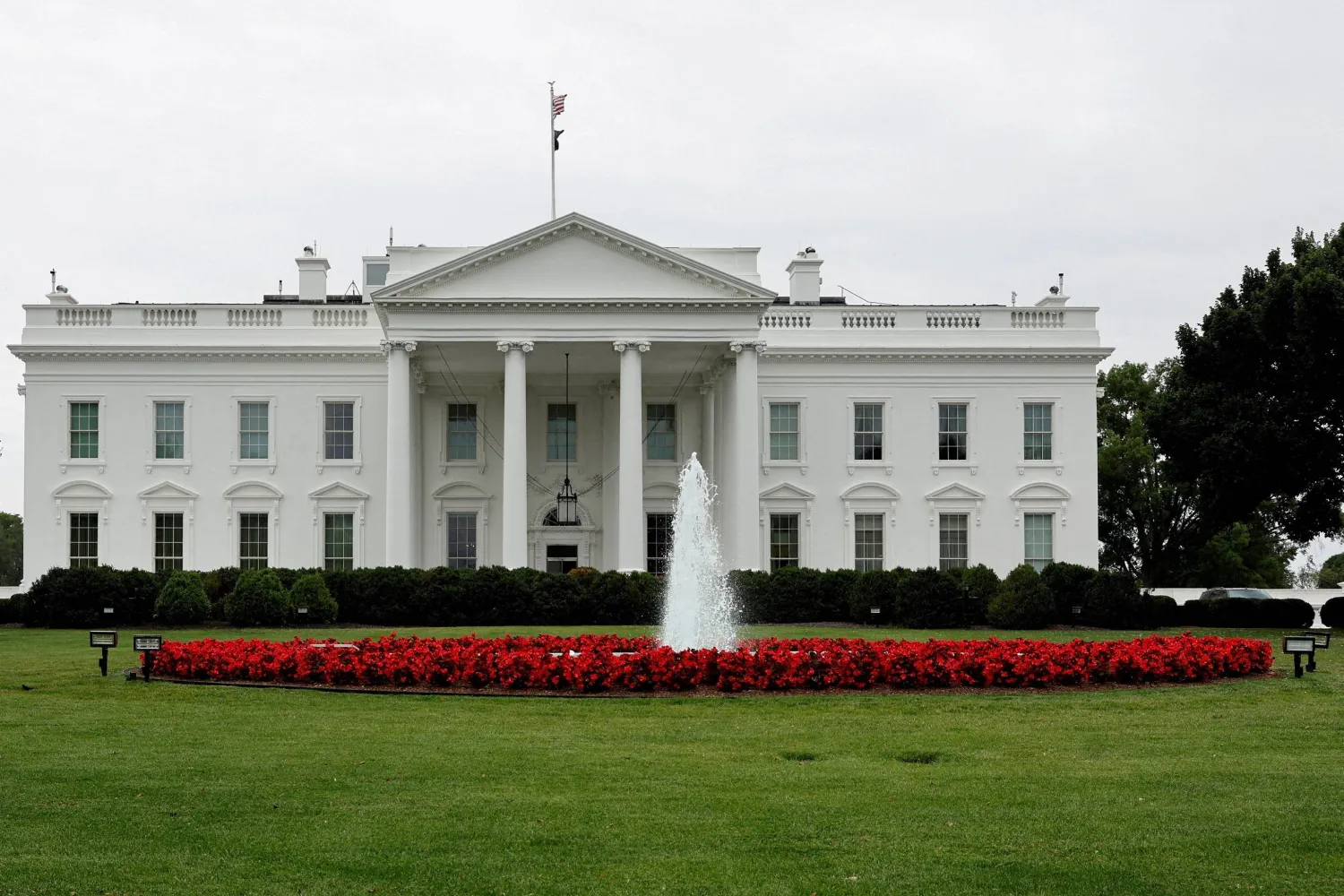
The White House in Washington. (Reuters)
TT

White House Wants Deep Cut in US Funding for War Crimes Investigations

The White House in Washington. (Reuters)

The White House has recommended terminating US funding for nearly two dozen programs that conduct war crimes and accountability work globally, including in Myanmar, Syria and on alleged Russian atrocities in Ukraine, according to three US sources familiar with the matter and internal government documents reviewed by Reuters.

The recommendation from the Office of Management and Budget, which was made on Wednesday and has not been previously reported, is not the final decision to end the programs since it gives the State Department the option to appeal.

But it sets up a potential back-and-forth between the OMB and US Secretary of State Marco Rubio and his aides, who will reply to OMB with their suggestions on which programs deserve to continue.

The programs also include work in Iraq, Nepal, Sri Lanka, Colombia, Belarus, Sudan, South Sudan, Afghanistan and the Gambia, according to the sources and a list seen by Reuters.

The State Department declined to comment. OMB did not immediately respond to a request for comment.

The expectation that Rubio would argue for many of the programs to be continued is slim, according to three US officials. However, the top US diplomat could make a case to keep crucial programs, such as aiding potential war crimes prosecutions in Ukraine, according to one source familiar with the matter.

Several of the programs earmarked for termination operate war crimes accountability projects in Ukraine, three sources familiar with the matter said, including Global Rights Compliance, which is helping to collect evidence of war crimes and crimes against humanity across Ukraine, such as sexual violence and torture.

Another is Legal Action Worldwide, a legal aid group which supports local efforts to bring cases against Russian suspects of war crimes in Ukraine, the sources said.

Requests seeking comment from the groups were not immediately answered.

State Department bureaus that would like to preserve any war crimes and accountability programs should send their justifications by close of business day on July 11, said an internal State Department email seen by Reuters.

CHANGING PRIORITIES

Many of the programs recommended for termination are dedicated to empowering local organizations seeking to advance justice in societies that have faced atrocities, one of the sources said, adding that some programs have been going on for decades across Democratic and Republican administrations.

"Even if Secretary Rubio intervenes to save these programs, many of which he supported as a senator, there will be no one left to manage these programs," the source said.

The administration of President Donald Trump has frozen and then cut back billions of dollars of foreign aid since taking office on January 20 to ensure American-taxpayer money funds programs that are aligned with his "America First" policies.

The unprecedented cutbacks have effectively shut down its premier aid arm US Agency for International Development, jeopardized the delivery of life-saving food and medical aid and thrown global humanitarian relief operations into chaos.

The OMB recommendation is yet another sign that the administration is increasingly de-prioritizing advocacy for human rights and rule of law globally, an objective that previous US administrations have pursued.

While US foreign aid freezes had already started hampering an international effort to hold Russia responsible for alleged war crimes in Ukraine, Wednesday's recommendations raise the risk of US completely abandoning those efforts.

Among the programs that are recommended for termination is a $18 million State Department grant for Ukraine's Prosecutor General's Office that is implemented by Georgetown University's International Criminal Justice Initiative, two sources said.

An official at Georgetown declined to comment.

While the programs do not directly impact Ukraine's frontline efforts to fend off Russia's invasion, supporters say they represent the best chance of extensively documenting reported battlefield atrocities in Europe's biggest conflict since World War Two, now grinding toward a fourth year.

Ukraine has opened more than 140,000 war crime cases since Moscow's February 2022 invasion, which has killed tens of thousands, ravaged vast swathes of the country and left behind mental and physical scars from occupation. Russia consistently denies war crimes have been committed by its forces in the conflict.

PATH TO APPEAL

Other programs include one that does accountability work on Myanmar army's atrocities against Rohingya minorities as well as on the persecution of Christians and other minorities by Syria's ousted former president Bashar al-Assad, two sources said.

While the OMB recommendations could face State Department push-back, the criteria to appeal are set very strictly.

In an internal State Department email, the administration cautioned that any effort to preserve programs that were recommended to be terminated should be thoroughly argued and directly aligned with Washington's priorities.

"Bureaus must clearly and succinctly identify direct alignment to administration priorities," the email, reviewed by Reuters said.




China Accuses US of Trying to Thwart Improved China-India Ties

FILE PHOTO: Chinese and US flags flutter in Shanghai, China July 30, 2019. REUTERS/Aly Song
TT

China Accuses US of Trying to Thwart Improved China-India Ties

FILE PHOTO: Chinese and US flags flutter in Shanghai, China July 30, 2019. REUTERS/Aly Song

China accused the US on Thursday of distorting its defense policy in an effort to thwart an improvement in China-India ties.

Foreign ministry ‌spokesperson Lin ‌Jian was ‌responding ⁠to a question ‌at a press briefing on whether China might exploit a recent easing of tensions with India over disputed border areas to keep ⁠ties between the United States ‌and India from ‍deepening.

China views ‍its ties with ‍India from a strategic and long-term perspective, Lin said, adding that the border issue was a matter between China and India and "we object to ⁠any country passing judgment about this issue".

The Pentagon said in a report on Tuesday that China "probably seeks to capitalize on decreased tension ... to stabilize bilateral relations and prevent the deepening of US-India ties".


UN Experts Slam US Blockade on Venezuela

US forces have launched dozens of deadly air strikes on boats that Washington alleges were transporting drugs. Miguel J. Rodriguez Carrillo / AFP
TT

UN Experts Slam US Blockade on Venezuela

US forces have launched dozens of deadly air strikes on boats that Washington alleges were transporting drugs. Miguel J. Rodriguez Carrillo / AFP

Four United Nations rights experts on Wednesday condemned the US partial naval blockade of Venezuela, determining it illegal armed aggression and calling on the US Congress to intervene.

The United States has deployed a major military force in the Caribbean and has recently intercepted oil tankers as part of a naval blockade against Venezuelan vessels it considers to be under sanctions, AFP said.

"There is no right to enforce unilateral sanctions through an armed blockade," the UN experts said in a joint statement.

A blockade is a prohibited use of military force against another country under the UN Charter, they added.

"It is such a serious use of force that it is also expressly recognized as illegal armed aggression under the General Assembly's 1974 Definition of Aggression," they said.

"As such, it is an armed attack under article 51 of the Charter -- in principle giving the victim state a right of self-defense."

US President Donald Trump accuses Venezuela of using oil, the South American country's main resource, to finance "narcoterrorism, human trafficking, murders, and kidnappings".

Caracas denies any involvement in drug trafficking. It says Washington is seeking to overthrow its president, Nicolas Maduro, in order to seize Venezuelan oil reserves, the largest in the world.

Since September, US forces have launched dozens of air strikes on boats that Washington alleges, without showing evidence, were transporting drugs. More than 100 people have been killed.

Congress should 'intervene'

"These killings amount to violations of the right to life. They must be investigated and those responsible held accountable," said the experts.

"Meanwhile, the US Congress should intervene to prevent further attacks and lift the blockade," they added.

They called on countries to take measures to stop the blockade and illegal killings, and bring perpetrators justice.

The four who signed the joint statement are: Ben Saul, special rapporteur on protecting human rights while countering terrorism; George Katrougalos, the expert on promoting a democratic and equitable international order; development expert Surya Deva; and Gina Romero, who covers the right to freedom of peaceful assembly and association.

UN experts are independent figures mandated by the UN Human Rights Council to report their findings. They do not, therefore, speak for the United Nations itself.

On Tuesday at the UN in New York, Venezuela, having requested an emergency meeting of the Security Council, accused Washington of "the greatest extortion known in our history".


North Korea's Kim Visits Nuclear Subs as Putin Hails 'Invincible' Bond

North Korean leader Kim Jong Un visits the construction site of an 8,700-ton nuclear-powered submarine capable of launching surface-to-air missiles in this picture released by North Korea's official Korean Central News Agency on December 25, 2025. KCNA via REUTERS
TT

North Korea's Kim Visits Nuclear Subs as Putin Hails 'Invincible' Bond

North Korean leader Kim Jong Un visits the construction site of an 8,700-ton nuclear-powered submarine capable of launching surface-to-air missiles in this picture released by North Korea's official Korean Central News Agency on December 25, 2025. KCNA via REUTERS

North Korean leader Kim Jong Un visited a nuclear submarine factory and received a message from Russia's Vladimir Putin hailing the countries' "invincible friendship", Pyongyang's state media said Thursday.

North Korea and Russia have drawn closer since Moscow launched its full-scale invasion of Ukraine nearly four years ago, and Pyongyang has sent troops to fight for Russia, AFP said.

In return, Russia is sending North Korea financial aid, military technology and food and energy supplies, analysts say.

The "heroic" efforts of North Korean soldiers in Russia's Kursk region "clearly proved the invincible friendship" between Moscow and Pyongyang, Putin said in a message to Kim, according to the Korean Central News Agency (KCNA).

Their work demonstrated the nations' "militant fraternity", Putin said in the message received by Pyongyang last week.

The provisions of the "historic treaty" the two leaders signed last year, which includes a mutual defense clause, had been fulfilled "thanks to our joint efforts", Putin wrote.

South Korean and Western intelligence agencies have estimated that the North has sent thousands of soldiers to Russia, primarily to Kursk, along with artillery shells, missiles and long-range rocket systems.

Around 2,000 troops have been killed and thousands more have been wounded, according to South Korean estimates.

North Korea acknowledged this month that its troops in Kursk had been assigned to clear mines and that some had died on deployment.

KCNA reported Putin's letter on the same day that it published details of Kim's undated recent visit to a manufacturing base for nuclear-powered submarines.

There, the North Korean leader vowed to counter the "threat" of South Korea producing its own such vessels.

US President Donald Trump has given the green light for South Korea to build "nuclear-powered attack submarines", though key details of the project remain uncertain.

Photos published by KCNA showed Kim walking alongside a purportedly 8,700-tonne submarine at an indoor assembly site, surrounded by officials and his daughter Kim Ju Ae.

In another image, Kim Jong Un smiles during an official briefing as Kim Ju Ae stands beside him.

Pyongyang would view Seoul developing nuclear subs as "an offensive act severely violating its security and maritime sovereignty", Kim Jong Un said, according to KCNA.

It was therefore "indispensable" to "accelerate the radical development of the modernization and nuclear weaponization of the naval force", he said.

Kim clarified a naval reorganization plan and learned about research into "new underwater secret weapons", KCNA said, without giving details.

Pyongyang's defense ministry said it would consider "countermeasures" against US "nuclear muscle flexing", a separate report said Thursday.

- Help from Russia? -

Only a handful of countries have nuclear-powered submarines, and the United States considers its technology among the most sensitive and tightly guarded military secrets.

In the North's first comments on the US-South Korea deal, a commentary piece by KCNA last month said the program was a "dangerous attempt at confrontation" that could lead to a "nuclear domino phenomenon".

Hong Min, an analyst at the Korea Institute for National Unification, told AFP the submarine photos raise "considerable speculation" over whether Russia helped North Korea assemble a nuclear-powered submarine "within such a short time frame".

Kim also reportedly oversaw the test launch on Wednesday of "new-type high-altitude long-range anti-air missiles" over the East Sea, also known as the Sea of Japan.

The projectiles hit mock targets at an altitude of 200 kilometers (124 miles), KCNA said. That height, if correct, would be in space.

One photo showed a missile ascending into the sky in a trail of intense orange flame, while another showed Kim walking in front of what appeared to be a military vehicle equipped with a vertical missile launcher.

Seoul's Joint Chiefs of Staff said they had been aware of the launch preparations and had braced for the firing in advance.

"South Korean and US intelligence authorities are currently closely analyzing the specifications," it said.