

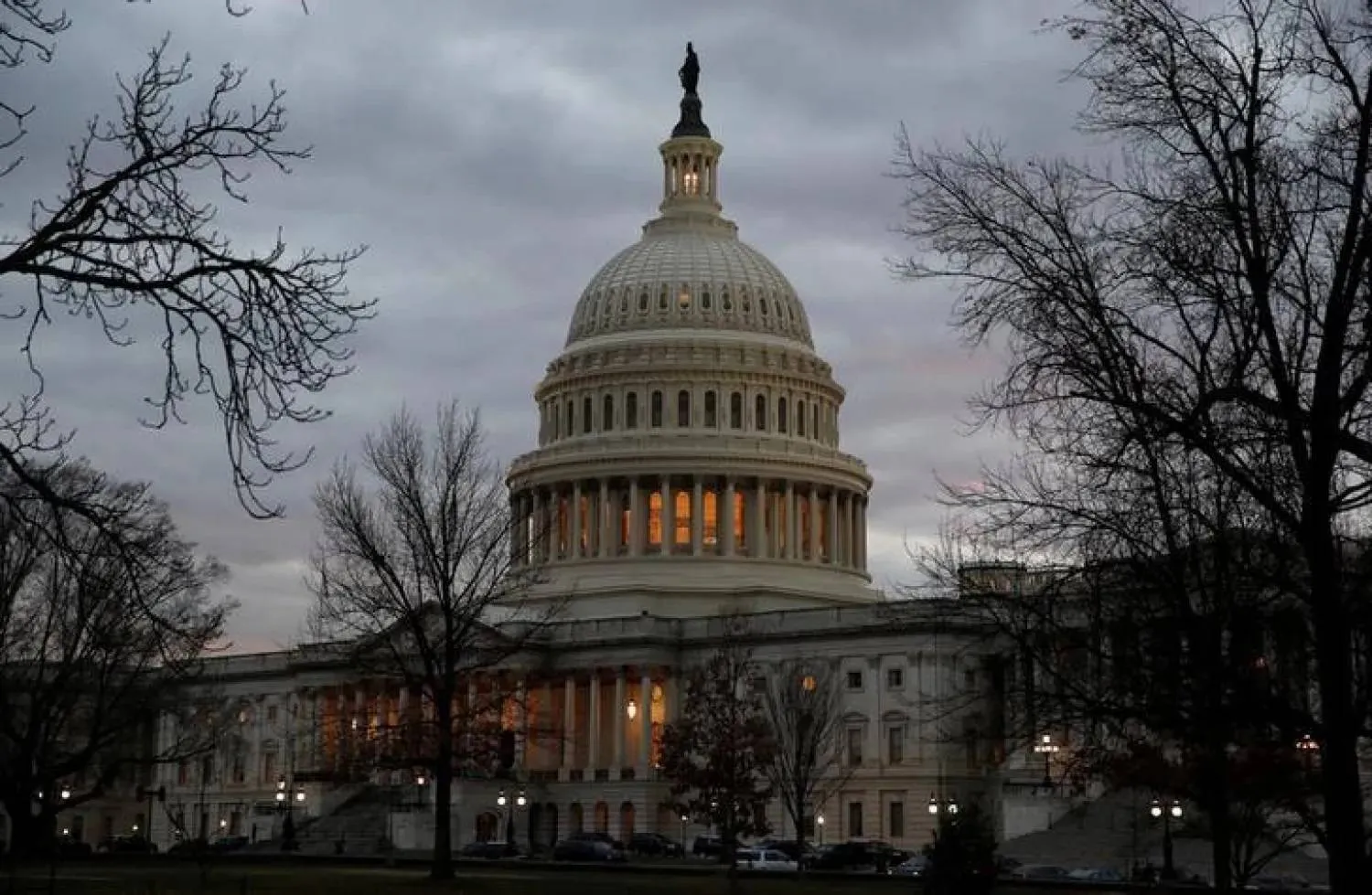

US Republicans Grill University Leaders in Latest House Antisemitism Hearing

The US Capitol building is lit at dusk (Reuters)
TT

US Republicans Grill University Leaders in Latest House Antisemitism Hearing

The US Capitol building is lit at dusk (Reuters)

The leaders of three US universities testified before a House of Representatives panel on Tuesday about what they have done to combat antisemitism on campus, saying they were committed to stamping out hatred while protecting academic freedom.

At Tuesday's three-hour hearing, Georgetown University interim President Robert Groves, City University of New York Chancellor Felix Matos Rodriguez, and University of California, Berkeley Chancellor Richard Lyons came under sharp fire from Republicans.

Many of them echoed President Donald Trump's recent attacks on universities, which he has described as "infested with radicalism," and questioned whether the presidents were doing enough to protect Jewish students and faculty.

"The genesis of this antisemitism, this hatred that we're seeing across our country, is coming from our universities," said Representative Burgess Owens, a Utah Republican.

It was the latest in a series of hearings about antisemitism on campus in which university leaders testified before the House Committee on Education and the Workforce, which is tasked with higher education oversight.

Democrats on the panel used the session to question the Trump administration's gutting of the Department of Education's Office for Civil Rights, which probes incidents of antisemitism and other forms of discrimination. That has led to a backlog in investigations at a time when Republicans say universities are not doing enough to combat antisemitism.

The US Supreme Court on Monday cleared the way for the administration to resume dismantling the entire department, part of Trump's bid to shrink the federal role in education and give more control to the states.

Representative Mark Takano, a California Democrat, called the hearing a "kangaroo court."

"This scorched earth warfare against higher education will endanger academic freedom, innovative research and international cooperation for generations to come," Takano said, referring to the administration's efforts to cut off funding to some schools, including Harvard and Columbia, and impose other sanctions.

University leaders have come under fire from both pro-Israel and pro-Palestinian communities for their handling of protests that broke out after the 2023 attack on Israel by the Hamas group and conflict that emerged from it. On some campuses, clashes erupted between pro-Palestinian and pro-Israel demonstrators, spawning antisemitic and Islamophobic rhetoric and assaults in some cases.

During the hearing, the university leaders were repeatedly asked about their responses to antisemitic actions by faculty or affiliated scholars.

Representative Mary Miller, an Illinois Republican, asked Berkeley's Lyons about a February event in which speakers "repeatedly denied that Israeli women were gang-raped by Hamas terrorists on October 7, 2023, and argued that Israel was weaponizing feminism."

Lyons said the online event in question was organized by a faculty member but the comments that Miller cited did not come from the Berkeley faculty member. He said the school anticipated that some of the ideas discussed at the event would prove controversial.

"I did not prevent it from happening because I felt that keeping the marketplace for ideas open was really important in this instance," he said.

Previous hearings held by the panel have led to significant consequences for university presidents.

In December 2023, Representative Elise Stefanik, a New York Republican, raised her own political profile by grilling the presidents of Harvard, University of Pennsylvania and Massachusetts Institute of Technology.

She asked them whether "calling for the genocide of Jews" would violate their schools' codes of conduct related to bullying and harassment. Each president declined to give a simple "yes" or "no" answer, noting that a wide range of hateful speech is protected under the US Constitution's First Amendment and under university policies.

Their testimony, which many viewed as insensitive and detached, triggered an outcry. More than 70 US lawmakers later signed a letter demanding that the governing boards of the three universities remove the presidents. Soon afterwards, Harvard's Claudine Gay and Penn's Liz Magill resigned.

Columbia President Minouche Shafik resigned in August, following her April testimony before the committee.



US Judge Blocks Deportation of Columbia University Palestinian Activist

Mohsen Mahdawi at a press conference in Vermont last year - Photo by Alex Driehaus/AP
TT

US Judge Blocks Deportation of Columbia University Palestinian Activist

Mohsen Mahdawi at a press conference in Vermont last year - Photo by Alex Driehaus/AP

A US immigration judge has blocked the deportation of a Palestinian graduate student who helped organize protests at Columbia University against Israel's war in Gaza, according to US media reports.

Mohsen Mahdawi was arrested by immigration agents last year as he was attending an interview to become a US citizen.

Mahdawi had been involved in a wave of demonstrations that gripped several major US university campuses since Israel began a massive military campaign in the Gaza Strip.

A Palestinian born in the occupied West Bank, Mahdawi has been a legal US permanent resident since 2015 and graduated from the prestigious New York university in May. He has been free from federal custody since April.

In an order made public on Tuesday, Judge Nina Froes said that President Donald Trump's administration did not provide sufficient evidence that Mahdawi could be legally removed from the United States, multiple media outlets reported.

Froes reportedly questioned the authenticity of a copy of a document purportedly signed by Secretary of State Marco Rubio that said Mahdawi's activism "could undermine the Middle East peace process by reinforcing antisemitic sentiment," according to the New York Times.

Rubio has argued that federal law grants him the authority to summarily revoke visas and deport migrants who pose threats to US foreign policy.

The Trump administration can still appeal the decision, which marked a setback in the Republican president's efforts to crack down on pro-Palestinian campus activists.

The administration has also attempted to deport Mahmoud Khalil, another student activist who co-founded a Palestinian student group at Columbia, alongside Mahdawi.

"I am grateful to the court for honoring the rule of law and holding the line against the government's attempts to trample on due process," Mahdawi said in a statement released by his attorneys and published Tuesday by several media outlets.

"This decision is an important step towards upholding what fear tried to destroy: the right to speak for peace and justice."


Fire Breaks out Near Iran's Capital Tehran, State Media Says

Smoke rises from a fire caused by an explosion in Tehran (File photo - Reuters)
TT

Fire Breaks out Near Iran's Capital Tehran, State Media Says

Smoke rises from a fire caused by an explosion in Tehran (File photo - Reuters)

A fire broke out in Iran's Parand near the capital city Tehran, state media reported on Wednesday, publishing videos of smoke rising over the area which is close to several military and strategic sites in the country's Tehran province, Reuters reported.

"The black smoke seen near the city of Parand is the result of a fire in the reeds around the Parand river bank... fire fighters are on site and the fire extinguishing operation is underway", state media cited the Parand fire department as saying.


Pakistan PM Sharif to Seek Clarity on Troops for Gaza in US Visit

US President Donald Trump looks at Pakistan's Prime Minister Shehbaz Sharif speaking following the official signing of the first phase of the Gaza ceasefire agreement between Israel and Hamas, during a world leaders' summit on ending the Gaza war, in Sharm El-Sheikh, Egypt, October 13, 2025. REUTERS/Evelyn Hockstein/File Photo
TT

Pakistan PM Sharif to Seek Clarity on Troops for Gaza in US Visit

US President Donald Trump looks at Pakistan's Prime Minister Shehbaz Sharif speaking following the official signing of the first phase of the Gaza ceasefire agreement between Israel and Hamas, during a world leaders' summit on ending the Gaza war, in Sharm El-Sheikh, Egypt, October 13, 2025. REUTERS/Evelyn Hockstein/File Photo

Before Pakistan commits to sending troops to Gaza as part of the International Stabilization Force it wants assurances from the United States that it will be a peacekeeping mission rather than tasked with disarming Hamas, three sources told Reuters.

Pakistan's Prime Minister Shehbaz Sharif is set to attend the first formal meeting of President Donald Trump's Board of Peace in Washington on Thursday, alongside delegations from at least 20 countries.

Trump, who will chair the meeting, is expected to announce a multi-billion dollar reconstruction plan for Gaza and detail plans for a UN-authorized stabilization force for the Palestinian enclave.

Three government sources said during the Washington visit Sharif wanted to better understand the goal of the ISF, what authority they were operating under and what the chain of command was before making a decision on deploying troops.

"We are ready to send troops. Let me make it clear that our troops could only be part of a peace mission in Gaza," said one of the sources, a close aide of Sharif.

"We will not be part of any other role, such as disarming Hamas. It is out of the question," he said.

Analysts say Pakistan would be an asset to the multinational force, with its experienced military that has gone to war with arch-rival India and tackled insurgencies.

"We can send initially a couple of thousand troops anytime, but we need to know what role they are going to play," the source added.

Two of the sources said it was likely Sharif, who has met Trump earlier this year in Davos and late last year at the White House, would either have an audience with him on the sidelines of the meeting or the following day at the White House.

Initially designed to cement Gaza's ceasefire, Trump sees the Board of Peace, launched in late January, taking a wider role in resolving global conflicts. Some countries have reacted cautiously, fearing it could become a rival to the United Nations.

While Pakistan has supported the establishment of the board, it has voiced concerns against the mission to demilitarize Gaza's militant group Hamas.