


Japan to Boost Coal-Fired Power as Middle East War Causes Energy Turmoil

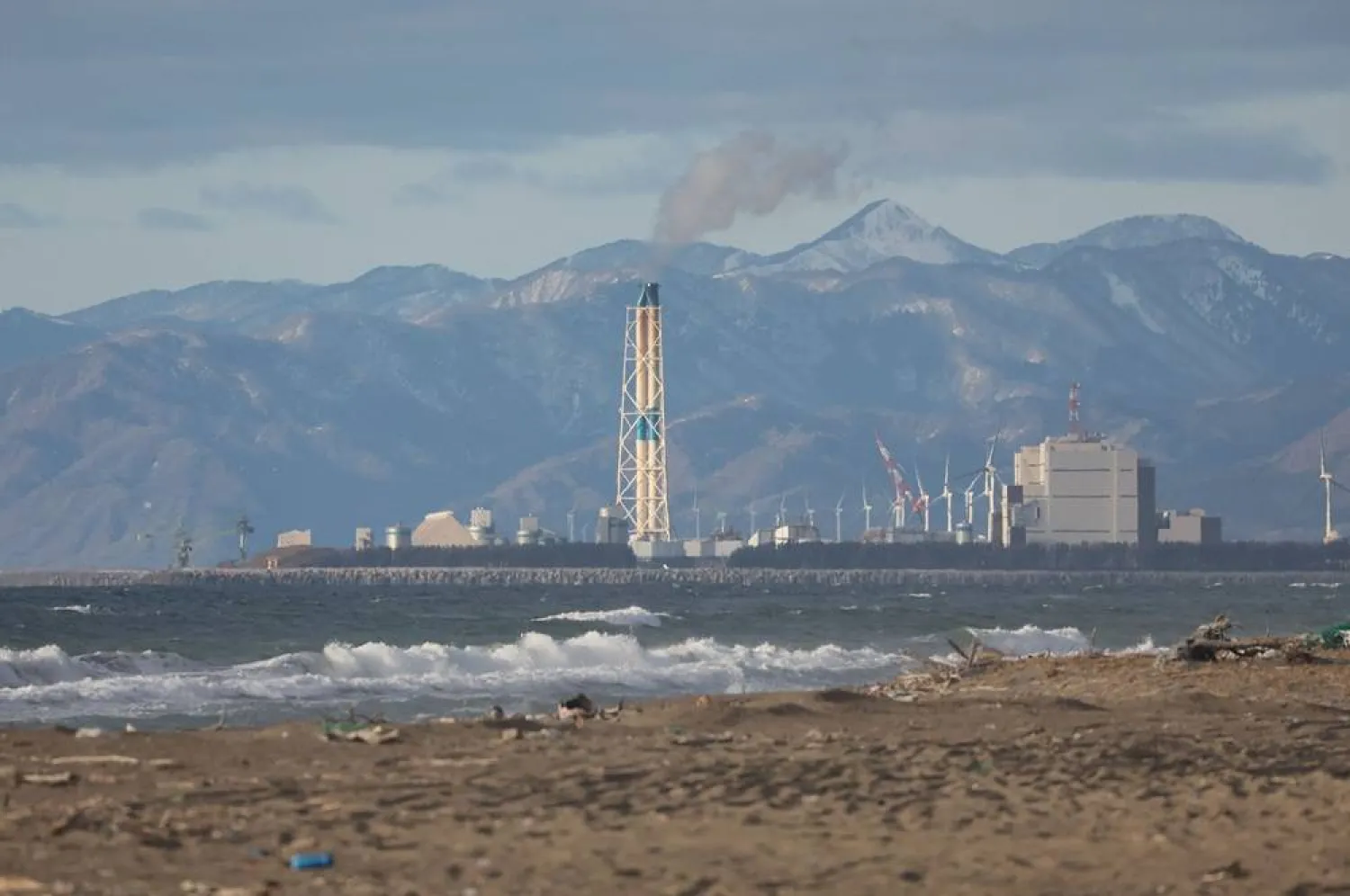
This photo taken on March 13, 2026 shows Noshiro Thermal Power Station, a coal-fired thermal power station operated by Tohoku Electric Power in the city of Noshiro, Akita Prefecture. (Jiji Press/AFP)
TT

Japan to Boost Coal-Fired Power as Middle East War Causes Energy Turmoil

This photo taken on March 13, 2026 shows Noshiro Thermal Power Station, a coal-fired thermal power station operated by Tohoku Electric Power in the city of Noshiro, Akita Prefecture. (Jiji Press/AFP)

Japan's government plans to temporarily lift restrictions on coal-fired power plants as it seeks to ease an energy crunch caused by the Middle East war, officials said on Friday.

Officials presented the plan at a meeting of a panel of experts, who approved the proposal, the industry ministry said on its website.

"Given the current situation in the Middle East affecting fuel prices, we believe that uncertainty regarding future LNG procurement is increasing," an industry ministry official said at the meeting, which was broadcast online.

"We think it will be necessary, by increasing the operation of coal-fired power plants, to...ensure the reliability of stable supply," he said.

Power suppliers have previously been required to keep the operating rate of coal-fired thermal power stations that emit large amounts of carbon dioxide at or below 50 percent.

But the government now intends to allow the full operation of older, less efficient coal-fired plants, for a year from the new fiscal year starting April, according to the plan presented at the meeting.

Japan relies on thermal power plants to generate around 70 percent of its electricity needs, with coal constituting 30 percent of their fuel.

Liquified natural gas (LNG) accounts for another 30 percent, and oil comprises seven percent.

The emergency measure to boost reliance on coal is estimated to "result in an LNG savings effect of approximately 500,000 tons," the official added.

The initiative follows many Asian nations' pivot towards coal to power their economies since the Middle East war that began late last month prompted Iran to partially close the crucial Strait of Hormuz trade route and target energy facilities in the Gulf.

South Korea plans to lift a cap on coal-powered generation capacity, while also increasing nuclear plant operations.

The Philippines also intended to boost the output of its coal-fired power plants to keep electricity costs down as the war wreaks havoc with gas shipments.

Japan is the fifth-biggest importer of oil with more than 90 percent of it coming from the Middle East.

Around 10 percent of its LNG imports are also from the region.

Tokyo purchases nearly 80 percent of its coal imports from Australia and Indonesia, according to the Agency for Natural Resources and Energy.

Japan on Thursday said it had also started to release another part of its strategic oil reserves, as it faced supply challenges to its oil imports.



Iran Command Says Has Closed Hormuz Again over US Blockade

A satellite image shows the ship movement at the Strait of Hormuz on April 2, 2026, in Space. EUROPEAN UNION/COPERNICUS SENTINEL-2/Handout via REUTERS
TT

Iran Command Says Has Closed Hormuz Again over US Blockade

A satellite image shows the ship movement at the Strait of Hormuz on April 2, 2026, in Space. EUROPEAN UNION/COPERNICUS SENTINEL-2/Handout via REUTERS

Iran's central military command announced on Saturday it would resume "strict management" of the Strait of Hormuz, reversing a decision to unblock the strategic channel as part of negotiations with Washington.

In a statement shared on state television, the headquarters said Washington had broken a promise by continuing its naval blockade of ships sailing to and from Iran's ports.

Until the United States restores freedom of movement for all vessels visiting Iran, "the situation in the Strait of Hormuz will remain strictly controlled," the statement said.

The announcement came after US President Donald Trump said the blockade of the Strait will remain and attacks will resume if no agreement is reached with Iran.


Australia, Japan Sign Contracts to Start $7 Billion Warship Deal

Australia's Deputy Prime Minister and Minister for Defense Richard Marles (R) listens to Japan's Minister of Defense Koizumi Shinjiro (L) during a Defense Ministers' Meeting at the Commonwealth Parliament Offices in Melbourne on April 18, 2026. (Photo by William WEST / AFP)
TT

Australia, Japan Sign Contracts to Start $7 Billion Warship Deal

Australia's Deputy Prime Minister and Minister for Defense Richard Marles (R) listens to Japan's Minister of Defense Koizumi Shinjiro (L) during a Defense Ministers' Meeting at the Commonwealth Parliament Offices in Melbourne on April 18, 2026. (Photo by William WEST / AFP)

Australia and Japan signed contracts on Saturday launching their landmark A$10 billion ($7 billion) deal to supply Australia with warships, Tokyo's most consequential military sale since ending a military export ban in 2014.

Defense Ministers Richard Marles and Shinjiro Koizumi signed a memorandum "reaffirming the Australian and Japanese governments' shared commitment to the successful delivery" of the warships, Marles said in a statement.

The deal struck in ⁠August anchors Japan's ⁠push away from its postwar pacifism to forge security ties beyond its alliance with the US to counter China.

Mitsubishi Heavy Industries is to supply the Royal Australian Navy with three upgraded Mogami-class ⁠multi-role frigates built in Japan from 2029. Eight more frigates will be built in Australia.

Japan's Defense Ministry posted on X that Koizumi and Marles welcomed the "conclusion of contracts for General Purpose Frigates, and confirmed to further strengthen bilateral defense ties" in the signing in Melbourne.

Contracts were signed for the first three frigates, to be built ⁠in ⁠Japan, before there is a "transition to an onshore build" at the Henderson shipyard near Perth in Western Australia, Reuters quoted Marles as saying.

Australia plans to deploy the ships - designed to hunt submarines, strike surface ships and provide air defense - to defend critical maritime trade routes and its northern approaches in the Indian and Pacific Oceans, where China's military footprint is expanding.


Iran Partially Reopens Airspace

FILE - Two police officers walk in front of an anti-US billboard in Tehran, Iran, Sunday, April 5, 2026. (AP Photo/Vahid Salemi, File)
TT

Iran Partially Reopens Airspace

FILE - Two police officers walk in front of an anti-US billboard in Tehran, Iran, Sunday, April 5, 2026. (AP Photo/Vahid Salemi, File)

Iran partially reopened its airspace on Saturday to international flights crossing the eastern part of its territory, the country's Civil Aviation Authority said.

"Air routes in the eastern section of the country's airspace are open for international flights transiting through Iran," it said, adding that some airports had also reopened at 7:00 am (0330 GMT).

More than three hours later, however, flight tracker websites still showed no international flights crossing Iran, and several avoiding its airspace by making long detours.