


Khamenei Sends Message to Putin on Regional Escalation

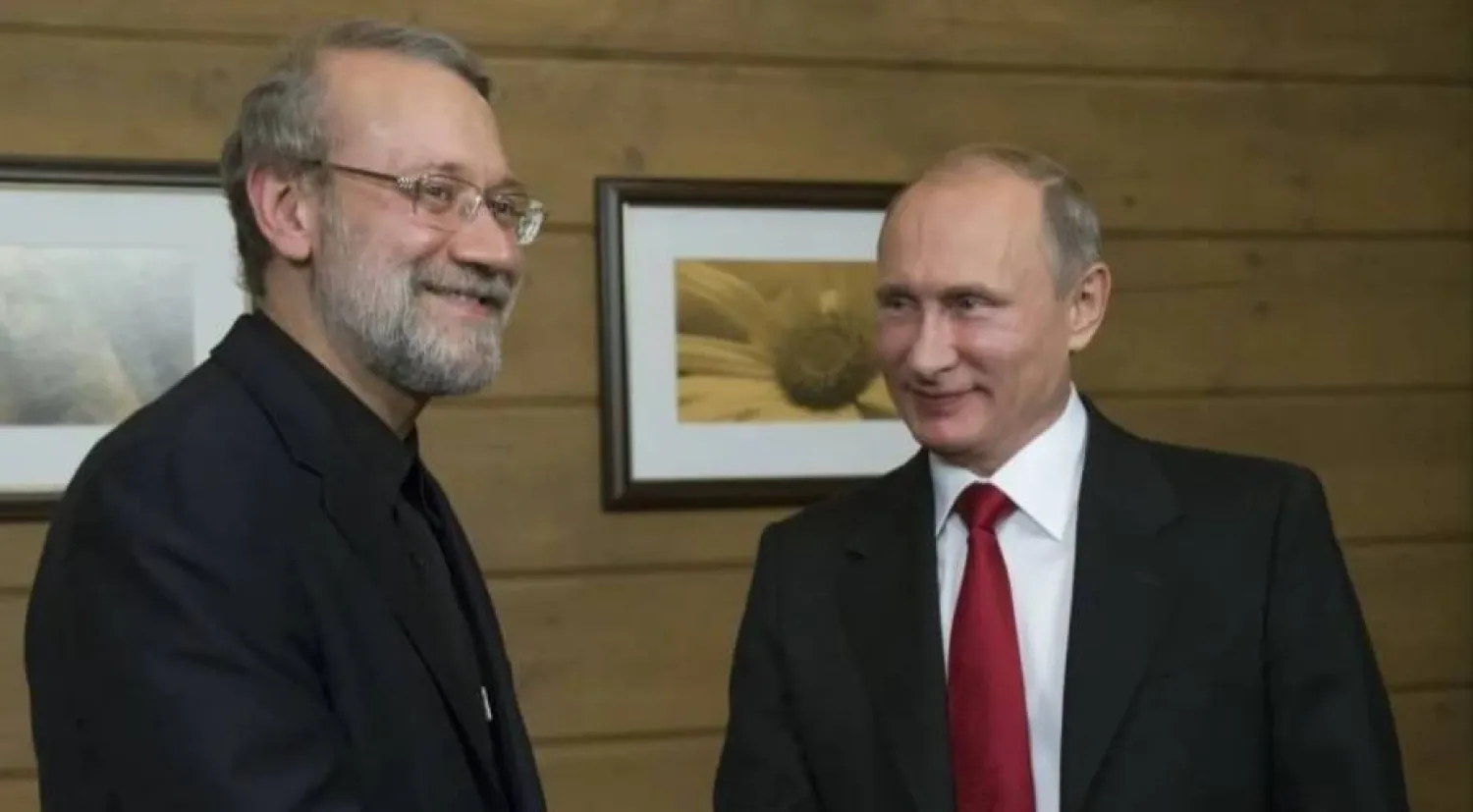
Russian President Vladimir Putin held a meeting with Ali Larijani, top adviser to Iran’s supreme leader on nuclear issues (IRNA)
TT

Khamenei Sends Message to Putin on Regional Escalation

Russian President Vladimir Putin held a meeting with Ali Larijani, top adviser to Iran’s supreme leader on nuclear issues (IRNA)

Russian President Vladimir Putin held a meeting with Ali Larijani, top adviser to Iran’s supreme leader on nuclear issues, to discuss Tehran’s nuclear program, the Kremlin said on Sunday.

The meeting came as Iran prepares to resume talks with the E3.

France, Britain and Germany told Iran last Thursday that they would restore UN sanctions unless it reopened talks on its nuclear program immediately and produced concrete results by the end of August.

On Sunday, Kremlin spokesman Dmitry Peskov said: “Today Russian President Vladimir Putin received Ali Larijani, supreme adviser to Iran's Supreme Leader, in the Kremlin.”

“On behalf of his leadership, the Iranian representative provided assessments of the escalated situation in the Middle East and around the Iranian nuclear program,” he added.

“The Russian side expressed well-known positions aimed at stabilizing the situation in the region and a political settlement of the issues related to the Iranian nuclear program,” the spokesperson said.

A source told Iran’s Tasnim news agency on Sunday that Iran and the European troika have agreed to resume their nuclear negotiations.

“Tehran and the European troika have come to an agreement in principle on the resumption of the talks about Iran’s nuclear program, but the timing and location of the negotiations are under debate,” the source said.

The decision as to which country will be hosting the upcoming talks has not been finalized yet, the source added.

Meanwhile, Vahid Ahmadi, a member of the parliamentary commission on national security, told the Iran Observer news website that Iran will not return to nuclear negotiations unless three conditions are met.

He said the conditions include: “International condemnation of recent attacks on the country's territory, compensation for military damages and guarantees against new acts of aggression from the USA or Israel.”

Russia, a longstanding ally of Tehran, plays a role in Iran's nuclear negotiations with the West as a veto-wielding UN Security Council member and a signatory to an earlier nuclear deal Trump abandoned during his first term in 2018.

Currently, Tehran is under increasing Western pressure to resume talks with the E3 powers. The European Troika foreign ministers told their Iranian counterpart Abbas Araghchi that the countries are moving to activate the “snapback” mechanism at the end of August unless an agreement is reached.

Last week, Iranian newspaper Etemad said Iran is trying to convince Russia and China to withdraw from the nuclear deal with an aim to annul Resolution 2231, which expires in October and provides the legal framework that includes the “snapback” mechanism for reimposing UN sanctions on Iran.

Russian Foreign Minister Sergey Lavrov met with his Iranian counterpart on the sidelines of the Shanghai Cooperation Organization’s Foreign Ministers Council Meeting in Tianjin last week.

The parties continued their exchange of views on regional and international issues of mutual interest. They reiterated the imperative of resolving the crisis surrounding Iran’s nuclear program exclusively through political and diplomatic means, in strict compliance with international law.

Two days prior to the Lavrov-Araghchi meeting, Russia rejected an Axios report saying Putin has told both Trump and Iranian officials that he supports the idea of a nuclear deal in which Iran is unable to enrich uranium.

Axios also said that while Moscow publicly advocates for Iran's right to enrich, Putin has taken a tougher position in private in the wake of the 12-day war between Israel and Iran.

Two sources said the Russians also briefed the Israeli government about Putin's position regarding Iran's uranium enrichment. "We know that this is what Putin told the Iranians," a senior Israeli official said.

Putin also expressed that position in calls last week with Trump and French President Emmanuel Macron.

An Alliance with Reservations

While Moscow has bought weapons from Iran for its war in Ukraine and signed a 20-year strategic partnership deal with Tehran earlier this year, their relationship since the 16th century, when Muscovy officially established relations with the Persian Empire, has at times been troubled.

The agreement does not include a mutual defense clause, but it says both countries will work together against common military threats, develop their military-technical cooperation, and take part in joint exercises.

Inside Russia, there were calls for Russia to come to the aid of its partner and to supply Iran with the same support which Washington had given to Ukraine - including air defense systems, missiles and satellite intelligence.

Larijani is the first Iranian official to visit Moscow since Iran and Israel ended their 12-day war. Before that, Araghchi traveled to Moscow on June 23, the eve of the ceasefire. Reports said the FM delivered a message from the Iranian leader to Putin.

A senior source told Reuters at the time that Araghchi was due to deliver a letter from Khamenei to Putin, seeking more help from Russia.

Iran has not been impressed with Russia's support so far, Iranian sources told Reuters, and the country wants Putin to do more to back it against Israel and the United States.

The sources did not elaborate on what assistance Tehran wanted.

Araghchi’s visit came days before the US strike on Iran’s nuclear sites.

The Kremlin at the time denied that the Iranian FM was carrying a letter from Khamenei.
However, the Farhikhtegan newspaper, whose editorial board is headed by the Iranian leader's senior adviser on international affairs, Ali Akbar Velayati, revealed details of the letter, before later deleting it.

The newspaper said Araghchi had conveyed Khamenei “discontent” over what Tehran considered Moscow's shortcomings during the recent war with Israel.



Zelenskiy Says Ukraine Faces Foreign Aid Shortfall of up to 50 billion Euros Next Year

Ukrainian President Volodymyr Zelensky. File Photo/The AP
TT

Zelenskiy Says Ukraine Faces Foreign Aid Shortfall of up to 50 billion Euros Next Year

Ukrainian President Volodymyr Zelensky. File Photo/The AP

Ukraine is facing a foreign aid shortfall of 45-50 billion euros ($53-59 billion) in 2026, President Volodymyr Zelenskiy said on Thursday, Reuters reported.

He added that if Kyiv did not receive a first tranche of a loan secured by Russian assets by next spring, it would have to significantly cut drone production.

Speaking in Brussels as EU leaders were set to take a decision on Moscow's seized sovereign wealth, Zelenskiy said this would mean that Ukraine would have far fewer drones than Russia, and would not be able to conduct long-range strikes on Russian energy facilities.


China Says Arms Trade With Cambodia, Thailand Unrelated to Border Conflict

Flags flutter at an entrance of Thai-Chinese Rayong Industrial Zone in Rayong province, east of Bangkok, Thailand, April 7, 2016. REUTERS/Chaiwat Subprasom
TT

China Says Arms Trade With Cambodia, Thailand Unrelated to Border Conflict

Flags flutter at an entrance of Thai-Chinese Rayong Industrial Zone in Rayong province, east of Bangkok, Thailand, April 7, 2016. REUTERS/Chaiwat Subprasom

China said on Thursday its arms trade with Thailand and Cambodia is unrelated to the current conflict between the Southeast Asian neighbours, with which Beijing has close ties.

"We hope relevant parties will refrain from making subjective speculation and malicious hype," the Chinese Defense Ministry said in response to reports that Thai troops seized Chinese-made weapons from Cambodian positions as border clashes between the two nations reignited, Reuters reported.

Beijing hopes the two countries can reach a ceasefire as soon as possible, the ministry said, adding that China will continue to advocate for peace and talks.

Border clashes between Thailand and Cambodia resumed this month and have killed more than 40 people and displaced over half a million in both countries.

China's Foreign Minister Wang Yi, in separate calls with his Thai and Cambodian counterparts on Thursday, also called for an immediate ceasefire and criticised "false information" that he said was aimed at smearing China's ties with the two countries.

"As a friend and close neighbour of both Cambodia and Thailand, China least wants to see the two sides engage in armed conflict, and is deeply saddened by civilian casualties caused by the clashes," the Foreign Ministry quoted Wang as saying.

China will continue to play a constructive role in facilitating peace, Wang said, urging both countries to protect the safety of Chinese projects and personnel.

Beijing last week warned Chinese citizens to leave border areas after media reports of injuries.

The Chinese Foreign Ministry said on Wednesday a special envoy for Asian affairs would be visiting Cambodia and Thailand on Thursday to conduct mediation.


UK Police Arrest Pro-Palestinian Protesters as Authorities Toughen Hate Speech Law Enforcement

Police officers carry a protester during a protest to support Palestine Action in London, Saturday, Sept. 6, 2025. (AP Photo/ Joanna Chan)
TT

UK Police Arrest Pro-Palestinian Protesters as Authorities Toughen Hate Speech Law Enforcement

Police officers carry a protester during a protest to support Palestine Action in London, Saturday, Sept. 6, 2025. (AP Photo/ Joanna Chan)

Police in London arrested two people who called for “intifada” during a pro-Palestinian protest, which followed a decision by authorities to toughen enforcement of hate speech laws after a deadly attack on a Hanukkah celebration in Australia.

The arrests Wednesday came hours after police in London and Manchester, England, announced a crackdown on protesters using slogans such as “globalize the intifada.” The Arabic word intifada is generally translated as “uprising.”

While pro-Palestinian demonstrators say the slogan describes the worldwide protests against the war in Gaza, Jewish leaders say it inflames tensions and encourages attacks on Jews, including the attack that killed 15 people on Sunday at Bondi Beach in Sydney, The Associated Press said.

London Metropolitan Police Commissioner Mark Rowley and Greater Manchester Police Chief Constable Stephen Watson said they decided to take a tougher stance after Bondi Beach and an Oct. 2 attack on a Manchester synagogue that left two people dead.

“We know communities are concerned about placards and chants such as `globalize the intifada,’ and those using it at future protest or in a targeted way should expect the Met and GMP to take action,” they said in a joint statement released Wednesday. “Violent acts have taken place, the context has changed — words have meaning and consequence.”

In the hours before Wednesday night’s demonstration in support of Palestine Action, a pro-Palestinian group that was banned as a terrorist organization earlier this year, London police warned protesters to be aware of the earlier announcement.

Two protesters were arrested for “racially aggravated public order offenses” after they shouted slogans calling for intifada during the protest outside the Ministry of Justice on Wednesday night, the Metropolitan Police Service said on social media. A third person was arrested for trying to interfere with the initial arrests.

The term “intifada” is used to describe two major Palestinian uprisings against Israeli policy in the West Bank and Gaza Strip, the first beginning in 1987 and the second beginning in 2000. During the recent conflict in Gaza, the slogan “globalize the intifada” has been widely used by pro-Palestinian protesters around the world.

The debate over such language comes after antisemitic hate crime and online abuse soared in Britain following the Hamas-led attack on Israel on Oct. 7, 2023, and the Israeli military campaign in Gaza that followed.

Around 1,200 people were killed and 251 taken hostage during the initial attack on Israel. More than 70,660 Palestinians have been killed during the ensuing Israeli campaign in Gaza, according to the territory’s health ministry.