


Tehran, Moscow and Beijing to Discuss European Threat of Sanctions ‘Snapback’

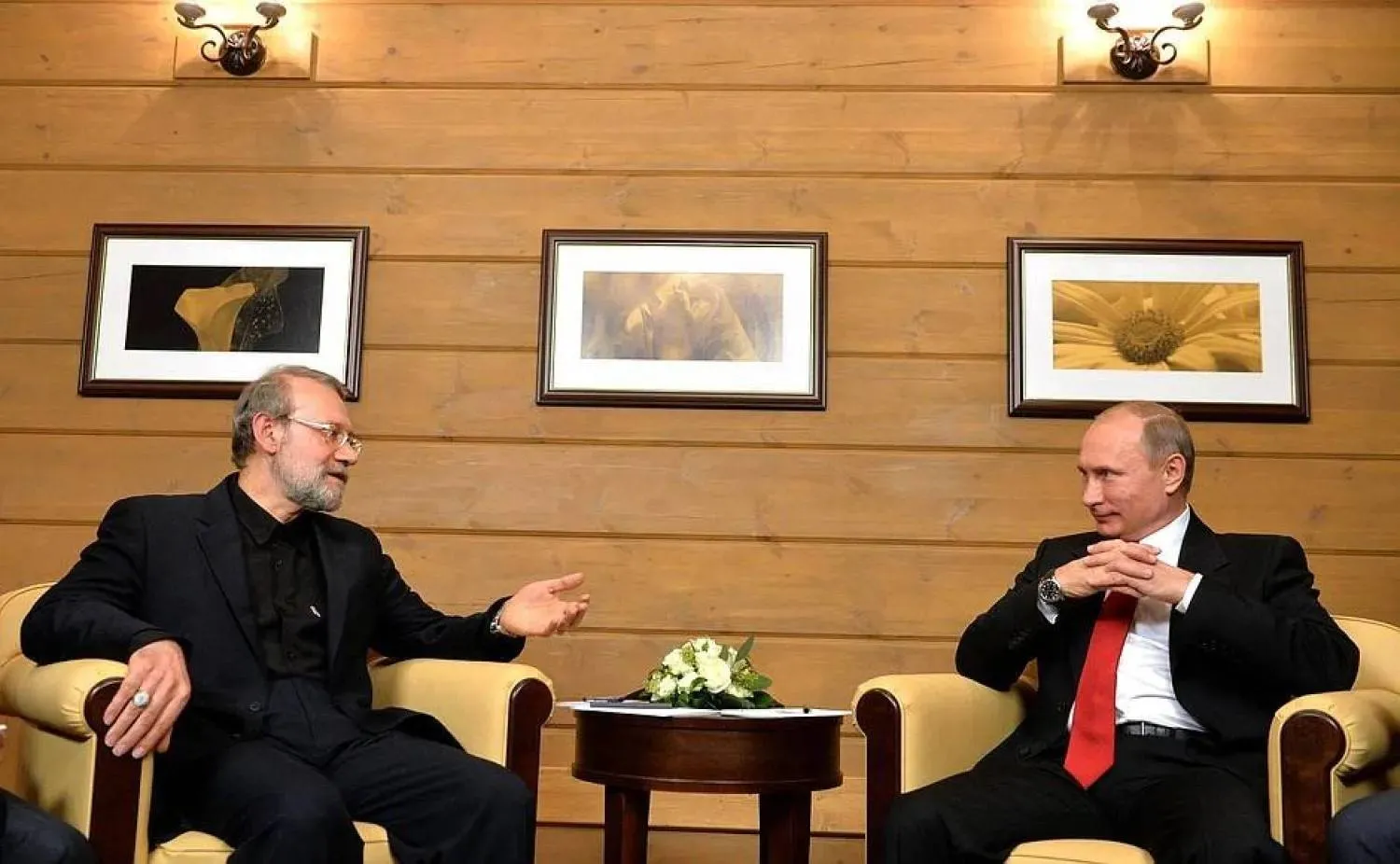
Russian President Vladimir Putin held a meeting with Ali Larijani, top adviser to Iran’s supreme leader on nuclear issues (The Kremlin) 
TT

Tehran, Moscow and Beijing to Discuss European Threat of Sanctions ‘Snapback’

Russian President Vladimir Putin held a meeting with Ali Larijani, top adviser to Iran’s supreme leader on nuclear issues (The Kremlin) 

Russia, China, and Iran are holding crucial consultations in Tehran on Tuesday to coordinate their positions ahead of the European Troika meeting in Geneva next week, focusing on discussions related to the threat of reimposed UN sanctions under the 2015 nuclear deal’s snapback mechanism.

Britain, France and Germany, known as the E3, have warned they would use the mechanism, which would reimpose international sanctions on Iran, if there was no progress on nuclear talks by the end of August.

Russian experts warned forceful pressure on Iran would only further exacerbate the situation, pushing Tehran to take steps that would most likely derail chances of a new nuclear deal.

Lately, Iran has not been impressed with Russia's support as the country wants Russian President Vladimir Putin to do more to back it against Israel and the United States.

Observers have questioned the Kremlin's ability to provide serious assistance to the Iranians amid Moscow's preoccupation with the war in Ukraine, and its unwillingness to engage in a direct confrontation with the United States and Israel.

Ahead of Tuesday’s meeting in Tehran, Permanent Representative of the Russian Federation to international organizations in Vienna, Mikhail Ulyanov, told Izvestia newspaper that the European troika has lost the right to resume international sanctions against Iran.

“The E3 has no legal or moral right to launch the so-called snapback mechanism to reimpose anti-Iranian sanctions,” he said.

The Russian diplomat added that Britain, France, and Germany, known as the E3, have repeatedly violated the terms of the 2015 nuclear deal, and thus forfeited their right to trigger the snapback mechanism.

Meanwhile, state-run Russian news agencies quoted the representative of the UN Secretary General, Stephane Dujarric, as saying that the countries participating in the JCPOA had not notified the world organization of their intention to launch a mechanism to restore sanctions against Iran.

“Thus, for now, such threats from Europe remain at the level of words. It is likely that this is an attempt to play on Iran's fears and scare the elite with the return of sanctions,” orientalist Leonid Tsukanov told Izvestia.

He added that despite the fact that the “snapback mechanism” implies an “instant return” to sanctions, the launch process itself takes about 30 days.

In return, some Russian observers say the E3 rush to implement the snapback before October, when Russia assumes the Security Council presidency.

“The rush of the European powers is due to the desire to fully introduce the mechanism until the moment when Russia takes over the presidency of the Security Council, that is, until October 2025,” Tsukanov said.

In this case, he added, the troika proceeds from the fact that its actions are legitimate, since the United States withdrew from the deal unilaterally in 2018, and Iran has significantly reduced its obligations over the past few years.

Russian Mediation

The E3 had promised not to impose sanctions if Tehran removes about 400 kg of uranium enriched to 60% from the country, and also agrees to resume monitoring by the IAEA, which Iran has suspended, according to Axios.

When the initial Joint Comprehensive Plan of Action was concluded, Moscow and Tehran agreed to export to Russia low-enriched uranium produced in Iran with a volume of more than 300 kg, Ulyanov recalled. He did not rule out that the Russian Federation may reimpose this agreement.

“In principle, I see no reason why such a scheme could not continue to be implemented if it would help resolve differences between Tehran and the Westerners over the Iranian nuclear program,” the diplomat said.

Ulyanov also said that Russia agrees to mediate between Iran and the United States to resolve the issue surrounding the nuclear deal at the request of both sides.

“Of course, we are ready to help resolve the problems surrounding the Iranian nuclear program through political and diplomatic means. We have been following this line for many years now, and it has repeatedly brought positive results. We are ready to play a mediating role now, if both contracting parties request it,” he said.

Recently, reports suggested Western countries could turn to Russia for guarantees that Iran would not work on developing nuclear weapons, Ulyanov noted. However, according to him, such guarantees will be extremely difficult to implement.

“I don't know anything about such requests. It is quite difficult to imagine how this idea can be put into practice. At the end, such guarantees should be provided by Iran, as well as the International Atomic Energy Agency, whose mandate includes verifying the use of atomic energy exclusively for peaceful purposes,” the diplomat added.

Meanwhile, Farhad Ibragimov, an expert in Oriental studies, told Izvestia that the ultimatum of the European troika and further threats from Washington may lead to Iran withdrawing from the nuclear deal and becoming actively engaged in its nuclear program.

In this regard, Moscow and Tehran held several meetings aimed at clarifying their positions, and to assess Russia’s ability to support Tehran amid the escalating Western pressure.

Russian Defense Minister Andrei Belousov and his Iranian counterpart Aziz Nasirzadeh discussed strengthening military cooperation at a meeting in Moscow, Russian state news agency RIA reported on Monday, citing the Iranian ambassador.

The meeting followed talks on Sunday between Russian President Vladimir Putin and Ali Larijani, a senior adviser to Iran's Supreme Leader Ali Khamenei, on the situation in the Middle East and issues surrounding Iran's nuclear program.

Iran hopes that Russia and China as members of the JCPOA, as well as permanent members of the UN Security Council, can play a role in any process within the Security Council.

The Iranian Foreign Ministry spokesperson Esmail Baghaei said Tehran, Moscow and Beijing had held “constructive consultations” over the past year, discussing the possible reintroduction of the UN Security Council’s sanctions on Iran.

This came as conflicting reports emerged about Russia’s stance regarding the enrichment of uranium in Iran.

On Sunday, Russia rejected an Axios report saying Putin has told both US President Donald Trump and Iranian officials that he supports the idea of a nuclear deal in which Iran is unable to enrich uranium.

Another difference emerged when Moscow announced that Putin had not received a letter from Khamenei during a previous visit by Iran's foreign minister to Moscow.

Also, Iran has not been impressed with Russia's support so far, Iranian sources said, and the country wants Putin to do more to back it against Israel and the United States.

The Farhikhtegan newspaper, whose editorial board is headed by the Iranian leader's senior adviser on international affairs, Ali Akbar Velayati, revealed details of the Khamenei letter, before later deleting it.

The newpspaer said Araghchi had conveyed the Supreme Leader’s “discontent” over what Tehran considered Moscow's shortcomings during the recent war with Israel.

Alexander Baunov, a former Russian diplomat and Kremlin watcher, wrote that “the Kremlin realizes that Israel and the United States are willing to make more efforts to destroy the Iranian regime than to save it.”

He said the recent military confrontation between Israel, the US and Iran has put Putin in front of very difficult choices, particularly because Iran's current adversaries are not Russia's enemies.

“This applies to Israel, the Gulf Arab states, and the Trump administration, with whom Putin still hopes to reach a big deal,” he said.


Aid Workers Stand Trial in Greece on Migrant Smuggling Charges

TOPSHOT - Migrants sit onboard an inflatable boat before attempting to illegally cross the English Channel to reach Britain, off the coast of Sangatte, northern France, on July 18, 2023. (Photo by BERNARD BARRON / AFP)
TT

Aid Workers Stand Trial in Greece on Migrant Smuggling Charges

TOPSHOT - Migrants sit onboard an inflatable boat before attempting to illegally cross the English Channel to reach Britain, off the coast of Sangatte, northern France, on July 18, 2023. (Photo by BERNARD BARRON / AFP)

Two dozen aid workers went on trial in Greece on Thursday on charges including migrant smuggling, in a case that rights groups have dismissed as a baseless attempt to outlaw aid for refugees heading to Europe.

The trial on the island of Lesbos comes as EU countries, including Greece - which saw more than one million people reaching its shores during Europe's refugee crisis in 2015-2016 - are tightening rules on migration as right-wing parties gain ground across the bloc, Reuters said.

The 24 defendants, affiliated with the Emergency Response Center International (ERCI), a nonprofit search-and-rescue group that operated on Lesbos from 2016 to 2018, face multi-year prison sentences. The felony charges include involvement in a criminal group facilitating the illegal entry of migrants and money laundering linked to the group's funding.

Among them is Sarah Mardini, one of two Syrian sisters who saved refugees in 2015 by pulling their sinking dinghy to shore and whose story inspired the popular 2022 Netflix movie The Swimmers, and Sean Binder, a German national who began volunteering for ERCI in 2017. They were arrested in 2018 and spent over 100 days in pre-trial detention before being released pending trial.

"The trial's result will define if humanitarian aid will be judicially protected from absurd charges or whether it will be left to the maelstrom of arbitrary narratives by prosecuting authorities," defense lawyer Zacharias Kesses told Reuters.

Greece has toughened its stance on migrants. Since 2019, the center-right government has reinforced border controls with fences and sea patrols and in July it temporarily suspended processing asylum applications for migrants arriving from North Africa.

Anyone caught helping migrants to shore today may face charges including facilitating illegal entry into Greece or helping a criminal enterprise under a 2021 law passed as part of Europe’s efforts to counter mass migration from the Middle East and Asia. In 2023, a Greek court dropped espionage charges against the defendants.

Rights groups have criticized the case as baseless and lacking in evidence. "The case depends on deeply-flawed logic," Human Rights Watch said in a statement. "Saving lives at sea is mischaracterized as migrant smuggling, so the search-and-rescue group is a criminal organization, and therefore, the group’s legitimate fundraising is money laundering."


Putin Says Russia Will Take All of Ukraine's Donbas Region Militarily or Otherwise

Russian President Vladimir Putin speaks with journalists as he attends the VTB Investment Forum "Russia Calling!" in Moscow, Russia, December 2, 2025. Sputnik/Yevgeny Biyatov/Pool via REUTERS
TT

Putin Says Russia Will Take All of Ukraine's Donbas Region Militarily or Otherwise

Russian President Vladimir Putin speaks with journalists as he attends the VTB Investment Forum "Russia Calling!" in Moscow, Russia, December 2, 2025. Sputnik/Yevgeny Biyatov/Pool via REUTERS

President Vladimir Putin said in an interview published on Thursday that Russia would take full control of Ukraine's Donbas region by force unless Ukrainian forces withdraw, something Kyiv has flatly rejected.

Putin sent tens of thousands of troops into Ukraine in February 2022 after eight years of fighting between Russian-backed separatists and Ukrainian troops in the Donbas, which is made up of the Donetsk and Luhansk regions, said Reuters.

"Either we liberate these territories by force of arms, or Ukrainian troops leave these territories," Putin told India Today ahead of a visit to New Delhi, according to a clip shown on Russian state television.

Ukraine says it does not want to gift Russia its own territory that Moscow has failed to win on the battlefield, and Ukrainian President Volodymyr Zelenskiy has said Moscow should not be rewarded for a war it started.

Russia currently controls 19.2% of Ukraine, including Crimea, which it annexed in 2014, all of Luhansk, more than 80% of Donetsk, about 75% of Kherson and Zaporizhzhia, and slivers of the Kharkiv, Sumy, Mykolaiv and Dnipropetrovsk regions.

About 5,000 square km (1,900 square miles) of Donetsk remains under Ukrainian control.

In discussions with the United States over the outline of a possible peace deal to end the war, Russia has repeatedly said that it wants control over the whole of Donbas - and that the United States should informally recognize Moscow's control.

Russia in 2022 declared that the Ukrainian regions of Luhansk, Donetsk, Kherson and Zaporizhzhia were now part of Russia after referenda that the West and Kyiv dismissed as a sham. Most countries recognize the regions - and Crimea - as part of Ukraine.

Putin received US envoys Steve Witkoff and Jared Kushner in the Kremlin on Tuesday, and said that Russia had accepted some US proposals on Ukraine, and that talks should continue.

Russia's RIA state news agency cited Putin as saying that his meeting with Witkoff and Kushner had been "very useful" and that it had been based on proposals he and President Donald Trump had discussed in Alaska in August.


Seoul Says Six Nationals Held in North Korea, Vows to Help Them

South Korea's presidential office confirmed Thursday that six nationals were being held captive in North Korea. Pedro PARDO / AFP/File
TT

Seoul Says Six Nationals Held in North Korea, Vows to Help Them

South Korea's presidential office confirmed Thursday that six nationals were being held captive in North Korea. Pedro PARDO / AFP/File

South Korea's presidential office confirmed Thursday that six of its citizens have been captive in North Korea for years, after President Lee Jae Myung appeared unaware of their plight during a briefing with foreign media.

Asked Wednesday about South Koreans detained in the North, Lee replied: "It's my first time ever hearing about this."

Lee's office later followed up with a statement saying that six nationals -- including Christian missionaries and North Korean defectors -- have been held since their arrests "between 2013 and 2016 on charges of espionage, among others".

Four of them have been named by Pyongyang, which has accused them of espionage -- a charge carrying severe penalties, including death, in the authoritarian country, Reuters said.

"In the current situation, where inter-Korean dialogue and exchanges have been suspended for an extended period, the suffering of our people caused by division continues," it said.

"The government will work to address the matter through efforts to swiftly resume inter-Korean dialogue."

At Wednesday's briefing, Lee turned to his national security adviser Wi Sung-lac for help answering the question.

Wi said there had been cases of South Koreans unable to return after entering the North and "other unknown cases", but could not confirm the timing of their arrests.

Lee's apparent lack of awareness made headlines in local media, with one headline in the conservative Chosun Ilbo calling him "clueless".

"It was a symbolic scene that illustrates the status of the issue of South Korean detainees in North Korea," the daily said.

Seoul's Unification Ministry, which handles inter-Korean relations, said Thursday it last raised the issue with Pyongyang in 2018.

The North responded that "relevant domestic institutions are thoroughly reviewing the issue", according to the ministry.

Pyongyang has not commented or taken any action on the matter since, it added.

Since taking office in June, Lee has proposed talks with Pyongyang without preconditions, a sharp reversal from the hawkish stance of his predecessor, who was removed from office over his disastrous declaration of martial law last year.

Pyongyang has remained silent on Lee's overtures.
