


Taiwanese Rally For, Against the Recall of Opposition Lawmakers Seen as Close to China

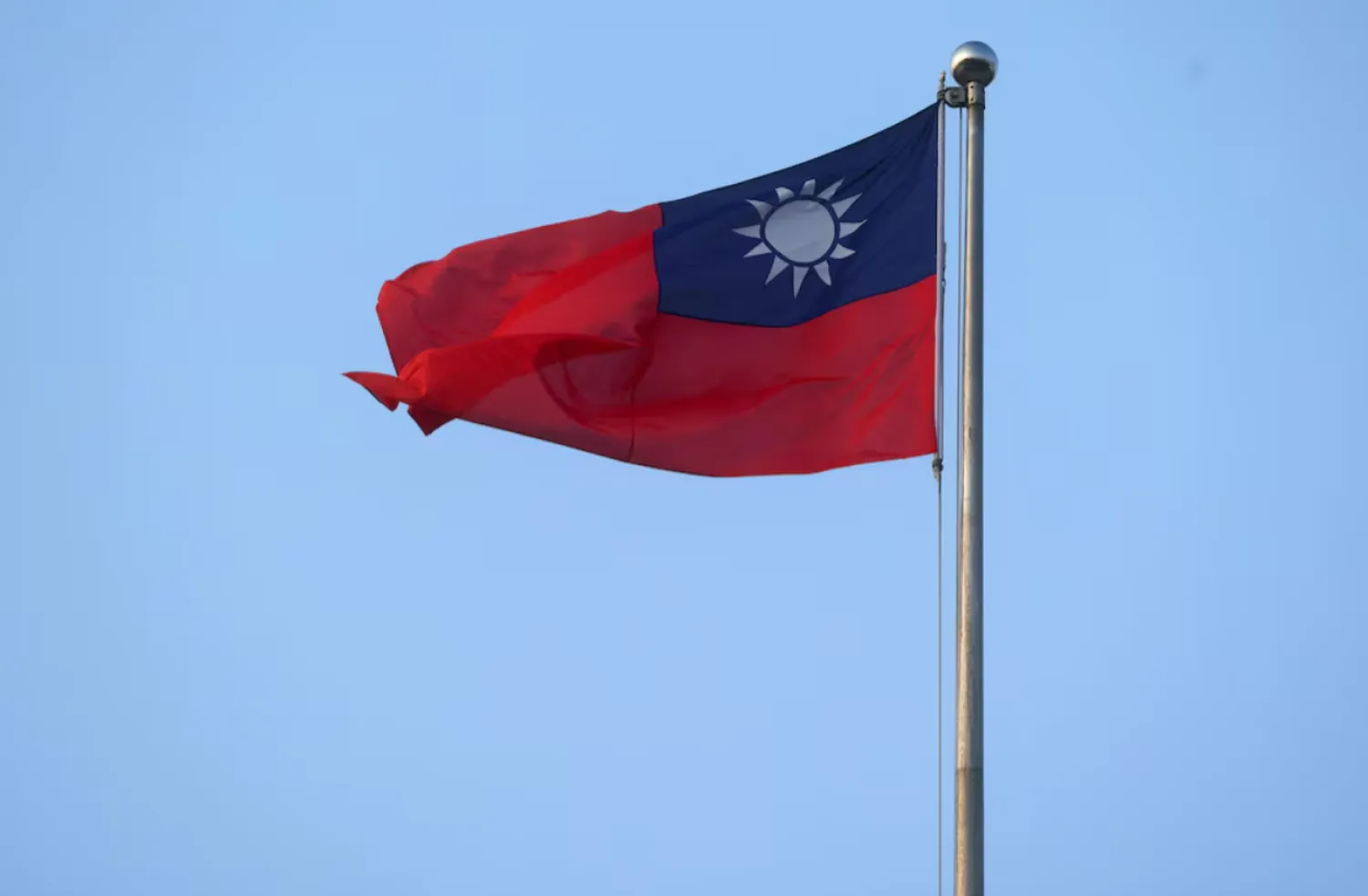
A Taiwan flag can be seen at Liberty Square in Taipei, Taiwan, July 28, 2022. REUTERS/Ann Wang/File Photo
TT

Taiwanese Rally For, Against the Recall of Opposition Lawmakers Seen as Close to China

A Taiwan flag can be seen at Liberty Square in Taipei, Taiwan, July 28, 2022. REUTERS/Ann Wang/File Photo

Threats from China and anger over legislative deadlock are dominating Taiwan's political discourse as residents rally for and against a campaign to recall two dozen opposition Nationalist Party lawmakers in polling to be held on Saturday.

Thousands of supporters of the independence-leaning ruling Democratic Progressive Party turned out in the heart of the capital Taipei on Thursday to hear from civil society activists, writers, musicians and others who support the recalls, which could potentially give the party, also known as the DPP, a majority in the legislature.

The DPP won last year’s presidential election, but came up short in the legislature, The AP news reported.

Since then, the China-friendly Nationalists, also known as the KMT, and their allies have sought to hobble the power of the executive and blocked key legislation, especially the defense budget.

That has been seen as undermining both Taiwan’s hard-won democracy and its ability to deter China’s threat to invade the island it considers its own territory. Those concerns prompted activists to campaign for recall votes in the districts where Nationalists were seen as most vulnerable, and they succeeded in 24 districts where votes are scheduled this weekend.

A recall measures must win 40% of the constituents in a district to succeed, after which a special election will be held to fill the seat, in which all parties can compete.

The KMT and the smaller Taiwan People’s Party together hold a majority in the parliament with 62 seats, while the ruling DPP holds 51 seats.

The KMT on Thursday sent some of its best known politicians, including the mayor of Taipei, the speaker of the legislature and the party chairman, out to urge voters to oppose the recall. It also planned a rally in Taipei on Friday. The KMT calls the measure a power grab by the DPP and a threat to multi-party democracy.

Perhaps more than any issue, China has loomed over the campaign, with both its officials and state media dismissing the recall effort as a further futile attempt to preclude what they call the inevitability of Beijing's annexation of Taiwan, either by military or peaceful means.

On Taiwan, it has brought out differences between Taiwanese who favor pursuing the current path and those who seek accommodation with Beijing. China-friendly politicians have been accused of selling out Taiwan for accepting trips to the mainland and meetings with Chinese politicians, while they defend themselves as keeping open lines of communication in light of Beijing's refusal to interact with the DPP.

The recall campaign — Taiwan's first — was prompted by anti-KMT groups alarmed by the party's closeness with China, corruption and the KMT's refusal to work with President Lai Ching-te's administration.

They first needed to gather signatures from 10% of voters in each district, targeting legislators seen as particularly vulnerable or controversial and under China's influence. Each campaign seeking to unseat a single legislator required a huge organizational effort, limiting the number of KMT lawmakers targeted.

The KMT is primed to contest any special elections that must be called within six months, raising the possibility that they could win back the seats, and the DPP, although enlivened by the campaign, could still remain in the minority.



WHO Says Ebola Risk High Regionally, Low Worldwide

A visitor walks at the entrance of a hospital in Rwampara on May 19, 2026. (AFP)
TT

WHO Says Ebola Risk High Regionally, Low Worldwide

A visitor walks at the entrance of a hospital in Rwampara on May 19, 2026. (AFP)

The World Health Organization on Wednesday said the risk of the Democratic Republic of Congo's deadly Ebola outbreak was currently high at the national and regional levels but low worldwide.

WHO experts said that while investigations into its origins were ongoing, given the scale of the situation in the eastern DRC, the outbreak probably began a couple of months ago.

But the UN health agency's emergency committee said it did not currently meet the pandemic emergency threshold.

"WHO assesses the risk of the epidemic as high at the national and regional levels, and low at the global level," said the organization's chief Tedros Adhanom Ghebreyesus.

So far, 51 cases have been confirmed in the DRC, in the eastern provinces of Ituri and North Kivu, "although we know the scale of the epidemic in DRC is much larger", he told a press conference at the WHO's headquarters in Geneva.

He said Uganda had also reported two confirmed cases in the capital Kampala, including one death, while a US national working in the DRC has been confirmed positive and transferred to Germany.

"There are several factors that warrant serious concern about the potential for further spread and further deaths," said Tedros.

"Beyond the confirmed cases, there are almost 600 suspected cases and 139 suspected deaths.

"We expect those numbers to keep increasing, given the amount of time the virus was circulating before the outbreak was detected."

- Not a pandemic -

On Sunday, Tedros declared the situation to be a public health emergency of international concern -- the second-highest level of alarm under the legally binding International Health Regulations (IHR) -- triggering emergency responses in countries worldwide.

The WHO emergency committee convened to assess the outbreak met on Tuesday.

"The current situation and criteria for a public health emergency of international concern have been met, and we agree that the current situation does not satisfy the criteria for a pandemic emergency," the committee's chair, Lucille Blumberg, told reporters from South Africa.

Anais Legand, WHO technical officer on viral hemorrhagic fevers, said investigations were under way to pinpoint how long Ebola has been spreading in the eastern DRC.

"Given the scale, we are thinking that it has started probably a couple of months ago, but investigations are ongoing and our priority is really to cut the transmission chain by implementing contact tracing, isolating and caring for all suspect and confirmed cases," she said.

US Secretary of State Marco Rubio on Tuesday said the WHO was "a little late" in identifying a deadly outbreak.

President Donald Trump, in one of his first acts on returning to office last year, set in motion a US withdrawal from the WHO, which he attacked bitterly over its response to the Covid-19 pandemic.

Asked about Rubio's criticism, Tedros said that "maybe what the secretary said... could be from lack of understanding of how IHR work, and the responsibilities of WHO and other entities", he said, explaining that the agency acted in support of countries rather than replacing them in outbreak responses.


Germany Arrests Married Couple on China Spying Charges

FILED - 12 May 2026, Bavaria, Munich: A view of the construction in the Freiham development area in Munich. Photo: Malin Wunderlich/dpa
TT

Germany Arrests Married Couple on China Spying Charges

FILED - 12 May 2026, Bavaria, Munich: A view of the construction in the Freiham development area in Munich. Photo: Malin Wunderlich/dpa

German police on Wednesday arrested a married couple on charges of spying for China, accusing them of seeking information on advanced technology with military uses.

The couple, German nationals partially named as Xuejun C. and Hua S., were arrested in the southern city of Munich, said the federal prosecution service, which alleged that the pair "work for a Chinese intelligence agency.”

Their homes and workplaces in Munich were being searched, AFP reported.

The couple are alleged to have "established contacts with numerous academics at German universities and research institutions, in particular with chairs in the fields of aerospace engineering, computer science and artificial intelligence.”

To make these contacts, the couple are believed to have "posed as interpreters or as employees of an automobile manufacturer.”

Some scientists were then "enticed to travel to China under the pretext of giving paid lectures to a civilian audience,” but actually ended up addressing employees of state-owned arms manufacturers, prosecutors said.

As well as the suspects' arrests, prosecutors said that "further measures" were being carried out "concerning a total of 10 people who are not suspected of any offence but are potential witnesses" in Berlin, Munich and several other locations across the country.


Israel Takes Step Toward Snap Election as Knesset Votes to Dissolve

Knesset members at the Knesset, the Israeli parliament, in Jerusalem, 20 May 2026. (EPA)
TT

Israel Takes Step Toward Snap Election as Knesset Votes to Dissolve

Knesset members at the Knesset, the Israeli parliament, in Jerusalem, 20 May 2026. (EPA)

Israel moved closer on Wednesday to a snap election after lawmakers gave an initial nod to dissolve parliament, with opinion polls showing Prime Minister Benjamin Netanyahu would lose the first national vote since the 2023 Hamas attacks.

Lawmakers voted almost unanimously for an early ballot in a preliminary reading of a bill to disband the 120-seat Knesset.

If it receives final approval, a process ‌that could ‌take weeks, Israel could hold an election several ‌weeks ⁠ahead of an ⁠October 27 deadline.

Netanyahu's own coalition submitted the bill to dissolve parliament after an ultra-Orthodox faction traditionally close to the Israeli leader accused him of failing to deliver on a promise to pass a law exempting their community from mandatory military service.

NETANYAHU BEHIND IN POLLS

Some 110 members of parliament voted in favor of ⁠the bill to dissolve, with no opponents or abstentions. ‌It now heads to committee where ‌an election date is agreed, before going back to the Knesset ‌for final approval.

The vote comes at a pivotal time ‌for Netanyahu, Israel's longest-serving prime minister who leads the most right-wing government in his country's history. Israel has been at war with Hamas in Gaza, Hezbollah in Lebanon and Iran, fronts that remain volatile and could ‌have an impact on the election.

Netanyahu still faces a long-running corruption trial. Israel's President Isaac Herzog ⁠is mediating ⁠talks to broker a plea deal in the case, which could see the 76-year-old Netanyahu retiring from politics as part of the deal.

Netanyahu's health could also be an issue. He recently disclosed that he was successfully treated for prostate cancer and in 2023 he was fitted with a pacemaker.

Since the October 7, 2023 Hamas attacks on Israel, polls have consistently shown Netanyahu's governing coalition falling far short of a parliamentary majority.

However, there is also a chance that opposition parties will fail to form a coalition, leaving Netanyahu at the head of an interim government until the political stalemate is broken.