



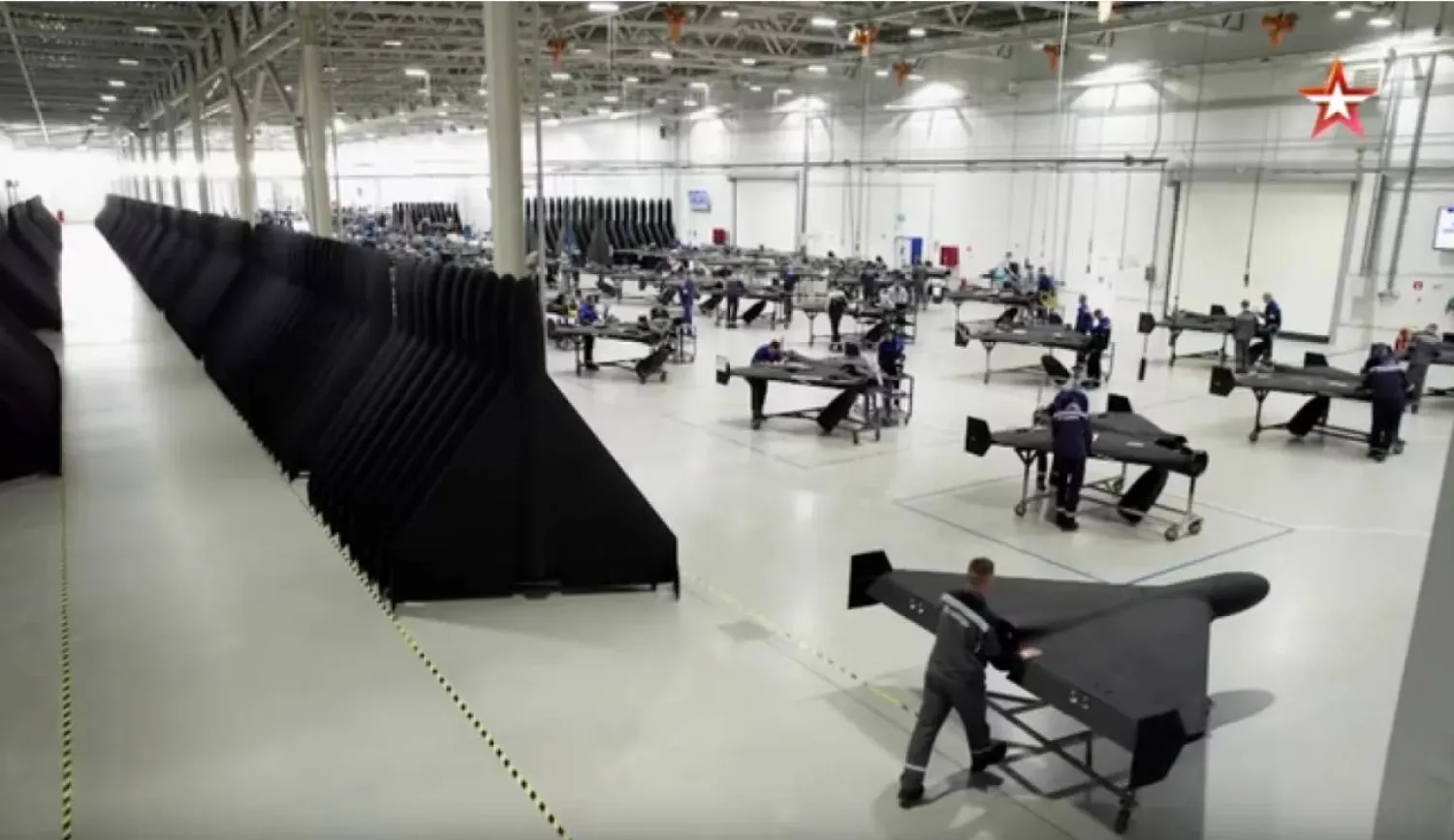

A Russian TV documentary on the country’s largest drone factory showed signs that Moscow has marginalized Iran in the arms industry.
As the Russian Defense Ministry showcased the TV documentary on the country’s largest drone factory inside the Alabuga drone factory, CNN counted more than 170 drones.
“Finally, something no one else has,” a Russian journalist said during the documentary. “Such mass production of two-stroke engines doesn’t exist anywhere else in Russia.”
The factory in question, Alabuga, 600 miles east of Moscow in Russia’s Tatarstan region, has been pumping out increasing numbers of the Iranian-designed Shahed-136 attack drone (known in Russia as Geran), but the man behind the site believes this may be one of its greatest achievements.
“This is a complete facility,” CEO Timur Shagivaleev said in the documentary, explaining most of the components for the drone are now produced locally.
“Aluminium bars come in, engines are made from them; microelectronics are made from electric chips; fuselages are made from carbon fiber and fiberglass – this is a complete location.”
According to CNN, the claim signals that production of the Iranian-designed Shahed, which has been the backbone of Moscow’s drone war on Ukraine, has now been mostly absorbed into Russia’s military industrial machine.
Analysts and intelligence officials believe 90% of production stages now happen at Alabuga or other Russian facilities.
To that end, recent satellite imagery shows the site is continuing to expand, with new production facilities and dorms that would allow it to scale up production exponentially.
Analysts CNN spoke with believe this growth would allow Russia to potentially export an updated and battle-tested version of the drone it originally imported from Iran – maybe even to Tehran itself.
But a Western intelligence source said the expansion and the complete Russian integration of the Shahed-136, have effectively marginalized Iran, revealing a rift between Moscow and Tehran.
He said Tehran has been growing increasingly impatient with the little return it’s received from Russia, despite having supported Moscow’s war effort with not just drones, but missiles and other assets.
That discontent effectively boiled over throughout Israel’s 12-day bombing campaign of targeting Iran’s nuclear weapons program in June, during which Russia’s statements of condemnation were seen as paltry support for a country that has been helping Moscow since the start of its full-scale invasion of Ukraine.
“Iran may have expected Russia to do more or take more steps without being required to do so,” Ali Akbar Dareini, an analyst for the Tehran-based Center for Strategic Studies, the research arm of the Iranian President’s office, told CNN.
“They may not intervene militarily, but they may beef operative support, in terms of weapons shipments, technological support, intelligence sharing, or things like that.”
But Russia’s distant approach was not surprising for the Western intelligence official CNN spoke with, who argued it showed the “purely transactional and utilitarian nature” of Russian cooperation with Iran.
After Russia launched its full-scale invasion of Ukraine in February 2022, it began importing Iranian Shahed drones. By early 2023, Moscow and Tehran had inked a $1.75 billion deal for Russia to make the drones domestically.
The 6,000 drones by September 2025 stipulated in the initial contract were manufactured about a year ahead of schedule and, according to Ukraine’s Defense Intelligence, Alabuga is now pumping out more than 5,500 units per month. It’s also doing so in a more efficient and cost-effective way.
“In 2022, Russia paid an average of $200,000 for one such drone,” a Ukrainian Defense Intelligence source told CNN. “In 2025, that number came down to approximately $70,000.”
Meanwhile, a Western intelligence official said Iran initially seemed to embrace Russia’s efforts to localize roughly 90% of production of the Shahed 136 at Alabuga but Moscow’s upgrades seem to have caught it off guard.
“This evolution marks a gradual loss of control for Iran over the final product, which is now largely manufactured locally and independently,” the source explained. They added Moscow’s end goal is “to fully master the production cycle and free itself from future negotiations with Tehran.”


