


Iran Warns of Foreign Interference in South Caucasus

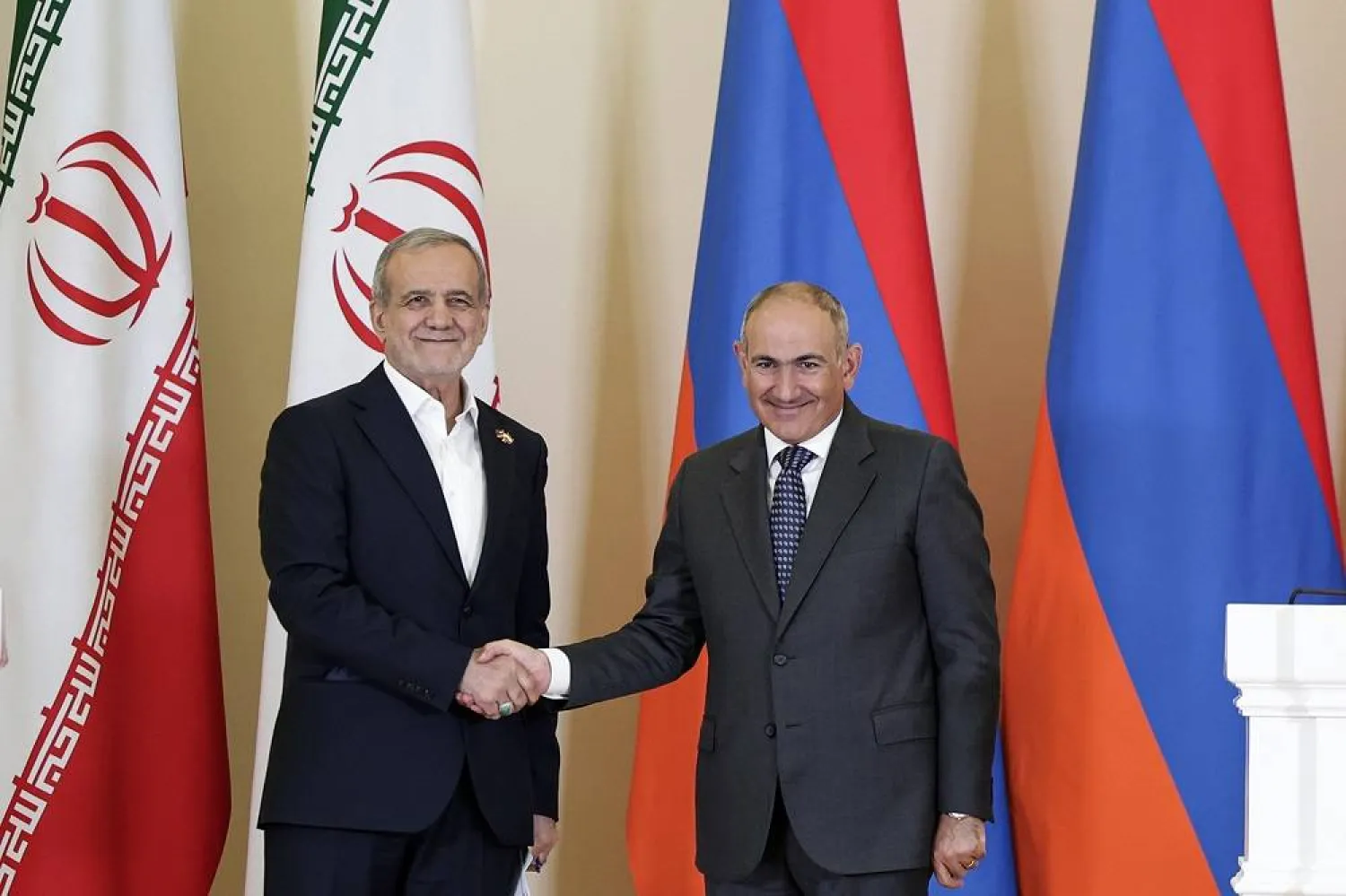
A handout photo made available by the Armenian Prime Minister's office shows Armenian Prime Minister Nikol Pashinyan (R) and Iranian President Masoud Pezeshkian shaking hands as they attend a press conference during their meeting in Yerevan, Armenia, 19 August 2025. (EPA/ Armenian Prime Minister Press Service / Handout)
TT

Iran Warns of Foreign Interference in South Caucasus

A handout photo made available by the Armenian Prime Minister's office shows Armenian Prime Minister Nikol Pashinyan (R) and Iranian President Masoud Pezeshkian shaking hands as they attend a press conference during their meeting in Yerevan, Armenia, 19 August 2025. (EPA/ Armenian Prime Minister Press Service / Handout)

Iranian President Masoud Pezeshkian stressed on Tuesday that Iran supports peace in the Caucasus region between Azerbaijan and Armenia, criticizing foreign interference in security issues of the region.

Pezeshkian headed to Armenia on Monday for talks on a planned corridor linking Azerbaijan with its exclave near the border with Iran, part of a peace deal signed at the White House on August 8.

Iran has long opposed the planned transit route, also known as the Zangezur corridor, fearing it would cut the country off from Armenia and the rest of the Caucasus, while bringing potentially hostile foreign forces close to its borders.

On Tuesday, the Iranian president met with Armenian Prime Minister Nikol Pashinyan ahead of bilateral talks where the two countries signed 10 agreements.

Pashinyan told Pezeshkian that his visit will give a new impetus to the friendly relations between Armenia and Iran.

For his part, Pezeshkian said the two sides want to develop their level of cooperation, especially in the economic field.

Pezeshkian’s visit highlights Iran’s concerns over the peace deal between Azerbaijan and Armenia that aims to end decades of conflict between the two Southern Caucasus neighbors.

Under the agreement, the United States will hold development rights for the proposed Zangezur route, which would connect Azerbaijan to its Nakhchivan exclave bordering Iran and Türkiye.

In Yerevan, Pezeshkian described peace in the South Caucasus region as a “strategic priority” for Iran.

“Iran's position has always been against any changes in international borders in the Caucasus region,” he said.

“We believe that agreement and friendship are the most important factors for security, stability and movement towards development,” he added.

Iran has always defended the safety of Armenia’s regional territories, Pezeshkian stressed, adding that “Outsourcing the resolution of Caucasus issues to extra-regional forces will further complicate the situation in the region.”

Pashinyan presented to Pezeshkian the details of the peace agreement. “This process is aimed at opening up great prospects for the economic development of the entire region,” he said.

He reassured his guest that the planned corridor linking Azerbaijan with its exclave will be under Armenian control.

“Roads passing through Armenia will be under the exclusive jurisdiction of Armenia, and security will be provided by Armenia, not by any third country,” Pashinyan said.

He added that the corridor would open new economic opportunities between the two countries and may offer a railway route from Iran to the Black Sea coast through Armenia.

The Armenian PM also noted that his country’s cooperation with Tehran covers many other areas, such as the economy, infrastructure, energy, healthcare, culture and environment.

A number of existing infrastructure projects between Armenia and Iran have already entered the practical stage, he revealed, noting that these projects are of strategic importance to Armenia.

One of these projects is the 32-kilometer Kajaran-Agarak road section, the construction of which the Armenian side has entrusted to an Iranian company, Pashinyan said, voicing his confidence that the road will be commissioned within the specified period.

"This will open new doors for railway cooperation between Armenia and Iran, including through the Nakhchivan-Julfa railway line, which will mean Iran’s railway access to Armenia and, ultimately, to the Black Sea,” he went on to say.

Pashinyan said Iran and Armenia have set a strategic goal to increase the volume of bilateral trade with Iran, first to one and then to $3 billion.

Britain Working with Allies to Support Shipping through Strait of Hormuz

 This handout satellite image taken by 2026 Planet Labs PBC shows damage at the military harbour in Iran's southern port of Bandar Abbas along the Strait of Hormuz on March 4, 2026.  (Photo by 2026 Planet Labs PBC / AFP)
This handout satellite image taken by 2026 Planet Labs PBC shows damage at the military harbour in Iran's southern port of Bandar Abbas along the Strait of Hormuz on March 4, 2026. (Photo by 2026 Planet Labs PBC / AFP)
TT

Britain Working with Allies to Support Shipping through Strait of Hormuz

 This handout satellite image taken by 2026 Planet Labs PBC shows damage at the military harbour in Iran's southern port of Bandar Abbas along the Strait of Hormuz on March 4, 2026.  (Photo by 2026 Planet Labs PBC / AFP)
This handout satellite image taken by 2026 Planet Labs PBC shows damage at the military harbour in Iran's southern port of Bandar Abbas along the Strait of Hormuz on March 4, 2026. (Photo by 2026 Planet Labs PBC / AFP)

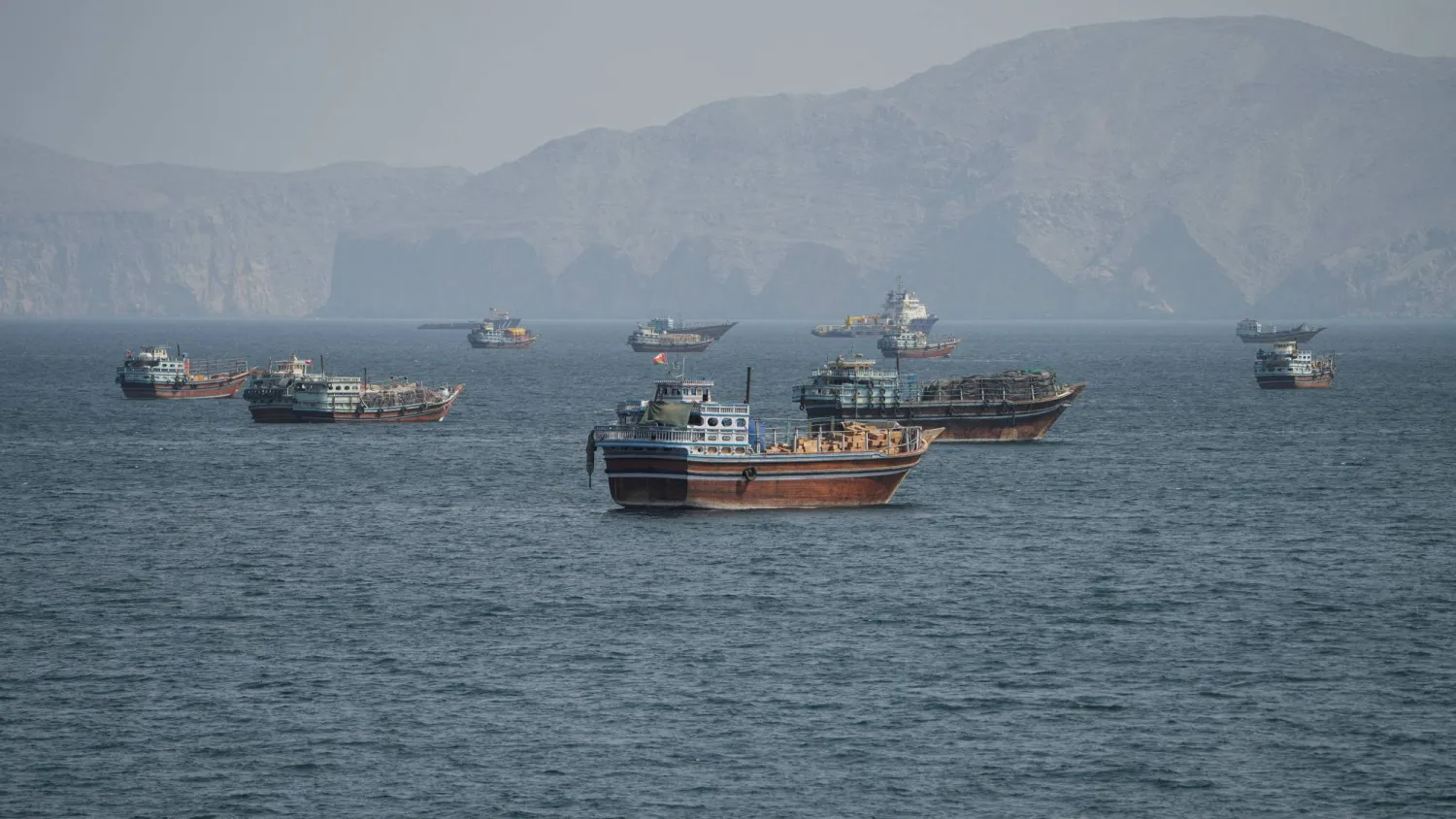
Britain is working with allies on a range of options to support commercial shipping through the Strait of Hormuz in the face of Iranian threats, Prime Minister Keir Starmer's spokesperson said on Tuesday as the US-Israeli war with Iran roils oil prices.

US President Donald Trump has said the war could end "soon" but also said the US could escalate its attacks if Iran sought to block tanker traffic through the Strait of Hormuz. After speaking to the leaders of Germany and Italy late on Monday, Downing Street said in a readout that they agreed on the "vital importance of freedom of navigation" through the Strait and "agreed to work closely together in the coming days in the face of Iranian threats."

"We're working with our allies on a range of options to support commercial shipping through the Strait as the threat picture develops," the spokesperson told reporters when asked about the readout.

Iran's Revolutionary Guards said on Tuesday they would not let any oil out of the Middle East until US and Israeli attacks cease. Starmer's spokesperson said Energy Secretary Ed Miliband had spoken to oil majors BP and Shell in the last few days, adding that the safety of their vessels was their primary concern.

He added that finance minister Rachel Reeves had liaised with Lloyd's of London to ensure there was "appropriate insurance cover available to operators" including cover for war, revolution and terrorism.

After meeting Reeves on Monday, the chairman of Lloyd's, Charles Roxburgh, said the insurance marketplace would work with Britain, the US and international partners on a "comprehensive response to the situation."

"In my meeting with (Reeves), I reiterated Lloyd’s confidence in our marine insurance market, which has remained open and continues to support international trade and shipping during this period of heightened risk," he said.


China-North Korea Trains to Resume after Six-year Halt

A passenger train crossing from North Korea to the Chinese border city of Dandong in 2019. Photograph: Greg Baker/AFP/Getty Images
TT

China-North Korea Trains to Resume after Six-year Halt

A passenger train crossing from North Korea to the Chinese border city of Dandong in 2019. Photograph: Greg Baker/AFP/Getty Images

Passenger train services between China and North Korea will resume this week six years after their suspension due to the Covid-19 pandemic, rail authorities in Beijing confirmed on Tuesday.

Train journeys between the two countries were halted in 2020 as they imposed strict border closures to prevent the coronavirus from spreading, AFP reported.

While China has since fully reopened its borders, North Korea has proceeded more slowly, though direct flights and train services with Russia resumed last year.

But China Railway announced on Tuesday evening that regular train services between Beijing and Pyongyang would resume on Thursday.

The services will help in "promoting personnel exchanges, economic and trade cooperation and cultural exchanges between the two countries," China Railway said.

Earlier on Tuesday, travel agents for an official ticketing booth in Beijing told AFP that anyone with a valid visa was now able to buy train tickets to the diplomatically isolated nation.

This would include Chinese people working and studying in North Korea, as well as North Koreans working, studying and visiting family abroad.

Another such ticketing booth in the Chinese border city of Dandong told AFP that sales would resume on Wednesday but tourists were not yet eligible to buy tickets.

"It's great to see the international train service resuming," Rowan Beard, tours manager at Young Pioneer Tours, told AFP.

He confirmed his company, one of several foreign-run firms that specialises in travel to North Korea, could also organise tickets from Thursday.

"While it isn't initially intended for tourists, it will provide another travel option once tourism to North Korea eventually returns, serving as an alternative to flying," Beard said.

The statement by China Railways said the trains would run in both directions between Beijing and Pyongyang every Monday, Wednesday, Thursday and Saturday.

Entry and exit procedures would be completed at the Dandong border crossing and at Sinuiju in North Korea, it said.

Tickets are currently available for offline purchase at several Chinese cities, the statement added.

Prior to the official announcement, South Korea's Unification Ministry said in a statement that it expected the services to resume Thursday, adding: "we will continue to closely monitor related developments".

China's foreign ministry spokesman Guo Jiakun said at a press conference before the announcement that "maintaining regular passenger train services is of great significance in facilitating people-to-people exchanges between the two sides".

Despite periods of strained relations between China and North Korea over Pyongyang's nuclear program, the two neighbours have maintained close ties.

China is historically North Korea's biggest backer and a crucial lifeline for its moribund economy, though Pyongyang has drawn closer to Russia since the start of the Ukraine war.

North Korea's reclusive authorities have given mixed signals on whether further opening is on the cards.

On Monday, Koryo Tours said North Korea had cancelled an international marathon in its capital Pyongyang originally scheduled for early next month, citing an official statement with no explanation for the decision.

The cancellation was "unexpected", the company said, adding it understood the decision had been "taken at a level above the organisers of the event itself".

The marathon is the largest international sporting event in North Korea, offering visitors a rare chance to run through Pyongyang's tightly controlled streets.


Netherlands Moves Iran Embassy Staff to Azerbaijan

A woman walks past a national flag, the day before a general election, in Delft, Netherlands, March 14, 2017. REUTERS/Yves Herman
TT

Netherlands Moves Iran Embassy Staff to Azerbaijan

A woman walks past a national flag, the day before a general election, in Delft, Netherlands, March 14, 2017. REUTERS/Yves Herman

The Netherlands will temporarily move its embassy staff in Iran to Azerbaijan, Foreign Minister Tom Berendsen said on Tuesday, citing safety concerns over the US-Israeli war on Iran, Reuters reported.

"Due to increasing risks to the safety of our staff, it has been decided to temporarily relocate the activities of the Dutch embassy in Iran to Baku, Azerbaijan," Berendsen wrote on X.