


European Leaders Face Tough Choices as the UK, France Host Another Meeting on Ukraine

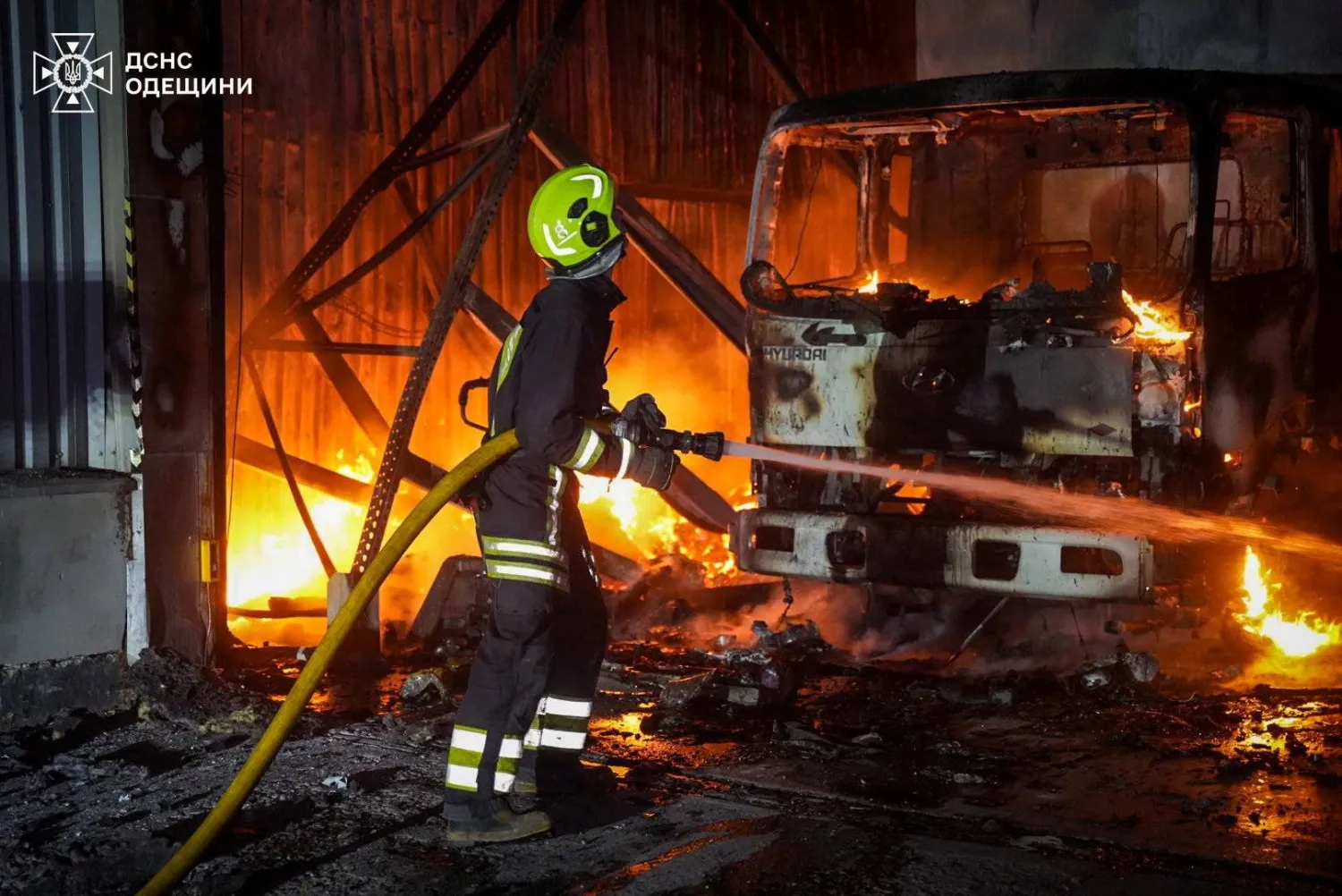
A firefighter works at the site of a warehouse hit by a Russian drone strike, amid Russia's attack on Ukraine, in Odesa, Ukraine September 4, 2025. Press service of the State Emergency Service of Ukraine in Odesa region/Handout via REUTERS
TT

European Leaders Face Tough Choices as the UK, France Host Another Meeting on Ukraine

A firefighter works at the site of a warehouse hit by a Russian drone strike, amid Russia's attack on Ukraine, in Odesa, Ukraine September 4, 2025. Press service of the State Emergency Service of Ukraine in Odesa region/Handout via REUTERS

European countries are stuck between a rock and a hard place as a coalition of countries meets in Paris on Thursday to discuss security guarantees for a postwar Ukraine.

The war is raging unabated, with no ceasefire in sight — and the crucial question of American involvement in ensuring Ukraine’s future security remains unresolved.

For months, the so-called “coalition of the willing” has been meeting to discuss aid for Ukraine, including sketching out plans for military support in the event of a ceasefire to deter future Russian aggression.

The coalition leaders — French President Emmanuel Macron and UK Prime Minister Keir Starmer — have insisted that any European “reassurance” force in Ukraine needs the backing of the United States. But while US President Donald Trump has hinted his country will be involved, he has moved away from calling for a ceasefire in Ukraine and refrained from implementing tough additional economic measures to punish Moscow.

Although Trump said he is “disappointed” in Russian President Vladimir Putin and issued several threats to try to cajole him into negotiating an end to hostilities, none has worked. At a meeting with Putin in Alaska in August, Trump failed to persuade the Russian leader to stop fighting and has not yet managed to broker talks between Putin and Ukraine's President Volodymyr Zelenskyy.

While Trump and European leaders met in Washington after the Alaska summit — and US, European and NATO military chiefs held discussions on support for Ukraine — little concrete detail has emerged on the security guarantees to deter Moscow from a future conflict.

Former military generals and experts suggest Europe is in a bind — not knowing the level of support the US is prepared to provide the coalition, the nature of any ceasefire or if the US will abide by commitments made. It's also far from certain that Putin would agree to a cessation of hostilities, something Russian officials have invariably dismissed.

“Talking about detailed operational planning when you don’t actually have your mission is, quite frankly, impossible,” said Ed Arnold, an expert in European Security at the Royal United Services Institute in London and a former military planner.

The “coalition of the willing” is a broad term for about 30 nations supporting Ukraine, but the so-called “reassurance force” that would provide security guarantees to Kyiv is a subset of that group.

The UK, France and Estonia have all suggested they are ready to deploy troops to Ukraine to deter Putin from attacking again, while officials in Poland said Warsaw will not take part and will instead focus on bolstering NATO security in the east of Europe.

There is “no suggestion” that any troops will be deployed without a ceasefire because it's too risky, said François Heisbourg, special adviser at the Foundation for Strategic Research in Paris.

Despite Zelenskyy signaling his willingness to talk, a ceasefire agreement is not currently in the cards — not least because of the positions of the US and Russian presidents.

At his Aug. 18 meeting with European leaders at the White House — three days after meeting Putin — Trump walked back his previous demands for a ceasefire in Ukraine and said he thought a peace agreement was preferable.

According to The Associated Press, the comments marked a shift toward the Russian position from Trump and would allow Moscow to fight on in Ukraine while peace negotiations are underway.

Russian Foreign Minister Sergey Lavrov later suggested an end to hostilities was even further away, stating that Moscow will not accept Zelenskyy's signature on any peace agreement as Russia considers him to be an illegitimate president.

“If Putin doesn’t want a ceasefire — and if Trump doesn’t call for a ceasefire — what are the chances of a ceasefire happening?” asked Heisbourg.

What a European security guarantee for Ukraine could look like Even if a ceasefire or peace agreement for Ukraine were implemented, it's not clear it would be a sufficient deterrent to Putin and would be “very, very risky” for European nations, said Arnold at RUSI.

Such an operation hinges on the US providing intelligence support and the deterrent effect of US airpower in countries outside Ukraine.

The Western appetite to potentially shoot down Russian missiles violating a ceasefire or target launchers firing them from within Russia is “close to zero,” said Heisbourg.

Any response to a ceasefire violation, he said, would likely depend on “how many Western soldiers the Russians would have actually killed...and nobody wants to think about that too much in advance.”

In March, Starmer told allies that a force for Ukraine would need at least 10,000 troops, but that would potentially require around 30,000 troops when taking into account those on rotation and rest.

As a coalition leader, the UK should look at contributing a brigade of 5,000 soldiers which would become 15,000 when taking into account rest and rotation, said Arnold.

That figure would account for about 30% of the deployable capacity of the British Army, he said, and potentially create a “tricky” problem whereby the UK deploys more forces on behalf of non-NATO ally Ukraine than it does for NATO allies such as Estonia.

European officials have indicated that the troops could be involved in training Ukrainian soldiers and likely based away from the frontlines although the risk of Russian missile and drone strikes would remain high.

But there would be “zero credibility" if Western troops were put in various Ukrainian towns without a clear mission or purpose, said Ben Hodges, former commanding general of the US Army in Europe.

"That will not impress the Russians at all," he added.

European leaders are also grappling with the question of whether to take Trump and his officials at their word while also eyeing the rise of populist parties — particularly in the UK, France and Germany — which may not share the same commitment to Ukraine as current political leadership.

That means the future of any security guarantees for Kyiv could be extremely fragile.

There is “absolutely no guarantee” that Trump will abide by commitments made to European nations over Ukraine, said Arnold, pointing to Trump's withdrawal from previous agreements, including the Paris climate agreement and Iran's nuclear deal.

That means European nations cannot rely on him ordering US jets into action in the event of a ceasefire violation because “at one time he may say yes, at another time he may say no,” Arnold said.

With NATO membership for Kyiv ruled out by Trump and a host of hurdles to overcome to implement security guarantees for Ukraine, European leaders may decide to navigate the situation by spending “a lot more money on weapons” for Kyiv, said Heisbourg.

Arnold agreed, adding that the best option could be to give Kyiv “loads of guns and loads of ammo.”

“There’s no easy way out," he said. “None of the options, especially for the Europeans, are good.”



Bessent Says US-Europe Relations Have ‘Never Been Closer’ Despite Greenland Crisis

Scott Bessent, US Secretary of the Treasury, holds a speech at the USA House during the Annual Meeting of the World Economic Forum in Davos, Switzerland, Tuesday, Jan. 20, 2026. (AP)
TT

Bessent Says US-Europe Relations Have ‘Never Been Closer’ Despite Greenland Crisis

Scott Bessent, US Secretary of the Treasury, holds a speech at the USA House during the Annual Meeting of the World Economic Forum in Davos, Switzerland, Tuesday, Jan. 20, 2026. (AP)

US Treasury Secretary Scott Bessent on Tuesday said America’s relations with Europe remain strong and urged trading partners to “take a deep breath” and let tensions driven by the Trump administration's new tariff threats over Greenland “play out.”

“I think our relations have never been closer,” he said, speaking on the sidelines of the World Economic Forum annual meeting in Davos, Switzerland.

On Saturday, US President Donald Trump announced a 10% import tax starting in February on goods from eight European nations that have rallied around Denmark in the wake of his stepped up calls for the United States to take over the semi-autonomous Danish territory of Greenland.

Trump has insisted the US needs the territory for security reasons against possible threats from China and Russia.

The American leader’s threats have sparked outrage and a flurry of diplomatic activity across Europe, as leaders consider possible countermeasures, including retaliatory tariffs and the first-ever use of the European Union’s anti-coercion instrument.

The EU has three major economic tools it could use to pressure Washington: new tariffs, suspension of the US-EU trade deal, and the “trade bazooka” — the unofficial term for the bloc’s Anti-Coercion Instrument, which could sanction individuals or institutions found to be putting undue pressure on the EU.

Earlier Tuesday, Trump posted on social media that he had spoken with NATO Secretary General Mark Rutte. He said "I agreed to a meeting of the various parties in Davos, Switzerland,” which is hosting the World Economic Forum’s annual meeting this week.

France's Macron suggests G7 meeting

Trump also posted a text message from Emmanuel Macron in which the French president suggested a meeting of members of the Group of Seven industrialized democracies in Paris after the Davos gathering.

Later, however, Trump posted some provocatively doctored images. One showed him planting the US flag next to a sign reading “Greenland, US Territory, Est. 2026.” The other showed Trump in the Oval Office next to a map that showed Greenland and Canada covered with the US Stars and Stripes.

In a sign of how tensions have increased in recent days, thousands of Greenlanders marched over the weekend in protest of any effort to take over their island. Greenland Prime Minister Jens-Frederik Nielsen said in a Facebook post Monday that the tariff threats would not change their stance.

“We will not be pressured,” he wrote.

In his latest threat of tariffs, Trump indicated that the import taxes would be retaliation for last week’s deployment of symbolic numbers of troops from the European countries to Greenland — though he also suggested that he was using the tariffs as leverage to negotiate with Denmark.

Danish minister called for a stronger Europe

Denmark's minister for European affairs called Trump's tariff threats “deeply unfair." He said that Europe needs to become even stronger and more independent, while stressing there is "no interest in escalating a trade war."

"You just have to note that we are on the edge of a new world order, where having power has unfortunately become crucial, and we see a United States with an enormous condescending rhetoric towards Europe,” Marie Bjerre told Danish public broadcaster DK on Tuesday.

European markets opened sharply lower on Tuesday and US futures fell further as tensions rose over Greenland. Benchmarks in Germany, France and Britain fell about 1%. The future for the S&P 500 lost 1.5% and the Dow future was down 1.4%.

With US trading closed Monday for a holiday, financial markets had a relatively muted response to Trump’s threat to put a 10% extra tariff on exports from eight European countries that have opposed his push to exert control over Greenland. Jonas Golterman of Capital Economics described the situation as a lose-lose one for both the US and the targets of Trump’s anger. He said, “It certainly fells like the kind of situation that could get worse before it gets better.”

In another sign of tension between allies, the British government on Tuesday defended its decision to hand sovereignty of the Chagos Islands to Mauritius after Trump attacked the plan, which his administration previously supported.

Trump said that relinquishing the remote Indian Ocean archipelago, home to a strategically important American naval and bomber base, was an act of stupidity that shows why he needs to take over Greenland.

The United Kingdom signed a deal in May to give Mauritius sovereignty over the islands, though the UK will lease back the island of Diego Garcia, where the US base is located, for at least 99 years.


Australian Lawmakers Back Stricter Gun, Hate Crime Laws

A visitor places a pebble at a memorial site in remembrance to the lives lost during the Bondi Beach mass shooting on December 14, 2025, in Sydney, Australia, January 16, 2026. (Reuters)
TT

Australian Lawmakers Back Stricter Gun, Hate Crime Laws

A visitor places a pebble at a memorial site in remembrance to the lives lost during the Bondi Beach mass shooting on December 14, 2025, in Sydney, Australia, January 16, 2026. (Reuters)

Australian politicians voted in favor of tougher hate crime and gun laws Tuesday, weeks after gunmen targeting Jewish people on Bondi Beach killed 15 people.

Lawmakers in the House of Representatives backed the legislation in response to the December 14 shooting at the famous Sydney beach.

Sajid Akram and his son Naveed allegedly targeted a Jewish Hanukkah celebration in the nation's worst mass shooting for 30 years.

The attack has sparked national soul-searching about antisemitism, anger over the failure to shield Jewish Australians from harm, and promises to protect the country with stiffer legislation.

The hate crime and gun control legislation must still be approved by the upper house Senate, which was expected to vote later in the day.

"The terrorists had hate in their hearts, but they also had high-powered rifles in their hands," Prime Minister Anthony Albanese told parliament.

"We're taking action on both -- tackling antisemitism, tackling hate, and getting dangerous guns off our streets."

Legislative reforms on guns and hate speech were voted on separately.

The hate speech legislation would toughen laws and penalties for people seeking to spread hate and radicalization, or to promote violence.

It creates aggravated offences for offenders who are preachers, other leaders, or adults seeking to radicalize children.

The reform would also make it easier to reject or cancel visas for people suspected of terrorism or espousing hatred on the basis of race, color, or origin.

On firearms, Australia would set up a national gun buyback scheme, tighten rules on imports of firearms and expand background checking for gun permits to allow input from intelligence services.

The legislation was debated in a special session of parliament, ahead of a national day of mourning on Thursday for the Bondi Beach victims.

Gunman Sajid Akram, 50, was shot and killed by police during the Bondi Beach attack. An Indian national, he entered Australia on a visa in 1998.

His 24-year-old son Naveed, an Australian-born citizen who remains in prison, has been charged with terrorism and 15 murders.

Police and intelligence agencies are facing difficult questions about whether they could have acted earlier.

Naveed Akram was flagged by Australia's intelligence agency in 2019, but he slipped off the radar after it was decided that he posed no imminent threat.


Macron Sent Message to Trump Offering to Host G7 Meeting in Paris Thursday

French President Emmanuel Macron wears sunglasses as he speaks as he leads a meeting on New-Caledonia at the Elysee Palace in Paris, France, 19 January 2026. EPA/STEPHANE DE SAKUTIN / POOL MAXPPP OUT
TT

Macron Sent Message to Trump Offering to Host G7 Meeting in Paris Thursday

French President Emmanuel Macron wears sunglasses as he speaks as he leads a meeting on New-Caledonia at the Elysee Palace in Paris, France, 19 January 2026. EPA/STEPHANE DE SAKUTIN / POOL MAXPPP OUT

Emmanuel Macron has sent a "private message" to Donald Trump offering to organize a G7 summit in Paris on Thursday in which Russia could be invited on the sidelines, the French president's entourage confirmed.

Trump posted this message on his Truth Social network in which Macron also proposes inviting Ukraine to the meeting as well as Denmark to discuss disagreements over Greenland.

The offer comes as Europe is weighing countermeasures after Trump threatened to impose tariffs on eight European countries in a bid to pressure the EU over Greenland.

"My friend, we are completely aligned on Syria. We can do great things in Iran. I don't understand what you are doing in Greenland," Macron said in his message.

"I can organize a G7 meeting in Paris on Thursday afternoon after Davos," Macron wrote, referring to the gathering of global elites in Switzerland where the US president is set to be in attendance.

"I can invite the Ukrainians, the Danes, the Syrians and the Russians on the sidelines" of the meeting, he added.

Trump's relations with Macron hit a new low Monday when the US president threatened 200 percent tariffs on French wine over France's intention to decline an invitation to join his "Board of Peace".

"Tariff threats to influence our foreign policy are unacceptable and ineffective," a source close to Macron told AFP on Tuesday.