



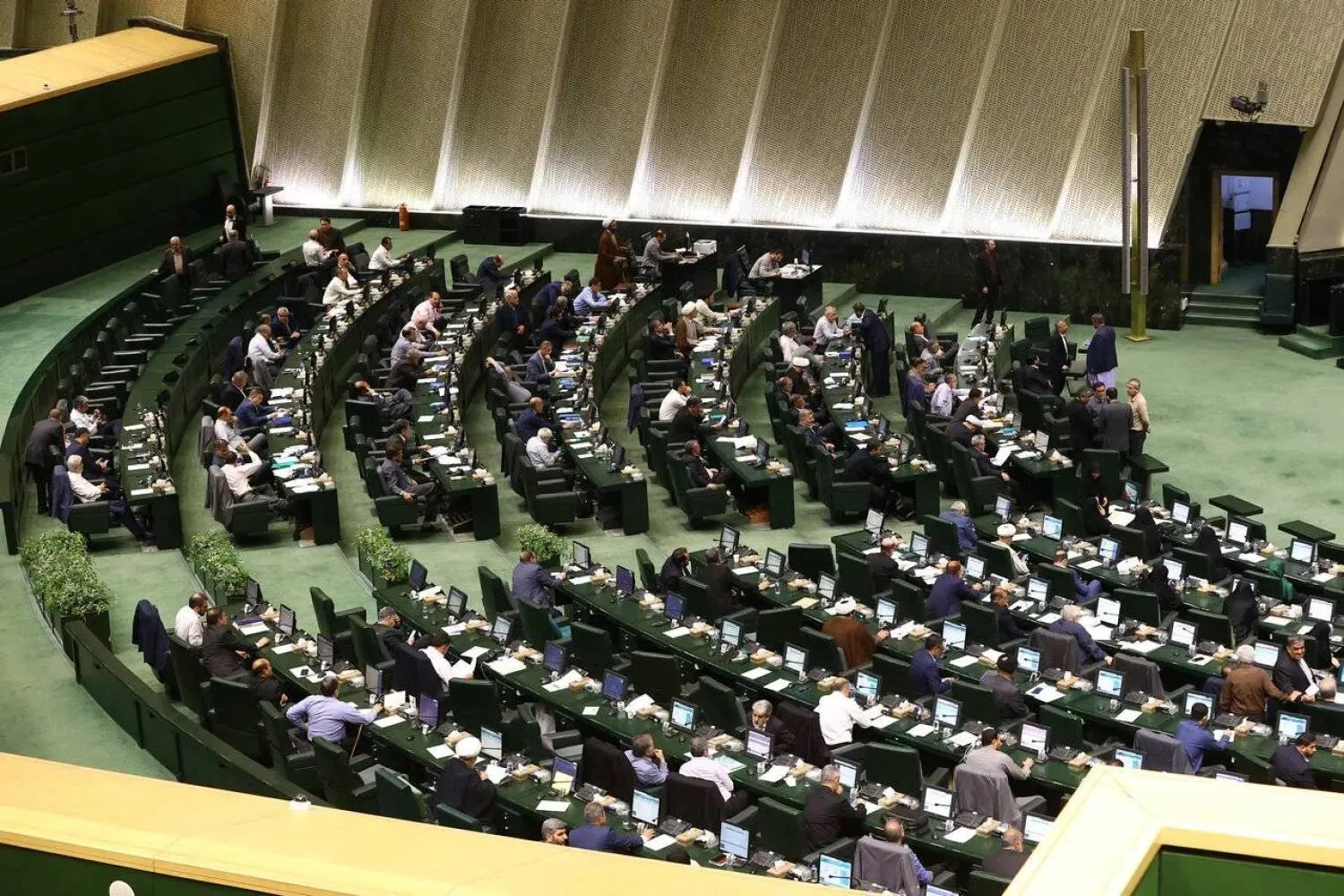

An Iranian lawmaker revealed on Monday that Tehran is about to sign an agreement with the International Atomic Energy Agency in Egypt, warning Foreign Minister Abbas Araghchi to ignore a parliament law on suspending cooperation with the agency.
Iran's parliament is debating an emergency bill that could push Tehran toward exiting the nuclear Non-Proliferation Treaty (NPT) in response to European powers triggering snapback sanctions.
The NPT, which Iran ratified in 1970, guarantees countries the right to pursue civilian nuclear power in return for requiring them to forego atomic weapons and cooperate with the UN nuclear watchdog, the IAEA.
On Monday, reports in Iran said Araghchi is set to travel to Egypt for talks with the International Atomic Energy Agency (IAEA).
Iranian lawmaker Hossein-Ali Haji-Deligani issued a warning to nuclear negotiators, including Iran’s foreign minister, saying that any deal that does not respect parliamentary decisions “will lead to prosecution.”
Deligani said deputies were briefed on the draft of a possible agreement between Iran and the agency. The lawmaker cited specific clauses in the draft that he said do not protect the rights of Iran, including one requiring Tehran to report the condition of nuclear facilities damaged during recent Israeli and US military strikes.
Another provision, he said, calls for the return of IAEA inspectors, who he described as “spies”, to conduct further assessments and complete questionnaires.
The lawmaker said the Agency had requested the precise location of Iran’s nuclear material storage sites.
Deligani then criticized the draft’s tenth and eleventh paragraphs, which he said offered unilateral concessions to the IAEA without reciprocal commitments.
He also warned the FM that any action taken “beyond the legal framework of Parliament” could result in his dismissal and legal consequences.
For his part, parliament member Fada-Hossein Maleki condemned the E3 countries for reactivating the “snapback mechanism.”
In a statement to ISNA, the deputy said, “It is true that exiting the non-proliferation treaty is a difficult step and creates great pressure, but it will not only affect Iran, but its effects will also extend to countries of the region.”
The deputies’ comments came while Foreign Ministry spokesperson Esmaeil Baghaei said on Monday that so far no definitive decision has been taken regarding the country's withdrawal from the NPT.
“Iran is a member of the NPT and committed to the safeguards agreement. The issue of withdrawing from the NPT has only been raised in the parliament at a limited level and so far no definitive decision has been taken in this regard,” he said.
Baghaei said the IAEA had “come to understand that Iran’s safeguards obligations cannot be implemented in the same way as before,” citing the absence of any protocol addressing military strikes on a member state’s nuclear infrastructure.


