
China Launches Discrimination and Dumping Probes into US Chips ahead of Trade Talks

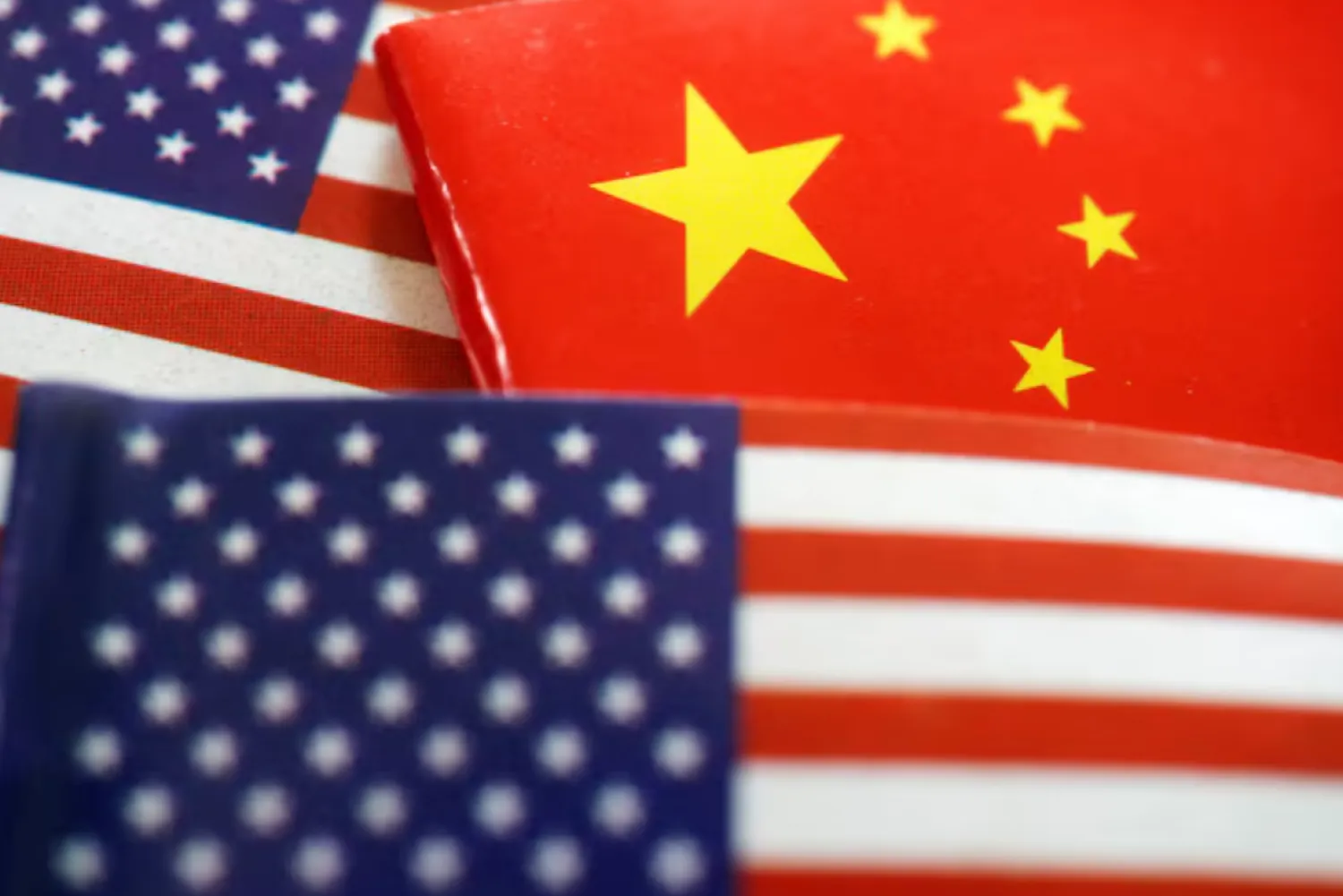
Flags of US and China are seen in this illustration picture taken August 2, 2022. REUTERS/Florence Lo/Illustration/File Photo
TT

China Launches Discrimination and Dumping Probes into US Chips ahead of Trade Talks

Flags of US and China are seen in this illustration picture taken August 2, 2022. REUTERS/Florence Lo/Illustration/File Photo

China's Ministry of Commerce initiated an anti-discrimination investigation into US trade policy over chips on Saturday, as well as a separate investigation into dumping, a day ahead of a new round of US-China trade talks in Spain.

The first investigation would examine whether Washington had discriminated against Chinese companies in its policies on trade in chips. The second would look into suspected dumping of imports of some US analog chips used in devices such as hearing aids, Wi-Fi routers and temperature sensors, according to Reuters.

The ministry said in a statement that the United States had imposed a series of restrictions on China over chips in recent years, including trade discrimination investigations and export controls.

Such "protectionist" practices are suspected of discriminating against China and are intended to curb and suppress China's development of high-tech industries such as advanced computing chips and artificial intelligence, it added.

TALKS TO START IN MADRID

A delegation to be led by Chinese Vice Premier He Lifeng is due to kick off a new round of dialogue with the United States from September 14-17 in Madrid.

The commerce ministry has said the two sides will discuss economic and trade issues such as US tariffs, the "abuse" of export controls and TikTok. In a separate statement on the talks on Saturday it questioned Washington's policies.

"What is the US's intention in imposing sanctions on Chinese companies at this time?" the ministry said.

"China urges the US to immediately correct its erroneous practices and cease its unwarranted suppression of Chinese companies. China will take necessary measures to resolutely safeguard the legitimate rights and interests of Chinese companies."

On Friday, the United States added 32 entities, 23 of them in China, to a commerce department restricted trade list. They included two Chinese firms accused of acquiring US chipmaking equipment for China's top chipmaker SMIC.

The upcoming US-China talks in Spain will be the fourth major in-person meeting this year as the two countries seek to maintain a trade truce that reduced retaliatory tariffs on both sides and restored the flow of Chinese rare earth minerals to the United States.

After meetings in Geneva and London, the two sides largely agreed in late July in Stockholm to extend a tariff pause for another 90 days. President Donald Trump approved the extension on August 12 until November 10.

ByteDance's short video app TikTok, which faces a potential ban in the US unless it moves to US ownership, will be on the agenda in the talks in Spain.

Trump has extended a deadline for TikTok to divest its US assets until September 17. US lawmakers have said TikTok's US user data could fall into the hands of China's government.

"The Chinese government attaches great importance to data privacy and security and has never and will never require companies or individuals to collect or provide data located in foreign countries for the Chinese government in violation of local laws," China's official People's Daily said in an article on Saturday.

If the United States insists on undermining the legitimate interests of Chinese companies, China will take necessary measures to safeguard national interests and the rights of Chinese companies, the Chinese newspaper wrote.


World Markets Face Fresh Jolt as Trump Vows Tariffs on Europe Over Greenland

A photo shows containers and transshipment at Maasvlakte, an industrial area in the port of Rotterdam, on July 21, 2025. (AFP)
TT

World Markets Face Fresh Jolt as Trump Vows Tariffs on Europe Over Greenland

A photo shows containers and transshipment at Maasvlakte, an industrial area in the port of Rotterdam, on July 21, 2025. (AFP)

Global markets face a fresh bout of volatility this week after President Donald Trump vowed to slap tariffs on eight European nations until the US is allowed to buy Greenland.

Trump said he would impose an additional 10% import tariffs from February 1 on goods from Denmark, Norway, Sweden, France, Germany, the Netherlands, Finland and Britain, which will rise to 25% on June 1 if no deal is reached.

The eight European states issued a joint statement backing Greenland on Sunday, while Ireland's prime minister said the European Union will retaliate if US tariff threats against Europe materialize.

"Hopes that the tariff situation has calmed down for this year have been dashed for now - and we find ourselves in the same situation as last spring," said Berenberg chief economist Holger Schmieding.

Sweeping "Liberation Day" tariffs in ‌April 2025 sent shockwaves ‌through markets. Investors then largely looked past Trump trade threats in the second ‌half ⁠of the year, ‌viewing them as noise and responding with relief as Trump made deals with Britain, the EU and others.

While that lull might be over, market moves on Monday could be dampened by the experience that investor sentiment had been more resilient and global economic growth stayed on track.

Nonetheless, Schmieding expected the euro could come under some pressure when Asian trade begins. The euro ended Friday at around $1.16 against the dollar, having hit its lowest levels since late November.

Implications for the dollar were less clear. It remains a safe haven, but could also feel the impact of Washington being at the center of geopolitical ruptures, as it did ⁠last April.

"For European markets it will be a small setback, but not something comparable to the Liberation Day reaction," Schmieding said.

European stocks are trading near record ‌highs, with Germany's DAX and London's FTSE index up more than 3% this ‍month, outperforming the S&P 500, which is up 1.3%.

European defense ‍shares are likely to benefit from geopolitical tensions. Defense stocks have jumped almost 15% this month, as the US ‍seizure of Venezuela's Nicolas Maduro fueled concerns about Greenland.

Denmark's closely managed crown will also likely be in focus. It has weakened, but rate differentials are a major factor and it remains close to the central rate at which it is pegged to the euro and is not far from six-year lows.

"The US-EU trade war is back on," said Tina Fordham, geopolitical strategist and founder of Fordham Global Foresight. Trump's latest move came as top officials from the EU and South American bloc Mercosur signed a free trade agreement.

'UNTHINKABLE SORTS OF DEVELOPMENTS'

The dispute over Greenland is just one hot ⁠spot.

Trump has also weighed intervening in unrest in Iran, while a threat to indict Federal Reserve Chair Jerome Powell has reignited concerns about its independence.

Against this backdrop, safe-haven gold remains near record highs.

"Markets at this point are expected to reopen this week in 'risk-off' mode," said IG market analyst Tony Sycamore.

"This latest flashpoint has heightened concerns over a potential unravelling of NATO alliances and the disruption of last year’s trade agreements with several European nations, driving risk-off sentiment in stocks and boosting safe-haven demand for gold and silver."

The World Economic Forum's annual risk perception survey, released before its annual meeting in Davos, which will be attended by Trump, identified economic confrontation between nations as the number one concern replacing armed conflict.

While investors have grown increasingly wary of geopolitical risk, they have also become used to it to some extent.

"Investor sentiment has proven quite resilient in the face of the sort of continuing unthinkable sorts of developments, which probably reflects a combination of like faith that Trump just won't ‌be able to do all of the things that he talks about mixed with a sense that none of this kind of moves the needle on asset prices," said Fordham.


Dar Global CEO: Saudi Arabia Emerges as One of the World’s Most Attractive Property Markets

Ziad El Chaar, Chief Executive Officer of Dar Global, attends an interview with Reuters, in Dubai, United Arab Emirates, April 29, 2025. REUTERS/Amr Alfiky
TT

Dar Global CEO: Saudi Arabia Emerges as One of the World’s Most Attractive Property Markets

Ziad El Chaar, Chief Executive Officer of Dar Global, attends an interview with Reuters, in Dubai, United Arab Emirates, April 29, 2025. REUTERS/Amr Alfiky

As global investors reassess their priorities, Saudi Arabia has firmly positioned itself as one of the world’s most attractive real estate markets and among the largest within the G20, according to Ziad El Chaar, CEO of Dar Global.

Annual real estate transactions in the Kingdom are approaching $100 billion, a scale that El Chaar says makes Saudi Arabia impossible to ignore over the coming decade.

“Any investor who overlooks the Saudi market in the next ten years will undoubtedly be a loser,” El Chaar told Asharq Al-Awsat, pointing to a market that consistently injects around $100 billion annually into real estate activity.

Beyond the numbers, El Chaar highlighted what he described as Saudi Arabia’s “proactive and forward-looking vision,” noting that the Kingdom has succeeded where many Western capitals have faltered.

By establishing a clear regulatory framework that distinguishes between local and foreign property ownership, Saudi Arabia has managed to protect domestic demand while simultaneously opening its doors to global capital.

This regulatory maturity, he said, prompted Dar Global to significantly expand its investment exposure in the Kingdom to SAR 38 billion (approximately $10 billion), through a series of exclusive developments branded with the Trump Organization.

El Chaar said Saudi Arabia now ranks among the largest real estate markets in the G20, driven by heavy infrastructure spending, the hosting of major international events, rapid growth in aviation and tourism, and investor-friendly policies. Together, these factors have made the Kingdom one of the most compelling real estate destinations worldwide.

He also praised Saudi Arabia’s regulatory foresight, particularly the zoning of areas for local versus foreign ownership and the introduction of minimum thresholds for foreign investment. He said these measures prevent market distortions and protect local buyers, an achievement that many Western economies have struggled to replicate.

El Chaar stressed the role of the General Real Estate Authority in organizing the sector and safeguarding investor interests, noting that while regulations may be stringent for developers, they provide long-term stability and fairness for all market participants.

Flagship Developments

Dar Global has recently launched several large-scale projects in Saudi Arabia in partnership with the Trump Organization, with a combined value of about SAR 38 billion.

El Chaar said the developments position the company as the largest non-government real estate developer in the Kingdom and reflect strong confidence in local demand, as well as the group’s ability to attract foreign investors.

The company is currently developing two projects in Riyadh and one in Jeddah. The CEO reiterated that any foreign real estate investor who fails to include Saudi Arabia in their portfolio over the next decade risks missing out on one of the world’s fastest-transforming economies.

Among Dar Global’s most prominent Riyadh projects is Saffar Valley, spanning 2.6 million square meters. The gated development will feature palaces only, surrounded by a Trump-branded golf course and a Trump Hotel, targeting an elite segment of global investors. El Chaar said the project stands out regionally for its scale, exclusivity, and prime location.

Jeddah Expansion

In Jeddah, Dar Global recently announced Trump Plaza, following the strong performance of Trump Tower Jeddah. The mixed-use project will be located on King Abdulaziz Road and will include Grade A offices, retail space, serviced apartments, and residential units overlooking a central park equivalent in size to a football field.

Timelines and Growth

Construction has already begun on the two main developments, with completion expected before 2030. Trump Tower Jeddah has entered the execution phase, with a main contractor appointed and delivery scheduled within 30 to 33 months.

El Chaar said Dar Global spent the past four and a half years building a strong institutional platform in the region, enabling its investment portfolio to grow from $7 billion last year to between $23 billion and $25 billion today. He added that the company’s move to the Premium segment of the London Stock Exchange enhances its eligibility for inclusion in major global indices.

On market capacity, El Chaar said domestic demand alone is sufficient to support Saudi real estate growth, while Dar Global’s specialized, high-end developments target a different segment and act as an additional magnet for foreign capital.

He concluded that Saudi Arabia’s cultural and regulatory transformation - from visa facilitation to tourism development and openness to foreign investment - has made the Kingdom one of the world’s most attractive destinations.

“Today, investors arrive in Saudi Arabia to a welcoming environment,” he said. “Small details, but they make a big difference in investment decisions.”


Europeans Reeling as Trump Imposes Tariffs on 8 Countries Over Greenland Dispute

A woman uses a shovel to clear a footpath from now and ice on January 16, 2026 in Nuuk, Greenland. (AFP)
TT

Europeans Reeling as Trump Imposes Tariffs on 8 Countries Over Greenland Dispute

A woman uses a shovel to clear a footpath from now and ice on January 16, 2026 in Nuuk, Greenland. (AFP)

Europeans were reeling Sunday from US President Donald Trump's announcement that eight countries will face 10% tariff for opposing American control of Greenland.

The responses to Trump's decision on Saturday ranged from saying it risked “a dangerous downward spiral” to predicting that “China and Russia must be having a field day.”

Trump's threat sets up a potentially dangerous test of US partnerships in Europe. Several European countries have sent troops to Greenland in recent days, saying they are there for Arctic security training. Trump's announcement came Saturday as thousands of Greenlanders were wrapping up a protest outside the US Consulate in the capital, Nuuk.

The Republican president appeared to indicate that he was using the tariffs as leverage to force talks with Denmark and other European countries over the status of Greenland, a semiautonomous territory of NATO ally Denmark that he regards as critical to US national security. Denmark, Norway, Sweden, France, Germany, the United Kingdom, the Netherlands and Finland would face the tariff.

There are immediate questions about how the White House could try to implement the tariffs because the EU is a single economic zone in terms of trading, according to a European diplomat who was not authorized to comment publicly and spoke on the condition of anonymity. It was unclear, too, how Trump could act under US law, though he could cite emergency economic powers that are currently subject to a US Supreme Court challenge.

European Union foreign policy chief Kaja Kallas said China and Russia will benefit from the divisions between the US and the Europe. She added in a post on social media: “If Greenland’s security is at risk, we can address this inside NATO. Tariffs risk making Europe and the United States poorer and undermine our shared prosperity."

Trump's move also was panned domestically.

US Sen. Mark Kelly, a former US Navy pilot and Democrat who represents Arizona, posted that Trump’s threatened tariffs on US allies would make Americans “pay more to try to get territory we don’t need.”

“Troops from European countries are arriving in Greenland to defend the territory from us. Let that sink in,” he wrote on social media. “The damage this President is doing to our reputation and our relationships is growing, making us less safe. If something doesn’t change we will be on our own with adversaries and enemies in every direction.”

‘Risk a dangerous downward spiral’

Norway and the UK are not part of the 27-member EU, which operates as a single economic zone in terms of trading. It was not immediately clear if Trump's tariffs would impact the entire bloc. EU envoys scheduled emergency talks for Sunday evening to determine a potential response.

António Costa, president of the European Council, and Ursula von der Leyen, president of the European Commission, pledged to continue their full solidarity with Denmark and Greenland.

“Tariffs would undermine transatlantic relations and risk a dangerous downward spiral. Europe will remain united, coordinated, and committed to upholding its sovereignty,” they wrote in a joint statement late Saturday.

The tariff announcement even drew blowback from Trump's populist allies in Europe.

Jordan Bardella, president of Marine Le Pen’s far-right National Rally party in France and also a European Parliament lawmaker, posted that the EU should suspend last year’s tariff deal with the US, describing Trump’s threats as “commercial blackmail.”

Trump also achieved the rare feat of uniting Britain’s main political parties, including the hard-right Reform UK party, all of whom criticized the tariff threat.

“We don’t always agree with the US government and in this case we certainly don’t. These tariffs will hurt us,” Reform UK leader Nigel Farage, a longtime champion and ally of Trump, wrote on social media. He stopped short of criticizing Trump's designs on Greenland.

Meanwhile, UK Prime Minister Keir Starmer, who leads the center-left Labour Party, said the tariffs announcement was “completely wrong” and his government would “be pursuing this directly with the US administration.”

The foreign ministers of Denmark and Norway are also expected to address the crisis Sunday in Oslo during a news conference.