


Ethiopia Accuses Eritrea of ‘Actively’ Preparing for War 

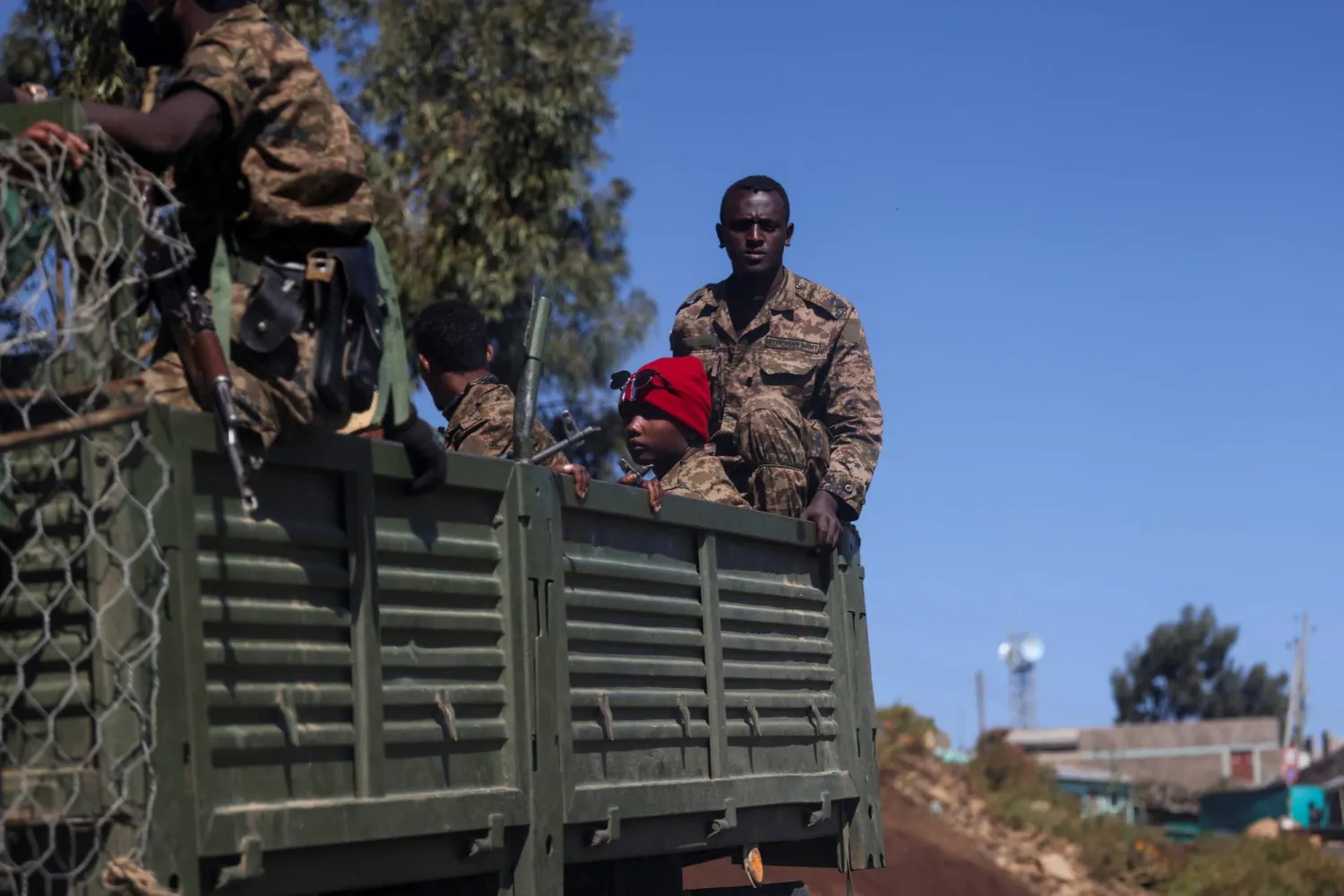
Ethiopian soldiers are seen in Tigray in March 2021. (Reuters)
TT

Ethiopia Accuses Eritrea of ‘Actively’ Preparing for War 

Ethiopian soldiers are seen in Tigray in March 2021. (Reuters)

Ethiopia has accused Eritrea of joining forces with a hardline opposition faction in preparing to launch a war, according to a letter from the foreign affairs ministry obtained by AFP on Wednesday.

The Tigray People's Liberation Front (TPLF), which dominated Ethiopian politics for some 30 years, has been banned from political activity.

Relations have been extremely strained for several months between the two neighbors, more than 30 years after Eritrea gained independence from Ethiopia after a decades-long armed struggle.

Ethiopia's foreign minister wrote in the letter to UN Secretary General Antonio Guterres that "the collusion between the Eritrean government and the TPLF has become more evident over the past few months...".

"The hardliner faction of the TPLF and the Eritrean government are actively preparing to wage war against Ethiopia," it added.

The government in Addis Ababa also accuses its counterpart in Asmara and the TPLF of "funding, mobilizing and directing armed groups" in the Amhara region, where the federal army has been facing rebels for several years.

Eritrea's Information Minister Yemane Ghebremeskel and the TPLF have so far not responded to AFP's requests for comment on the accusations.

After independence in 1993, a bloody border war erupted between the two Horn of Africa countries from 1998 to 2000, leaving tens of thousands dead.

Relations thawed in 2018 after Ethiopian Prime Minister Abiy Ahmed came to power and signed a peace deal with President Isaias Afwerki, who has ruled Eritrea with an iron fist since independence.

The peace agreement earned Abiy a Nobel Peace Prize in 2019.

Eritrean troops backed Ethiopian federal forces during the bloody war in the northern Tigray region between 2020 and 2022, which left an estimated 600,000 people dead, according to the African Union.

- Sea access dispute -

Since the conflict ended, relations have again turned frosty, with Asmara accusing its landlocked neighbor of eyeing the Assab port on the Red Sea in southeastern Eritrea.

Abiy has repeatedly reiterated his desire for Ethiopia to regain sea access, lost legally after Eritrea's independence.

Ethiopian foreign minister Gedion Timothewos in the letter said Addis Ababa wants "to engage in good faith negotiations with the government of Eritrea".

He accused Asmara of trying "to justify its sinister machinations against Ethiopia by claiming that it feels threatened by Ethiopia's quest to gain access to the sea".

In June, a report by a US monitoring group accused Eritrea of rebuilding its army and destabilizing its neighbors.

Ghebremeskel, Eritrea's information minister, criticized the report by the NGO The Sentry and blamed "the new tension in the region" on Ethiopia.

Eritrea, one of Africa’s least populated countries with about 3.5 million people, has in recent months strengthened ties with Egypt, which also has strained relations with Ethiopia.



‘You Are Not Alone’ in Ebola Fight, Vows DR Congo-Bound WHO Chief

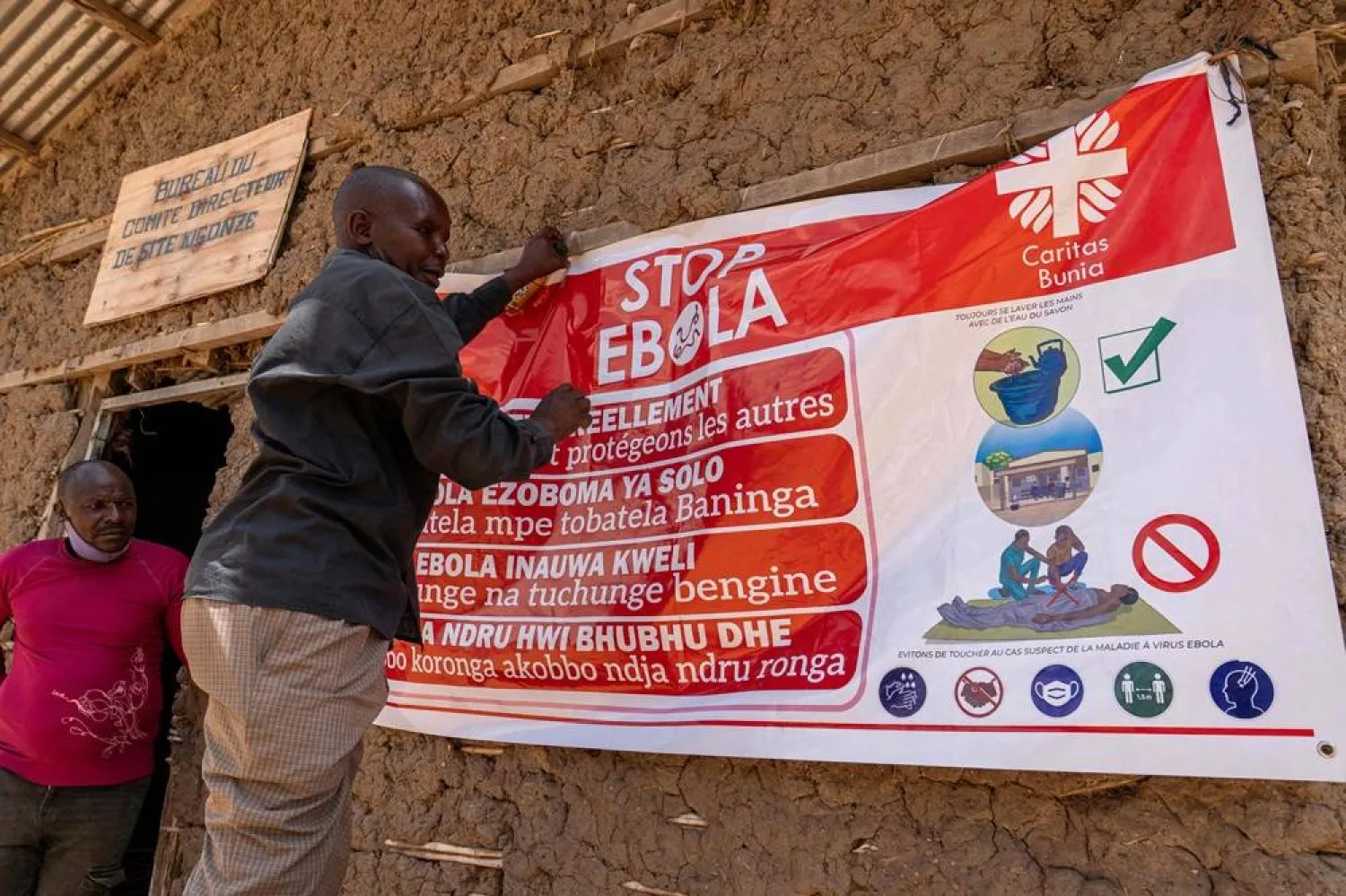
A man hangs an Ebola awareness banner in the Kigonze camp in Bunia, in the eastern Democratic Republic of the Congo, on May 28, 2026. (AFP)
TT

‘You Are Not Alone’ in Ebola Fight, Vows DR Congo-Bound WHO Chief

A man hangs an Ebola awareness banner in the Kigonze camp in Bunia, in the eastern Democratic Republic of the Congo, on May 28, 2026. (AFP)

The WHO's chief pledged to do "everything in my power" to help conquer a deadly Ebola outbreak in the Democratic Republic of Congo, as he headed to the African nation on Thursday.

In lengthy message to the Congolese people, the World Health Organization's director-general Tedros Adhanom Ghebreyesus insisted that "together, we will overcome this outbreak".

According to its latest figures, up to May 24, the WHO has recorded 10 confirmed and 223 suspected Ebola deaths in the DRC since the outbreak was declared on May 15, out of more than 1,000 confirmed and suspected cases.

The WHO has warned that the true spread of the outbreak, thought to have circulated under the radar for some time, is likely much wider.

"I want to be with you in these moments. And I want you to know that you are not alone," Tedros said in the message posted on X, having earlier said he was on his way to the DRC.

"Ebola is now back. This time, the outbreak is hitting Ituri province the hardest," he said, with more than 90 percent of cases in the conflict-torn northeastern province.

"I know how frightening that is."

Tedros said he would be going to Ituri's capital Bunia, "and doing everything in my power to help you. I will not be managing this from a comfortable office far away."

- 'Declare a ceasefire' -

The UN health agency's chief said the affected areas were already dealing with malaria, hunger, insecurity and now Ebola. "It is not fair, and I will not pretend otherwise," he said.

According to Tedros, the Ebola response would be built on Ituri's in-built resilience.

"We do not come to Ituri with only medicine and expertise. We come to join a community that already knows how to fight for its survival," he said.

Tedros fears insecurity in the eastern DRC, which has been plagued by conflict for three decades, is making it harder to contain the outbreak.

He urged the warring factions to give health workers the space to save lives.

"Conflict and displacement make everything harder," he said.

"I am making a direct appeal to all warring parties in this region: please, declare a ceasefire.

"People are dying from Ebola who do not have to die. Children are sick. Families are suffering. No cause, no conflict, no grievance is worth condemning innocent people to death from a preventable disease."

- Fear and silence -

No vaccine or treatment exists for the Bundibugyo strain of Ebola, which is behind the current outbreak.

However, Tedros said the spread of the virus could still be prevented by early care in treatment centers.

And he vowed that the authorities would help ensure loved ones are buried in dignity and safety.

He urged young people to help break "the fear and the silence that allow this virus to spread".

Tedros said he was no stranger to Ebola outbreaks in the DRC, recalling that from 2018 to 2020, he visited North Kivu province -- the epicenter of that outbreak -- 14 times.

In that crisis, "trust grew slowly, then more quickly. People came forward. And together, we managed to contain the outbreak," he said.

This is the 17th recorded Ebola outbreak in the vast central African country of more than 100 million people.

"Together, you have overcome every single one before," said Tedros.

"We will get through this one too."


Report Says Iran and US Reach Outline Ceasefire Deal After Latest Attacks

An Iranian girl walks next to an anti-US mural depicting Iran and US negotiations at a table, near the former US Embassy in Tehran, Iran, 26 May 2026. (EPA)
TT

Report Says Iran and US Reach Outline Ceasefire Deal After Latest Attacks

An Iranian girl walks next to an anti-US mural depicting Iran and US negotiations at a table, near the former US Embassy in Tehran, Iran, 26 May 2026. (EPA)

The United States and Iran have reached an outline agreement to extend their ceasefire pending the approval of President Donald Trump, Axios reported on Thursday, after Iran targeted a US air base in Kuwait in the wake of US strikes on what Washington said was an Iranian drone operation.

According to the report by Axios, the two sides agreed on a 60-day memorandum of understanding to extend the truce and launch negotiations on Iran's nuclear program, but the plan still needed Trump's signoff.

There was no immediate confirmation of the report which prompted oil prices to reverse course and trade lower.

Trump has repeatedly said the end of the war is close but told media at a cabinet meeting on Wednesday he was not yet satisfied by the negotiations and that the ‌US was not ‌discussing easing sanctions, one of Tehran's demands.

US AND IRAN TRADE BLOWS

The latest attacks, while ‌limited, ⁠highlighted the fragility ⁠of negotiations to turn the tenuous early-April ceasefire into a lasting agreement to end the three-month-old war, which has killed thousands, and reopen the vital Strait of Hormuz shipping route.

US Central Command said US forces had shot down five Iranian attack drones and struck a ground control station in the port city of Bandar Abbas that was about to launch a sixth. Kuwaiti forces had then intercepted a ballistic missile fired towards the country, which hosts a large US base.

"These actions were measured, purely defensive and intended to maintain the ceasefire," a US official, who requested anonymity to speak candidly about military operations, told Reuters ⁠earlier.

The Iranian Revolutionary Guard Corps said it had targeted the US base responsible for ‌an early-morning attack near Bandar Abbas airport and that any repeat would ‌lead to a "more decisive response", Tasnim news agency reported.

Kuwait condemned the attack and demanded that Iran immediately halt what it called ‌a serious escalation.

The violence, the second flare-up this week, coincided with Eid al-Adha holiday that is celebrated ‌across the region, where multiple countries have been caught up in the conflict triggered by US and Israeli attacks on Iran on February 28.

Mediator Pakistan said its foreign minister, Ishaq Dar, would meet US Secretary of State Marco Rubio in Washington on Friday, although the significance of his visit was unclear.

In Lebanon, which Iran says must be part of any overall peace deal, Israel said ‌it had begun striking infrastructure of Iran-backed Hezbollah in the southern city of Tyre and had carried out a strike in the capital Beirut.

The Lebanese army ⁠said a strike had ⁠killed one of its soldiers, while Israel, which has displaced hundreds of thousands of people with a push deep into Lebanon in pursuit of Hezbollah, said air raid sirens had gone off in its north.


UN Condemns ‘Dangerous Escalation’ in Ukraine War

Commuters sit in a bus driving past a heavily damaged building following Russian strikes near the Lukianivska metro station in Kyiv on May 27, 2026, amid the Russian invasion of Ukraine. (AFP)
TT

UN Condemns ‘Dangerous Escalation’ in Ukraine War

Commuters sit in a bus driving past a heavily damaged building following Russian strikes near the Lukianivska metro station in Kyiv on May 27, 2026, amid the Russian invasion of Ukraine. (AFP)

The United Nations rights chief warned Thursday against a "dangerous escalation" in Ukraine, and Russia's threats to ramp up attacks, urging both sides to return to the negotiating table.

"I strongly urge restraint. Resume negotiations and end the suffering," Volker Turk said in a statement.

His appeal comes days after one of the worst combined missile and drone attacks on Kyiv since Russia launched its full-scale invasion of Ukraine more than four years ago.

It was the latest in a string of large-scale attacks by Russia in recent weeks.

The UN rights office said 815 civilians had been killed and 4,174 injured in Ukraine in the first four months of 2026 -- a 21-percent increase in civilian casualties over the same period last year.

"As if all these casualty figures weren't horrifying enough on their own, following these attacks, Russian officials have publicly threatened to increase attacks across Kyiv," Turk said.

"International humanitarian law demands that parties to a conflict take all feasible precautions to avoid civilian harm," he said.

"These are not simply suggestions or recommendations, but binding obligations carrying legal responsibility for those involved."

His office also pointed to an attack by Ukrainian armed forces on an educational complex in the occupied city of Starobilsk on May 21-22, in which Russian authorities say 21 people were killed and 44 injured.

"The UN Human Rights Office has conducted a thorough review of publicly-available information, which indicates that the educational facilities were operational at the time of the attack and that civilians -- many of them students -- were killed or injured," it said.

Eighteen of those killed were women, it said, adding that attacks by Ukrainian armed forces had also killed and injured civilians within Russia itself.

Turk called on both Russian and Ukrainian authorities to conduct "prompt, independent, and effective investigations and hold those responsible accountable".