


Iran Says its Missile Program is Not Part of Negotiations

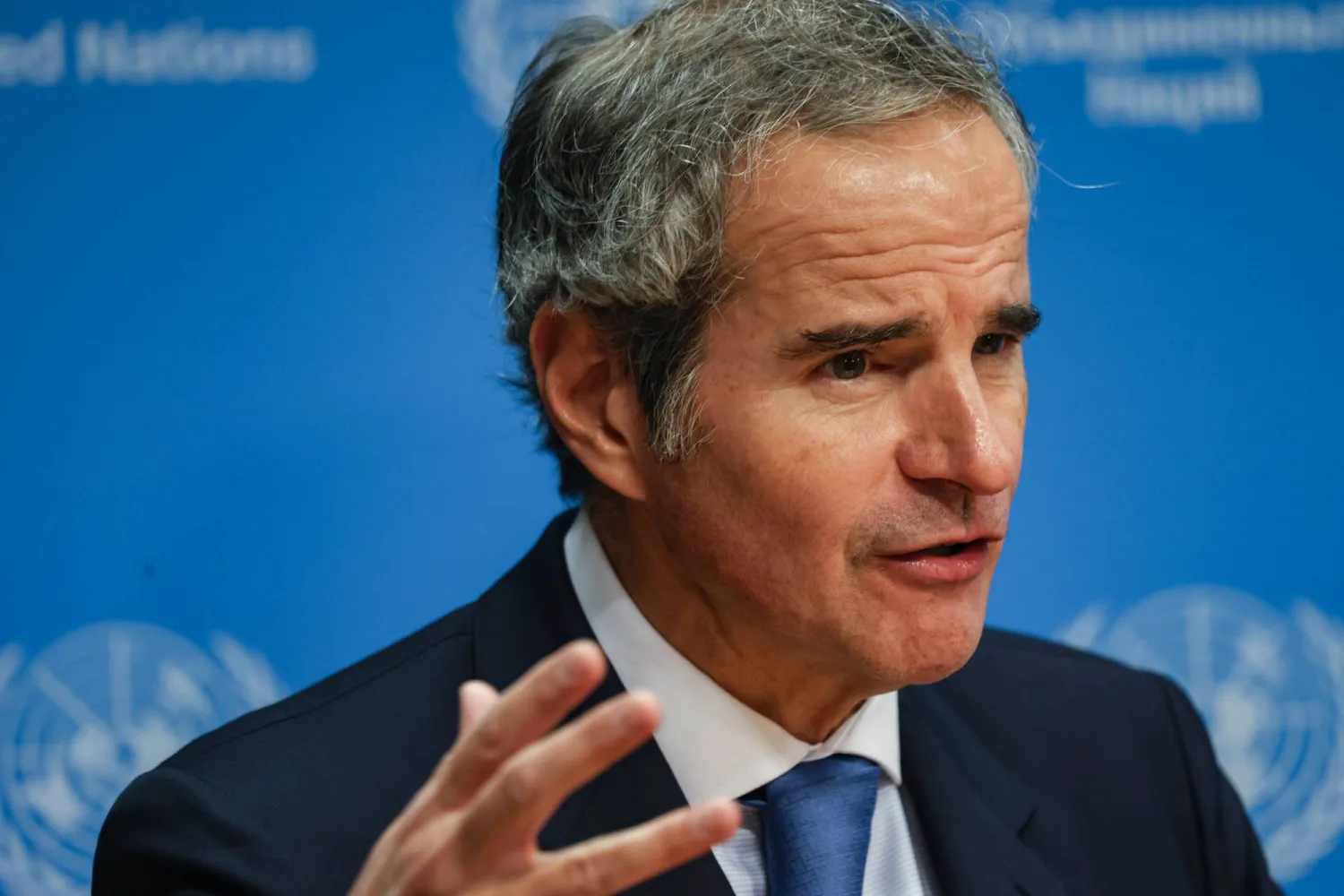
29 October 2025, US, New York: RAFAEL MARIANO GROSSI, Director General of the International Atomic Energy Agency (IAEA), briefs the press on current global nuclear safety and security concerns, including developments in Ukraine and Iran. Photo: Bianca Otero/ZUMA Press Wire/dpa
TT

Iran Says its Missile Program is Not Part of Negotiations

29 October 2025, US, New York: RAFAEL MARIANO GROSSI, Director General of the International Atomic Energy Agency (IAEA), briefs the press on current global nuclear safety and security concerns, including developments in Ukraine and Iran. Photo: Bianca Otero/ZUMA Press Wire/dpa

Iranian Foreign Minister Abbas Araghchi said on Wednesday that Tehran currently has no plans for talks on its missile program.

Any possible talks between Iran and the United States would be limited to the nuclear file, Araghchi said.

Speaking after a cabinet meeting in Tehran, the minister said Washington had often raised missile and regional topics in past discussions, but Iran’s position was unchanged.

“If there are talks with the US, they will only concern the nuclear issue,” he added.

Meanwhile, International Atomic Energy Agency chief Rafael Grossi said Wednesday that Iran must "seriously improve" cooperation with the United Nations inspectors to avoid heightening tensions with the West.

Grossi told the Financial Times that while the IAEA has carried out about a dozen inspections in Iran since hostilities with Israel in June, it had not been given access to nuclear facilities such as Fordow, Natanz and Isfahan, which were bombed by the United States.

Grossi said in October that movement had been detected near Iran's enriched uranium stockpile but that it did "not imply that there is activity on enrichment.”

Iranian Foreign Ministry spokesperson Esmaeil Baghaei subsequently said that Grossi was "fully aware of the peaceful nature" of Iran's nuclear program and should not express "unfounded opinions" on it.

Iranian officials have blamed the IAEA for providing a justification for Israel's bombing, which began the day after the IAEA board voted to declare Iran in violation of obligations under the Nuclear Non-Proliferation Treaty.

Grossi told the FT that while the agency was trying to approach the "bumpy" relations with Iran with understanding, the country still needed to comply.

"You cannot say, 'I remain within the non-proliferation of nuclear weapons treaty’, and then not comply with obligations," Grossi said.

"You cannot expect the IAEA to say, 'OK, since there was a war you are in a different category'...Otherwise what I will have to do is report that I have lost all visibility of this material,” he said.



NATO: Ukraine Still Receiving Arms Despite Mideast War

NATO Secretary General Mark Rutte via Reuters/File
TT

NATO: Ukraine Still Receiving Arms Despite Mideast War

NATO Secretary General Mark Rutte via Reuters/File

Ukraine is still getting essential defense equipment despite the war in the Middle East, which is depleting stockpiles in Europe and the United States, NATO Secretary General Mark Rutte said Thursday.

"The good news is that essential equipment into Ukraine continues to flow," he told reporters. That included American-made Patriot missile interceptors, which Ukraine desperately needs, he added, AFP reported.

The PURL program, launched last year, allows Ukraine to receive US equipment financed by European countries.

Some 75 percent of the missiles used by Patriot batteries in Ukraine have been supplied through the program, and 90 percent of the munitions used by other air-defense systems, Rutte added.

Rutte called on European countries to increase their own production capacity.

"They need to produce more extra production lines, extra shifts, opening new factories. The money is there," he said.


Germany FM Says 'Encouraging' if US Speaking Directly to Iran

German Foreign Minister Johann Wadephul. (Reuters: File Photo)
TT

Germany FM Says 'Encouraging' if US Speaking Directly to Iran

German Foreign Minister Johann Wadephul. (Reuters: File Photo)

Germany's foreign minister Thursday said it was encouraging if the United States was talking directly to Iran to end the war in the Middle East, but Washington should make its intentions clear.

"I hear that there are signs that the US is speaking directly to Iran. I think that this is encouraging and this is welcome," Johann Wadephul told reporters before heading into the meeting of G7 foreign ministers outside Paris, AFP reported.

With US Secretary of State Marco Rubio set to join the discussions from Friday, he added: "For the German government it is of great importance to know precisely what our American partners are intending."


US Envoy Witkoff Says Iran is Seeking an Off-ramp

US Special Envoy Steve Witkoff speaks during a cabinet meeting at the White House in Washington, DC, US, March 26, 2026. REUTERS/Evelyn Hockstein
TT

US Envoy Witkoff Says Iran is Seeking an Off-ramp

US Special Envoy Steve Witkoff speaks during a cabinet meeting at the White House in Washington, DC, US, March 26, 2026. REUTERS/Evelyn Hockstein

The United States has sent Iran a "15-point action list" as a basis for negotiations to end the current conflict, US Special Envoy Steve Witkoff said on Thursday, adding that there are signs that Tehran was interested in making a deal.


Witkoff, speaking during a cabinet meeting at the White House, said that the nascent talks could be successful if the Iranians realize there were no good alternatives - a realization Tehran might be coming to, he argued, Reuters reported.


"We will see where things lead, and if we can convince Iran that this is the inflection point with no good alternatives for them other than more death and destruction," Witkoff told reporters.


"We have strong signs that this is a possibility."


Witkoff said Pakistan had been acting as a mediator, confirming statements from Pakistani officials.