Türkiye Condemns Ukrainian Strikes on Russian Oil Tankers off Black Sea Coast

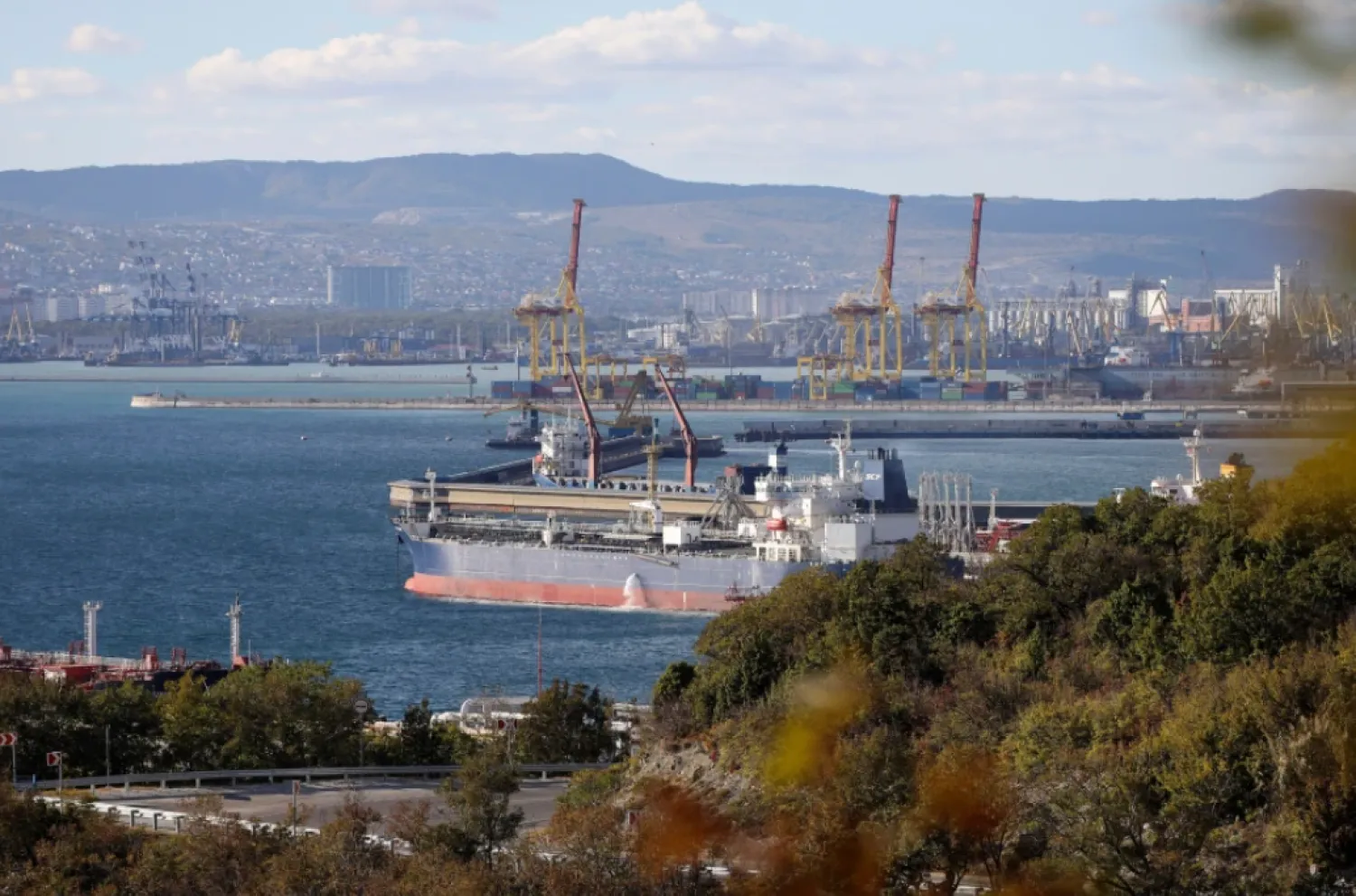
An oil tanker is moored at the Sheskharis oil and petroleum complex on the Black Sea port of Novorossiysk, Russia, Oct. 11, 2022. (AP Photo, File)
TT

Türkiye Condemns Ukrainian Strikes on Russian Oil Tankers off Black Sea Coast

An oil tanker is moored at the Sheskharis oil and petroleum complex on the Black Sea port of Novorossiysk, Russia, Oct. 11, 2022. (AP Photo, File)

The Turkish government has condemned Ukrainian drone attacks on two Russian “shadow fleet” oil tankers in the Black Sea.

Foreign Ministry spokesman Oncu Keceli said the attacks on the Kairos and Virat vessels happened inside Türkiye's exclusive economic zone and “have posed serious risks to navigation, life, property and environmental safety in the region.”

In a social media post late Saturday, Keceli added that Türkiye is carrying out talks with “the relevant parties” to prevent the spread of the war in Ukraine across the Black Sea and to protect Türkiye's economic interests, The AP news reported.

Ukraine has said it used naval drones to hit the tankers in quick succession off Türkiye's Black Sea coast late Friday afternoon. Crew members on board both vessels were reported to be safe.

The OpenSanctions database, which tracks people or organizations involved in sanctions evasion, describes the vessels as part of a fleet of ships used to evade sanctions imposed on Russia following its 2022 invasion of Ukraine.

Ukraine has carried out successful naval strikes against Russian shipping during the war, particularly using explosives-packed marine drones. However, Ukrainian missions have previously largely been limited to the waters of the northern Black Sea.


With New Speaker, Israel Parliament Moves to Unravel Netanyahu Legacy

Israeli Prime Minister Benjamin Netanyahu and other Israeli lawmakers attend a parliamentary session at the Knesset, Israel's parliament, in Jerusalem, during a vote to elect Matan Kahana as the new Speaker of the Knesset, Tuesday, Nov. 17, 2026. (AP)
TT

With New Speaker, Israel Parliament Moves to Unravel Netanyahu Legacy

Israeli Prime Minister Benjamin Netanyahu and other Israeli lawmakers attend a parliamentary session at the Knesset, Israel's parliament, in Jerusalem, during a vote to elect Matan Kahana as the new Speaker of the Knesset, Tuesday, Nov. 17, 2026. (AP)

Israel's parliament met under a new speaker from the anti-Benjamin Netanyahu bloc on Wednesday, as opponents of the caretaker prime minister begin a legislative offensive to roll back his divisive legacy.

In the vote for parliament speaker late on Tuesday, 66 lawmakers out of 120 voted in favor of Matan Kahana, an ally of former military chief Gadi Eisenkot who has until next month to form a government to replace Netanyahu.

The speaker is an important office given that it sets the timetable for parliamentary business and can therefore speed up or delay debates or votes on proposed legislation.

With Kahana at the helm, Eisenkot's camp has an opportunity to deal blows to Netanyahu's legislative agenda even before a possible government is formed.

High on the list is repealing the sweeping reforms to reduce the independence of the judiciary that were advanced by Netanyahu, who has been enraged over corruption charges against him that could land him in prison if he loses power.

On Wednesday, a provisional committee in charge of organizing parliamentary business began examining the possibility of fast-tracking several bills that Eisenkot wants to see adopted even before the formation of a government.

The Knesset is due to hold preliminary votes on bills designed to reverse Netanyahu-era legislation which increased political influence over the judiciary and the media.

But any green light would not mean the immediate adoption of the bills, which must still clear several parliamentary stages and be put to three votes.

Kahana, a 54-year-old former special forces soldier, was elected on Tuesday with the backing of the two Arab-majority lists, who won an unprecedented number of seats in the October 27 election.

"I intend to serve as speaker for everyone, regardless of religion, race or gender," Kahana said during his inauguration speech immediately after the vote.

- 'Not what I wanted' -

The October election failed to deliver a clear majority for either Eisenkot or Netanyahu's bloc.

Netanyahu on Tuesday acknowledged the result in a rare statement free from political attacks on his opponents.

"The results of these elections are not what I wanted, nor are they what others wanted, but they are what the people want," he told journalists, calling for unity.

Netanyahu, who has reportedly been urging US President Donald Trump to resume war on Iran, has talked up the threat from Tehran as he insists on the need for a unity government with Eisenkot.

As well as repealing Netanyahu's divisive judicial reforms, Eisenkot has also vowed to quickly set up a state commission of inquiry to investigate security failures that led to Hamas's October 7, 2023 attack -- the deadliest day in Israel's history.

Netanyahu, who has built his brand on saying he will ensure Israel's security, has refused an independent probe, instead proposing one whose members would be chosen by politicians.


Russia Sentences Israeli Organ Smuggler to 12 Years

 People walk up to Red Square approaching St. Basil's cathedral and the Kremlin's Spasskaya tower during a snowfall in Moscow on November 18, 2026. (AFP)
People walk up to Red Square approaching St. Basil's cathedral and the Kremlin's Spasskaya tower during a snowfall in Moscow on November 18, 2026. (AFP)
TT

Russia Sentences Israeli Organ Smuggler to 12 Years

 People walk up to Red Square approaching St. Basil's cathedral and the Kremlin's Spasskaya tower during a snowfall in Moscow on November 18, 2026. (AFP)
People walk up to Red Square approaching St. Basil's cathedral and the Kremlin's Spasskaya tower during a snowfall in Moscow on November 18, 2026. (AFP)

A Moscow court on Wednesday sentenced an Israeli citizen to 12 years in a penal colony in a major organ trafficking case that dates back 20 years.

Russia says Boris Wolfman, 42, lured people -- including Russians -- to Kosovo between 2006 and 2008 for them to undergo illegal operations and for an international crime group to sell their organs.

He was found guilty of trafficking human beings as part of an organized group with the aim of removing their organs.

Wolfman was arrested in Türkiye last year and deported to Russia, where was detained upon arrival.

"The court sentenced Wolfman to 12 years of imprisonment to be served in a high-security correctional colony," the Moscow prosecutor's office said in a statement.

State prosecutors had asked for a 15-year sentence.

According to some media, he is also a citizen of Ukraine.

In 2018, two Kosovan doctors were imprisoned for performing illegal operations and selling organs to wealthy patients for hundreds of thousands of dollars.

The procedures took place in a private clinic in Pristina, AFP reported at the time.

State media reported Wolfman did not admit guilt.

According to Russian media, he had lured at least three Russians facing difficult financial circumstances to come to Kosovo and sell their kidneys.


China’s Xi Backs Efforts to Ease Tensions with North Korea, South Korea Says

South Korean President Lee Jae Myung attends a meeting with Chinese President Xi Jinping at the APEC China 2026 Summit in Shenzhen, Guangdong province, China, 18 November 2026. (EPA)
TT

China’s Xi Backs Efforts to Ease Tensions with North Korea, South Korea Says

South Korean President Lee Jae Myung attends a meeting with Chinese President Xi Jinping at the APEC China 2026 Summit in Shenzhen, Guangdong province, China, 18 November 2026. (EPA)

China supports various efforts to ease tensions on the Korean peninsula including dialogue between US and North Korea, South Korea's presidential office said on Wednesday after a meeting between President Lee Jae Myung and Chinese counterpart Xi Jinping.

The two leaders met on the sidelines of the Asia-Pacific Economic Cooperation gathering.

US President Donald Trump has floated the possibility of meeting North Korean leader Kim Jong Un during his Asia trip, although no such encounter has been confirmed. China says it has no information about a possible meeting.

Trump's interest in renewed engagement with Kim ‌comes seven years ‌after their last summit ended without agreement over curtailing ‌North ⁠Korea's nuclear weapons ⁠and sanctions relief.

North Korea has repeatedly signaled it is unwilling to resume discussions unless denuclearization is off the agenda. Trump has referred to North Korea as a nuclear power, a status allies in the region and the West have refused to recognize.

US Secretary of State Marco Rubio said on Wednesday that Trump is "prepared" for dialogue with Pyongyang, although it does ⁠not mean a meeting will take place during ‌the visit.

Lee told Xi that ‌tensions on the peninsula were a matter of vital national interest for South ‌Korea, the presidential office said in a statement.

Xi briefed Lee on recent ‌developments in China's relations with North Korea and said China would continue to play a constructive role in issues on the Korean peninsula, Seoul said.

South Korea's Lee also said he hopes the two countries will further develop an ‌equal and mutually beneficial economic partnership.

"Above all, for the strategic partnership between Korea and China to mature and ⁠develop, peace and ⁠stability on the Korean Peninsula must be ensured," Lee said, according to a pool report.

Neither Xi nor Lee referred to denuclearization in their public opening remarks or in the South Korean account of the meeting.

China has increasingly framed its approach around stability and dialogue on North Korea issues rather than publicly stressing denuclearization.

Trump's new global security roadmap has dropped any reference to denuclearizing North Korea as a goal, fueling speculation that Washington wants to raise the chances of a diplomatic breakthrough with Pyongyang this year.

China is ready to strengthen communication and coordination with South Korea, maintain the stability and smooth operation of global industrial and supply chains, Xi said.