


US Says It Disables Another Commercial Ship Trying to Breach Blockade and Reach Iran

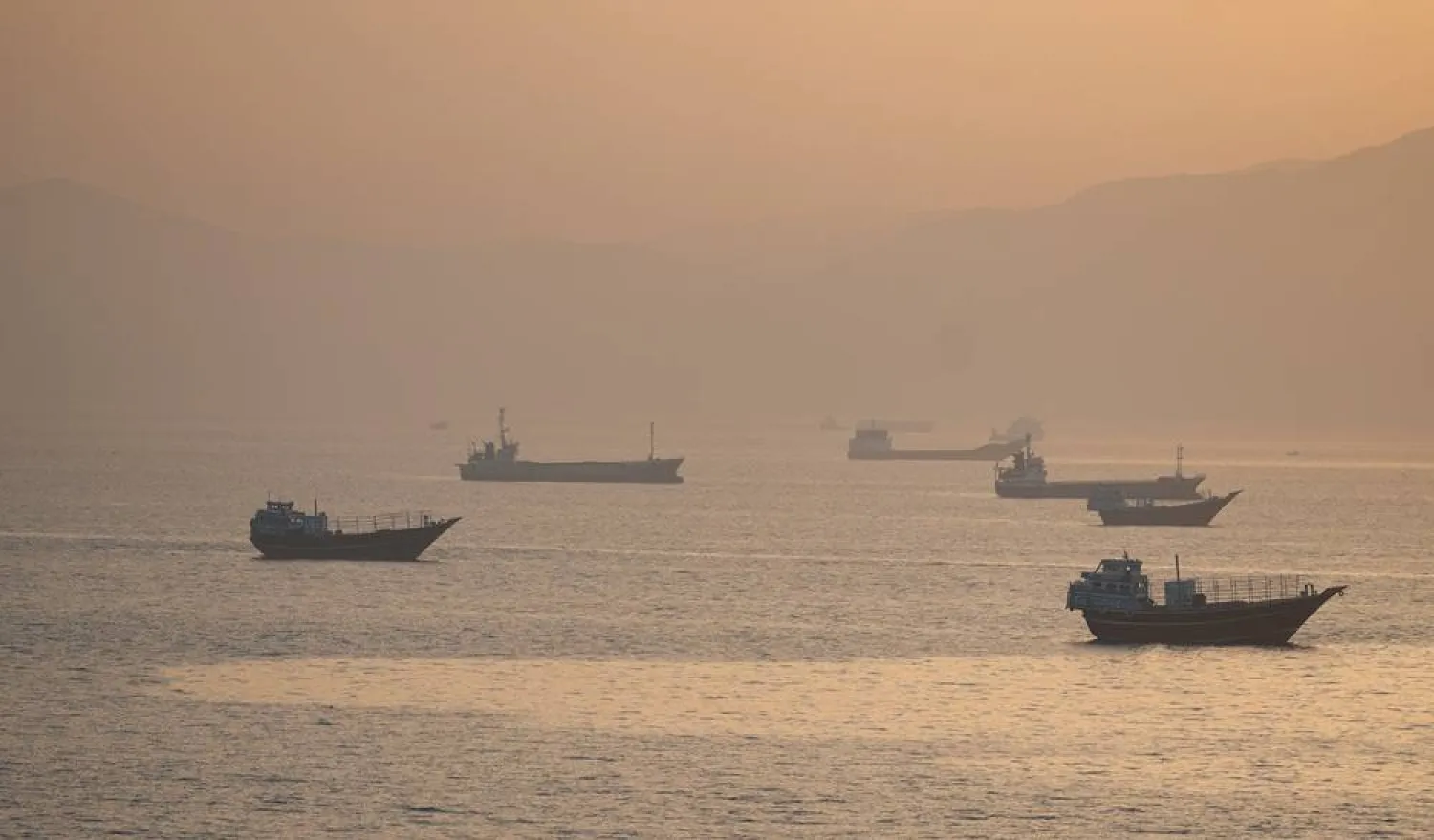
 Vessels anchored at the Strait of Hormuz, as seen from Musandam, Oman, May 30, 2026. (Reuters)
Vessels anchored at the Strait of Hormuz, as seen from Musandam, Oman, May 30, 2026. (Reuters)
TT

US Says It Disables Another Commercial Ship Trying to Breach Blockade and Reach Iran

 Vessels anchored at the Strait of Hormuz, as seen from Musandam, Oman, May 30, 2026. (Reuters)
Vessels anchored at the Strait of Hormuz, as seen from Musandam, Oman, May 30, 2026. (Reuters)

The US military has stopped another merchant vessel trying to break through the American blockade of Iranian ports, a US official with knowledge of the situation told The Associated Press on Saturday.

The Gambia-flagged bulk carrier Lian Star ignored multiple warnings from US forces overnight as it tried to enter an Iranian port, said the official, who spoke on condition of anonymity to discuss military operations.

The ship was disabled by US aircraft in the Gulf of Oman and remains adrift there, the official said, adding that US forces have not boarded it.

With the latest action, US military has stopped six ships trying to breach the blockade. One was allowed to proceed.

The US launched the blockade on April 17 in response to Iran effectively closing the Strait of Hormuz after the war began with US and Israeli strikes on Feb. 28. A fragile ceasefire has held since April 7.

Now the region and wider world await word on whether a deal is being reached to extend it by 60 days while new talks would be held on Iran’s disputed nuclear program.

Events in the Strait of Hormuz between Iran and Oman have shaken the global economy, with shipments of significant amounts of oil, natural gas and related supplies like fertilizer largely stranded, increasing the strain on consumers and food producers.

The US blockade seeks to limit Iran’s own shipments and further weaken its access to cash, creating more pain for its long-weakened economy.

US President Donald Trump met with advisers on Friday but has yet to decide on whether to move ahead with a deal to extend the ceasefire and reopen the strait. Iran has said the deal had not been finalized.



Rubio: Trump Likely to Visit India Early Next Year

 US Secretary of State Marco Rubio speaks with members of the media before departing for Bahrain International Airport after his visit to the Middle East, Manama, Bahrain, June 25, 2026. (Reuters)
US Secretary of State Marco Rubio speaks with members of the media before departing for Bahrain International Airport after his visit to the Middle East, Manama, Bahrain, June 25, 2026. (Reuters)
TT

Rubio: Trump Likely to Visit India Early Next Year

 US Secretary of State Marco Rubio speaks with members of the media before departing for Bahrain International Airport after his visit to the Middle East, Manama, Bahrain, June 25, 2026. (Reuters)
US Secretary of State Marco Rubio speaks with members of the media before departing for Bahrain International Airport after his visit to the Middle East, Manama, Bahrain, June 25, 2026. (Reuters)

US Secretary of State ‌Marco Rubio said the US is seeking to arrange a visit to India by President Donald Trump early next year as the countries work on a bilateral trade deal, Indian media outlet IANS reported on Saturday.

Rubio is likely to travel to India this year to prepare for the president's visit, he told ‌IANS in ‌an interview.

"We're working towards sometime ‌early ⁠next year to ⁠have the president come," he said, according to IANS.

Prime Minister Narendra Modi met Trump last week on the sidelines of a summit of the Group of Seven industrial powers in France. Trump ⁠said that they had a "very ‌good" conversation.

India ‌has been pressing the United States for ‌months for a Trump visit, potentially as ‌part of a meeting including Japan and Australia.

India-US ties have been rocky over the past year since Washington imposed high tariffs on ‌Indian goods, punishing New Delhi for purchasing Russian oil, and engaging ⁠closely ⁠with India's arch-rival Pakistan.

Rubio visited India last month seeking to repair ties, but the killing of three Indian sailors in attacks on commercial ships by the US Navy in the Gulf has roiled relations again.

In the IANS interview, Rubio said the US hoped to conclude a trade deal with India. "We're on the last inches of getting it done and it's very positive."


Seoul Says Chinese, Russian Military Aircraft Enter Its Air Defense Zone

A person holds a South Korean flag in front of the National Assembly in Seoul, South Korea, December 6, 2024. (Reuters)
TT

Seoul Says Chinese, Russian Military Aircraft Enter Its Air Defense Zone

A person holds a South Korean flag in front of the National Assembly in Seoul, South Korea, December 6, 2024. (Reuters)

South Korea said it had sent up fighter jets as a precaution after more than 10 Chinese and Russian military aircraft entered its air defense zone on Saturday.

The Joint Chiefs of Staff in Seoul said the Chinese and Russian aircraft had entered and then left the Korea Air Defense Identification Zone (KADIZ) over the East Sea and the South Sea.

"South Korea's military detected the Chinese and Russian aircraft before they entered the zone and deployed Air Force fighter jets to prepare for any contingency," it said in a statement, without giving more details.

The Chinese and Russian aircraft did not violate South Korean airspace, it said.

An air defense identification zone is not sovereign airspace but a buffer area where countries identify approaching aircraft for security purposes.

Military aircraft are generally expected to notify the relevant country before entering its air defense zone, although such notification is not legally required.

China and Russia did not comment immediately about the incident.

South Korea and Japan reacted furiously when nine Chinese and Russian military aircraft entered the KADIZ in December 2025, the previous such incident.

South Korea's defense ministry lodged protests with Beijing and Moscow over that incident, while Japan expressed its "serious concern" over national security.

China and Russia said the flights were part of a joint patrol over the East Sea and the western Pacific.


Can Iran Rebuild its Military Arsenal?

Drones are seen at an undisclosed location in Iran. (Reuters file)
TT

Can Iran Rebuild its Military Arsenal?

Drones are seen at an undisclosed location in Iran. (Reuters file)

The full extent of damage to Iran’s military from US and Israeli strikes in 2026 remains unclear. “What is clear is that absent regime change, Iran will move quickly to reconstitute,” said a report by the Center for Strategic and International Studies (CSIS)

“Open-source evidence, though incomplete, points to significant degradation of Iran’s military in the recent conflict. Commercial satellite imagery confirms the loss of nearly all of Tehran’s conventional naval surface fleet and further damage to its principal military shipyards and naval bases, which have also been rendered partially inoperable by sunken vessels blocking military berths.”

Imagery also shows damage to aboveground weapon production sites and munitions facilities. Reports vary on the extent to which the 6,770 drone and missile launches as of April 1 have depleted Iran’s inventory. Recent US government assessments reported in the New York Times and the Washington Post say Tehran retains 70 percent of its prewar missile stockpile but only 40 percent of its drone arsenal.

“Based on the damage, Iran will look to clearing the ports, as without functional ports, the rest of the reconstitution effort is bottlenecked. Marine salvage operations to remove sunken hulls and restore channel access are necessary for much of what follows,” said the CSIS report.

Iran will seek to repair and rebuild weapons and munitions facilities. This is the precondition for reconstituting military production at scale. The work will require not just construction, but the replacement of damaged or destroyed manufacturing equipment.

“Drones are central to Iran’s military doctrine, its asymmetric posture, and its military export regime. Restoring and maintaining stockpiles will be a first-order priority.”

“With the conventional fleet degraded and shipyards damaged, Tehran is likely to lean further into the Revolutionary Guards small boat, fast attack, and unmanned maritime capabilities - platforms that are cheaper, faster to build, and better suited to the harassment and denial missions Iran is most likely to pursue in the near term,” said the report.

Clearing the ports requires specialized equipment, including enclosed marine salvage airbags, high-capacity submersible hydraulic pumps, and heavy-duty overhead gantry cranes.

Replenishing the drone fleet requires the sustained import of critical components. As recently as November 2022, according to leaked documents from a Russian delegation visit, Iran was assessed to be able to produce approximately 5,000 engines and 500 airframes for the Shahed-136 drone annually.

To do so, Iran requires a consistent supply of imported components, such as electronics and engines. Iran will also look to rebuild lost domestic production capabilities, importing not only components from abroad but also the fundamental equipment and materials needed to rebuild its partial self-sufficiency.

Iran’s procurement routes are being reshaped by the conflict. Iran is likely to develop more procurement pathways through countries bordering the Caspian in general.

“While Chinese materials, components, and equipment will likely be good enough to meet the bulk of Iran’s needs, Iran will likely continue its attempts to illicitly procure advanced Western technologies, such as German and Japanese machine tool controllers,” said the report.

“Diplomatic pressure on China could also lead to further trade obfuscation, with goods making multiple stops between China and Iran, making it more difficult to identify sources of supply but also slowing procurements and making them more costly,” it added.