


Landmine Casualties Hit 4-Year High as States Exit Ban Treaty

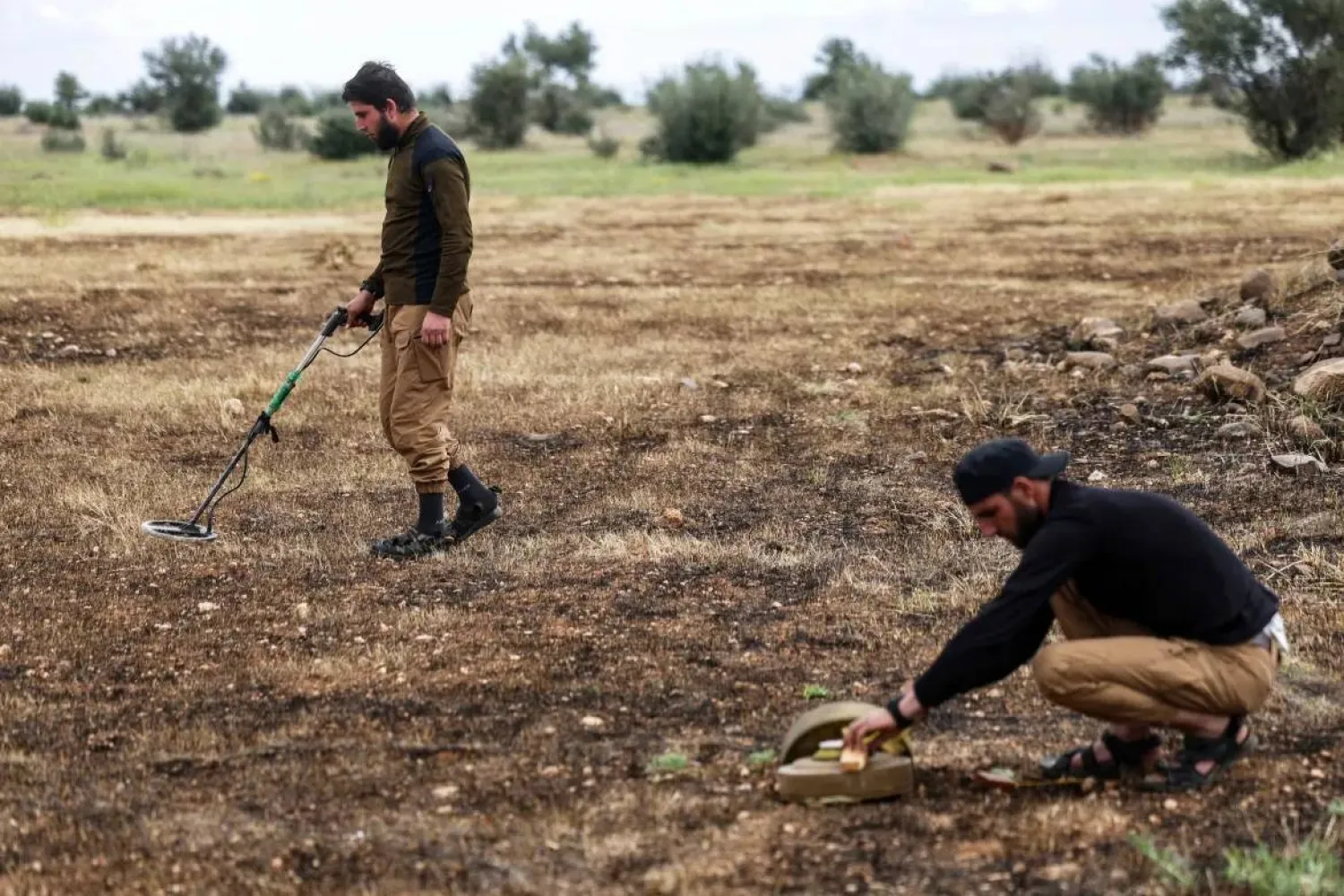
Members of Syria's Ministry of Defense clear landmines south of Idlib. (AP)
TT

Landmine Casualties Hit 4-Year High as States Exit Ban Treaty

Members of Syria's Ministry of Defense clear landmines south of Idlib. (AP)

Deaths and injuries from landmines and unexploded ordnance hit a four-year high in 2024, driven by conflicts in Syria and Myanmar as well as European countries moving to withdraw from the treaty banning their use, a new report showed on Monday.

Over 6,000 incidents were recorded last year, including 1,945 deaths and 4,325 injuries - the highest annual total since 2020, according to the Landmine Monitor 2025 report. Nearly 90% were civilians, with almost half women and children.

The surge was driven mainly by mines exploding in conflict zones in Syria and Myanmar - both countries which are outside the treaty. In Syria, returning residents face growing risks from unexploded ordnance following the fall of former President Bashar al-Assad, the report said.

Myanmar recorded the highest number with over 2,000 incidents due to increased use by both the army and non-state armed groups, the report said.

The treaty, which came into effect in 1999, binds 166 states, 85% of the world, prohibiting the use, stockpiling, production and transfer of anti-personnel mines. It also requires parties to clear contaminated areas and assist victims.

Several European nations are seeking withdrawal at a time when global funding cuts are hampering clearance efforts.

Estonia, Finland, Latvia, Lithuania and Poland are in the process of legally exiting the Ottawa Convention banning anti-personnel landmines in the face of what they say are growing military threats from Russia - risking the treaty's "dangerous erosion", the report stated.

Ukraine announced its withdrawal from the Convention on June 29. Military analysts said that doing so could help slow the Russian advances Kyiv is struggling to contain over three years after Moscow's full-scale invasion.

Activists say there should be a global ban on a weapon that blights huge swathes of territory and maims and kills civilians long after conflicts have abated.

The report also documented signs of new Ukrainian mine use, plus Thailand's accusations that Cambodian forces deployed anti-personnel mines in a July disputed border clash, which Cambodia denies. Russia and Myanmar, non-signatories, used landmines extensively, the report said.

Donor funding cuts, including from the US, resulted in reduced survivor support and termination of several humanitarian mine action programs compared with prior years, according to the report.

States party to the Mine Ban Treaty meet in Geneva this week.


NATO: Ukraine Still Receiving Arms Despite Mideast War

NATO Secretary General Mark Rutte via Reuters/File
TT

NATO: Ukraine Still Receiving Arms Despite Mideast War

NATO Secretary General Mark Rutte via Reuters/File

Ukraine is still getting essential defense equipment despite the war in the Middle East, which is depleting stockpiles in Europe and the United States, NATO Secretary General Mark Rutte said Thursday.

"The good news is that essential equipment into Ukraine continues to flow," he told reporters. That included American-made Patriot missile interceptors, which Ukraine desperately needs, he added, AFP reported.

The PURL program, launched last year, allows Ukraine to receive US equipment financed by European countries.

Some 75 percent of the missiles used by Patriot batteries in Ukraine have been supplied through the program, and 90 percent of the munitions used by other air-defense systems, Rutte added.

Rutte called on European countries to increase their own production capacity.

"They need to produce more extra production lines, extra shifts, opening new factories. The money is there," he said.


Germany FM Says 'Encouraging' if US Speaking Directly to Iran

German Foreign Minister Johann Wadephul. (Reuters: File Photo)
TT

Germany FM Says 'Encouraging' if US Speaking Directly to Iran

German Foreign Minister Johann Wadephul. (Reuters: File Photo)

Germany's foreign minister Thursday said it was encouraging if the United States was talking directly to Iran to end the war in the Middle East, but Washington should make its intentions clear.

"I hear that there are signs that the US is speaking directly to Iran. I think that this is encouraging and this is welcome," Johann Wadephul told reporters before heading into the meeting of G7 foreign ministers outside Paris, AFP reported.

With US Secretary of State Marco Rubio set to join the discussions from Friday, he added: "For the German government it is of great importance to know precisely what our American partners are intending."


US Envoy Witkoff Says Iran is Seeking an Off-ramp

US Special Envoy Steve Witkoff speaks during a cabinet meeting at the White House in Washington, DC, US, March 26, 2026. REUTERS/Evelyn Hockstein
TT

US Envoy Witkoff Says Iran is Seeking an Off-ramp

US Special Envoy Steve Witkoff speaks during a cabinet meeting at the White House in Washington, DC, US, March 26, 2026. REUTERS/Evelyn Hockstein

The United States has sent Iran a "15-point action list" as a basis for negotiations to end the current conflict, US Special Envoy Steve Witkoff said on Thursday, adding that there are signs that Tehran was interested in making a deal.


Witkoff, speaking during a cabinet meeting at the White House, said that the nascent talks could be successful if the Iranians realize there were no good alternatives - a realization Tehran might be coming to, he argued, Reuters reported.


"We will see where things lead, and if we can convince Iran that this is the inflection point with no good alternatives for them other than more death and destruction," Witkoff told reporters.


"We have strong signs that this is a possibility."


Witkoff said Pakistan had been acting as a mediator, confirming statements from Pakistani officials.
