


UN Refugee Agency Hails $1.5 Bn in Early Donations Amid Funding Crunch

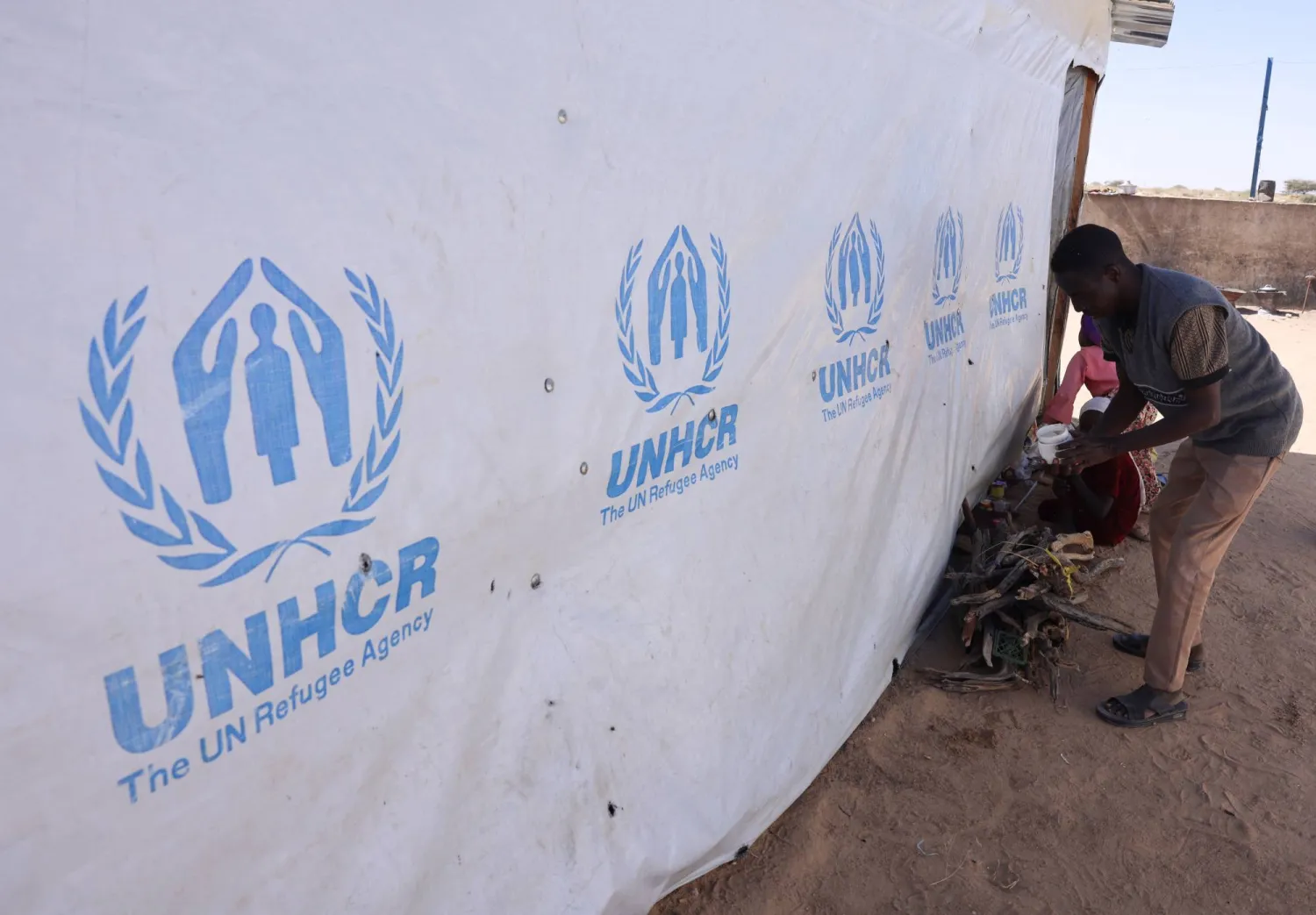
Ibrahim Mohamed Ishaq, 35, a Sudanese refugee father from el-Fasher, stands near firewood after purchasing it for warmth inside the Tine transit camp, after arriving and securing a place in eastern Chad, as he and his family flee ongoing clashes between the paramilitary Rapid Support Forces (RSF) and the Sudanese army, November 22, 2025. (Reuters)
TT

UN Refugee Agency Hails $1.5 Bn in Early Donations Amid Funding Crunch

Ibrahim Mohamed Ishaq, 35, a Sudanese refugee father from el-Fasher, stands near firewood after purchasing it for warmth inside the Tine transit camp, after arriving and securing a place in eastern Chad, as he and his family flee ongoing clashes between the paramilitary Rapid Support Forces (RSF) and the Sudanese army, November 22, 2025. (Reuters)

The United Nations refugee agency said Tuesday it had secured more than $1.5 billion in early pledges to support its work in 2026, at a time when aid funding is plummeting globally.

"Today's commitments show that the world has not turned its back on people forced to flee, and that support for refugees endures," United Nations High Commissioner for Refugees (UNHCR) chief Filippo Grandi said in a statement.

During a donor conference in Geneva, governments pledged $1.16 billion to the agency for 2026, which was "slightly above the amount pledged last year... which was an all-time high", it said.

An additional commitment of $350 million from the private sector brought the total to $1.5 billion, covering nearly 18 percent of the UNHCR's projected funding needs for next year, it said, adding that additional contributions were expected in the coming months.

Top government contributors included Denmark, Germany, Japan, the Netherlands and Norway, alongside substantially increased contributions from Ireland, Luxembourg and Iceland, the UNHCR said.

It was welcome news for the agency, which is grappling with a towering crisis: amid surging global displacement, humanitarian funding has been fast evaporating this year.

The United States -- traditionally the world's top donor -- has slashed foreign aid spending since President Donald Trump returned to office in January, while other major donor countries have tightened their belts.

The UNHCR announced in October that it had been forced to shed nearly 5,000 jobs globally, with dire consequences for refugees in need of aid and protection.

"This year's drastic funding cuts -- neither necessary nor inevitable -- have been deeply counterproductive, leading to more instability and less protection, assistance and hope," Grandi said.

While welcoming the early pledges for 2026, the UNHCR said they highlighted a "worrisome trend", with the percentage of unearmarked funds dropping to just 17 percent -- nearly half of the 2023 share.

Humanitarian organizations prefer receiving flexible funds not bound to specific activities, allowing them to dedicate resources where they are most needed and react more easily to emergencies.

UNHCR has said it needs $8.5 billion to cover its 2026 budget -- down 20 percent from this year's.

This decrease is not due to a reduction in needs, but rather to a strategic shift in how UNHCR plans and implements its actions, it said last month, stressing a greater focus on protection, life-saving interventions and systems support in host countries.



Iran Fires Missiles at Israel after Trump Threatens Weeks of Strikes

US President Donald Trump arrives to speak at a televised address on the conflict in the Middle East from the Cross Hall of the White House in Washington, DC on April 1, 2026. (Photo by Alex Brandon / POOL / AFP)
TT

Iran Fires Missiles at Israel after Trump Threatens Weeks of Strikes

US President Donald Trump arrives to speak at a televised address on the conflict in the Middle East from the Cross Hall of the White House in Washington, DC on April 1, 2026. (Photo by Alex Brandon / POOL / AFP)

Israel said it came under Iranian missile fire on Thursday after US President Donald Trump threatened to bomb the Iranian republic into the "Stone Ages" with heavy strikes in the next two to three weeks.

In a speech from the White House, Trump sought to reassure war-weary Americans that the military campaign that began on February 28 was coming to an end, vowing "extremely hard" strikes against Iran.

"Thanks to the progress we've made, I can say tonight that we are on track to complete all of America's military objectives shortly, very shortly," Trump said.

The war's "core strategic objectives are nearing completion", he said, warning however that "over the next two to three weeks, we are going to bring them back to the Stone Ages, where they belong".

His address came as Britain was set to host a meeting Thursday with about 35 countries on how to reopen the strategic Strait of Hormuz that Iran has effectively blocked without a deal to end the war.

The US-Israeli strikes on Iran that started the war killed senior officials in the Iranian republic's military forces and government, including supreme leader Ali Khamenei, whose son has since replaced him.

Trump, whose approval rating is sinking over the war, indicated that talks may be possible with Iran's new leadership, which he described as "less radical and much more reasonable" than its predecessor.

He warned that if no agreement with Tehran was struck, Washington had "our eyes on key targets including the country's electric generating plants".

Despite Trump's threats, Israel's military said Iran twice fired missiles at the country after his address, part of four barrages detected within six hours on Thursday.

Iran has dismissed Washington's ceasefire overtures, describing US demands to end the conflict as "maximalist and irrational".

"Messages have been received through intermediaries, including Pakistan, but there is no direct negotiation with the US," said Iranian foreign ministry spokesman Esmaeil Baqaei, quoted by the ISNA news agency on Thursday.

Pro-government Iranians in the capital Tehran were also defiant at the funeral of a Revolutionary Guards naval commander who was killed in an Israeli strike.

"This war has lasted a month. However long it takes, we will continue," said Moussa Nowruzi, a 57-year-old pensioner.

"We will resist until the end."

- Gulf protection -

Trump also assured regional allies Israel and Gulf nations that Washington would protect them from Iranian retaliatory fire, as more attacks were reported across the region on Thursday.

He addressed Israel, Saudi Arabia, Qatar, the UAE, Kuwait and Bahrain -- all battered by Iranian drone and missile attacks -- that the United States "will not let them get hurt or fail in any way, shape or form".

As Israel prepared for the Passover holiday, which began at sunset Wednesday, air raid sirens sounded repeatedly in the Tel Aviv area.

On Thursday, the United Arab Emirates said its air defenses were again responding to missile and drone "threats".

The Revolutionary Guards also confirmed hitting an oil tanker in the Gulf they said belonged to Israel. A British maritime security agency said the vessel was struck off Qatar, reporting damage but no casualties.

In Lebanon, militant group Hezbollah said its fighters launched drones and rockets at northern Israel on Thursday, with the Israeli military's Home Front Command saying air raid sirens were activated across the border.

A day earlier, Israel killed a top Hezbollah commander, two sources told AFP, in a Beirut strike that the Lebanese health ministry said killed seven people.

Authorities in Lebanon say Israeli attacks have killed more than 1,300 people in the country since war erupted between Israel and Iran-backed Hezbollah on March 2.

- Hormuz 'courage' -

Hours before Trump's address, Iran's President Masoud Pezeshkian asked the American people whether the conflict was truly putting "America First", accusing Washington of war crimes and of being influenced by Israel.

Trump had claimed earlier Wednesday that Iran's president had sought a ceasefire, but said the Iranian republic must first reopen the Strait of Hormuz -- which he said in his address would happen "naturally" once the conflict ended.

In his speech he called for countries that receive oil through the Strait of Hormuz to show "courage" and seize the key waterway.

On Thursday, the British-led virtual meeting of dozens of nations will "assess all viable diplomatic and political measures that we can take to restore freedom of navigation" in the strait, Prime Minister Keir Starmer said.

But Trump's remarks did little to calm energy markets rocked by the waterway's de facto closure, with oil prices surging Thursday. Brent jumped more than four percent to more than $105, while West Texas Intermediate climbed three percent to hit around $103.

One-fifth of global oil normally passes through the Strait of Hormuz.

Iran's Revolutionary Guards vowed Wednesday to keep it shut to the country's "enemies".

After a wave of anti-government demonstrations that crested in Iran in January over economic grievances, some Iranians still privately long for political change, particularly after Trump himself had promised to come to their aid.

"He betrayed the Iranians," said one woman in her 30s, requesting anonymity for security reasons.

Sounding resigned, she added she no longer expects a change of government, but "if they could grant us more freedoms, we could live with that".


Trump Takes a Dig at Macron, Saying Wife Treats Him 'Badly'

France's President Emmanuel Macron (L) and his wife Brigitte Macron (R) wait for the arrival of Croatia's Prime Minister Andrej Plenkovic and his wife Ana Maslac Plenkovic at the Elysee Palace, in Paris, on December 8, 2025 ahead of a dinner. (Photo by Anne-Christine POUJOULAT / AFP)
TT

Trump Takes a Dig at Macron, Saying Wife Treats Him 'Badly'

France's President Emmanuel Macron (L) and his wife Brigitte Macron (R) wait for the arrival of Croatia's Prime Minister Andrej Plenkovic and his wife Ana Maslac Plenkovic at the Elysee Palace, in Paris, on December 8, 2025 ahead of a dinner. (Photo by Anne-Christine POUJOULAT / AFP)

US President Donald Trump made fun of the French president and his wife during a private lunch Wednesday, as he lambasted NATO allies for not joining the war against Iran that has roiled the Middle East.

"We didn't need them, but I asked anyway," Trump told a private lunch in a video posted briefly on the White House YouTube channel before access was blocked.

"I call up France, Macron -- whose wife treats him extremely badly. Still recovering from the right to the jaw," Trump said.

He was referring to a May 2025 news video that appeared to show Brigitte Macron shoving the French president's face on a trip to Vietnam, which Macron later rejected as part of a disinformation campaign, said AFP.

"And I said, 'Emmanuel, we'd love to have some help in the Gulf even though we're setting records on knocking out bad people and knocking out ballistic missiles. We'd love to have some help. If you could, could you please send ships immediately,'" Trump continued.

He then mimics a French accent to give Macron's alleged answer: "'No no no, we cannot do that, Donald. We can do that after the war is won,'" he said.

"I said, 'No no, I don't need after the war is won Emmanuel,'" Trump said.

"So I learned about NATO -- NATO won't be there if we ever have the big one, you know what I mean by the big one," Trump said, without elaborating.

He also branded NATO a "paper tiger," the latest salvo by Trump and his top officials against the transatlantic alliance since he returned to the White House last year.

On Tuesday, Secretary of State Marco Rubio said the United States "is going to have to reexamine" its relationship with NATO once the war against Iran has concluded.


US to Leave Iran 'Pretty Quickly' and Return if Needed, Trump Tells Reuters

03 March 2026, US, Washington: US President Donald Trump speaks during a meeting in the White House. Photo: Kay Nietfeld/dpa
TT

US to Leave Iran 'Pretty Quickly' and Return if Needed, Trump Tells Reuters

03 March 2026, US, Washington: US President Donald Trump speaks during a meeting in the White House. Photo: Kay Nietfeld/dpa

The United States will be "out of Iran pretty quickly" and could return for "spot hits" if needed, President Donald Trump told Reuters on Wednesday, hours before he was scheduled to make a primetime address to the nation. Trump also said he would express his disgust with NATO for what he considers the alliance's lack of support for US objectives in Iran.
He said he is "absolutely" considering an attempt to withdraw the United States from NATO, Reuters reported.

Asked when the United States would consider the Iran war over, Trump said: "I can't tell you exactly .... we're going to be out pretty quickly."

He said US action has ensured Iran will not have a nuclear weapon.

"They won't have a nuclear weapon because they are incapable of that now, and then I'll leave, and I'll take everybody with me, and if we have to we'll come back to do spot hits," Trump said.