


Iran Accused of ‘Digital Apartheid’

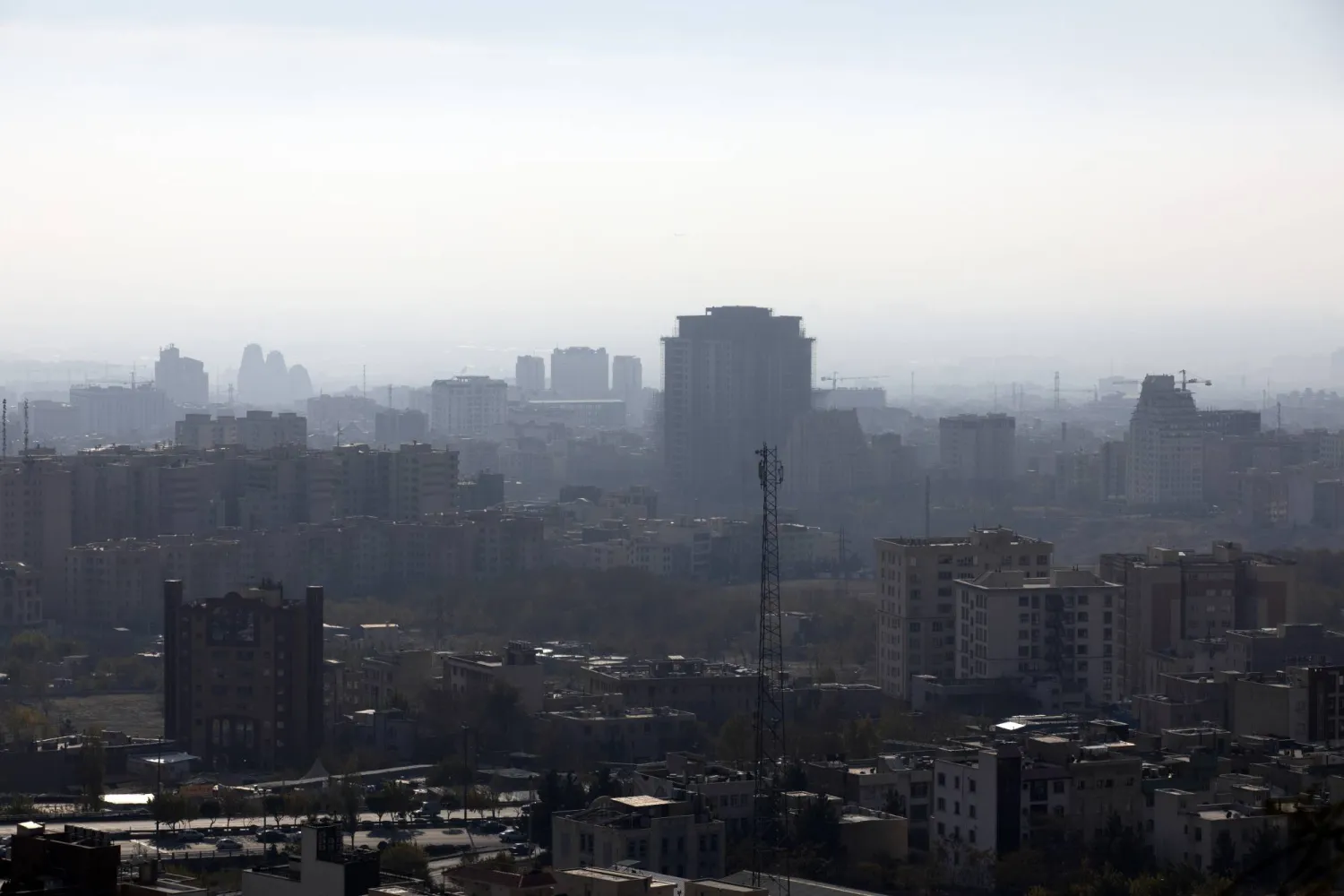
03 December 2025, Iran, Teheran: View of the smog-ridden metropolis of Tehran. Photo: Aref Taherkenareh/dpa
TT

Iran Accused of ‘Digital Apartheid’

03 December 2025, Iran, Teheran: View of the smog-ridden metropolis of Tehran. Photo: Aref Taherkenareh/dpa

Ordinary Iranians face up to 10 years in prison or even execution if they use X to write anything the government deems critical.

But little did they know that government officials and regime supporters have been using the social media site, which is banned inside Iran, Britain’s The Telegraph reported.

This practice has been revealed after Elon Musk’s X rolled out an update that displays each user’s location.

It has exposed government ministers, state media figures, political officials and pro-regime accounts as having accessed the banned platform from within Iran using special white SIM cards.

The new X location feature was designed to spot fake accounts but instead has lifted the curtain on the divide in Iran, one of the world’s most censored countries, according to the newspaper.

Critics of the regime have termed the online divide a form of “digital apartheid”, with only certain groups able to access the internet freely.

Ordinary Iranians are forced to use VPNs, which conceal their true location, to get around the ban. If they are caught posting on X they are reprimanded by Iranian authorities, and if those posts are anti-Iran or pro-Israel, they face execution or prison sentences.

Meanwhile, state and pro-regime accounts use the white SIM cards in their phones to receive unrestricted access to the internet and bypass their own restrictions.

Ahmad Bakhshayesh Ardestani, an Iranian politician who serves on the national security commission, criticized their use.

Ardestani said: “Many people want filtering to exist because they want to sell VPNs and do business.”

He added that the VPN market, used by ordinary Iranians, has high financial turnover and is controlled by “a mafia”.

If users access X through VPNs, the location shows the country where their server is located rather than their actual location.

Other banned platforms in Iran include Facebook, YouTube and Telegram.

“This is obvious discrimination in public rights and against the explicit text of the constitution,” one Iranian citizen told The Telegraph, referring to Iran’s constitutional guarantee of equality among citizens.

“When you yourself use white SIM cards, how can we expect you to understand the pain of filtering? How can we expect you to fight to remove it?” another Iranian said.

Among those whose locations were displayed were communications minister Sattar Hashemi, former foreign minister Javad Zarif, government spokesman Fatemeh Mohajerani and dozens of journalists working for state-aligned media outlets.

Also exposed were political figures, eulogists who praise the Iranian regime at official events, and accounts that had claimed online to be opposition voices, including some monarchist and separatist pages operating from inside Iran with apparent government approval.

Analysts say it is meant to keep parts of the opposition narrative under the control of the clerical establishment.

The exposure proved particularly embarrassing for officials who had publicly opposed privileged internet access.

Mohajerani had claimed she used VPN software like ordinary citizens, saying: “Class-based internet has neither legal basis nor will it ever be on the government’s agenda.”

Mahdi Tabatabaei, communications deputy, said: “Making society white and black is playing on the enemy’s field.”

He added that from President Masoud Pezeshkian’s view, “all 90 million Iranians are white”.

Journalist Yashar Soltani compared the situation to George Orwell’s Animal Farm. He said: “When freedom is rationed it’s no longer freedom – it’s structural discrimination.”



WHO Says Ebola Risk High Regionally, Low Worldwide

A visitor walks at the entrance of a hospital in Rwampara on May 19, 2026. (AFP)
TT

WHO Says Ebola Risk High Regionally, Low Worldwide

A visitor walks at the entrance of a hospital in Rwampara on May 19, 2026. (AFP)

The World Health Organization on Wednesday said the risk of the Democratic Republic of Congo's deadly Ebola outbreak was currently high at the national and regional levels but low worldwide.

WHO experts said that while investigations into its origins were ongoing, given the scale of the situation in the eastern DRC, the outbreak probably began a couple of months ago.

But the UN health agency's emergency committee said it did not currently meet the pandemic emergency threshold.

"WHO assesses the risk of the epidemic as high at the national and regional levels, and low at the global level," said the organization's chief Tedros Adhanom Ghebreyesus.

So far, 51 cases have been confirmed in the DRC, in the eastern provinces of Ituri and North Kivu, "although we know the scale of the epidemic in DRC is much larger", he told a press conference at the WHO's headquarters in Geneva.

He said Uganda had also reported two confirmed cases in the capital Kampala, including one death, while a US national working in the DRC has been confirmed positive and transferred to Germany.

"There are several factors that warrant serious concern about the potential for further spread and further deaths," said Tedros.

"Beyond the confirmed cases, there are almost 600 suspected cases and 139 suspected deaths.

"We expect those numbers to keep increasing, given the amount of time the virus was circulating before the outbreak was detected."

- Not a pandemic -

On Sunday, Tedros declared the situation to be a public health emergency of international concern -- the second-highest level of alarm under the legally binding International Health Regulations (IHR) -- triggering emergency responses in countries worldwide.

The WHO emergency committee convened to assess the outbreak met on Tuesday.

"The current situation and criteria for a public health emergency of international concern have been met, and we agree that the current situation does not satisfy the criteria for a pandemic emergency," the committee's chair, Lucille Blumberg, told reporters from South Africa.

Anais Legand, WHO technical officer on viral hemorrhagic fevers, said investigations were under way to pinpoint how long Ebola has been spreading in the eastern DRC.

"Given the scale, we are thinking that it has started probably a couple of months ago, but investigations are ongoing and our priority is really to cut the transmission chain by implementing contact tracing, isolating and caring for all suspect and confirmed cases," she said.

US Secretary of State Marco Rubio on Tuesday said the WHO was "a little late" in identifying a deadly outbreak.

President Donald Trump, in one of his first acts on returning to office last year, set in motion a US withdrawal from the WHO, which he attacked bitterly over its response to the Covid-19 pandemic.

Asked about Rubio's criticism, Tedros said that "maybe what the secretary said... could be from lack of understanding of how IHR work, and the responsibilities of WHO and other entities", he said, explaining that the agency acted in support of countries rather than replacing them in outbreak responses.


Germany Arrests Married Couple on China Spying Charges

FILED - 12 May 2026, Bavaria, Munich: A view of the construction in the Freiham development area in Munich. Photo: Malin Wunderlich/dpa
TT

Germany Arrests Married Couple on China Spying Charges

FILED - 12 May 2026, Bavaria, Munich: A view of the construction in the Freiham development area in Munich. Photo: Malin Wunderlich/dpa

German police on Wednesday arrested a married couple on charges of spying for China, accusing them of seeking information on advanced technology with military uses.

The couple, German nationals partially named as Xuejun C. and Hua S., were arrested in the southern city of Munich, said the federal prosecution service, which alleged that the pair "work for a Chinese intelligence agency.”

Their homes and workplaces in Munich were being searched, AFP reported.

The couple are alleged to have "established contacts with numerous academics at German universities and research institutions, in particular with chairs in the fields of aerospace engineering, computer science and artificial intelligence.”

To make these contacts, the couple are believed to have "posed as interpreters or as employees of an automobile manufacturer.”

Some scientists were then "enticed to travel to China under the pretext of giving paid lectures to a civilian audience,” but actually ended up addressing employees of state-owned arms manufacturers, prosecutors said.

As well as the suspects' arrests, prosecutors said that "further measures" were being carried out "concerning a total of 10 people who are not suspected of any offence but are potential witnesses" in Berlin, Munich and several other locations across the country.


Israel Takes Step Toward Snap Election as Knesset Votes to Dissolve

Knesset members at the Knesset, the Israeli parliament, in Jerusalem, 20 May 2026. (EPA)
TT

Israel Takes Step Toward Snap Election as Knesset Votes to Dissolve

Knesset members at the Knesset, the Israeli parliament, in Jerusalem, 20 May 2026. (EPA)

Israel moved closer on Wednesday to a snap election after lawmakers gave an initial nod to dissolve parliament, with opinion polls showing Prime Minister Benjamin Netanyahu would lose the first national vote since the 2023 Hamas attacks.

Lawmakers voted almost unanimously for an early ballot in a preliminary reading of a bill to disband the 120-seat Knesset.

If it receives final approval, a process ‌that could ‌take weeks, Israel could hold an election several ‌weeks ⁠ahead of an ⁠October 27 deadline.

Netanyahu's own coalition submitted the bill to dissolve parliament after an ultra-Orthodox faction traditionally close to the Israeli leader accused him of failing to deliver on a promise to pass a law exempting their community from mandatory military service.

NETANYAHU BEHIND IN POLLS

Some 110 members of parliament voted in favor of ⁠the bill to dissolve, with no opponents or abstentions. ‌It now heads to committee where ‌an election date is agreed, before going back to the Knesset ‌for final approval.

The vote comes at a pivotal time ‌for Netanyahu, Israel's longest-serving prime minister who leads the most right-wing government in his country's history. Israel has been at war with Hamas in Gaza, Hezbollah in Lebanon and Iran, fronts that remain volatile and could ‌have an impact on the election.

Netanyahu still faces a long-running corruption trial. Israel's President Isaac Herzog ⁠is mediating ⁠talks to broker a plea deal in the case, which could see the 76-year-old Netanyahu retiring from politics as part of the deal.

Netanyahu's health could also be an issue. He recently disclosed that he was successfully treated for prostate cancer and in 2023 he was fitted with a pacemaker.

Since the October 7, 2023 Hamas attacks on Israel, polls have consistently shown Netanyahu's governing coalition falling far short of a parliamentary majority.

However, there is also a chance that opposition parties will fail to form a coalition, leaving Netanyahu at the head of an interim government until the political stalemate is broken.