Russia Pummels Kyiv Ahead of Zelensky’s US Visit

Trump is trying to broker an agreement between the warring sides to end Europe's worst conflict since World War II. Jim WATSON, Tetiana DZHAFAROVA / AFP/File
TT

Russia Pummels Kyiv Ahead of Zelensky’s US Visit

Trump is trying to broker an agreement between the warring sides to end Europe's worst conflict since World War II. Jim WATSON, Tetiana DZHAFAROVA / AFP/File

Russia pummeled Ukraine's capital with drones and missiles on Saturday as President Volodymyr Zelensky was headed to the US to meet with President Donald Trump. 

Zelensky said the attack showed Russia did not want to end its invasion launched in February 2022 that has left tens of thousands dead. 

Ahead of Zelensky's talks in Florida with Trump on Sunday, Russia said Kyiv and its EU backers were trying to "torpedo" a previous US-brokered plan to stop the fighting. 

The barrage of drones and missiles killed two people, wounded dozens and cut power and heating to hundreds of thousands of Kyiv region residents during freezing temperatures, Ukraine authorities said. 

Some 2,600 residential buildings were hit in the attack, as well as more than 300 schools, pre-schools or social services buildings, Kyiv mayor Vitaliy Klitschko said. 

Zelensky said some 500 drones and 40 missiles had pounded the capital and its surrounding region. 

"Russian representatives engage in lengthy talks, but in reality, Kinzhals (missiles) and Shaheds (drones) speak for them," he said. 

"They do not want to end the war and seek to use every opportunity to cause Ukraine even greater suffering," he added. 

Just as Zelensky departed for the US, Ukraine's anti-corruption agency announced a new probe in which it said some MPs were implicated. It tried to raid parliamentary offices but was blocked by security personnel. 

During the Russian onslaught, which lasted 10 hours, AFP reporters in Kyiv heard loud explosions, some accompanied by bright flashes that turned the sky orange. 

The Russian army said it used hypersonic missiles and drones to target infrastructure and energy facilities "used in the interests of the armed forces of Ukraine", as well as military sites. 

Ukrainian Prime Minister Yulia Svyrydenko said the attack left about 600,000 people without power while authorities said apartment blocks, a university dormitory and a petrol station had been among buildings hit. 

Neighboring Poland, a NATO member, scrambled jets and put air defenses on alert during the attack, the Polish military said on social media. 

Air traffic at two airports in Poland near the Ukrainian border were temporarily suspended during the strikes, the country's air navigation agency said. 

- Florida talks - 

Sunday's meeting in Florida is to focus on a new, 20-point plan that would freeze the war on its current front line but could require Ukraine to pull back troops from the east, where demilitarized buffer zones could be created, according to details revealed by Zelensky this week. 

The new plan, formulated with Ukraine's input, is Kyiv's most explicit acknowledgement yet of possible territorial concessions, and differs markedly from an initial 28-point proposal by Washington last month that adhered to many of Russia's core demands. 

Trump, speaking to news outlet Politico on Friday, said of Zelensky's plan that "he doesn't have anything until I approve it". He added: "So we'll see what he's got." 

Part of the plan includes separate US-Ukraine bilateral agreements on security guarantees, reconstruction and the economy. Zelensky said those were changing daily. 

"As for sensitive issues, we will discuss (the eastern region of) Donbas and the Zaporizhzhia nuclear power plant," he added. 

On the way to the US, Zelensky was making a stopover in Canada and was to speak in a video call with EU allies, he said. 

Zelensky added Saturday that the aim of talks was to reduce unresolved issues to a minimum. 

"Of course, today there are red lines for Ukraine and Ukrainian people. There are compromise proposals. All of these issues are very sensitive," he said on X. 

Meanwhile, Ukraine needed European and US support to acquire weapons and funds, both of which were insufficient, Zelensky said -- "in particular for the production of weapons and, most importantly, drones". 

In negotiations, Ukraine's "most important consideration -- if we take certain steps -- is that security guarantees should be strong and we should be protected", he said. 

Zelensky added that Ukraine was working with the US on a roadmap for the country's reconstruction which he said will require $700 billion to $800 billion. 


80 Mines Are Blocking Normal Navigation in Hormuz Strait

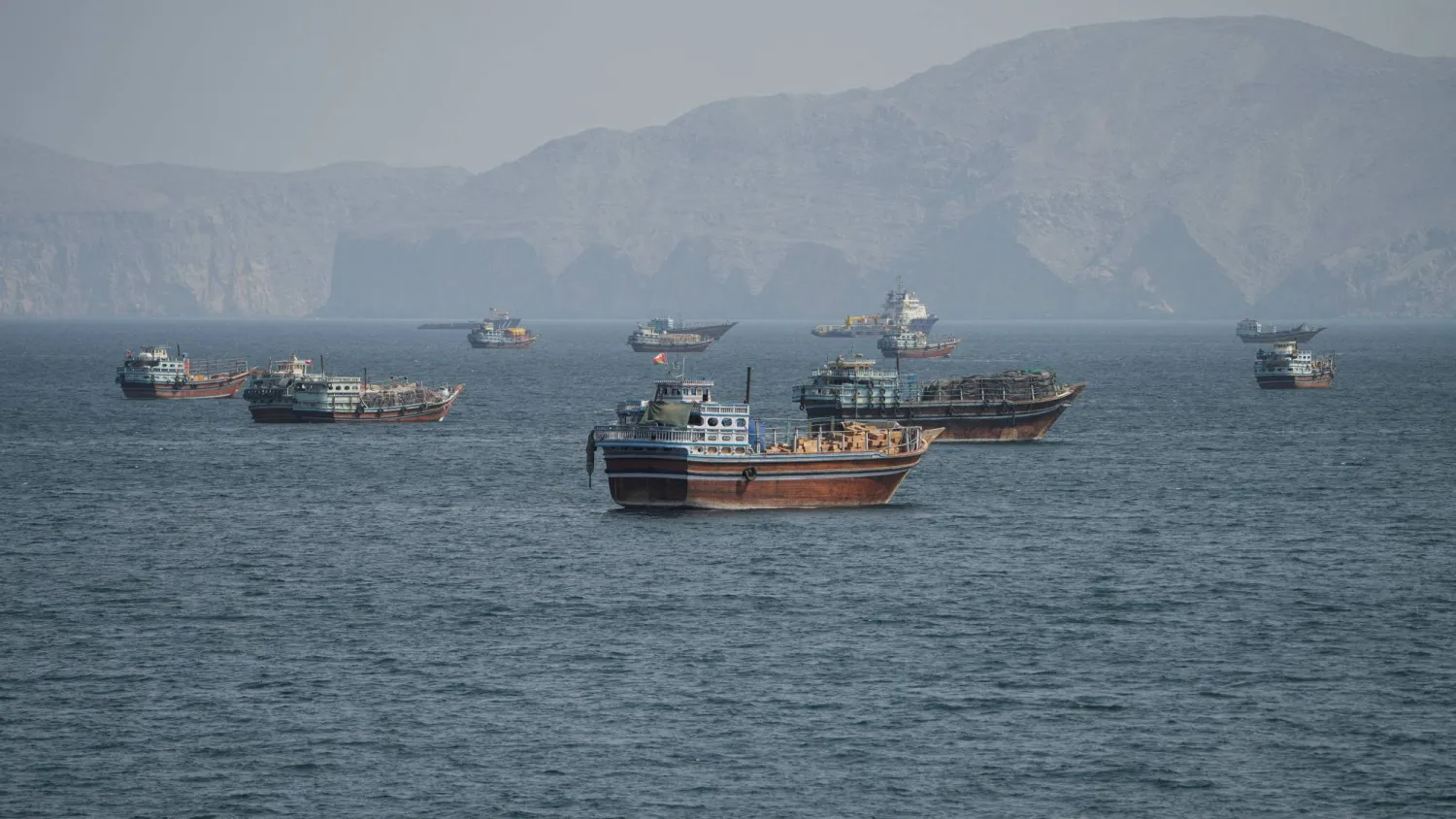
 Vessels are anchored in the Strait of Hormuz, as seen from Musandam, Oman, June 19, 2026. (Reuters)
Vessels are anchored in the Strait of Hormuz, as seen from Musandam, Oman, June 19, 2026. (Reuters)
TT

80 Mines Are Blocking Normal Navigation in Hormuz Strait

 Vessels are anchored in the Strait of Hormuz, as seen from Musandam, Oman, June 19, 2026. (Reuters)
Vessels are anchored in the Strait of Hormuz, as seen from Musandam, Oman, June 19, 2026. (Reuters)

The center of the strait of Hormuz is blocked with about 80 mines that will need clearing for normal shipping to resume, the independent tanker owner trade body has said.

Several vessels began to exit the Gulf through the key maritime chokepoint on Thursday after the signing of a memorandum of understanding (MoU) between the US and Iran. However, shipping is not expected to return to normal for some time, even if a ceasefire lasted, because of the mines and other obstacles, underlining the continuing challenges facing global trade, reported the Guardian on Saturday.

“The main route ... through the middle of the strait of Hormuz, that’s closed, that’s dangerous,” said Phil Belcher, the marine director at Intertanko, the tanker owners association.

“The latest figure we had was that there’s 80 mines in the strait of Hormuz. It’s an enormous amount and it’s going to take some time to clear.”

During the conflict Tehran laid mines in the center of the strait in the traffic separation scheme, which has been in place between Iran and Oman since 1968, to restrict the movement of tankers and other vessels.

About 20,000 seafarers were left stuck either side of the channel, although some ships managed to sneak through at night near the Omani coast with their transmitters off and with US assistance. Others paid to travel through Iranian waters in an arrangement nicknamed “Tehran’s tollbooth”.

The shipping industry is keen to see a return to using the standard route, which before the conflict allowed about 130 ships a day to cross the strait, through which about 20% of global oil used to flow.

“This is like a highway where the road in the middle is closed and you are using the hard shoulder,” said Belcher, according to the Guardian

“We need to get the highway open so we can get the volume of traffic through safely. One of the big issues we’ve got at the moment is the navigational risk, the risk of running aground on the rocks. It’s very close to the rocks on the southern route, the Omani route.”

With high numbers of vessels trying to pass through narrow areas of the strait, the shipping industry is warning of the risk of collision. This risk is intensified by the “signal jamming” that Iran has reportedly carried out during the conflict, where electronic interference has prevented ships’ navigating and positioning systems from operating, leaving them effectively sailing blind.

A collision, grounding or sinking could further disrupt global trade. Shipping companies still remember the disruption caused in 2021 when the container ship Ever Given blocked the Suez canal for a week.

Almost 600 vessels are believed to still be in the Gulf, where they have been anchored since February, meaning the backlog will take time to clear.

Richard Meade, editor-in-chief at the maritime data provider Lloyd’s List, said: “We are in uncharted territory. I don’t think [shipping in the strait] is getting back to normal this year.”

The shipping industry is cautiously waiting to see whether the ceasefire in the strait will hold, after Israel and Hezbollah traded deadly strikes on Friday. The industry was already on high alert after the April ceasefire unraveled within hours of being announced.

The MoU signed by the US and Iran this week should be “greeted with realism and extreme caution”, said Peter Sand, the chief analyst at the ocean and air freight analytics firm Xeneta. “Even if the ceasefire holds, around 10% of global container shipping capacity is impacted by the blockade and freight rates are spiraling across major trades. This scale of disruption and market volatility cannot be reversed overnight.”

Further concerns remain over Iran saying it plans to charge a maritime fee to vessels crossing the strait. Such tolls are illegal under international law.

Under the terms of the US-Iran memorandum, Iran is required to ensure toll-free passage for commercial vessels for at least 60 days, with full restoration of traffic within 30 days. Tehran has said it would charge ships fees to cover the cost of managing the waterway after the 60-day period.

The German container shipping company Hapag-Lloyd has said it would be “fundamentally wrong” to charge vessels to pass through international waters. A company spokesperson added: “Tolls for infrastructure such as the Suez or Panama canals are different, as they reflect major infrastructure investments. That’s not the case in the strait of Hormuz.”

The shipping industry is concerned that Iran charging fees could set a precedent for other key maritime channels that are bordered by several states, including the strait of Malacca – a narrow stretch of water between Singapore, Malaysia and Indonesia – or the Taiwan strait separating the island of Taiwan from mainland China.


US and Iran Set for New Talks after Delay over Lebanese File and Deadly Strikes

Iran's Speaker of the Iranian Parliament, Mohammed Bagher Ghalibaf (L), and the Minister of Foreign Affairs of Iran, Seyyed Abbas Araghchi (C), attend a meeting at the Bürgenstock resort in Obbürgen, near Lucerne, Switzerland, Sunday, 21 June 2026.  EPA/URS FLUEELER
Iran's Speaker of the Iranian Parliament, Mohammed Bagher Ghalibaf (L), and the Minister of Foreign Affairs of Iran, Seyyed Abbas Araghchi (C), attend a meeting at the Bürgenstock resort in Obbürgen, near Lucerne, Switzerland, Sunday, 21 June 2026. EPA/URS FLUEELER
TT

US and Iran Set for New Talks after Delay over Lebanese File and Deadly Strikes

Iran's Speaker of the Iranian Parliament, Mohammed Bagher Ghalibaf (L), and the Minister of Foreign Affairs of Iran, Seyyed Abbas Araghchi (C), attend a meeting at the Bürgenstock resort in Obbürgen, near Lucerne, Switzerland, Sunday, 21 June 2026.  EPA/URS FLUEELER
Iran's Speaker of the Iranian Parliament, Mohammed Bagher Ghalibaf (L), and the Minister of Foreign Affairs of Iran, Seyyed Abbas Araghchi (C), attend a meeting at the Bürgenstock resort in Obbürgen, near Lucerne, Switzerland, Sunday, 21 June 2026. EPA/URS FLUEELER

A new round of negotiations over the Middle East war was set to kick off Sunday, with Iranian negotiators arriving in the Swiss host city hours ahead of US Vice President JD Vance, even as Tehran said it was closing the Strait of Hormuz again over Israeli attacks in Lebanon.

Before boarding his flight to Europe, Vance told reporters he hoped to "make progress on the nuclear issue, make progress on the Lebanon ceasefire issue. Those are the two big things that I think we're going to be focused on".

Follow-up talks had been planned in Switzerland on Friday but were postponed at the last minute after Israel launched deadly strikes in Lebanon following the deaths of four of its soldiers in combat.

Washington announced a renewed ceasefire there later Friday -- a condition of its preliminary agreement with Iran -- but Israeli troops clashed again with Hezbollah fighters on Saturday, with each side accusing the other of breaking the truce.

Citing a US "breach of contract" and "the Zionist regime's continuous and relentless violation of the ceasefire in southern Lebanon", Iran's central military command said "the Strait of Hormuz will be closed to vessel traffic".

Hormuz, a key conduit for oil and gas shipments, was blockaded by Iran for much of the war, sending shockwaves through global energy markets, said AFP.

Tehran had agreed to reopen it under the preliminary accord signed by US President Donald Trump and his Iranian counterpart Masoud Pezeshkian, and shipping traffic had begun to recover.

US Central Command said after Iran's announcement that safe passage through the international waterway had "remained intact" and that US forces were "present and vigilant".

Trump later warned that Washington could impose its own tolls on Hormuz if negotiators failed to complete the deal.

There would be no tolls "unless they are imposed by and for the United States of America", Trump wrote on Truth Social.

- Switzerland push -

An Iranian delegation arrived in Switzerland late Saturday, state media and the Swiss foreign ministry said.

Iran's official broadcaster said it included parliamentary speaker Mohammad Bagher Ghalibaf and Foreign Minister Abbas Araghchi.

Foreign ministry spokesman Esmaeil Baqaei said the delegation would "demand implementation of the other party's commitments" under the deal.

"Otherwise, the entire understanding will be in trouble," he said, according to official news agency IRNA.

Vance left Washington on an afternoon flight to join the talks, saying he could only stay "a day or two".

US negotiators Jared Kushner and Steve Witkoff were already there handling "some of the technical elements" and had reported that "things are going well", Vance said in an interview with Fox News earlier Saturday.

Pakistan, which has been helping to mediate, said Sunday that Prime Minister Shehbaz Sharif and army chief Asim Munir had left for Switzerland to take part in high-level talks involving US and Iranian representatives and other mediators from Qatar.

The talks are meant to open a two-month negotiation period on issues left unresolved by the initial accord, notably Iran's nuclear program.

- Lebanon truce frays -

Israel and Hezbollah continued trading accusations Saturday as fighting persisted in southern Lebanon.

The Israeli military said one soldier was killed in combat, the fifth such fatality since the US-Iran deal was reached.

An Israeli army official later said the military had received orders from the country's political leadership to cease fire, adding that troops were "not conducting proactive strikes" but operating defensively inside a security zone.

Earlier, an Israeli military official said fresh attacks were under way after Hezbollah "launched more than 50 projectiles at Israeli forces in southern Lebanon" overnight.

Hezbollah accused Israel of carrying out "under the cover of the ceasefire... an infiltration attempt towards the Ali Taher hills", a strategic feature overlooking Nabatieh, and said its fighters had responded "with appropriate weapons".

Lebanese state media reported Israeli air raids on around 20 locations, with authorities counting more than 30 dead. The overall death toll from the fighting in Lebanon had surpassed 4,000, the health ministry said.

Hezbollah lawmaker Hassan Fadlallah said his group retained "the full right to confront this enemy when it attacks us".

Israel's US ambassador Yechiel Leiter maintained it was Hezbollah that broke the truce, saying Israel was "defending itself against terrorist attacks".

But Hezbollah said Israel bore "full responsibility".

Fadi Zayat, who fled the southern Lebanon town of Tayr Debba, told AFP that "fear dominates" the south.

"We returned to the village a few days ago, but our bags are ready to flee again," the 53-year-old said.

Hezbollah pulled Lebanon into the wider Middle East conflict in early March when it fired rockets at Israel in retaliation for the killing of Iran's supreme leader in US-Israeli strikes.

A previous ceasefire meant to take effect in Lebanon in April was never honored, with each side justifying its attacks by citing alleged violations by the other.


US Forces Monitoring Strait of Hormuz to Ensure it Stays Open

Vessels at the Strait of Hormuz, as seen from Musandam, Oman, June 18, 2026. REUTERS/Stringer
TT

US Forces Monitoring Strait of Hormuz to Ensure it Stays Open

Vessels at the Strait of Hormuz, as seen from Musandam, Oman, June 18, 2026. REUTERS/Stringer

The US military on Saturday denied Iran's claims that it had closed the Strait of Hormuz, saying the critical waterway remained open and that US forces were monitoring the situation to ensure that ⁠continued.

"Iran does not ⁠control the Strait of Hormuz," US Central Command spokesperson Navy Captain Tim Hawkins told Reuters. "Traffic ⁠continues to flow, and US forces are monitoring the situation to ensure this remains the case."

Iran's Revolutionary Guard Corps declared the Strait of Hormuz shut earlier on Saturday and warned ⁠ships ⁠not to approach the waterway, casting new doubt on the future of a ceasefire agreement between the US and Iran meant to pave the way for in-depth peace talks.