


‘We Don’t Want to Be Americans’: Greenland’s Political Parties

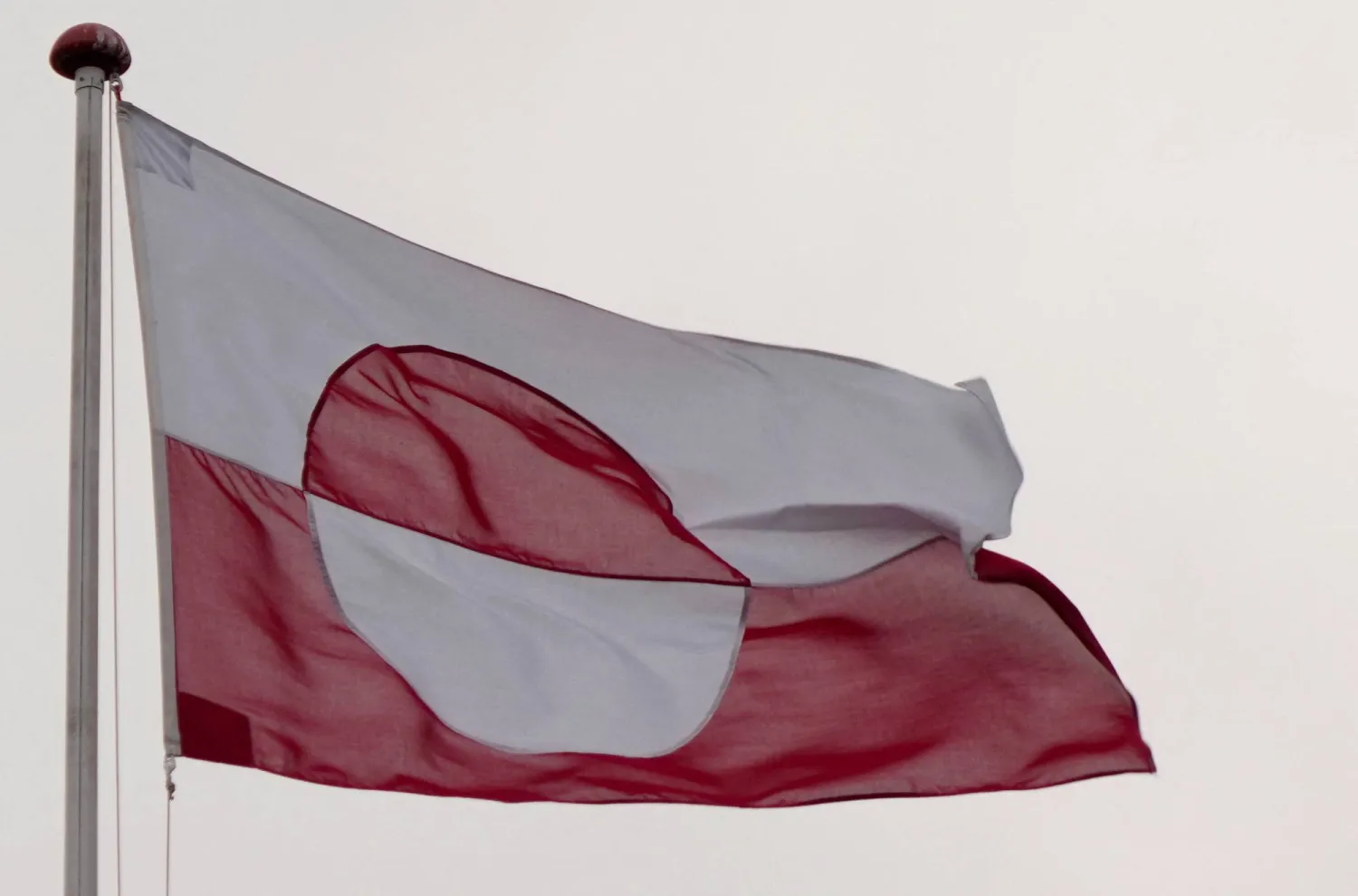
 A Greenlandic flag flutters in Copenhagen, Denmark, January 8, 2026. (Reuters)
A Greenlandic flag flutters in Copenhagen, Denmark, January 8, 2026. (Reuters)
TT

‘We Don’t Want to Be Americans’: Greenland’s Political Parties

 A Greenlandic flag flutters in Copenhagen, Denmark, January 8, 2026. (Reuters)
A Greenlandic flag flutters in Copenhagen, Denmark, January 8, 2026. (Reuters)

"We don't want to be Americans," Greenland's political parties said after US President Donald Trump again suggested using force to seize the mineral-rich Danish autonomous territory.

The statement late Friday came after Trump repeated that Washington was "going to do something on Greenland, whether they like it or not".

"We don't want to be Americans, we don't want to be Danish, we want to be Greenlanders," the leaders of five parties in Greenland's parliament said.

"The future of Greenland must be decided by Greenlanders."

Denmark and other European allies have voiced shock at Trump's threats to take control of Greenland, where the United States already has a military base.

Trump says controlling the strategic island is crucial for US national security given the rising military activity of Russia and China in the Arctic.

"We're not going to have Russia or China occupy Greenland. That's what they're going to do if we don't. So we're going to be doing something with Greenland, either the nice way or the more difficult way," the US president said Friday.

Both Russia and China have increased military activity in the region in recent years, but neither has laid any claim to the vast icy island.

Danish Prime Minister Mette Frederiksen has warned that an invasion of Greenland would end "everything", meaning the transatlantic NATO defense pact and the post-World War II security structure.

Trump has made light of the concerns of Denmark, a steadfast US ally that joined the United States in the 2003 invasion of Iraq.

"I'm a fan of Denmark, too, I have to tell you. And you know, they've been very nice to me," Trump said.

"But you know, the fact that they had a boat land there 500 years ago doesn't mean that they own the land."

Secretary of State Marco Rubio is due to meet next week with Denmark's foreign minister and representatives from Greenland.



Trump Threatens to Strike Iran’s Bridges and Electric Power Plants

US President Donald Trump delivers an address to the nation about the Iran war at the White House in Washington, DC, US, April 1, 2026. (Reuters)
TT

Trump Threatens to Strike Iran’s Bridges and Electric Power Plants

US President Donald Trump delivers an address to the nation about the Iran war at the White House in Washington, DC, US, April 1, 2026. (Reuters)

US President Donald Trump warned late on Thursday about striking and destroying bridges and electric power plants in Iran in his latest threat to hit the country's infrastructure.

The US military "hasn't even started destroying what's left in Iran. Bridges next, then Electric Power Plants," Trump wrote on social media.

His post said that Iran's leadership "knows what has to be done, ‌and has ‌to be done, FAST!"

Trump, who has previously ‌offered ⁠shifting timelines and objectives ⁠for the war, said in a televised speech on Wednesday that the war could escalate if Iran did not give in to Washington's terms, with strikes on its energy and oil infrastructure possible.

Dozens of international law experts in the US signed an open letter released earlier on Thursday saying that US strikes on ⁠Iran may amount to war crimes.

The 1949 ‌Geneva Conventions on humanitarian conduct ‌in war prohibit attacks on sites considered essential for civilians.

The Geneva Conventions ‌and additional protocols say that parties involved in military conflict ‌must distinguish between "civilian objects and military objectives", and that attacks on civilian objects are forbidden.

"We are going to hit them extremely hard over the next two to three weeks. We are going to ‌bring them back to the Stone Ages, where they belong," Trump said in his Wednesday address.

While ⁠he said ⁠Washington was nearing the completion of its goals in Iran, Trump did not lay out a timeline to end the war.

The war began on February 28 when the US and Israel attacked Iran. Tehran responded by launching its own attacks on Israel and Gulf states with US bases. Joint US-Israeli strikes in Iran and Israeli attacks in Lebanon have killed thousands and displaced millions.

The war has also raised oil prices and shaken global markets. Trump's mixed messages thus far have done little to ease the concerns over his country's biggest military attacks since the 2003 invasion of Iraq.


Israel Wary of Sudden Trump Shift Despite War Pledge

Israeli security forces and first responders inspect the site of an Iranian strike that hit a residential neighborhood in Petah Tikva on April 2, 2026. (AFP)
TT

Israel Wary of Sudden Trump Shift Despite War Pledge

Israeli security forces and first responders inspect the site of an Iranian strike that hit a residential neighborhood in Petah Tikva on April 2, 2026. (AFP)

Despite reassurances in Israel after US President Donald Trump said the war on Iran would continue for another two to three weeks, Israeli assessments still warn of a possible abrupt policy shift that could halt the conflict “before its objectives are complete.”

Security sources say Iran’s Revolutionary Guard Corps (IRGC) remains intent on prolonging the war despite heavy losses, seeking to turn it into a drawn-out war of attrition. Trump, however, is viewed as aiming to deny Tehran that leverage.

Sources quoted by Israeli outlet Walla said ending the war sooner could allow Israel and the United States to better assess the impact of their strikes, amid growing opposition to the conflict in the United States and Western countries, as well as waning support within Israel.

According to Channel 12, Iran has sustained extensive damage. The United States and Israel have struck 19,650 targets — including 11,000 by US forces — killing 55 senior figures, among them 22 top-level leaders. Around 4,700 sites linked to ballistic missile production and storage were destroyed, eliminating about 90 percent of that capability, along with 150 naval vessels.

Still, Iran has continued to launch missiles. Only 14 percent of its strikes targeted Israel — 411 barrages involving 585 missiles and 765 drones — while the rest were directed at roughly 14 countries, most of them Arab or Muslim states, the report underlined.

Better prepared than expected

Danny Citrinowicz, a researcher at Tel Aviv University’s Institute for National Security Studies and former head of the Iran desk in Israeli military intelligence, told Ynet that Iran retains significant capabilities and appears better prepared than Israel and the United States had expected.

He said statements by Iranian parliament speaker Mohammad Bagher Ghalibaf about an “eye-for-an-eye” policy indicate that Iran’s command structure remains intact and that its missile launches follow a coordinated strategy.

“This is not random fire,” Citrinowicz said. “There is a strategic and operational plan.”

He cited a pattern of reciprocal strikes, including attacks in southern Iran followed by the first strike on the Haifa oil refinery, then an attack on the Natanz nuclear facility and a retaliatory strike on Israel’s Dimona reactor.

Further exchanges included strikes on Iranian steel plants and on an Israeli facility in Neot Hovav in the Negev desert. Iran later targeted the Haifa refinery again after Israeli attacks on its electricity infrastructure.

Citrinowicz said Tehran is seeking to establish a deterrence equation that goes beyond Israel alone. He pointed to an attack on Ras Laffan that disrupted 17 percent of Qatar’s gas production following strikes on the South Pars field in southern Iran.

He also highlighted a new risk: threats by Yemen’s Iran-backed Houthis to close the Bab el-Mandeb Strait in response to any major escalation or ground incursion.

Such a move would mark a significant escalation, he warned. Iran’s strategy is not parity, but escalation to impose new rules of engagement and deter future attacks.

Citrinowicz said the next phase could include strikes on academic institutions, noting recent threats by the Revolutionary Guard against Israeli universities.

These assessments reflect a broader shift in Israel, where officials increasingly believe the war will not destroy Iran, but could delay its strategic programs for several years, requiring future confrontation.

Israeli Foreign Minister Gideon Saar said Israel had removed an existential threat, but cautioned the conflict would not be its last.

He stated: “Our enemies still exist. They have suffered a severe blow, but we must remain prepared.”

Israeli and US forces, meanwhile, are continuing their intensive strikes, aiming to further weaken Iran. According to Maariv, both sides agree Iran will not return to its pre-war status after the conflict.


Iran Warns UN Security Council against 'Provocative Action' on Hormuz

09 September 2025, Egypt, Cairo: Iranian Foreign Minister Abbas Araghchi attends a joint press conference in Cairo. (dpa)
TT

Iran Warns UN Security Council against 'Provocative Action' on Hormuz

09 September 2025, Egypt, Cairo: Iranian Foreign Minister Abbas Araghchi attends a joint press conference in Cairo. (dpa)

Iran warned the UN Security Council against any "provocative action", ahead of a scheduled vote on a draft resolution on the Strait of Hormuz that ended up being postponed.

"Any provocative action by the aggressors and their supporters, including in the UN Security Council regarding the situation in the Strait of Hormuz, will only complicate the situation," Iranian Foreign Minister Abbas Araghchi said.

Araghchi was speaking ahead of a scheduled Security Council vote on a draft resolution mandating a force to protect shipping through the Strait of Hormuz Friday.

It was later announced that the vote was postponed, with no new date scheduled.

The Strait of Hormuz, a shipping lane vital to global energy flows, has been all but shut since the United States and Israel launched strikes against Iran on February 28.

The 15-member body was set to vote on a draft resolution brought by Bahrain on authorizing the use of "defensive" force to protect shipping in Hormuz from Iranian attacks, according to the official program.

The draft resolution was backed by the US and the countries hardest hit by the virtual blockade, but member states including Russia, China and France had objected to earlier drafts.