
Trump Says Working Well with Venezuela’s New Leaders, Open to Meeting

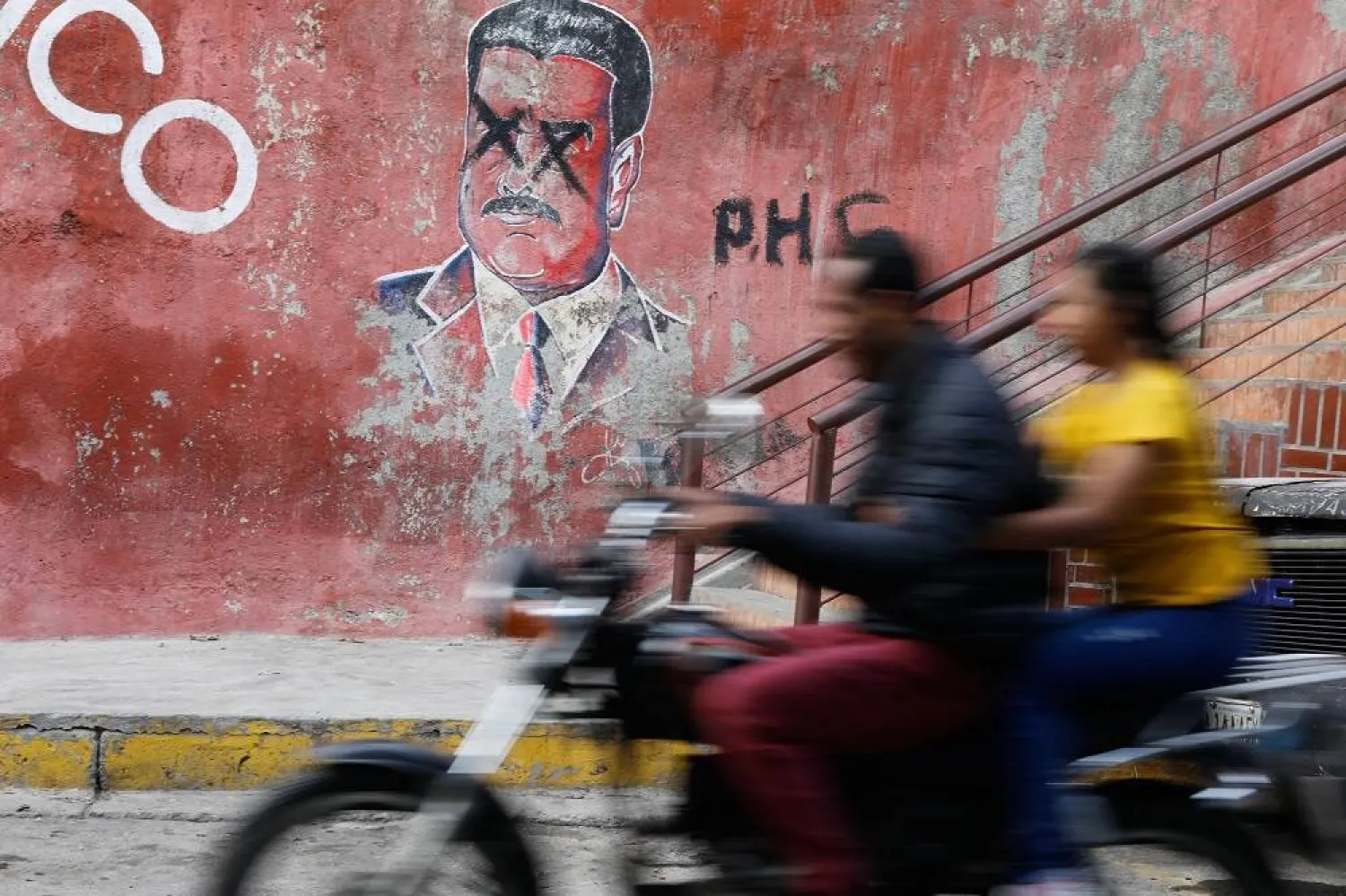
A motorcyclist rides past graffiti depicting former Venezuelan President Nicolas Maduro, who is facing trial in the United States after US forces captured him, in Caracas, Venezuela, Sunday, Jan. 11, 2026. (AP)
TT

Trump Says Working Well with Venezuela’s New Leaders, Open to Meeting

A motorcyclist rides past graffiti depicting former Venezuelan President Nicolas Maduro, who is facing trial in the United States after US forces captured him, in Caracas, Venezuela, Sunday, Jan. 11, 2026. (AP)

US President Donald Trump said Sunday his administration was working well with Venezuela's interim leader Delcy Rodriguez -- and that he would be open to meeting with her.

Trump's upbeat remarks came just over a week after Venezuelan leader Nicolas Maduro was seized in a US special forces raid and brought to New York to face drug trafficking charges.

Trump has said that the United States now has de facto control of Venezuela, as it enforces a naval blockade of the South American nation's vital oil exports.

Rodriguez, despite being a close Maduro ally, has indicated a willingness to work with the United States, saying she is open to cooperate on Trump's demands for access to Venezuelan oil.

Her government has also vowed to release political prisoners and begin talks on reestablishing diplomatic ties with Washington.

US envoys visited Caracas on Friday to discuss reopening Washington's embassy there.

"Venezuela is really working out well. We're working along really well with the leadership," Trump told reporters Sunday aboard Air Force One.

Asked if he planned to meet with Rodriguez, Trump said: "At some point I'll be."

He also said he expected to meet with Venezuelan opposition leader Maria Corina Machado on Tuesday or Wednesday.

Many were stunned when Trump dismissed the possibility of Machado serving as Venezuela's interim leader following the toppling of Maduro, and instead accepted Rodriguez's ascent.

Machado was given the Nobel Peace Prize last year and dedicated it to Trump, though he has made no secret of his frustration at being passed over for the award.

- Political prisoners -

The Venezuelan government began to release prisoners jailed under Maduro on Thursday, saying a "large" number would be released -- but rights groups and the opposition say only about 20 have walked free so far, including several prominent opposition figures.

Relatives have gathered outside prisons believed to be holding political detainees, to await their loved ones' release, sometimes even camping outside.

Rights groups estimate there are 800 to 1,200 political prisoners currently being held in Venezuela.

"Venezuela has started the process, in a BIG WAY, of releasing their political prisoners. Thank you!" Trump said in a post late Saturday on his Truth Social platform.

"I hope those prisoners will remember how lucky they got that the USA came along and did what had to be done."

Meanwhile, a detained police officer accused of "treason" against Venezuela died in state custody after a stroke and heart attack, the state prosecution service confirmed Sunday.

Opposition groups said the 52-year-old man, Edison Jose Torres Fernandez, had shared messages critical of Maduro's government.

"We directly hold the regime of Delcy Rodriguez responsible for this death," Justice First, part of the Venezuelan opposition alliance, said on X.

Late Saturday, families held candlelight vigils outside El Rodeo prison east of Caracas and El Helicoide, a notorious jail run by the intelligence services, holding signs with the names of their imprisoned relatives.

Prisoners include Freddy Superlano, a close ally of Machado who was jailed after challenging Maduro's widely contested reelection in 2024.

"He is alive -- that was what I was most afraid about," Superlano's wife Aurora Silva told reporters.

"He is standing strong and I am sure he is going to come out soon."

Maduro's supporters rallied in Caracas on Saturday but the demonstrations were far smaller than his camp had mustered in the past, and top figures from his government were notably absent.

- Oil -

Trump pressed top oil executives at a White House meeting on Friday to invest in Venezuela, but was met with a cautious reception.

ExxonMobil's chief executive Darren Woods notably dismissed the country as "uninvestable" without sweeping reforms -- earning a rebuke from Trump.

"I didn't like Exxon's response. You know, we have so many that want it, I'd probably be inclined to keep Exxon out. I didn't like their response. They're playing too cute," Trump said Sunday.

Experts say Venezuela's oil infrastructure is creaky after years of mismanagement and sanctions.


Far-Right Triumph in Eastern Germany Leaves Migrants Questioning Their Future

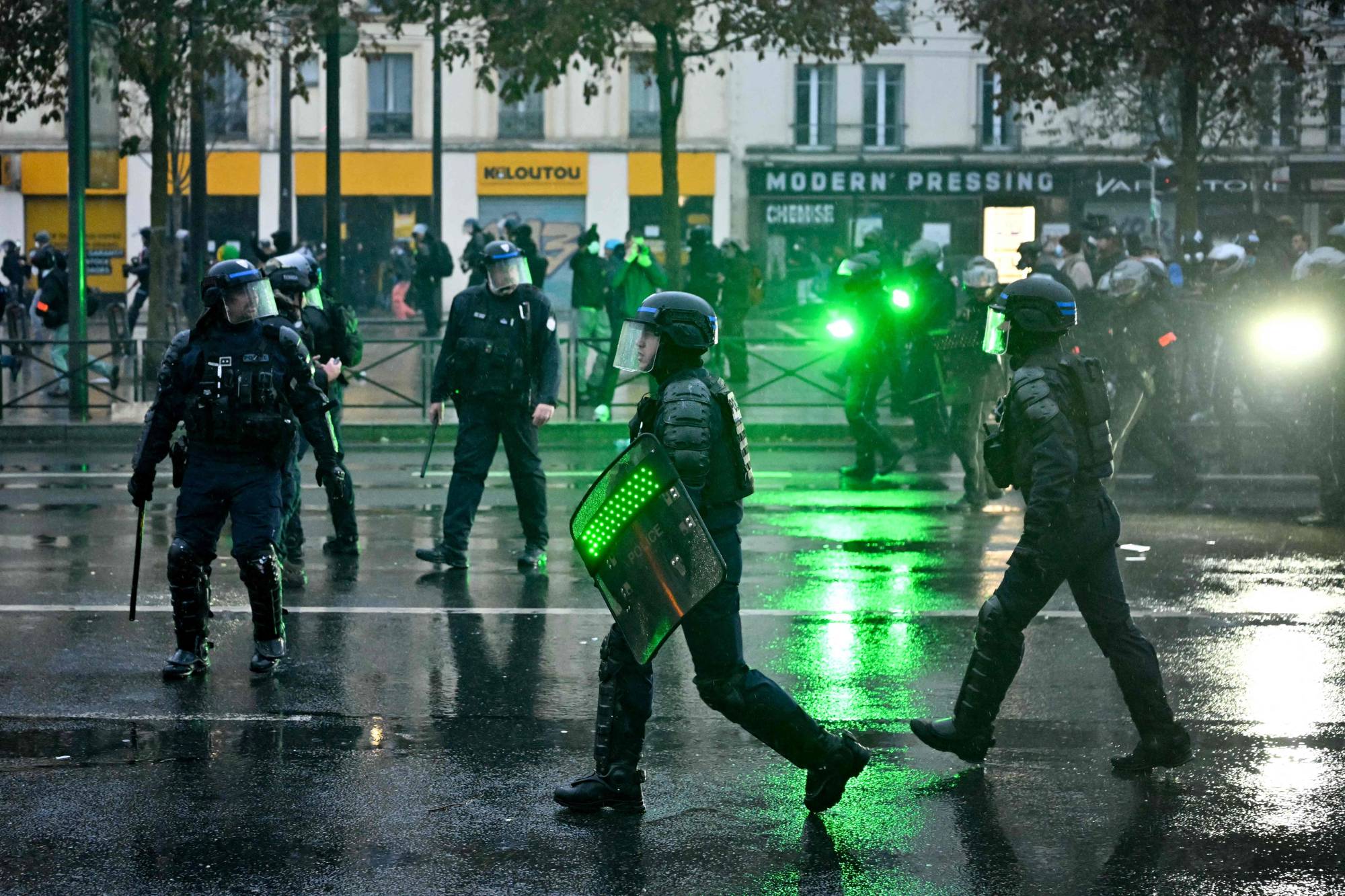
A general view taken on September 7, 2026 in Magdeburg, eastern Germany, shows Saxony-Anhalt's State Parliament, the day after the state election. (AFP)
TT

Far-Right Triumph in Eastern Germany Leaves Migrants Questioning Their Future

A general view taken on September 7, 2026 in Magdeburg, eastern Germany, shows Saxony-Anhalt's State Parliament, the day after the state election. (AFP)

Mamad Mohamad watched with mixed emotions as the far-right Alternative for Germany (AfD) swept to a historic victory on Sunday evening in the eastern state of Saxony-Anhalt.

A member of the Greens, the 46-year-old is set to become one of the first lawmakers with an immigrant background to enter the state parliament, alongside Mustafa Groener of the Left (Die Linke) party.

For Mohamad, who arrived in Germany from Syria as a 16-year-old Yazidi Kurd in 1996, it was a milestone that should have been a moment of celebration. Instead, he described it as a "poisoned victory".

"My heart was split," Mohamad said, recalling the first projections that showed the AfD outperforming expectations ‌while Chancellor Friedrich Merz's ‌governing conservatives slumped to a historic low.

'CULTURALLY ALIEN'

The AfD has long ‌campaigned ⁠for tighter immigration ⁠and asylum policies, arguing that Germany has lost control of its borders and that migration is putting heavy pressure on public services, security and social cohesion.

According to its election manifesto, an AfD-led Saxony-Anhalt would launch a state-level campaign to deport rejected asylum seekers.

The party also proposes encouraging businesses to adopt artificial intelligence and automation rather than rely on skilled migration from what it describes as "culturally alien" backgrounds.

The AfD rejects accusations that its rhetoric contributes to a hostile climate for migrants, insisting it opposes only illegal and uncontrolled ⁠migration.

"Everyone is warmly welcome who contributes positively to our society, who ‌wants to work here, who is qualified, who pays taxes, ‌and who abides by the law," AfD co-leader Alice Weidel said on Monday.

PACKED BAGS

The mood in Mohamad's ‌family was somber on Monday.

His daughter, he said, was reluctant to attend school, one of ‌several criticized by the AfD over projects that examine threats to democracy.

Though anxiety is running high in many immigrant communities, the result has prompted unease rather than surprise, said Undra Dressler, managing director of the State Network of Migrant Organizations in Saxony-Anhalt.

People with migrant backgrounds have long faced discrimination and structural barriers in access ‌to work, education, healthcare and public services, Dressler said.

"All of this is our reality," she told Reuters.

Sunday's result nevertheless marks a turning ⁠point, she said. "There are ⁠many people in our communities who say: 'We've already packed our bags and have concrete plans, and we'll be leaving soon,' or, in some cases, have already left."

Pascal Begrich, managing director of democracy advocacy group Miteinander, said he did not expect a large-scale exodus, partly because of economic realities, but agreed that many migrants but also employers were reassessing their future in Saxony-Anhalt.

"There are companies asking themselves whether they really want to locate here and whether they can ensure their workers will be safe," Begrich told Reuters.

CONSTITUTIONAL LIMITS

Mohamad said he feared the political shift could make it harder to attract newcomers to a state already grappling with demographic decline.

"Skilled workers and families will look elsewhere," he said.

Despite concerns about the state's political direction, both Dressler and Begrich stressed that any future government would remain bound by Germany's constitutional order and protections for minorities.

"Every government is bound by this," Dressler said. "And the 15 other federal states have a duty to monitor this and, if necessary, to intervene."


Russia Announces the Closure of the German Consulate in St. Petersburg

A person walks past the German Consulate General in Saint Petersburg, Russia September 2, 2026. Picture taken with a mobile phone. REUTERS/Dmitry Vasilyev
TT

Russia Announces the Closure of the German Consulate in St. Petersburg

A person walks past the German Consulate General in Saint Petersburg, Russia September 2, 2026. Picture taken with a mobile phone. REUTERS/Dmitry Vasilyev

Russia’s Foreign Ministry said Monday that the German consulate in St. Petersburg will have to close, a tit-for-tat move that reflected the simmering tensions between the two countries.

Russia’s Foreign Ministry said the German consulate must stop operations by Sept. 18, following an earlier move by Moscow to close German cultural centers on its territory.

The ministry said the closure was in retaliation for Germany’s decision Wednesday to close both the Russian consulate in Bonn and the Russian House cultural center in the German capital, Berlin.

Germany blamed Russia for an attempted drone attack at Leipzig/Halle Airport on Aug. 4, when an explosives-laden drone was found near a Ukrainian plane.

The airport is a major international freight hub used for providing support to Ukraine. The drone was later defused.

Moscow has denied involvement.


North Korea, Russia Open their First Road Bridge, a Symbol of Expanding Ties 

The first road bridge between Russia and North Korea across the Tumen River, locally known as Tumannaya, on the border with North Korea in the Primorsky region, Russia, in this still image from a video released September 7, 2026. Russian Government/Handout via REUTERS
TT

North Korea, Russia Open their First Road Bridge, a Symbol of Expanding Ties 

The first road bridge between Russia and North Korea across the Tumen River, locally known as Tumannaya, on the border with North Korea in the Primorsky region, Russia, in this still image from a video released September 7, 2026. Russian Government/Handout via REUTERS

North Korea and Russia opened their first road bridge on Monday in a carefully choreographed display of friendship, a structure which spans the Tumen river and which both sides cast as an important milestone in their deepening strategic partnership.

The first flag-adorned trucks trundled across the 1 km (0.6 mile) long two-lane bridge as Russian Prime Minister Mikhail Mishustin and North Korea's Premier Pak Thae Song tuned in by video link to address workers and government officials from both countries.

Construction of the new bridge, which had been under discussion for years, began in April last year after the project was agreed during a visit by President Vladimir Putin to North Korea in 2024. There are already direct air and rail links between Moscow and Pyongyang, but until Monday there had not been a proper road link. Instead, since 1959 and by special arrangement, planks had been placed on the nearby rail bridge - for decades the sole border crossing point - in order to move vehicles across the border between the two countries.

"I am convinced that the expansion of cross-border transport infrastructure will provide a powerful impetus for the further development of trade, economic, scientific, technological and cultural cooperation," said Mishustin, who said ties between Moscow and Pyongyang were "at an unprecedented high level" and called the opening of the bridge "a genuinely historic event."

The construction of the bridge was not merely an engineering project, he said, but "a new symbol of friendship".

Mishustin said up to 300 vehicles would be able to cross every day and that the bridge would be linked to Russia's federal road network and have easy access to the transport corridor which runs from the far eastern city of Vladivostok to St Petersburg. Trucks would begin to use the bridge immediately to transport cargo, the Russian government said. At the end of this year, the bridge would be fully operational and could be used for passenger traffic too.

The bridge was built near an existing "Friendship Bridge", a rail bridge which was commissioned in 1959 after the Korean war. Symbolically, the new bridge is named after Yakov Novichenko, a Red Army soldier who Pyongyang credits with protecting the life of North Korea's first leader Kim Il Sung in 1946 by intercepting a grenade thrown at him and others.

Ties between the two countries have grown stronger since the start of the war in Ukraine in 2022, with Pyongyang sending thousands of troops to Russia's Kursk region to help repel a 2024 Ukrainian incursion there.

Mishustin made a reference to that in his speech on Monday, referring to "the Korean heroes who, only recently, fought shoulder to shoulder with our soldiers and defended Russian soil".