


Iran Official Says 2,000 People Have Been Killed in Unrest

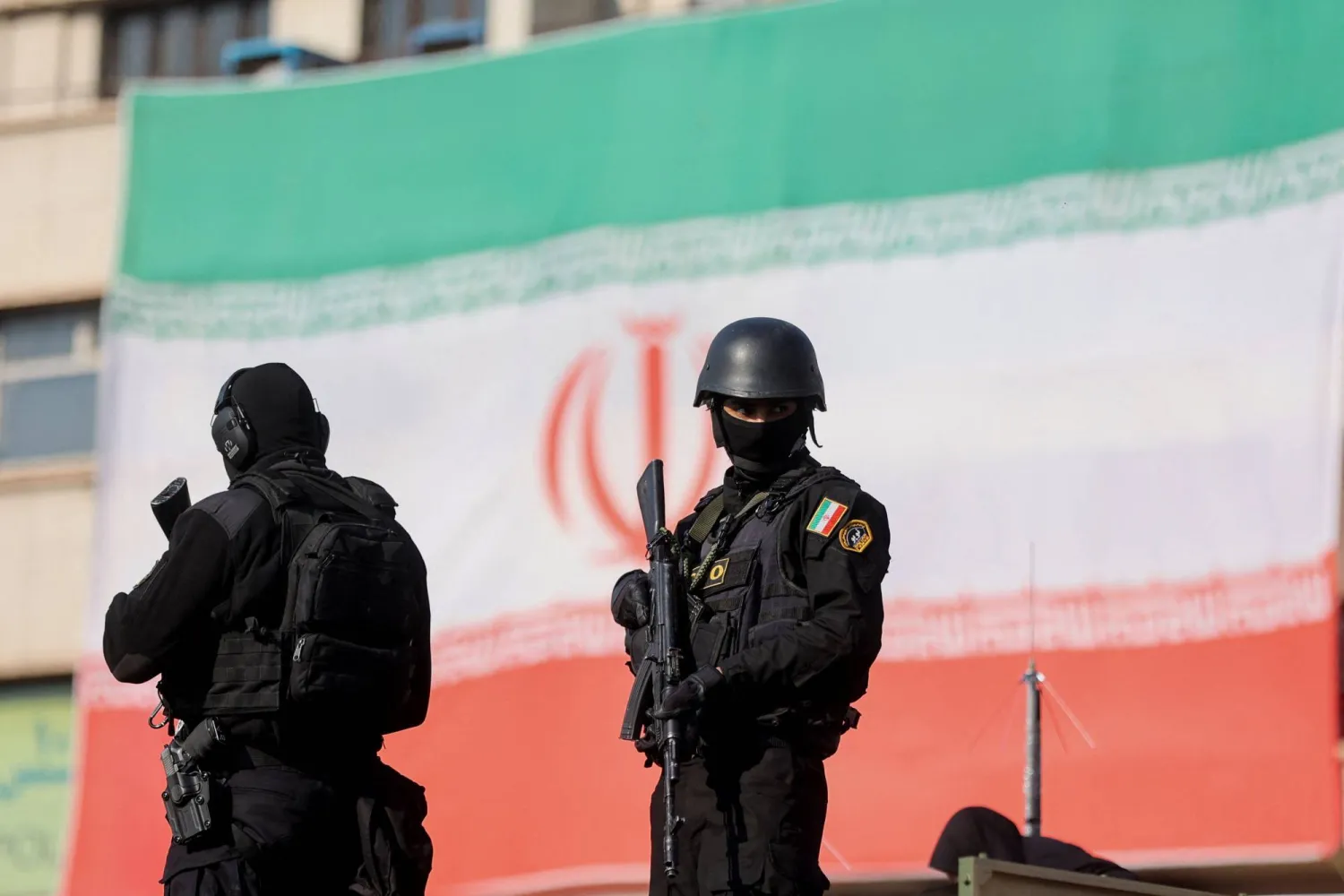
Members of the Iranian police attend a pro-government rally in Tehran, Iran, January 12, 2026. Stringer/WANA (West Asia News Agency) via Reuters
TT

Iran Official Says 2,000 People Have Been Killed in Unrest

Members of the Iranian police attend a pro-government rally in Tehran, Iran, January 12, 2026. Stringer/WANA (West Asia News Agency) via Reuters

About 2,000 people including security personnel have been killed in protests in Iran, an Iranian official said on Tuesday, the first time authorities have acknowledged the high death toll from an intense crackdown on two weeks of nationwide unrest.

The Iranian official, speaking to Reuters, said that people he ​called terrorists were behind the deaths of both protesters and security personnel. The official, who declined to be named, did not give a breakdown of who had been killed.

The unrest, sparked by dire economic conditions, has posed the biggest internal challenge to Iran's clerical rulers for at least three years and has come at a time of intensifying international pressure after Israeli and US strikes last year.

On Monday evening US President Donald Trump announced 25% import tariffs on products from any country doing business with Iran - a major oil exporter. Trump has also said more military action is among options he is weighing to punish Iran over the crackdown, saying earlier this month "we are locked and loaded".

Tehran has not yet responded publicly to Trump's announcement of the tariffs, but it was swiftly criticized by China. Iran, already under heavy US sanctions, exports much of its oil to China, with Türkiye, Iraq, and India ‌among its other top trading partners.

IRAN TAKES DUAL APPROACH TO PROTESTS

While analysts say Iran has ‌ridden ⁠out ​bigger waves ‌of protests, the current unrest comes at a particularly vulnerable moment for authorities given the scale of economic problems.

Underscoring the international uncertainty over what comes next in Iran, which has been one of the dominant powers across the Middle East for decades, German Chancellor Friedrich Merz said he believed the government would fall.

"I assume that we are now witnessing the final days and weeks of this regime," he said on Tuesday, adding that if it had to maintain power through violence, "it is effectively at its end".

He did not expand on whether this forecast was based on intelligence or other assessments.

Iranian Foreign Minister Abbas Araqchi dismissed Merz's criticisms, accusing Berlin of double standards and saying he had "obliterated any shred of credibility".

Despite the nationwide protests and years of external pressure, there are as yet no signs of fracture in the ⁠country's security elite that could bring an end to the clerical system in power since a 1979 revolution.

Iran's authorities have tried to take a dual approach to the demonstrations, calling protests over ‌economic problems legitimate while enforcing a harsh security crackdown.

"The government sees security forces and protesters ‍as its children. To the best of our abilities, we have tried ‍and will try to listen to their voices even if some have tried to hijack such protests," government spokesperson Fatemeh Mohajerani said on Tuesday.

Authorities have ‍accused the US and Israel of fomenting unrest alongside the unidentified people who they call terrorists and who they say have taken over protests.

Parliament member Mohammadreza Sabaghian, who represents an area in Yazd, in central Iran, said the government needed to resolve people's dissatisfaction, warning that otherwise "the same events will occur with greater intensity".

The protests began on December 28 over the fall in value of the local currency and have grown into wider demonstrations over dire economic hardships and defiant calls for the fall of ​the clerical establishment.

A rights group had previously identified hundreds of people killed and said that thousands had been arrested.

INFORMATION BLACKED OUT

Communications restrictions, including an internet blackout over recent days, have hampered the flow of information. The UN rights office said on Tuesday that ⁠phone services had been restored but internet links with Iran remained patchy.

Videos of nighttime clashes between demonstrators and security forces over the past week, including several that were verified by Reuters, have shown violent confrontations with gunfire and burning cars and buildings.

US-based rights group HRANA said that by late Monday 10,721 people had been arrested. Reuters was unable to confirm the figures independently.

Rights groups say they have identified by name hundreds of those killed. Opposition groups outside Iran have said the death toll is far higher than the 2,000 estimated by the Iranian official on Tuesday.

HRANA said it received reports and videos on Monday from Tehran's Behesht Zahra Cemetery where family members of victims "gathered at burial sites and chanted protest slogans".

POTENTIAL DIALOGUE WITH WASHINGTON

Iranian authorities said on Monday they were keeping communication channels with Washington open as Trump considered how to respond to Iran's crackdown.

"We have the duty to do dialogue and we will certainly do so," government spokesperson Mohajerani said on Tuesday.

White House press secretary Karoline Leavitt told reporters on Monday that while airstrikes were one of many alternatives open to Trump, "diplomacy is always the first option for the president".

"What you're hearing publicly from the Iranian regime is quite different from the messages the administration is receiving privately, and I think the president has an ‌interest in exploring those messages," she said.

Foreign Minister Araqchi said Tehran was studying ideas proposed by Washington, though these were "incompatible" with US threats.

"Communications between (US special envoy Steve) Witkoff and me continued before and after the protests and are still ongoing," he told Al Jazeera on Monday. 


Russian Missile Kills Three on Bus in East Ukraine

This photograph shows residential buildings heavily damaged by a Russian air strike at the beginning of the full-scale invasion, where more than 50 people were killed, in the center of the city of Izium, Kharkiv region on March 10, 2026, amid the Russian invasion of Ukraine. (AFP)
TT

Russian Missile Kills Three on Bus in East Ukraine

This photograph shows residential buildings heavily damaged by a Russian air strike at the beginning of the full-scale invasion, where more than 50 people were killed, in the center of the city of Izium, Kharkiv region on March 10, 2026, amid the Russian invasion of Ukraine. (AFP)

A Russian strike in eastern Ukraine on Friday killed three people on a bus near the embattled town of Kupiansk, which Moscow's army is battling to recapture, investigators said.

The wider Kharkiv region, which borders Russia, was partly occupied when Russian forces invaded in February 2022, but was largely liberated by Ukraine months later.

"Three people were killed as a result of the strike: the bus driver and two passengers," local investigators announced.

The bus was near the village of Nova Oleksandrivka when it was hit by an Iskandr missile, they added. Investigators posted images of a red bus with its windows blown out.

There was no immediate comment from the Kremlin, which claims its forces do not target civilians.

Peace talks spearheaded by the United States aiming to halt more than four years of fighting have been derailed by the US-Israeli war with Iran.

Russia's invasion sparked the bloodiest war in Europe since World War II, forcing the displacement of millions and leaving hundreds of thousands of soldiers and civilians dead on both sides.


Türkiye Says Third Ballistic Missile from Iran Shot Down

 This handout photograph taken and released on March 9, 2026, by Turkish news agency DHA (Demiroren News Agency) shows part of a second Iranian ballistic missile destroyed by NATO in Turkish airspace. (Photo by Handout / DHA (Demiroren News Agency) / AFP)
This handout photograph taken and released on March 9, 2026, by Turkish news agency DHA (Demiroren News Agency) shows part of a second Iranian ballistic missile destroyed by NATO in Turkish airspace. (Photo by Handout / DHA (Demiroren News Agency) / AFP)
TT

Türkiye Says Third Ballistic Missile from Iran Shot Down

 This handout photograph taken and released on March 9, 2026, by Turkish news agency DHA (Demiroren News Agency) shows part of a second Iranian ballistic missile destroyed by NATO in Turkish airspace. (Photo by Handout / DHA (Demiroren News Agency) / AFP)
This handout photograph taken and released on March 9, 2026, by Turkish news agency DHA (Demiroren News Agency) shows part of a second Iranian ballistic missile destroyed by NATO in Turkish airspace. (Photo by Handout / DHA (Demiroren News Agency) / AFP)

Türkiye’s defense ministry on Friday said a ballistic missile from Iran had been shot down in Turkish airspace by NATO forces in the third such incident of the Middle East war. 

"A ballistic munition launched from Iran and entering Turkish airspace was neutralized by NATO air and missile defense assets deployed in the eastern Mediterranean," a ministry statement said. 

Hours earlier, sirens wailed at Türkiye’s southern Incirlik airbase, a key NATO facility where US troops are stationed, state news agency Anadolu reported. 

Local media also reported sirens in Batman, 600 kilometers (370 miles) further east. 

NATO air defenses shot down a first ballistic missile fired from Iran on March 4, with a second intercepted on Monday. 

Residents of the southern city of Adana, next to Incirlik, were woken by sirens at 3:25 am (0025 GMT) and several posted footage of a fast-moving object that appeared to be on fire, the Ekonomim business news website reported. 

Separately, sirens sounded in Batman around 4:00 am, with reporters saying the alarm appeared to be coming from a military drone base next to the city's airport. 

Monday's incident prompted Washington to close its consulate in Adana and urge all US citizens to leave southeastern Türkiye. 

Iranian President Masoud Pezeshkian denied the missile had been fired from Iran in a phone call to Türkiye’s Recep Tayyip Erdogan. 

Since the US-Israeli war on Iran started on February 28, Tehran has retaliated with strikes across the Middle East. 

Incirlik is an important NATO facility used by US troops for decades, but which also hosts military personnel from Spain and Poland, its website says. 

US troops are also stationed at Kurecik, a base in the central Malatya province, where they man an early-warning radar system NATO describes as a "key element" of its missile shield that can detect Iranian missile launches. 

Although Ankara has categorically denied radar data has ever been used to help Israel, its presence has rattled Tehran. 

On Tuesday, Türkiye said a Patriot missile defense system was being deployed in Malatya just days after NATO moved to strengthen its "alliance-wide ballistic missile defense posture". 


Russia Says It Doesn't See Iran Crisis Reducing US Interest in Ukraine Peace Talks

FILE PHOTO: Kremlin spokesman Dmitry Peskov attends a meeting of Russian President Vladimir Putin with Palestinian President Mahmoud Abbas at the Kremlin in Moscow, Russia, January 22, 2026. REUTERS/Ramil Sitdikov/Pool/File Photo
TT

Russia Says It Doesn't See Iran Crisis Reducing US Interest in Ukraine Peace Talks

FILE PHOTO: Kremlin spokesman Dmitry Peskov attends a meeting of Russian President Vladimir Putin with Palestinian President Mahmoud Abbas at the Kremlin in Moscow, Russia, January 22, 2026. REUTERS/Ramil Sitdikov/Pool/File Photo

Russia is not concerned at this point that the Iran crisis will reduce US interest in mediating ‌peace talks ‌on Ukraine, ‌Kremlin ⁠spokesman Dmitry Peskov said ⁠on Friday.

"No, there are no such concerns at ⁠this time; our ‌contacts with ‌our American ‌counterparts provide ‌no grounds for such doubts," Peskov told reporters in ‌response to a question.

Russia is ⁠expecting ⁠a new round of negotiations, but has nothing to announce yet on the timing, he said.
