US Designates Three Muslim Brotherhood Chapters as Global Terrorists

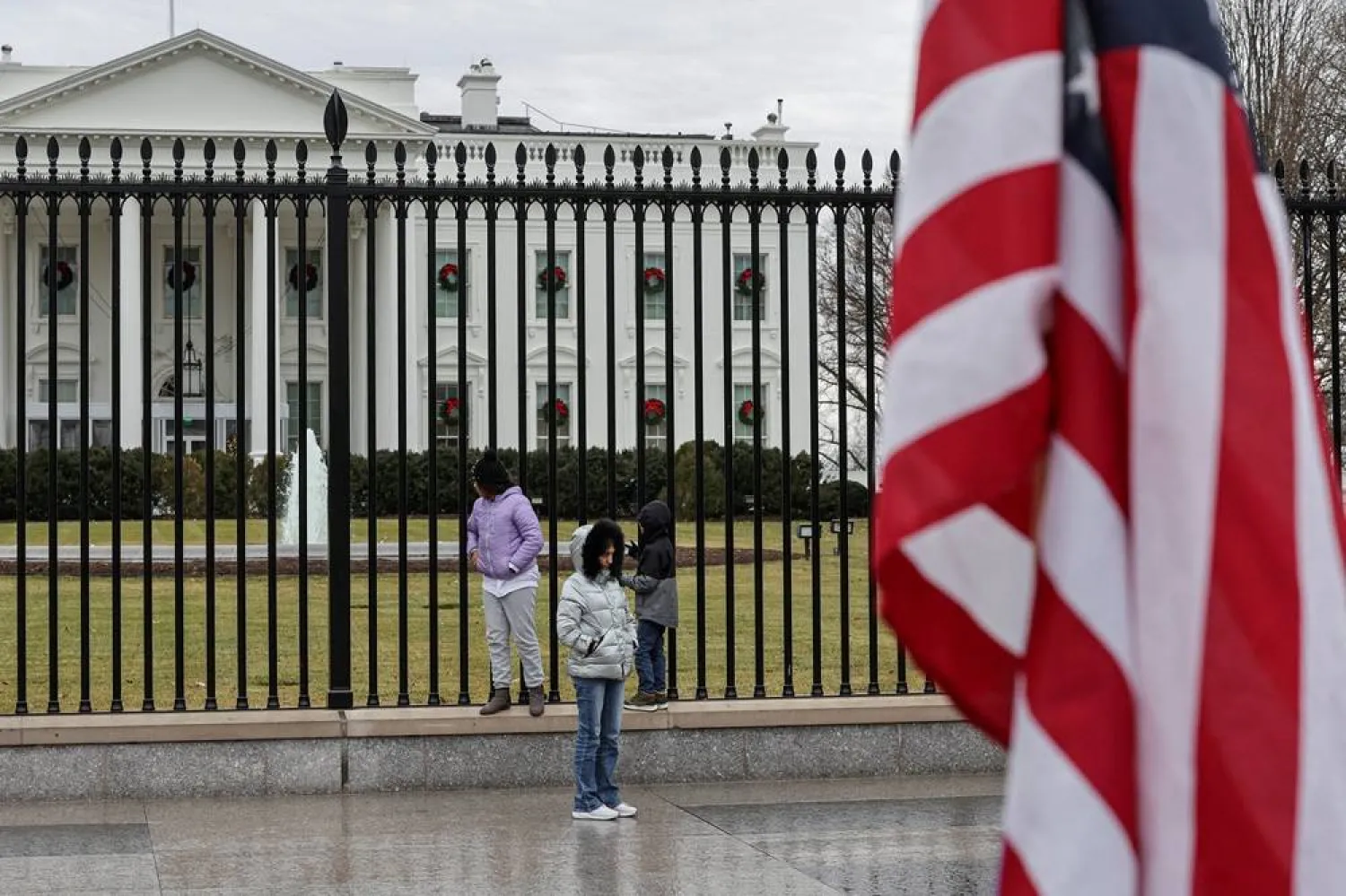
Tourists stand next to the fence of the White House in Washington, DC, US December 26, 2025. (Reuters)
TT

US Designates Three Muslim Brotherhood Chapters as Global Terrorists

Tourists stand next to the fence of the White House in Washington, DC, US December 26, 2025. (Reuters)

The United States on Tuesday designated the Egyptian, Lebanese and Jordanian branches of the Muslim Brotherhood as global terrorists, citing in part what it called their support for Palestinian group Hamas.

The ‌move, which ‌Washington formally ‌set ⁠in motion ‌last November, will bring sanctions against one of the Arab world's oldest and most influential Islamist movements.

The Treasury said it ⁠was labeling the three chapters ‌as specially designated global ‍terrorists. ‍It has accused the ‍trio of supporting or encouraging violent attacks against Israel and US partners.

"Chapters of the Muslim Brotherhood purport to be legitimate civic organizations while, ⁠behind the scenes, they explicitly and enthusiastically support terrorist groups like Hamas," the Treasury Department said in a statement.

Republicans and right-wing voices have long advocated for and considered terrorist designations for ‌the Muslim Brotherhood.


Study: Europe's Refugee Population Stabilizes after Decade of Growth

Chadian women weave plastic threads in Tongori camp for Chadian returnees, on June 9, 2026. (Photo by Joris Bolomey / AFP)
TT

Study: Europe's Refugee Population Stabilizes after Decade of Growth

Chadian women weave plastic threads in Tongori camp for Chadian returnees, on June 9, 2026. (Photo by Joris Bolomey / AFP)

Europe's refugee and asylum-seeker population stabilized in 2025 after more than a decade of growth, as asylum applications fell for a second consecutive year, according to a report by the Centre for the Research and Analysis of Migration at the Rockwool Foundation Berlin seen by Reuters on Friday.

The number of refugees and asylum seekers in the European Union and Britain stood at 9.59 million in 2025, little changed from 9.58 million ⁠a year earlier, ⁠marking a sharp shift from the rapid increases seen after Russia's invasion of Ukraine.

Asylum applications fell to 770,000 in 2025 from 1.01 million in 2024 and 1.1 million in 2023, the report said.

"The period of rapid growth ⁠in Europe's refugee population appears to have come to an end," said Tommaso Frattini, deputy director at the institute.

Immigration has become a contentious issue in many European countries in recent years amid a rise in support for far-right and right-wing populist parties.

The stable overall figure masked differences between countries: Germany, Europe's largest host country, recorded a 4.7% decline in its refugee and asylum-seeker population ⁠and Italy ⁠saw a 17.9% drop, while France, Spain and Britain recorded increases.

The report said Germany's decline largely reflected lower inflows and the naturalization of earlier refugee groups, especially Syrians and Iraqis, rather than departures.

Syrians filed more than 70% fewer asylum applications after the collapse of the Assad regime in late 2024, while applications from Venezuelans rose 24% to 91,000.

Ukrainians still account for nearly half of all refugees and asylum seekers in the EU and Britain, the report said.


US Vice President Vance Postpones Trip to Switzerland for Iran Talks

Vice President JD Vance speaks to reporters in the James S. Brady Press Briefing Room at the White House, Thursday, June 18, 2026, in Washington. (AP Photo/Manuel Balce Ceneta)
TT

US Vice President Vance Postpones Trip to Switzerland for Iran Talks

Vice President JD Vance speaks to reporters in the James S. Brady Press Briefing Room at the White House, Thursday, June 18, 2026, in Washington. (AP Photo/Manuel Balce Ceneta)

US Vice President JD Vance will not travel to Switzerland as scheduled for talks on Friday following up on the deal to end the war with Iran, according to the White House.

The signing of the accord this week was intended to end the conflict in Iran, reopen the Strait of Hormuz and begin a 60-day period for talks on wider issues, including Tehran's nuclear program, said AFP.

At the same time, the deal was to end the fighting in Lebanon, but new clashes have flared between Israeli forces and Iran-backed Hezbollah militants.

It has also appeared increasingly unlikely that a signing ceremony between the United States and Iran, originally slated for Switzerland on Friday, will take place as planned.

"The logistics of these negotiations have never been simple or predictable. As of now the Vice President is not departing tonight," a White House spokesperson said of Vance late Thursday.

"We look forward to beginning technical talks as soon as possible."

In Iran, the Tasnim agency said "nothing has been confirmed" about the Iranian delegation's trip to Switzerland.

The agreement has been signed separately by US President Donald Trump and his Iranian counterpart Masoud Pezeshkian.

Iran's supreme leader Mojtaba Khamenei said Thursday that he had approved the agreement, despite reservations, even as the United States lifted a blockade of Iranian ports.

Mojtaba Khamenei, who took over after his father and longstanding ruler Ali Khamenei was killed in an airstrike on the first day of the war on February 28, said in a written statement that he held a "different view" on the deal, without elaborating.

"But I issued my permission due to the commitment" made by officials including Pezeshkian to "protect the rights of the Iranian nation".

"Face-to-face negotiations" with the United States will be held in the future, but that does not "mean accepting the enemy's point of view", he added.

On Friday, Iran's chief negotiator Mohammad Bagher Ghalibaf warned that Tehran would give a "decisive" response if the agreement was breached.

- 'Maybe they start fighting again' -

American forces on Thursday lifted their naval blockade of Iranian ports that had prevented ships from sailing to or from the Iranian republic, the US military said, noting that American warships "will remain in the general area".

Activity was still muted in the Strait of Hormuz, the strategic bottleneck for energy shipments that Iran blockaded during the conflict.

Three Saudi oil tankers left the Gulf through the strait on Thursday, maritime trackers said, as did a French vessel loaded with liquefied natural gas.

Iranian state TV, citing a statement from the country's Supreme National Security Council, said that ships "seeking passage through the Strait of Hormuz must submit their request" to a new government body tasked with overseeing the waterway.

In keeping with the terms of the deal, it added, "no fees whatsoever will be collected from applicants for a period of sixty days".

The deal should bring an end to the current US-Israeli conflict with Iran, which saw five weeks of all-out war until a ceasefire was struck in early April.

But fighting has continued in Lebanon, with Tehran-backed Hezbollah saying on Friday that its fighters destroyed three Israeli tanks in the country's south and that clashes were "ongoing".

Israel has yet to confirm if its tanks were hit.

Three people were also killed in Lebanon by Israeli drone strikes, the country's official National News Agency reported on Thursday.

Hezbollah drew Lebanon into the Middle East war in March by attacking Israel to avenge the killing of Iran's supreme leader at the start of the US-Israeli campaign.

Some in Tehran were downbeat at the prospects for peace.

"I have no hope that this is a lasting agreement. Maybe after the 60 days they start fighting again," said Mina, 54, a psychologist from Tehran.

Her sentiment was shared by French President Emmanuel Macron, who presided over the signing at the Palace of Versailles in what he described as a "spontaneous" move by Trump.

Macron said he did not believe that the war was "totally finished".

- 'What does that get us?' -

Under the text, Washington commits to immediately waive oil sanctions crippling Iran's economy.

And once a final agreement is reached on Iran's nuclear program, the United States will facilitate the release of a $300 billion reconstruction fund supported by regional nations, the deal says.

Trump's decision to end the war, in which 13 US service members were killed and a vast proportion of US ammunition stockpiles was used, has unsettled some of his allies at home.

US Senator Bill Cassidy from Trump's Republican Party described it as the "worst foreign policy blunder in decades".

But Trump argued that using military force to wring more concessions out of Tehran would have been counterproductive.

"The only way I can get tougher is if I go in there for another two or three weeks and continue to bomb the hell out of 'em. Right? But what does that get us? The Strait of Hormuz will not be open," he told Axios.

"We wouldn't have oil for months," he said. "This is the kind of thing that could cause a worldwide depression."


US Strike on Alleged Drug Boat Kills 3 in Eastern Pacific Ocean

A US strike targeted a boat suspected of being used for drug smuggling in the Eastern Pacific (Reuters file photo)
TT

US Strike on Alleged Drug Boat Kills 3 in Eastern Pacific Ocean

A US strike targeted a boat suspected of being used for drug smuggling in the Eastern Pacific (Reuters file photo)

The US military attacked a boat accused of smuggling drugs in the eastern Pacific Ocean on Thursday, killing three people, as the Trump administration wages a monthslong campaign against alleged traffickers in Latin America.

The latest attack brings the number of people who have been killed in boat strikes by the US military to at least 211 since the Trump administration began targeting those it calls “narcoterrorists” in early September.

As with most of the military’s statements on strikes in the eastern Pacific Ocean and Caribbean Sea, US Southern Command said it targeted the alleged drug traffickers along known smuggling routes.

The military did not provide evidence that the vessel was ferrying drugs. A video posted on X showed a boat speeding through the water before being struck and bursting into flames.

President Donald Trump has said the US is in “armed conflict” with cartels in Latin America and has justified the attacks as a necessary escalation to stem the flow of drugs into the United States and fatal overdoses claiming American lives. But his administration has offered little evidence to support its claims of killing “narcoterrorists.”

Critics have questioned the overall legality of the boat strikes as well as their effectiveness, in part because the fentanyl behind many fatal overdoses is typically trafficked to the US over land from Mexico, where it is produced with chemicals imported from China and India.

Senators on Thursday demanded that the Pentagon release “unedited video” of the strikes, The Associated Press reported. They have drawn intense scrutiny from some Democratic lawmakers and military legal scholars. The US military’s first strike in early September drew particular concern from some lawmakers and those who study military law.

Two men on the boat initially survived the attack that killed nine others, and they were clinging to the wreckage when the vessel was struck again, killing them. The White House confirmed the follow-up strike, insisting it was done “in self-defense” to ensure the boat was destroyed and in accordance with the laws of armed conflict.

But some legal scholars said a second strike killing survivors would have been illegal under any circumstance, armed conflict or not.

The Pentagon’s watchdog said in May that it plans to look into whether the US military followed an established targeting framework when carrying out the strikes. However, the evaluation is focused specifically on what’s known as the six-phase Joint Targeting Cycle and not on the legality of the strikes, the inspector general’s office said.