



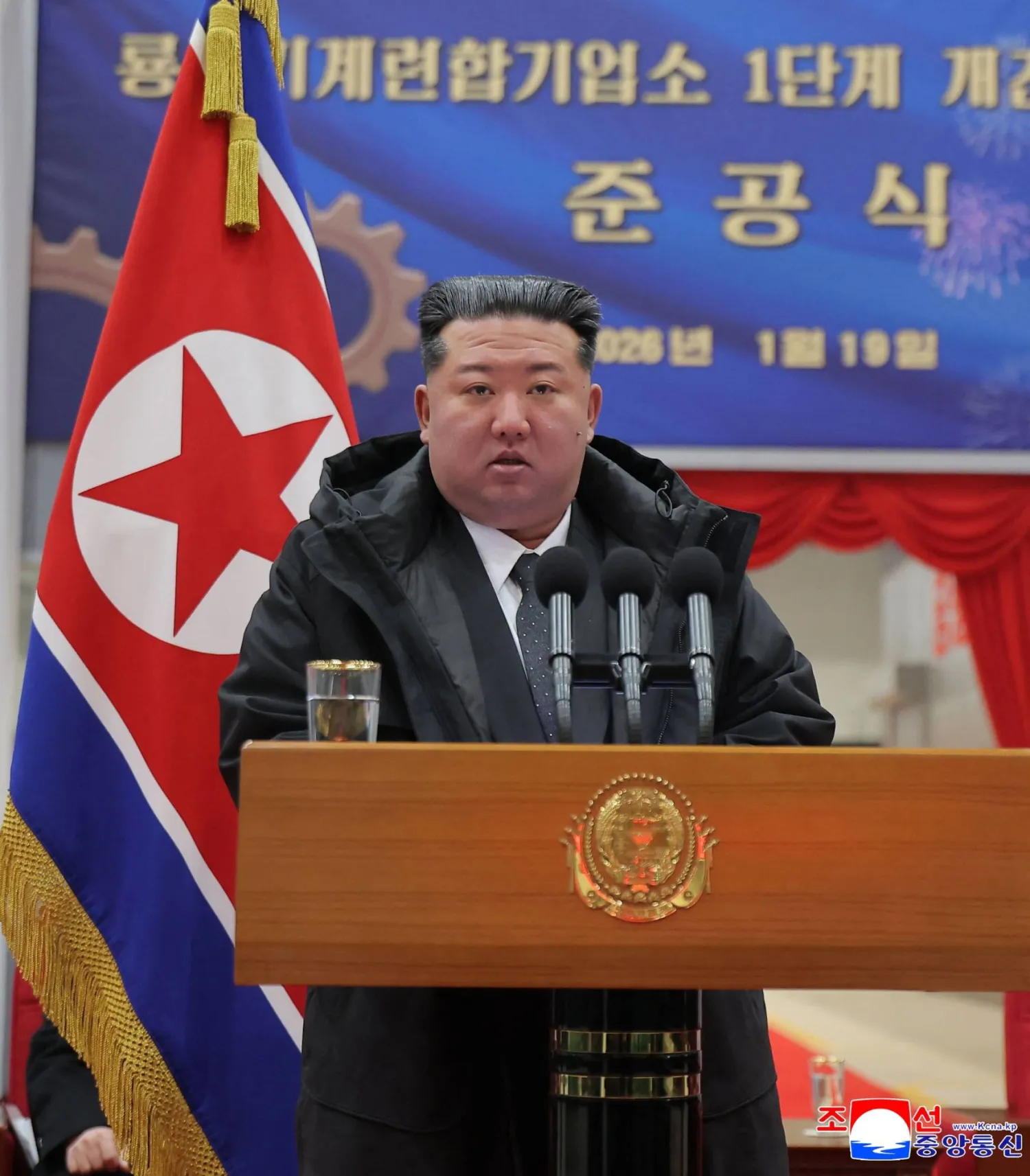

The Pentagon foresees a "more limited" role in deterring North Korea, with South Korea taking primary responsibility for the task, according to a policy document released on Friday, a move that could lead to a reduction of US forces on the Korean Peninsula.
South Korea hosts about 28,500 US troops in combined defense against North Korea's military threat and Seoul has raised its defense budget by 7.5% for this year, said Reuters.
"South Korea is capable of taking primary responsibility for deterring North Korea with critical but more limited US support," the Pentagon said in the 25-page National Defense Strategy document that guides its policies.
"This shift in the balance of responsibility is consistent with America's interest in updating US force posture on the Korean Peninsula."
In recent years, US officials have signaled a desire to make US forces in South Korea more flexible, to potentially operate outside the Korean Peninsula in response to a broader range of threats, such as in defending Taiwan and checking China's growing military reach.
South Korea has resisted the idea of shifting the role of US troops, but has worked to grow its defense capabilities in the past 20 years, with the goal of being able to take on the wartime command of combined US and South Korean forces. South Korea has 450,000 troops.
The Pentagon's top policy official, Elbridge Colby, is due to travel to Asia next week and is expected to visit South Korea, a US official said.
The wide-ranging document, which each new administration publishes, said the Pentagon's priority was defending the homeland. In the Indo-Pacific region, the document said, the Pentagon was focused on ensuring that China could not dominate the United States or US allies.
"This does not require regime change or some other existential struggle. Rather, a decent peace, on terms favorable to Americans but that China can also accept and live under, is possible," the document said, without mentioning Taiwan by name.
China claims democratically governed Taiwan as its own territory and has not ruled out the use of force to take control of the island. Taiwan rejects Beijing's sovereignty claims and says only the people of Taiwan can decide their future.
The Pentagon document is based on US President Donald Trump's National Security Strategy, published last year, which said the United States will reassert its dominance in the Western Hemisphere, build military strength in the Indo-Pacific, and possibly reassess its relationship with Europe.


