


Iranian Students Rally for Second Day as Fears of War with US Mount

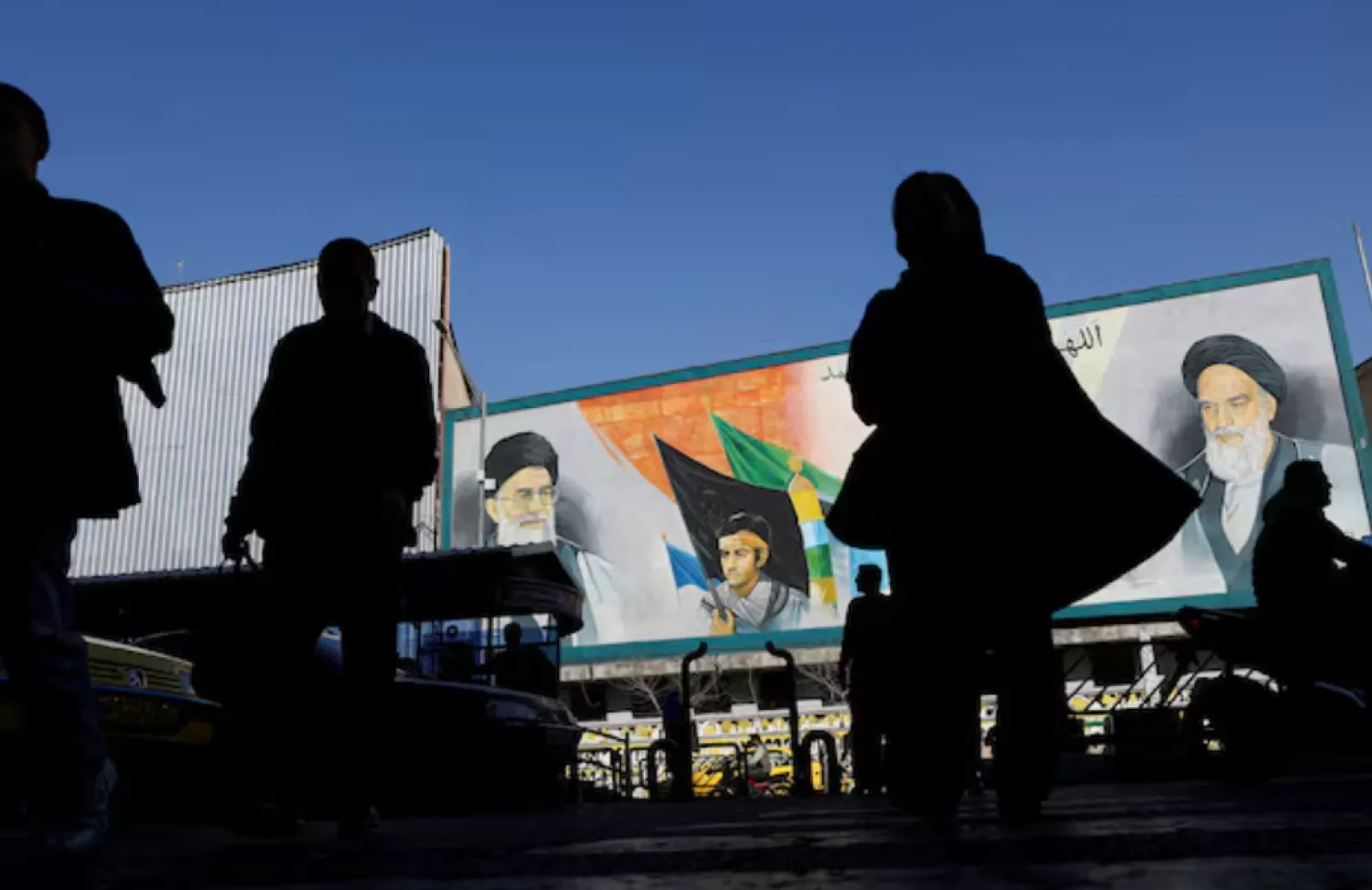
People walk near a mural featuring images of Iran's Supreme Leader Ayatollah Ali Khamenei and leader of Iran's 1979 Islamic Revolution Ayatollah Ruhollah Khomeini, on a street in Tehran, Iran, February 17, 2026. Majid Asgaripour/WANA (West Asia News Agency) via REUTERS
TT

Iranian Students Rally for Second Day as Fears of War with US Mount

People walk near a mural featuring images of Iran's Supreme Leader Ayatollah Ali Khamenei and leader of Iran's 1979 Islamic Revolution Ayatollah Ruhollah Khomeini, on a street in Tehran, Iran, February 17, 2026. Majid Asgaripour/WANA (West Asia News Agency) via REUTERS

Iranian students gathered for fresh pro- and anti-government rallies Sunday commemorating those killed in recent protests, as fears loomed of renewed conflict with the United States over the country's nuclear programme.

The initial demonstrations were sparked in December by economic hardship in the sanctions-hit country, but quickly expanded into mass anti-government protests that marked one of the largest challenges to the Islamic republic's clerical leadership in years.

US President Donald Trump had initially cheered on the protesters, threatening to intervene on their behalf as authorities launched a deadly crackdown, but his threats soon shifted to Iran's nuclear programme, which the West believes is aimed at developing atomic weapons, AFP reported.

Washington and Tehran have since returned to the negotiating table, but Trump has simultaneously pursued a major military build-up in the Middle East aimed at pressuring Iran to cut a deal.

Following campus rallies commemorating the protest dead on Saturday, the Fars news agency on Sunday published videos of fresh crowds of dozens of people waving Iranian flags and carrying memorial photographs at universities in the capital Tehran.

One showed a rowdy gathering at Sharif University of Technology shouting "death to the shah" -- a reference to the monarchy ousted by the 1979 Islamic revolution -- as they faced off with another group, with men in uniforms between them.

Fars said there had been "tensions" at at least three universities in Tehran where some students chanted "anti-establishment" slogans.

Iran International, a media outlet based outside the country and branded a "terrorist" organization by Tehran, shared a video on social media of students holding up the pre-revolution flag at Sharif University, as well as videos of rallies at other institutions of higher learning.

A video geolocated by AFP of what appeared to be the demonstration at Sharif University showed a large crowd chanting anti-government slogans as they thronged around students waving the flag of the toppled monarchy.

The authorities acknowledge more than 3,000 deaths in the unrest, including members of the security forces and bystanders, but say the violence was caused by "terrorist acts" fuelled by Iran's enemies.

The US-based Human Rights Activists News Agency (HRANA), however, has recorded more than 7,000 killings in the crackdown, the vast majority protesters, though the toll may be far higher.

- Negotiations -

Representatives of the US and Iran recently met in Geneva for a second round of Oman-mediated nuclear talks, with Iran promising to send a draft proposal for a deal to avert military action in the coming days.

Axios reported on Sunday, citing an unnamed senior US official, that if Iran submitted its proposal in the next 48 hours, Washington was ready to meet again "in Geneva on Friday in order to start detailed negotiations to see if we can get a nuclear deal".

The US has dispatched two aircraft carriers to the region, along with other jets and ships, and has also shored up its air defenses in the Middle East.

Trump's chief Middle East negotiator Steve Witkoff said Saturday in a Fox News interview that the president was questioning why Iran had not yet given in to US pressure.

"He's curious as to why they haven't... I don't want to use the word 'capitulated', but why they haven't capitulated," he said.

"Why, under this pressure, with the amount of seapower and naval power over there, why haven't they come to us and said, 'We profess we don't want a weapon, so here's what we're prepared to do'?"

Iran has long denied it is trying to produce nuclear weapons, but insists on its right to enrich uranium for civilian purposes.

- Fears of war -

A previous round of nuclear diplomacy last year was interrupted by Israel's surprise bombing campaign against the Islamic republic.

That sparked a 12-day conflict in June that the US briefly joined with strikes on nuclear facilities

Iran has maintained that it will defend itself in the event of any new attack.

Despite the latest talks, Iranians' fears of a new conflict have grown.

"I don't sleep well at night even while taking pills," Tehran resident Hamid told AFP, saying he worried for his "family's health... my kids and grandchildren".

IT technician Mina Ahmadvand, 46, believes that "at this stage, war between Iran and the US as well as Israel is inevitable and I've prepared myself for that eventuality".

"I don't want war to happen, but one should not fool around with the realities on the ground."

The concerns have prompted several foreign countries to urge their citizens to leave Iran, including Sweden, Serbia, Poland and Australia, which warned "commercial flights are currently available but this could change quickly".



Australia Rejects Report it is Repatriating Families of ISIS Militants from Syrian Camp

FILE PHOTO: Members of Australian families believed to be linked to ISIS militants leave Roj camp near Derik, Syria February 16, 2026. REUTERS/Orhan Qereman/File Photo
TT

Australia Rejects Report it is Repatriating Families of ISIS Militants from Syrian Camp

FILE PHOTO: Members of Australian families believed to be linked to ISIS militants leave Roj camp near Derik, Syria February 16, 2026. REUTERS/Orhan Qereman/File Photo

Australia's center-left government ‌on Sunday rejected a local media report that said it was working to repatriate Australians in a Syrian camp holding families of suspected ISIS militants.

The 34 women and children were released on Monday from the camp in northern Syria, but returned to the detention center due to technical reasons. The group is expected to travel to ‌Damascus before eventually returning ‌to Australia, despite objections from ‌ruling ⁠and opposition lawmakers.

On ⁠Sunday, Home Affairs Minister Tony Burke rejected claims made in a report in the Sunday Telegraph, asserting that official preparations were under way for the cohort’s return.

"In that report, it makes a claim that ⁠we are conducting a repatriation. We are ‌not," Burke told ‌Australian Broadcasting Corp television.

"It claims we have been ‌meeting with the states for the purposes of ‌a repatriation. We have not," Burke added.

Prime Minister Anthony Albanese, who leads Australia's Labor Party, said this week his government would not help ‌the group return to Australia.

The return of relatives of suspected ISIS ⁠militants ⁠is a political issue in Australia, which has seen a surge in popularity of the right-wing, anti-immigration One Nation party led by Pauline Hanson.


US, Iran to Meet in Geneva Thursday for Crucial Talks

US fighter jets prepare to take off from the aircraft carrier "USS Abraham Lincoln" in the Arabian Sea last week (US Navy)
TT

US, Iran to Meet in Geneva Thursday for Crucial Talks

US fighter jets prepare to take off from the aircraft carrier "USS Abraham Lincoln" in the Arabian Sea last week (US Navy)

Oman’s Foreign Minister Badr Albusaidi said talks between the United States and Iran would resume on Thursday in Geneva "with a positive push to go the extra mile towards finalizing” a deal on Tehran's nuclear program.

Speaking to CBS News on Sunday, Iran's Foreign Minister Abbas Araghchi said details of a possible deal were being drawn up ahead of the renewed talks, after Washington's envoy Steve Witkoff had publicly wondered why Tehran had not yet "capitulated.”

Witkoff said in a Fox News interview broadcast Saturday that US President Donald Trump was questioning why Iran had not yet given in to the pressure.

"He's curious as to why they haven't... I don't want to use the word 'capitulated', but why they haven't capitulated," he said.

"Why haven't they come to us and said, 'We profess we don't want a weapon, so here's what we're prepared to do'?"

Meanwhile, US threats of military action have multiplied.

"If the US attacks us, then we have every right to defend ourselves," Araghchi said, alluding to American interests in the region as potential targets.

Still, he said, "there is a good chance to have a diplomatic solution.”

Their comments came after a senior US official told Axios that the Trump administration is prepared to consider a proposal that allows Iran “token” nuclear enrichment if it leaves no possible path to a bomb.

This suggests there could be an opening, if only a small one, between the red lines set by the US and Iran for a deal to constrain Iran's nuclear capabilities and prevent war, according to Axios.

A senior Iranian official also told Reuters that Tehran could seriously ⁠consider a combination of ⁠exporting part of its highly enriched uranium (HEU) stockpile, diluting the purity of its HEU and a regional consortium for enriching uranium, but in return Iran's ⁠right to "peaceful nuclear enrichment" must be recognized.

"The negotiations continue and the possibility of reaching an interim agreement exists," the official said.

The senior official said Tehran will not hand over control of its oil and mineral resources but US companies can always participate as contractors in Iran’s oil and gas fields.


Mexican Army Kills Leader of Jalisco New Generation Cartel

A vehicle sits charred after being set on fire, on a road in Guadalajara, Jalisco state, Mexico, Sunday, Feb. 22, 2026, after the death of the leader of the Jalisco New Generation Cartel, "El Mencho." (AP Photo/Alejandra Leyva)
TT

Mexican Army Kills Leader of Jalisco New Generation Cartel

A vehicle sits charred after being set on fire, on a road in Guadalajara, Jalisco state, Mexico, Sunday, Feb. 22, 2026, after the death of the leader of the Jalisco New Generation Cartel, "El Mencho." (AP Photo/Alejandra Leyva)

The Mexican army killed the leader of the Jalisco New Generation Cartel, Nemesio Rubén Oseguera Cervantes, “El Mencho,” in an operation Sunday, a federal official said.

The official, who requested anonymity because they were not authorized to speak publicly, said it happened during a military operation in the western state of Jalisco.

It followed several hours of roadblocks with burning vehicles in Jalisco and other states, The Associated Press reported. Such tactics are commonly used by the cartels to block military operations.

Videos circulating social media showed plumes of smoke billowing over the city of Puerto Vallarta, a major city in Jalisco, and sprinting through the airport of the state's capital in panic.

The US State Department had offered a reward of up to $15 million for information leading to the arrest of El Mencho. The Jalisco New Generation Cartel is one of the most powerful and fasted growing criminal organizations in Mexico.

In February, the Trump administration designated the cartel as a foreign terrorist organization.

It has been one of the most aggressive cartels in its attacks on the military—including helicopters—and a pioneer in launching explosives from drones and installing mines. In 2020, it carried out a spectacular assassination attempt with grenades and high-powered rifles in the heart of Mexico City against the then head of the capital’s police force and now head of federal security.

The DEA considers this cartel to be as powerful as the Sinaloa cartel, one of Mexico's most infamous criminal groups, with a presence in all 50 US states where it distributes tons of drugs. It is one of the main suppliers of cocaine to the US market and, like the Sinaloa cartel, earns billions from the production of fentanyl and methamphetamines.