


4 Years into Russia’s Full-Scale Invasion of Ukraine, a Look at the War by the Numbers 

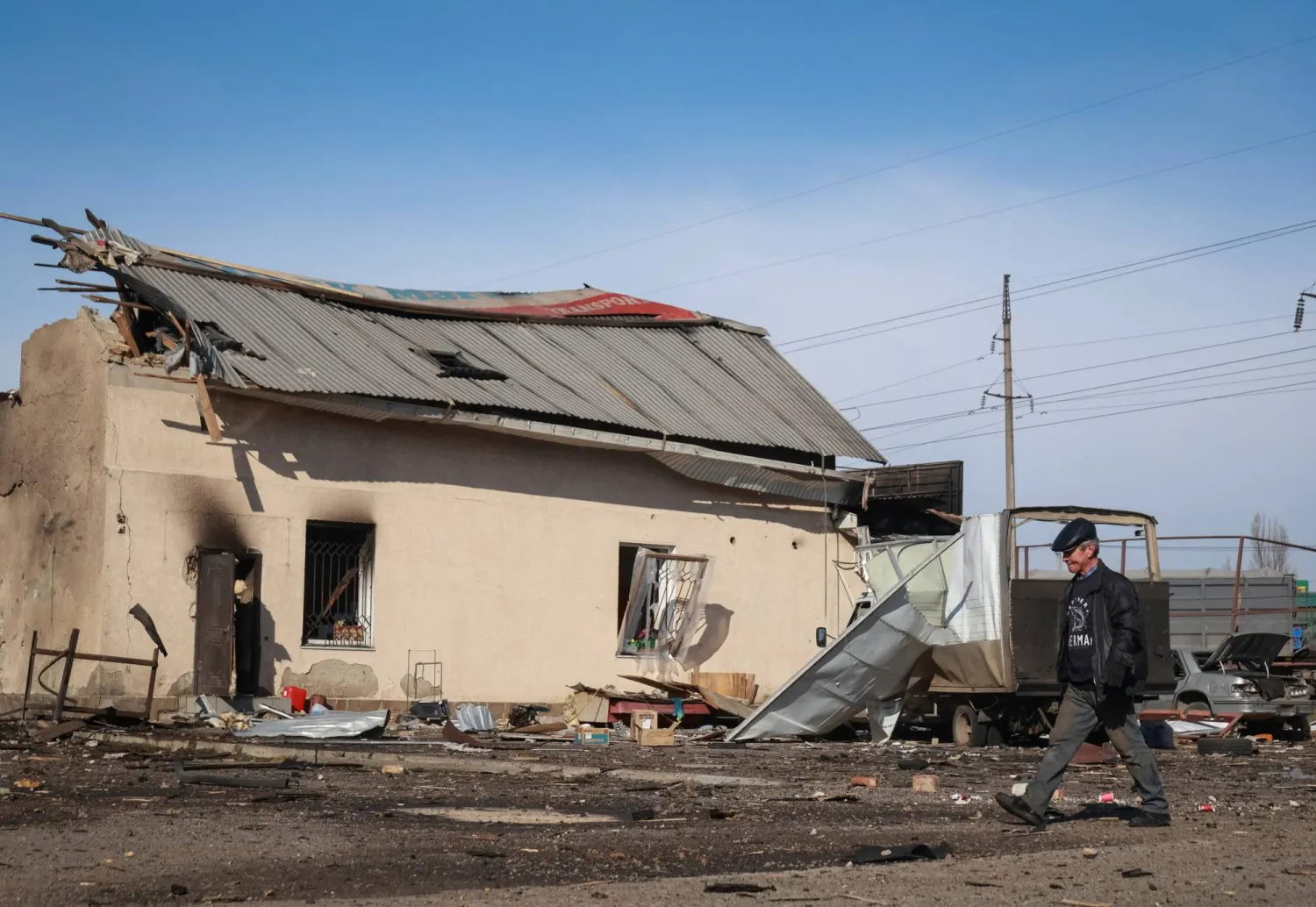
A resident walks at the site of the Russian drone strike, amid Russia's attack on Ukraine, near the city of Chornomorsk, Odesa region, Ukraine February 23, 2026. (Reuters)
TT

4 Years into Russia’s Full-Scale Invasion of Ukraine, a Look at the War by the Numbers 

A resident walks at the site of the Russian drone strike, amid Russia's attack on Ukraine, near the city of Chornomorsk, Odesa region, Ukraine February 23, 2026. (Reuters)

Russia’s invasion of Ukraine four years ago launched Europe’s biggest conflict since World War II, causing immense suffering for civilians and harrowing ordeals for soldiers while rewriting the post-Cold War security order.

The fighting enters its fifth year on Tuesday, and it shows no signs of stopping any time soon.

The US has brokered talks with delegations from Moscow and Kyiv as part of the Trump administration's yearlong push for peace. But reconciling key differences, such as the future of Russian-occupied Ukrainian land and postwar security for Ukraine, has thwarted progress.

Meanwhile, thousands of each countries’ troops have died on the battlefield, and Ukrainian civilians have been battered by Russian aerial strikes that have brought years of power outages and water cuts.

Here’s a look at the conflict, by the numbers, since the full-scale invasion on Feb. 24, 2022.

1.8 million The upper end of the estimated number of soldiers killed, wounded or missing on both sides, according to a report last month by the Center for Strategic and International Studies, a think tank.

It estimated that Russia suffered 1.2 million casualties, including up to 325,000 troop deaths, between February 2022 and December 2025 — what it said was the largest number of troop deaths for any major power in any conflict since World War II.

Russia has not released figures on battlefield deaths since January 2023, when it said more than 80 soldiers were killed in a Ukrainian strike, bringing the total military deaths Moscow has confirmed to just over 6,000.

CSIS estimated that Ukraine has seen 500,000 to 600,000 military casualties, including up to 140,000 deaths.

Ukrainian President Volodymyr Zelenskyy said earlier this month that 55,000 Ukrainian troops have died in the war. Many are missing, he said.

Neither Moscow nor Kyiv gives timely data on military losses. Independent verification is not possible.

14,999 The UN Human Rights Monitoring Mission’s count for civilian deaths in Ukraine since Russia’s all-out invasion, though it says that is likely an underestimate. More than 40,600 civilians were injured over the same period, it said in a December report.

The war has killed at least 763 children, according to the UN.

Last year was the deadliest for civilians in Ukraine since 2022. The conflict killed 2,514 civilians and injured 12,142 in the country in 2025 — a 31% increase in civilian casualties over 2024, it said.

19.4% The percentage of Ukrainian land occupied by Russia, according to the Institute for the Study of War.

Over the past year, Russia has gained just 0.79% of Ukraine’s territory in the grinding war of attrition, the Washington-based think tank said in calculations provided earlier this month to The Associated Press, underscoring the little progress Moscow's forces have made despite huge costs in troops and armor.

Before Russia’s all-out invasion, it controlled nearly 7% of Ukraine, including Crimea and parts of the Donetsk and Luhansk regions in the east, as Moscow-backed separatists fought the Ukrainian army, according to Ukrainian officials and Western analysts.

13% The percentage drop in foreign military aid to Kyiv last year compared with the annual average between 2022 and 2024, according to Germany’s Kiel Institute, which tracks assistance to Kyiv.

US President Donald Trump stopped sending American weapons paid for by the US to Ukraine after he took office just over a year ago. European countries, striving to make up the difference, increased their military aid last year by 67% compared with the 2022-2024 period, the institute said in a report this month.

Foreign humanitarian and financial aid to Ukraine fell by 5% last year in comparison with the average in the previous three years, it said.

5.9 million The number of Ukrainian civilians who have left their country.

Some 5.3 million of those people have found refuge in Europe, according to a report this month from the UN office in Ukraine.

Additionally, around 3.7 million Ukrainians forced out of their homes have moved elsewhere within the country, the UN said in December.

Ukraine's prewar population was more than 40 million.

2,851 The number of Russian attacks that affected the provision of medical care in Ukraine, according to the World Health Organization. The figure covers the period from the full-scale invasion through Feb. 11.

The attacks include 2,347 strikes on health care facilities, as well as ones that damaged vehicles and the storage of medical supplies.



Risk of ‘Escalation’ if Iran Attacked, Warns Deputy Foreign Minister

Iranians walk past shops selling food ahead of Iftar, the Ramadan fast-breaking meal, in northern Tehran on February 23, 2026. (AFP)
TT

Risk of ‘Escalation’ if Iran Attacked, Warns Deputy Foreign Minister

Iranians walk past shops selling food ahead of Iftar, the Ramadan fast-breaking meal, in northern Tehran on February 23, 2026. (AFP)

Iran's deputy foreign minister Kazem Gharibabadi warned of a wider escalation if his country was attacked, after US President Donald Trump raised the threat of strikes.

Trump has sent a major deployment of air and sea power to the Middle East and has threatened to strike Iran if it does not reach a deal on key concerns starting with its nuclear program.

"We call upon all nations committed to peace and justice to take meaningful steps to prevent further escalation," Gharibabadi said at the Conference on Disarmament in Geneva.

"The consequences of any renewed aggression wouldn't remain confined to one country -- and responsibility would rest with those who initiate or support such actions."

Iranian and US negotiators held indirect talks in Geneva last week on Tehran's nuclear program, hosted by Oman.

A fresh round of talks in the Swiss city this Thursday has been confirmed by Muscat, though not by Washington.

"Iran remains committed to diplomacy and dialogue as the most effective path towards de-escalation and sustainable security," Gharibabadi said.

"Recent diplomatic engagement here in Geneva, which will continue this Thursday, demonstrates that a new window of opportunity exists for negotiations to address differences and build confidence -- provided that they uphold mutual respect, equitable treatment and non-selective application of international norms.

"Any sustainable and credible negotiation must respect the legitimate rights of all states under international law, and deliver tangible security benefits without coercion, unilateral demands or threats of force."

- 'Chaos and change' -

The United States and Israel threatened new military action against Iran after mass protests in the regime, which the Iranian authorities crushed at a cost of thousands of lives.

After last week's indirect talks with Washington through Omani mediators in Geneva, Tehran said they had reached broad agreement on a set of guiding principles.

Gharibabadi said that while Tehran sought the path of diplomacy, it was prepared to defend its sovereignty, territory and people, insisting it would exercise its right to self-defense "if necessary".

He said meaningful progress in disarmament and non-proliferation could only be achieved through mutual, balanced and legally-binding commitments.

He called upon nuclear weapons states to engage constructively in talks towards a comprehensive nuclear weapons convention, plus offer legally-binding security assurances for countries without nuclear weapons.

Speaking just before, UN Secretary-General Antonio Guterres said the world was living through a period of "chaos and change", with international law being brazenly violated.

"The international order that defined security relations for nearly eight decades is shifting rapidly. The reckless use of force in many regions is fomenting mistrust," he warned.


Netanyahu Says Israel Facing ‘Challenging Days’ with Iran-US Tensions

Israeli Prime Minister Benjamin Netanyahu delivers a speech during a plenary session of the Knesset, the Israeli parliament, in Jerusalem, 23 February 2026. (EPA)
TT

Netanyahu Says Israel Facing ‘Challenging Days’ with Iran-US Tensions

Israeli Prime Minister Benjamin Netanyahu delivers a speech during a plenary session of the Knesset, the Israeli parliament, in Jerusalem, 23 February 2026. (EPA)

Prime Minister Benjamin Netanyahu said Monday that Israel was facing "complex and challenging days" as tensions escalate between the United States and Iran following President Donald Trump's threat of strikes should Tehran refuse to accept a new nuclear agreement.

"We are in very complex and challenging days," Netanyahu told lawmakers in a brief address to parliament. "We are keeping our eyes open and are prepared for any scenario."

He also reiterated a warning to Iran's leadership: "I have conveyed to the Iranian regime that if they make the gravest mistake in their history and attack the State of Israel, we will respond with a force they cannot even imagine."

The premier further highlighted Israel's close military cooperation with the US, as Washington continues to build up its military presence near Iran and in the Middle East.

"The alliance with the United States has never been closer," Netanyahu said.

"Between the Israel forces and the United States military, between our security agencies and their security services, there has never been anything like this," he added.

Arch-foes Israel and Iran faced each other in a first direct confrontation last June during a 12-day war in which the Israeli military targeted Tehran's nuclear facilities and ballistic missile arsenal.

Iran responded with drone and missile strikes on Israel. Later on in the war, the United States joined Israel in targeting Iran's underground nuclear facilities.


Iranian Students Protest for Third Day as US Pressure Mounts

Iranians drive along a street in Tehran, Iran, 23 February 2026. (EPA)
TT

Iranian Students Protest for Third Day as US Pressure Mounts

Iranians drive along a street in Tehran, Iran, 23 February 2026. (EPA)

Iranian students ‌defied authorities with protests for a third day on Monday, weeks after security forces crushed mass unrest with thousands killed and as the United States weighs possible air strikes against the country.

State media outlets reported students chanting anti-government slogans at Tehran University, burning flags at the all-women al-Zahra University, and scuffles at Amir Kabir University, all located in the capital.

Reuters also verified video showing students at al-Zahra University chanting slogans including "we'll reclaim Iran", but was not able ‌to confirm ‌when it was recorded.

In a new ‌sign ⁠of the mounting ⁠tension in the Middle East, the United States began pulling non-essential personnel and family members from the embassy in Beirut, a senior State Department official said.

US President Donald Trump has repeatedly threatened Iran since major nationwide protests across the country in January, saying on Thursday that "really bad things will ⁠happen" if talks between the countries fail ‌to produce a deal.

Washington wants ‌Iran to give up much of its nuclear program, which ‌it believes is aimed at building a bomb, limit the ‌range of its missiles to short distances and stop supporting groups it backs in the Middle East.

It has built up forces across the Middle East, putting increased pressure on Iran ‌as it weighs its response to US demands amid ongoing talks.

Iranian Supreme Leader Ali ⁠Khamenei ⁠already faces the gravest crisis of his 36-year tenure, with an economy struggling under the weight of international sanctions and growing unrest that broke out into major protests in January.

On Sunday Iranian President Masoud Pezeshkian said negotiations with the US had "yielded encouraging signals" even as a second US aircraft carrier headed towards the Middle East.

Trump has not laid out in detail his thinking on any possible Iran strike. A senior White House official told Reuters last week there was still no "unified support" within the administration to go ahead with an attack.