



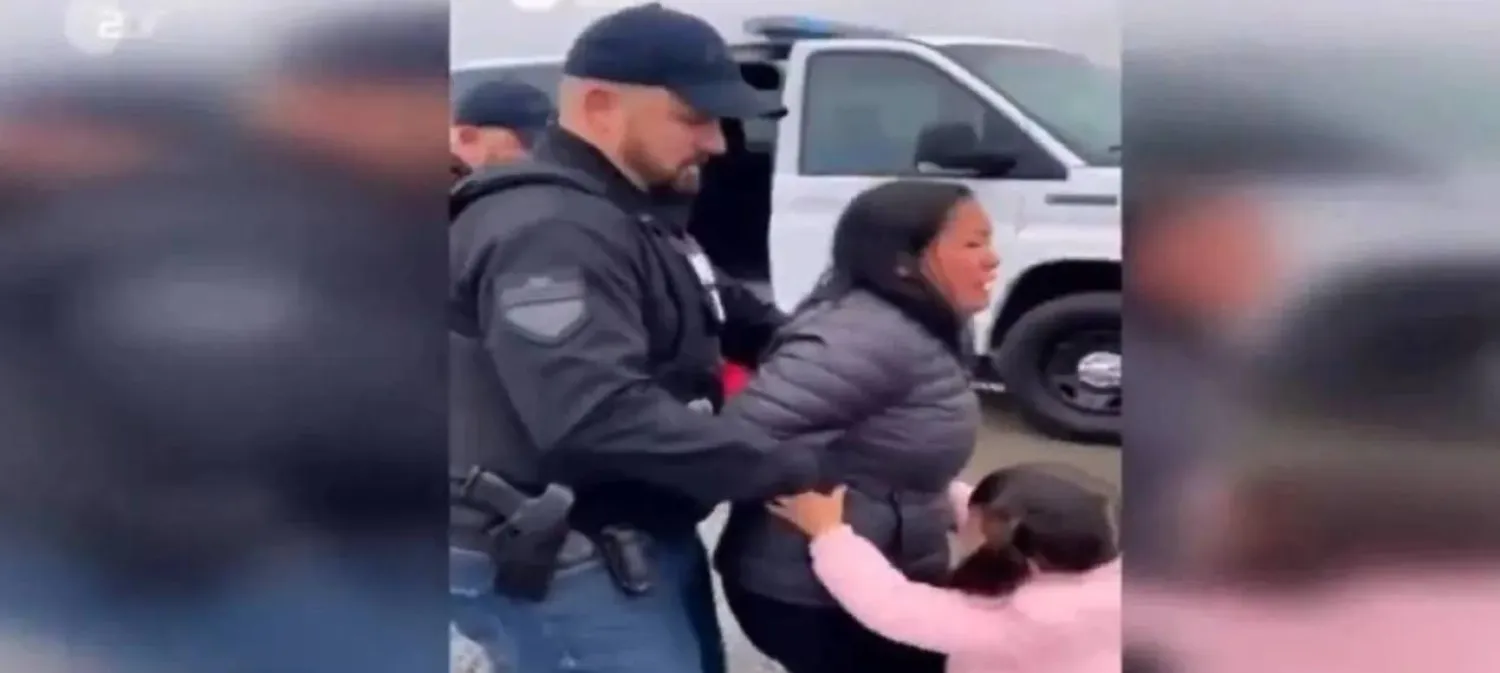

A German broadcaster faced a significant scandal after AI-generated images were screened during a news report, raising concerns about the use of artificial intelligence in journalism and the potential for misleading or inaccurate visuals to be presented as real.
About a week ago, German public broadcaster ZDF caused a stir with a news report in its “heute journal” news program about the operations of the United States Immigration and Customs Enforcement (ICE) because the editorial team had used some AI-generated images.
Aired on the February 15 edition of the flagship nightly news program, the report contained two misleading clips.
The first clip showed a video sequence in which alleged ICE police officers spearte a mother from her children. The scene could be seen to feature the watermark of Sora, OpenAI's platform that generates short video clips based on prompts.
The second scene showed a US police officer escorting a minor. But the scene is from 2022, when a teenager had threatened a school shooting in Florida.
Presenter Dunja Hayali had introduced the segment saying the Trump administration's immigration raids had created “a climate of fear that doesn't even stop at children.”
Apology
Two days passed before ZDF admitted the mistake, removed the material from the web, and announced the implementation of rigorous verification procedures to rebuild viewer trust in public media.
“The AI-generated material should not have been used without journalistic justification and without contextualization in accordance with ZDF's internal rules for the use of AI-generated material,” the broadcaster explained.
In addition, the broadcaster dismissed its New York correspondent Nicola Albrecht with immediate effect last Friday.
Later, the editor-in-chief of ZDF, Bettina Schausten, said, “The damage caused by the disregard of journalistic rules is great. At its core, it is about the credibility of our reporting.”
She added, “We are currently developing a catalog of measures to ensure with all rigor that the high journalistic standards to which we are committed are adhered to at all times and without restriction.”
Criticism of the station came from outraged viewers and also from political circles.
Minister for Media of North Rhine-Westphalia Nathanael Liminski, who sits on ZDF's supervisory board, said the credibility of public media is their most valuable asset and that this incident requires thorough explanation by the supervisory structures.
Christiane Schenderlein, Minister of State for Sport and Volunteering, also warned that “public broadcasting must operate to the highest quality standards.”


