


Iranian Red Crescent Society Says at Least 787 People in Iran Killed in US-Israeli Airstrikes

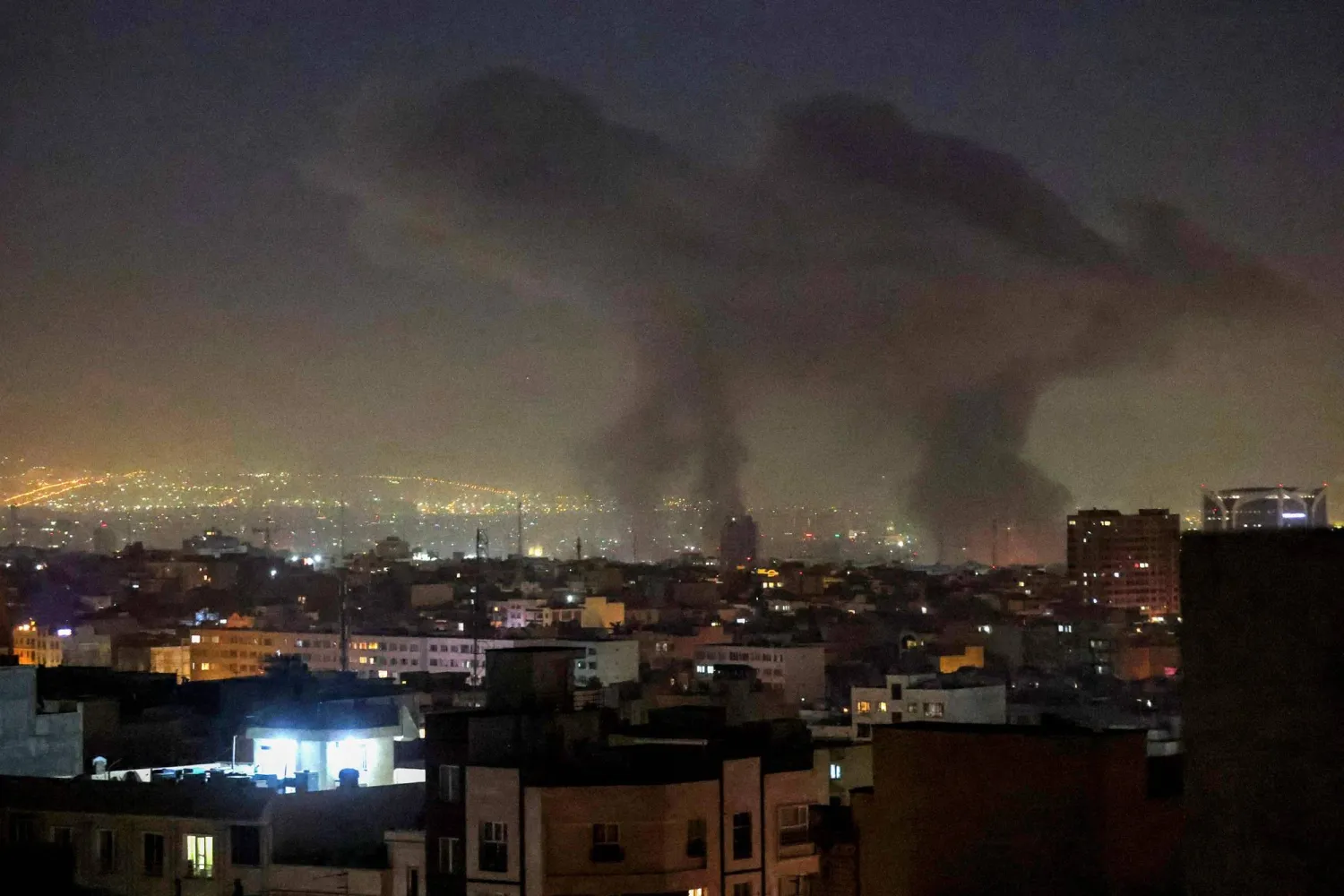
Plumes of smoke rise following reported explosions in Tehran early on March 3, 2026.  (Photo by ATTA KENARE / AFP)
Plumes of smoke rise following reported explosions in Tehran early on March 3, 2026. (Photo by ATTA KENARE / AFP)
TT

Iranian Red Crescent Society Says at Least 787 People in Iran Killed in US-Israeli Airstrikes

Plumes of smoke rise following reported explosions in Tehran early on March 3, 2026.  (Photo by ATTA KENARE / AFP)
Plumes of smoke rise following reported explosions in Tehran early on March 3, 2026. (Photo by ATTA KENARE / AFP)

Airstrikes by the United States and Israel have killed at least 787 people in Iran since the start of the war, the Iranian Red Crescent Society said Tuesday.

It offered the toll in a message on X.

Iran struck the US Embassy in Saudi Arabia’s capital with a drone early Tuesday as it kept hitting targets around the region, while the United States and Israel pounded Iran with airstrikes in what US President Donald Trump suggested was just the start of a relentless campaign that could last more than a month.

The attack from two drones on the US Embassy in Riyadh caused a “limited fire” and minor damage, according to Saudi Arabia’s Defense Ministry, and the embassy urged Americans to avoid the compound. It followed an attack on the US Embassy in Kuwait, which announced Tuesday it had been closed until further notice. The US State Department also ordered the evacuation of non-emergency personnel and family in Kuwait, as well as Bahrain, Iraq, Qatar, Jordan and the United Arab Emirates as a precaution.

Across Iran’s capital, explosions rang out throughout the night into the early morning, with witnesses describing hearing aircraft overhead. It was not immediately clear what had been hit. And in Lebanon, Israel launched more strikes on Hezbollah, the Iran-backed militia group. Explosions could be heard and smoke seen in a southern suburb of Beirut. Israel also said its soldiers are “operating in southern Lebanon.” Lebanon’s state-run National News Agency said the Lebanese army was evacuating some of its positions along the border.

The conflict could have far-reaching consequences

The expansion of Iranian retaliation across the Gulf and the intensity of the Israeli and American attacks, the killing of Iranian Supreme Leader Ali Khamenei and the lack of any apparent exit plan portend a possibly prolonged conflict with far-reaching consequences.

Iran has hit many countries deemed safe havens in the Mideast in retaliation for the US and Israeli strikes. Recent targets include two Amazon data centers in the UAE and a drone impact near another in Bahrain that caused damage, the company said Tuesday. Iran has also hit energy facilities in Qatar and Saudi Arabia, and attacked several ships in the of Strait of Hormuz, the narrow mouth of the Arabian Gulf through which a fifth of all oil traded passes, sending global oil and natural gas prices soaring.

“The Strait of Hormuz is closed," declared Iranian Brig. Gen. Ebrahim Jabbari, an adviser to the paramilitary Revolutionary Guard, threatening to set fire to any ships attempting to transit. “Don’t come to this region.”

US citizens urged to leave

The US State Department urged US citizens to leave more than a dozen Middle Eastern countries due to safety risks, as have many other countries, though with much of the airspace closed many remain stranded.

Trump said operations are likely to last four to five weeks but that he was prepared “to go far longer than that.” He later added that the US had a “virtually unlimited supply” of munitions and pre-positioned “high grade weaponry.”

“Wars can be fought ‘forever,’ and very successfully, using just these supplies,” he wrote on social media.



Trump Says He Ordered Strike on Iran Over Attack Fears

US President Donald Trump holds a bilateral meeting with German Chancellor Friedrich Merz (not pictured) in the Oval Office at the White House in Washington, DC, USA, 03 March 2026. (EPA)
TT

Trump Says He Ordered Strike on Iran Over Attack Fears

US President Donald Trump holds a bilateral meeting with German Chancellor Friedrich Merz (not pictured) in the Oval Office at the White House in Washington, DC, USA, 03 March 2026. (EPA)

President Donald Trump said on Tuesday he ordered US forces to join Israel's attack on Iran because he believed Iran was about to strike the United States, his latest explanation amid conflicting accounts from the administration of how the war started.

"I might have forced their (Israel’s) hand," Trump told reporters in the Oval Office as he met with German Chancellor Friedrich Merz. "We were having negotiations with these lunatics, and it was my opinion that they were going to attack first. If we didn't do it, they were going to attack first. I felt strongly about that."

Trump's comments about the run-up to the war were at odds with an ‌earlier account from ‌Secretary of State Marco Rubio, who told reporters on ‌Monday ⁠that the United ⁠States launched the attack because of fears that Iran would retaliate in response to planned Israeli action against Tehran.

"We knew that there was going to be an Israeli action, we knew that that would precipitate an attack against American forces, and we knew that if we didn’t preemptively go after them before they launched those attacks, we would suffer higher casualties," Rubio said.

Trump on Tuesday said he ⁠believed Iran was on the brink of launching attacks, presenting ‌no evidence to support his view, after US ‌negotiations with Iran last Thursday in Geneva. Iran had described those talks as positive ‌with more planned in the days ahead.

"It's something that had to be ‌done," Trump said, taking questions from reporters in a public setting for the first time since the US attacks began. He previously had discussed the attacks in two brief videos and one-on-one interviews with select journalists over the weekend but did not give a ‌televised address to the nation.

Trump also said on Tuesday he could live with higher oil prices for a period of ⁠time because ⁠it was more important to remove what he said was an imminent threat from Iran. Gasoline prices in the United States have jumped as a result of uncertainty about oil supplies with the conflict showing no signs of ending soon.

Trump described the war effort as successful thus far against many Iranian naval and air targets. "Just about everything has been knocked out," he said.

Iran has responded to the attack by firing missiles and drones at neighboring Arab states and strangling shipping through the Strait of Hormuz, a key waterway for energy trade.

But Trump predicted Tehran will eventually lose its capability to continue lobbing missiles due to a sustained assault against them.

"They've shot a lot of them, and we're knocking out a lot," he said.


Russian, Iranian Foreign Ministers Discuss US, Israeli Strikes on Iran

 Russia's Foreign Minister Sergei Lavrov speaks during a joint press conference with Brunei's Second Minister of Foreign Affairs after their talks at Zinaida Morozova's Mansion in Moscow on March 3, 2026. (AFP)
Russia's Foreign Minister Sergei Lavrov speaks during a joint press conference with Brunei's Second Minister of Foreign Affairs after their talks at Zinaida Morozova's Mansion in Moscow on March 3, 2026. (AFP)
TT

Russian, Iranian Foreign Ministers Discuss US, Israeli Strikes on Iran

 Russia's Foreign Minister Sergei Lavrov speaks during a joint press conference with Brunei's Second Minister of Foreign Affairs after their talks at Zinaida Morozova's Mansion in Moscow on March 3, 2026. (AFP)
Russia's Foreign Minister Sergei Lavrov speaks during a joint press conference with Brunei's Second Minister of Foreign Affairs after their talks at Zinaida Morozova's Mansion in Moscow on March 3, 2026. (AFP)

Russian Foreign Minister Sergei Lavrov spoke by phone on Tuesday with his Iranian counterpart Abbas ‌Araqchi, Russia's ‌Foreign Ministry ‌said.

The ⁠ministers discussed the ⁠development of the situation in the region "resulting from the ⁠unprovoked armed ‌aggression ‌by the United ‌States and ‌Israel against Iran," the ministry said.

Lavrov reiterated ‌Russia's call for de-escalation, rejected the ⁠use ⁠of force and urged a political and diplomatic resolution, saying Moscow stood ready to help.


Israel, US Strikes Hit Building of Body to Elect New Iran Supreme Leader

A plume of smoke rises following a US-Israeli military strike in Tehran, Iran, Tuesday, March 3, 2026. (AP)
TT

Israel, US Strikes Hit Building of Body to Elect New Iran Supreme Leader

A plume of smoke rises following a US-Israeli military strike in Tehran, Iran, Tuesday, March 3, 2026. (AP)

Israeli and US strikes on Tuesday hit the building of a body tasked with electing Iran's new supreme leader, local media reported.

Former leader Ali Khamenei was killed during a wave of US-Israeli attacks on Saturday.

"The American-Zionist criminals attacked the Assembly of Experts building in Qom," south of Tehran, according to the Tasnim news agency.

The assembly is tasked with appointing, supervising and potentially dismissing the supreme leader.

Local media showed footage of the building severely damaged in the strikes.

There was no information on any potential casualties.

The Mehr news agency reported that the building was no longer being used for meetings.

Tasnim reported that strikes had already targeted the main headquarters of the Assembly of Experts in Tehran on Monday.

Iran declared on Sunday the start of a transition process after confirming Khamenei's death.

The plans include the formation of an interim leadership council including the president, the head of the judiciary and a jurist from the Guardian Council, the body that oversees legislation and vets electoral candidates.

Also playing a central role is Iran's top security chief Ali Larijani.

The interim leadership council will lead the country while a permanent successor is found for the supreme leader.