


Iran’s Choice of Mojtaba Khamenei Appears to Close Path to Swift End to War

An Iranian man holds a portrait of Mojtaba Khamenei, son of the late Supreme Leader Ali Khamenei, during the 47th anniversary celebrations of the revolution in Tehran, Iran, 11 February 2026. (EPA)
TT

Iran’s Choice of Mojtaba Khamenei Appears to Close Path to Swift End to War

An Iranian man holds a portrait of Mojtaba Khamenei, son of the late Supreme Leader Ali Khamenei, during the 47th anniversary celebrations of the revolution in Tehran, Iran, 11 February 2026. (EPA)

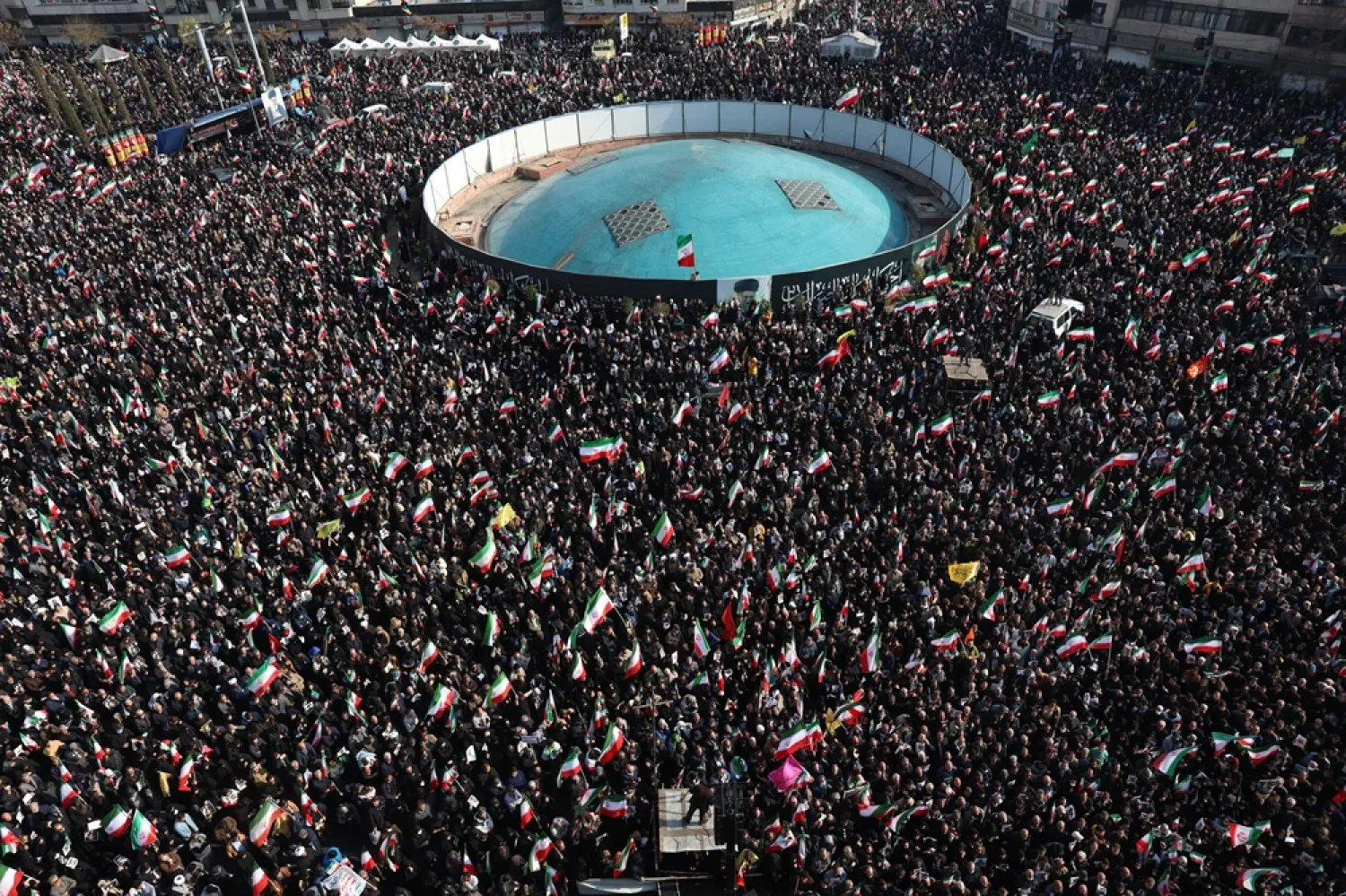
Iran named Mojtaba Khamenei to succeed his slain father as supreme leader on Monday, signaling that hardliners remain firmly in charge and appearing to close off any path to a swift end to war in the Middle East. 

The prospect that the disruption to global energy supplies - already one of the most severe in history - could last longer than previously expected sent oil prices surging in record leaps and global stock markets went into a nosedive. 

Khamenei, 56, a cleric with a power base among the security forces and their vast business empire, has been declared unacceptable by US President Donald Trump, who has demanded Iran's unconditional surrender. 

IRAN'S POLITICAL SYSTEM RALLIES BEHIND MOJTABA 

Iran's political system rallied around the new supreme leader, with politicians and institutions issuing strongly worded pledges of loyalty. Public processions to take loyalty vows were announced for later on Monday. 

"We will obey the commander-in-chief until the last drop of our blood," a defense council statement said. 

Mojtaba's father, Supreme Leader Ali Khamenei, was killed in one of the first strikes against Iran more than a week ago. 

Mojtaba had been viewed as a frontrunner before Sunday's vote by the Assembly of Experts, a body of 88 ‌clerics tasked with choosing the ‌new supreme leader, who has the final say in all matters of state. 

Despite public vows of loyalty, ‌Iranian ⁠society remains deeply divided. ⁠Many Iranians publicly celebrated the elder Khamenei's death, weeks after his security forces killed thousands of anti-government protesters in the worst domestic unrest since the era of Iran's 1979 revolution. 

But there has been little sign of anti-government activity during the bombing campaign. Activists say it would be unsafe to take to the streets while the country is under attack. 

Israel says its war aim is to overthrow Iran's system of clerical rule. Washington was initially more circumspect, saying its aim was to destroy Iran's missile capabilities and nuclear program, although Trump ratcheted up his demands by also demanding the installation of a compliant Iranian government. 

Israel had said it would kill whoever succeeded the elder Khamenei unless Iran ended its hostile policies. Trump repeated his demand on Sunday that Washington have a say in the selection of the new supreme leader. 

"If ⁠he doesn't get approval from us, he's not going to last long," he told ABC News, adding ‌that ending the war would be a "mutual" decision with Israeli Prime Minister Benjamin Netanyahu. 

In an interview ‌with the Times of Israel after the new supreme leader was named, Trump declined to respond, saying only "We'll see what happens," according to the newspaper. 

OIL SURGES PAST $100 ‌A BARREL 

The war has effectively shut the Strait of Hormuz, where a fifth of global oil and seaborne liquefied gas is shipped near the ‌Iranian coast. With tankers unable to sail for over a week, producers have run out of storage and are being forced to halt pumping. 

Brent crude futures were up 12.5% at $104.30 per barrel at 1017 GMT, having earlier shot as high as 119.50, on track at one point for the biggest jump in a single day. 

The prospect of a prolonged energy crisis - reviving memories of the Middle East oil shock of the 1970s - sent share markets in Asia and Europe into a tailspin, which futures showed was ‌likely to reach Wall Street when it opens on Monday. 

The price of gasoline has huge political resonance in the United States, where Trump's Republicans hope to keep control of Congress in midterm elections in ⁠November. He won re-election in 2024 after ⁠pledging to end foreign wars and cut the cost of living. 

"Short-term oil prices, which will drop rapidly when the destruction of the Iran nuclear threat is over, is a very small price to pay for USA, and World, Safety and Peace," Trump posted on Truth Social on Sunday night. "ONLY FOOLS WOULD THINK DIFFERENTLY!" 

Tehran was choked in heavy black smoke from strikes that hit an oil refinery, an escalation in attacks to target Iran's domestic energy supplies which appeared to trigger attacks on Washington's Gulf Arab allies. 

Thick smoke rose from a huge refinery in Bahrain, where state oil company Bapco declared force majeure after it was struck overnight. 

The Israeli military said on Monday it had launched attacks in central Iran and struck the Lebanese capital Beirut, where Israel has extended its campaign after the Iran-backed Hezbollah fired across the border. 

The US military reported a seventh American had died from wounds sustained during Iran's initial counter-attack a week ago. 

Israel's military said on Sunday two of its soldiers were killed in southern Lebanon, the first fatalities among its troops since Israel-Hezbollah hostilities resumed. 

At least four people were killed in an Israeli strike on an apartment in the Ramada hotel building in central Beirut early on Sunday. Israel said it had targeted Iranian commanders operating in Beirut. 

The US-Israeli attacks have killed at least 1,332 Iranian civilians and wounded thousands, according to Iran's UN ambassador. Lebanon has reported scores of people killed there. 

In Israel, ambulance workers said one man was killed from shrapnel wounds at a construction site on Monday, raising to 11 the death toll in Iranian strikes. 


Türkiye's Halkbank, US Justice Department Agree to Resolve Criminal Charges

FILE PHOTO: A street vendor sells roasted chestnuts in front of a branch of Halkbank in central Istanbul, January 10, 2018. REUTERS/Murad Sezer/File Photo
TT

Türkiye's Halkbank, US Justice Department Agree to Resolve Criminal Charges

FILE PHOTO: A street vendor sells roasted chestnuts in front of a branch of Halkbank in central Istanbul, January 10, 2018. REUTERS/Murad Sezer/File Photo

The US Justice Department has agreed to resolve its long-running criminal prosecution of Turkish state-run lender Halkbank, the judge overseeing the case said in a court filing on Monday, without providing further details of the deal.

Manhattan-based US District Judge Richard Berman said in a written order that he would ask lawyers for both sides about the so-called deferred prosecution agreement at a previously scheduled hearing on Wednesday, Reuters reported.

Halkbank shares rose more than 8% after the agreement was announced.

In 2019, prosecutors charged Halkbank with fraud, money laundering and conspiracy for allegedly helping Iran evade American economic sanctions. The bank was sanctions-evasion scheme Halkbank's case has long been a thorn in US-Türkiye relations, with Turkish President Tayyip Erdogan in 2019 calling the decision to prosecute an "unlawful, ugly" step.

Neither a spokesman for the Manhattan US Attorney's office, which brought the case, nor lawyers for Halkbank immediately responded to requests for comment.

Deferred prosecution agreements let defendants avoid criminal charges if they meet various conditions, typically over several months or a few years. The government dismisses cases after the defendants comply.


Jailed Erdogan Rival Clashes with Judge as Türkiye Corruption Trial Begins

Türkiye President Recep Tayyip Erdogan  (Presidency)
Türkiye President Recep Tayyip Erdogan (Presidency)
TT

Jailed Erdogan Rival Clashes with Judge as Türkiye Corruption Trial Begins

Türkiye President Recep Tayyip Erdogan  (Presidency)
Türkiye President Recep Tayyip Erdogan (Presidency)

Istanbul's jailed mayor, Ekrem Imamoglu, argued with the presiding judge on Monday in a chaotic start to a sweeping corruption trial that could extinguish the ambition of Tayyip Erdogan's main rival to become president at Türkiye's next election.

Imamoglu, 55, demanded permission to speak and urged the judge to "respect the right of people to defend themselves" - but the judge refused as he launched the trial of more than 400 defendants linked to the Istanbul municipality, Reuters reported.

Imamoglu is accused of leading a criminal organization for profit, involving tender-rigging and bribery. He and his main opposition Republican People's Party (CHP) deny the corruption charges, which carry prison sentences amounting to hundreds of years.

Police maintained tight security outside the courthouse at Silivri prison west of Istanbul, where Imamoglu has been held in pre-trial detention for almost a year amid a judicial crackdown on the CHP that is overshadowing politics ahead of elections expected to be held next year.

JUDGE EMPTIES GALLERY AFTER NOISY PROTEST

Imamoglu, the CHP's presidential candidate, waved his hands as he entered the courtroom, while the other defendants, lawyers and public stood up to clap, whistle and wave back at him. He then rose to protest the judge's decision to hear other defendants before Imamoglu, who is the chief suspect.

The judge called the protest disrespectful to the court, prompting more outcry from the public gallery, which the judge ordered to be emptied, calling a recess until 1030 GMT.

CHP leader Ozgur Ozel and Imamoglu's wife, Dilek, sat side-by-side in the large courtroom fitted out with two large screens.

"We are nervous and anxious," Dilek Imamoglu told reporters before the hearing started. "We hope that they move to trial without detention. I last saw Ekrem last week, and he was in very good spirits."

LEGAL CRACKDOWN CALLED POLITICIZED

In comments to Reuters last month, Imamoglu struck a defiant tone, saying Erdogan should call elections right away. But his prospects of challenging the veteran leader look bleak amid a crackdown that rights groups and foreign observers say has undermined the democratic credentials of NATO member Türkiye.

The government denies exerting influence over the judiciary, which it says is independent. Imamoglu already suffered a severe blow to his presidential ambitions when a court in January rejected his lawsuit challenging the cancellation of his university degree – a qualification required of any presidential candidate. Erdogan, 72, has led Türkiye as prime minister or president since 2003.

Presidential and parliamentary elections are not scheduled until 2028, but if he wishes to seek a third term as president he is obliged to hold the vote early, likely in 2027, unless the constitutional term limits are changed.


Kurdish Rebels Say Ready to Resist Iran, Await Uprising

A Kurdish fighter from the Iranian Kurdish armed faction Kurdistan Free Life Party (PJAK) stands with his rifle at a site near the Iraqi border with Iran in Iraq's autonomous Kurdistan region, on March 8, 2026. (AFP)
TT

Kurdish Rebels Say Ready to Resist Iran, Await Uprising

A Kurdish fighter from the Iranian Kurdish armed faction Kurdistan Free Life Party (PJAK) stands with his rifle at a site near the Iraqi border with Iran in Iraq's autonomous Kurdistan region, on March 8, 2026. (AFP)

From their hideouts in the Iraqi mountains near Iran, leftist Kurdish rebels say they are ready to fight the country, but hope for an uprising before they intervene, with or without US support.

After saying that he would be "all for" a Kurdish offensive on Iran, US President Donald Trump appeared to backtrack Saturday, saying he did not want such an attack.

Senior commander Roken Nerada of the Party of Free Life of Kurdistan (PJAK) told AFP: "If there is an attack on the Kurdish people... then with every means... we are ready to resist as we always have."

"I think we can achieve our rights without the help of the US or any other country," said Nerada, 39, who joined the rebels 17 years ago.

Like other Iranian Kurdish rebel groups, PJAK has bases in the mountains of Iraq's northern autonomous Kurdistan region, but it also maintains hideouts in majority-Kurdish areas inside Iran.

Iran has designated Kurdish rebels groups as terrorist organizations, and many have previously fought its security forces in Kurdish-majority areas along the border.

But in recent years, under political pressure mostly from their Iraqi hosts, they have largely refrained from armed activity -- raising questions about their current capacity to lead an armed offensive against Iran.

AFP journalists met 30 PJAK fighters in a bunker adorned with photos of fallen comrades, with a television inside showing war coverage with smoke rising from Tehran and Beirut.

Since the Middle East war began late last month with a wave of US-Israeli strikes on Iran, Tehran has repeatedly struck Kurdish militants' positions in Iraq, accusing them of serving Western or Israeli interests.

- Ground attack, not yet -

Just before the war, and after anti-government protests in Iran, PJAK joined a coalition of Kurdish rebel parties seeking to overthrow the Tehran regime and secure self-determination.

"We are ready to fight, especially after what they did 50 days ago," PJAK fighter Shwan said, referring to the crackdown on the protests in Iran that left thousands dead.

Amid reports that rebels might collaborate with the US, Tehran threatened to target "all facilities" in Iraq's Kurdistan if Kurdish militants cross the border.

But on Saturday, Trump said "we're not looking to the Kurds going in".

"We don't want to make the war any more complex than it already is," he added.

Amir Karimi, another commander in PJAK, told AFP last week that the "Americans are already in the area, and we have had a dialogue".

It was "a political exchange... to get to know each other," Karimi said, adding that "a ground attack is not on the table at this stage".

"From a strategic and tactical point of view, we believe it wouldn't be a good idea," he added, warning that Iranian forces have reinforced the borders.

"The most important thing is that the population itself becomes a driving force. There must be a popular uprising" in Iran, Karimi said.

"We are not waiting for Iran or the United States to give us the green light. But the population needs support from the outside," he added.

The Kurds will need guarantees to secure a democratic Iran, he said.

"Who can say that, tomorrow, they won't support another dictator and bring him to power," Karimi said, referring to the US.

Commander Nerada said: "What is important... is to change this current darkness into a democratic Iran."
