



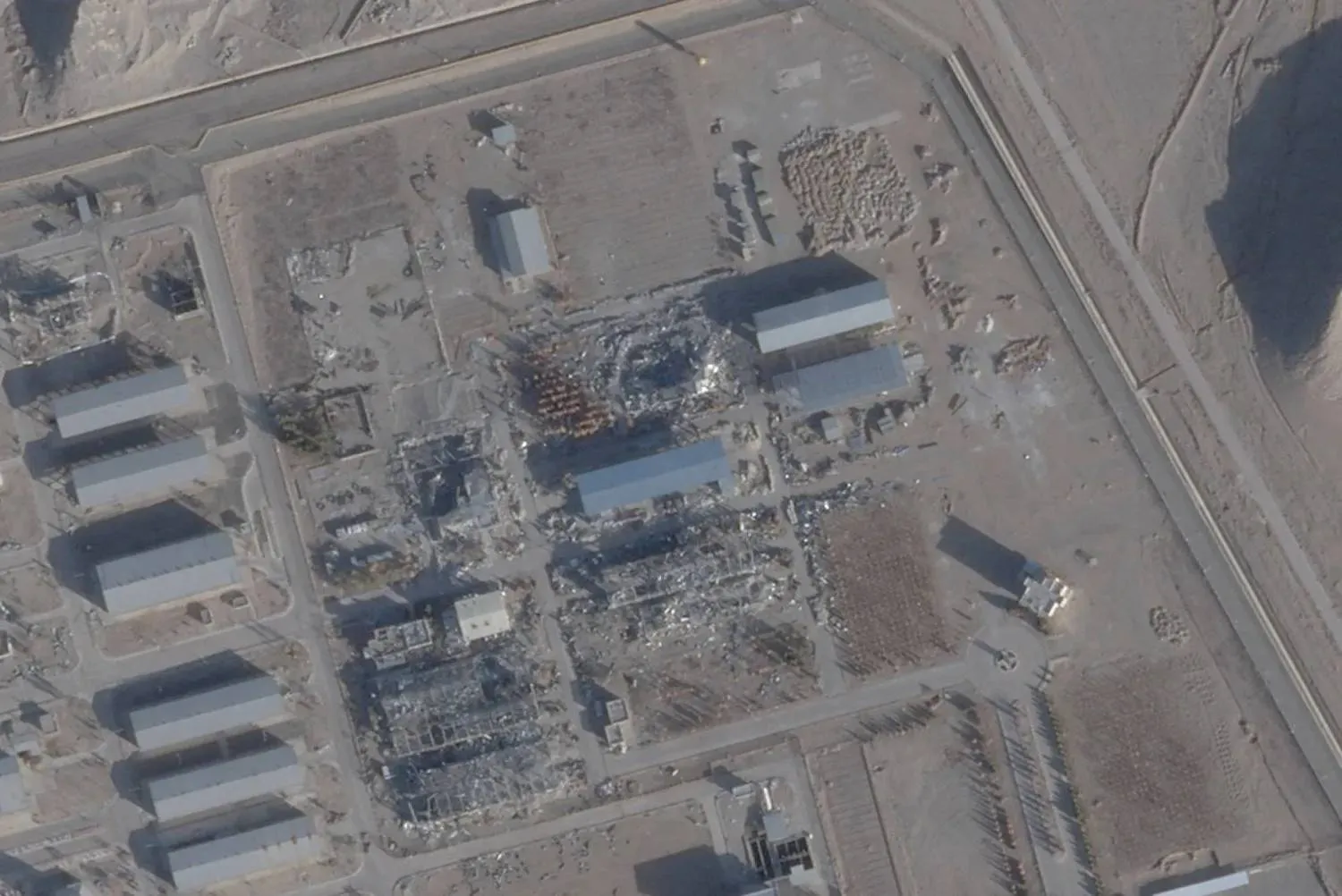

American intelligence agencies said Iran could retrieve its primary store of highly enriched uranium even though it was entombed under the country’s nuclear site at Isfahan by US strikes last year.
Multiple officials familiar with the classified reports told The New York Times on Sunday Iran can now get to the uranium through a very narrow access point.
It is unclear how quickly Iran could move the uranium, which is in gas form and stored in canisters.
US officials have said that US spy agencies have constant surveillance of the Isfahan site and have a high degree of confidence they could detect — and react — to any attempt by the Iranian government or other groups to move it.
Last week, US Special Envoy to the Middle East Steve Witkoff told Fox News that Iran has 10,000, roughly, kilograms of fissionable material that's broken up into roughly 460 kilograms of 60% enriched uranium, another 1,000 kilograms 20% enriched uranium.
“The 60% material can be brought to 90% - that's weapon grade - in roughly one week, maybe 10 days at the outside. The 20% can be brought to weapons grade inside of three to four weeks,” he said.
On March 3, Rafael Mariano Grossi, director general of the International Atomic Energy Agency, said while there has been no evidence of Iran building a nuclear bomb, its large stockpile of near-weapons-grade enriched uranium and refusal to grant my inspectors full access are cause for serious concern.
That stockpile of uranium would be a key building block if Iran decided to move toward making a nuclear weapon, The New York Times said.
With Iran in chaos from the ongoing strikes by the United States and Israel, the fate of the uranium and the options for securing it have become critical issues for the Trump administration.
On Saturday, President Donald Trump was asked by reporters on Air Force One if he would consider sending in ground forces to secure the highly enriched uranium.
“Right now we’re just decimating them, but we haven’t gone after it,” he said. “But something we could do later on. We wouldn’t do it now.”
The United States chose not to try to retrieve the uranium last year after the 12-day war in which Iran’s nuclear sites came under intense bombardment.
Trump determined that doing so at that time would be too dangerous.
Soon after the US strike on Iran, high-resolution spy satellites detected that Iran had moved excavation equipment to Isfahan, and had begun to access the underground tunnels, according to US officials and others briefed on the intelligence.
The spy satellite images showed Iranians moving both the dirt they placed in the tunnel entrances and debris generated by the Tomahawk strikes, the people said.
An analysis of commercial satellite imagery by The New York Times’s visual investigations team reached similar conclusions, finding evidence of digging in multiple areas of Isfahan.
At one location just north of the main facility, satellite photos show several pieces of excavating equipment moving earth. The images indicate that workers had excavated a pit, placed an unidentified object inside of it under a tarp, then buried it.
At another location northeast of the main facility, there was not much activity until last month, when satellite images showed what appeared to be a crane moving dirt into a truck.
A large amount of earth moving was seen at several of the tunnel entrances in satellite imagery taken in February, including a tunnel on the western side, as seen in a time lapse of commercial satellite imagery.
It is unclear whether the dirt was taken to a dumping site or moved to the tunnel entrances to protect them from future strikes.
Earlier this year, researchers at the Institute for Science and International Security also noticed increased activity on the road leading to the tunnel entrances.
They suggested in a report that some tunnel entrances were being buried by soil as a possible preparation for strikes, similar to Iran’s activities ahead of the strikes last June.


