

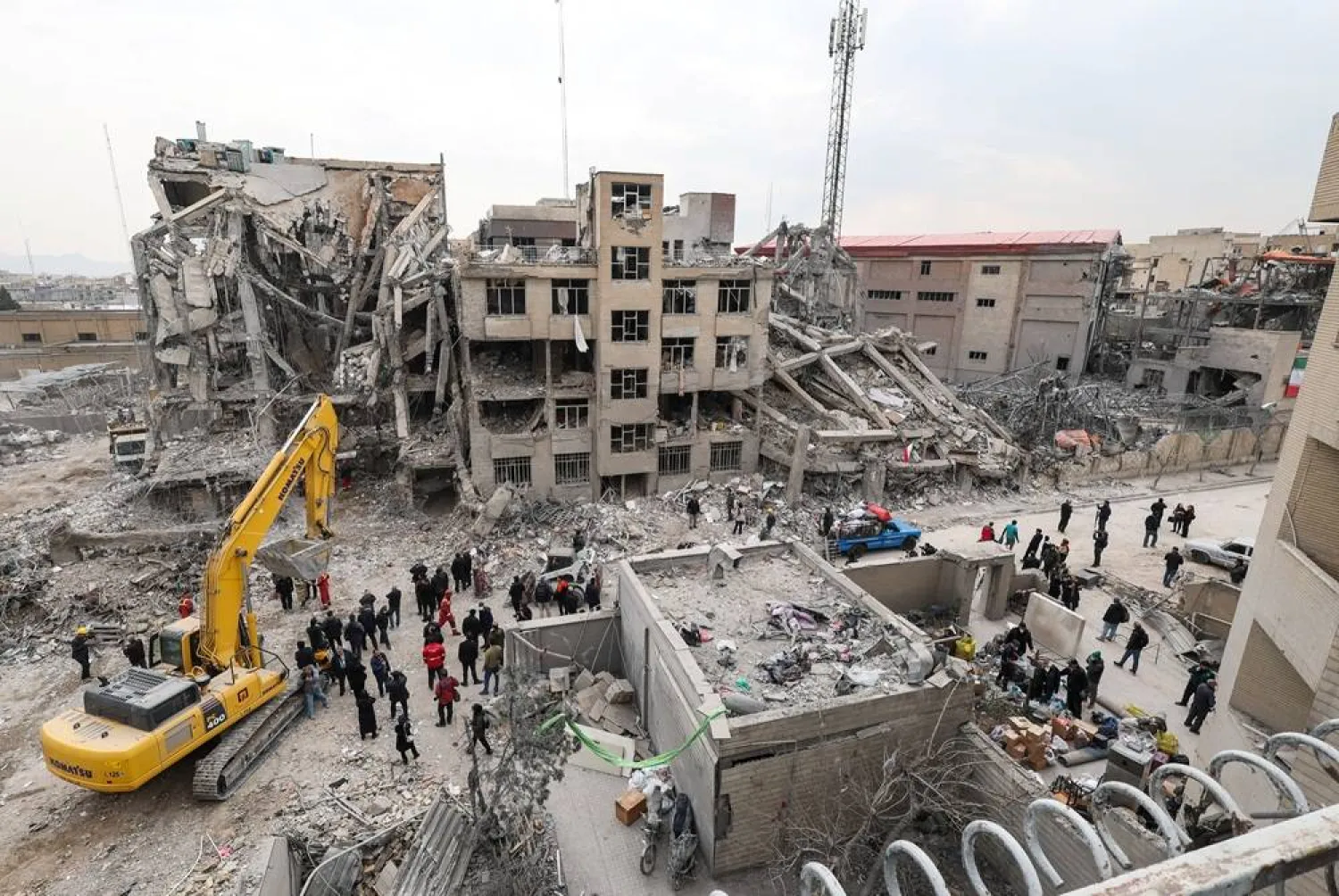

Islamic Nations D-8 Summit Postponed Due to Middle East War

People gather at the site of an airstrike, amid the US-Israeli conflict with Iran, in Tehran, Iran, March 12, 2026. (Reuters)
TT

Islamic Nations D-8 Summit Postponed Due to Middle East War

People gather at the site of an airstrike, amid the US-Israeli conflict with Iran, in Tehran, Iran, March 12, 2026. (Reuters)

An April summit of the D-8 bloc of Muslim-majority developed countries that includes Iran has been postponed due to the war in the Middle East, host Indonesia said Friday.

No new date was announced for the meeting that was to have stretched over four days, culminating in a leaders' summit on April 15.

Fresh strikes rocked Iran and several Gulf countries Friday as Israel and Iran unleashed a new wave of attacks in a war that has ignited the Middle East and threatens to torpedo the world economy.

Apart from Iran and Indonesia, the D-8 Organization for Economic Cooperation also includes Azerbaijan, Bangladesh, Egypt, Malaysia, Nigeria, Pakistan and Türkiye.

Referring to "developments since February 28" when the US-Israeli attacks on Iran started, Indonesian foreign ministry official Tri Tharyat said it was decided to hold the D-8 meeting at a later date.

"It is regrettable that there are still no visible signs of de-escalation," he told reporters in Jakarta.

"Last night, the foreign minister signed a letter addressed to his counterparts announcing the postponement of the D-8 summit," added Tri.



Türkiye Says Third Ballistic Missile from Iran Shot Down

 This handout photograph taken and released on March 9, 2026, by Turkish news agency DHA (Demiroren News Agency) shows part of a second Iranian ballistic missile destroyed by NATO in Turkish airspace. (Photo by Handout / DHA (Demiroren News Agency) / AFP)
This handout photograph taken and released on March 9, 2026, by Turkish news agency DHA (Demiroren News Agency) shows part of a second Iranian ballistic missile destroyed by NATO in Turkish airspace. (Photo by Handout / DHA (Demiroren News Agency) / AFP)
TT

Türkiye Says Third Ballistic Missile from Iran Shot Down

 This handout photograph taken and released on March 9, 2026, by Turkish news agency DHA (Demiroren News Agency) shows part of a second Iranian ballistic missile destroyed by NATO in Turkish airspace. (Photo by Handout / DHA (Demiroren News Agency) / AFP)
This handout photograph taken and released on March 9, 2026, by Turkish news agency DHA (Demiroren News Agency) shows part of a second Iranian ballistic missile destroyed by NATO in Turkish airspace. (Photo by Handout / DHA (Demiroren News Agency) / AFP)

Türkiye’s defense ministry on Friday said a ballistic missile from Iran had been shot down in Turkish airspace by NATO forces in the third such incident of the Middle East war. 

"A ballistic munition launched from Iran and entering Turkish airspace was neutralized by NATO air and missile defense assets deployed in the eastern Mediterranean," a ministry statement said. 

Hours earlier, sirens wailed at Türkiye’s southern Incirlik airbase, a key NATO facility where US troops are stationed, state news agency Anadolu reported. 

Local media also reported sirens in Batman, 600 kilometers (370 miles) further east. 

NATO air defenses shot down a first ballistic missile fired from Iran on March 4, with a second intercepted on Monday. 

Residents of the southern city of Adana, next to Incirlik, were woken by sirens at 3:25 am (0025 GMT) and several posted footage of a fast-moving object that appeared to be on fire, the Ekonomim business news website reported. 

Separately, sirens sounded in Batman around 4:00 am, with reporters saying the alarm appeared to be coming from a military drone base next to the city's airport. 

Monday's incident prompted Washington to close its consulate in Adana and urge all US citizens to leave southeastern Türkiye. 

Iranian President Masoud Pezeshkian denied the missile had been fired from Iran in a phone call to Türkiye’s Recep Tayyip Erdogan. 

Since the US-Israeli war on Iran started on February 28, Tehran has retaliated with strikes across the Middle East. 

Incirlik is an important NATO facility used by US troops for decades, but which also hosts military personnel from Spain and Poland, its website says. 

US troops are also stationed at Kurecik, a base in the central Malatya province, where they man an early-warning radar system NATO describes as a "key element" of its missile shield that can detect Iranian missile launches. 

Although Ankara has categorically denied radar data has ever been used to help Israel, its presence has rattled Tehran. 

On Tuesday, Türkiye said a Patriot missile defense system was being deployed in Malatya just days after NATO moved to strengthen its "alliance-wide ballistic missile defense posture". 


Russia Says It Doesn't See Iran Crisis Reducing US Interest in Ukraine Peace Talks

FILE PHOTO: Kremlin spokesman Dmitry Peskov attends a meeting of Russian President Vladimir Putin with Palestinian President Mahmoud Abbas at the Kremlin in Moscow, Russia, January 22, 2026. REUTERS/Ramil Sitdikov/Pool/File Photo
TT

Russia Says It Doesn't See Iran Crisis Reducing US Interest in Ukraine Peace Talks

FILE PHOTO: Kremlin spokesman Dmitry Peskov attends a meeting of Russian President Vladimir Putin with Palestinian President Mahmoud Abbas at the Kremlin in Moscow, Russia, January 22, 2026. REUTERS/Ramil Sitdikov/Pool/File Photo

Russia is not concerned at this point that the Iran crisis will reduce US interest in mediating ‌peace talks ‌on Ukraine, ‌Kremlin ⁠spokesman Dmitry Peskov said ⁠on Friday.

"No, there are no such concerns at ⁠this time; our ‌contacts with ‌our American ‌counterparts provide ‌no grounds for such doubts," Peskov told reporters in ‌response to a question.

Russia is ⁠expecting ⁠a new round of negotiations, but has nothing to announce yet on the timing, he said.


US Braces for Potential Iranian Retaliatory Operations within its Borders

US President Donald Trump speaks with the media as Defense Secretary Pete Hegseth (R) and special envoy Steve Witkoff (C) look on aboard Air Force One during a flight from Dover, Delaware, to Miami, Florida, on March 7, 2026. (AFP)
TT

US Braces for Potential Iranian Retaliatory Operations within its Borders

US President Donald Trump speaks with the media as Defense Secretary Pete Hegseth (R) and special envoy Steve Witkoff (C) look on aboard Air Force One during a flight from Dover, Delaware, to Miami, Florida, on March 7, 2026. (AFP)

Fears have grown in the US that Tehran could activate “sleeper cells” or carry out unconventional retaliatory attacks on American soil as Washington and Tel Aviv continue their war against Iran.

President Donald Trump warned on Wednesday that his administration knows where the Iranian sleeper cells are and is monitoring all of their members. The statement appeared aimed both at reassuring the public and sending a warning to Iran.

Still, the tone contrasts with more cautious assessments from US security agencies, which say the threat remains potential rather than imminent or specific.

Security agencies on alert

Trump’s remarks followed earlier comments in which he said the situation was “under control” and that authorities were “watching everyone” of the suspected sleeper cells.

While the president sought to link the issue to immigration, security agencies have adopted a more measured approach. A US intelligence assessment issued after the killing of Iran’s Supreme Leader Ali Khamenei warned that Iran and its proxies could resort to selective attacks inside the United States, though large-scale assaults are considered less likely.

Officials see a higher probability of cyberattacks or smaller operations carried out by limited networks or sympathetic individuals.

The Department of Homeland Security has similarly assessed that Iran and its proxies could pose a threat through targeted attacks inside the United States.

Against that backdrop, Kash Patel, director of the Federal Bureau of Investigation, announced on Feb. 28 that the bureau had placed its counterterrorism and intelligence teams on “maximum alert.”

The move included mobilizing additional security resources and emphasizing that the FBI’s Joint Terrorism Task Forces nationwide are working around the clock to detect and disrupt potential threats. Such measures typically involve heightened surveillance of high-priority suspects, expanded use of confidential sources, reviews of technical intelligence tools and closer coordination between federal and local authorities.

Drone concerns in California

One development that drew attention in recent days was the disclosure of a confidential FBI bulletin circulated through the Los Angeles Joint Regional Intelligence Center before the outbreak of the war.

The notice warned that Iran might attempt to retaliate for US attacks by launching drones from ships at sea targeting California.

According to a security bulletin reviewed by Reuters, the FBI distributed the warning last month to law enforcement agencies, citing information collected in late February suggesting Iran could plan a surprise drone attack launched from a vessel offshore if Washington carried out strikes against it.

The bulletin, however, contained no specific information on timing or targets and described the scenario more as a potential ambition than a confirmed operational plan. It also said no further details were available regarding how such an attack might be carried out or who might be involved.

Details of the bulletin emerged publicly as the war, which began with US and Israeli strikes on Iran on Feb. 28, entered its twelfth day.

Vigilance but no imminent threat

California authorities sought to balance caution with reassurance. Governor Gavin Newsom said the state was aware of the warning and was coordinating closely with federal and local agencies while preparing for worst-case scenarios. He stressed that no credible or imminent threats had been identified.

Los Angeles Mayor Karen Bass and San Francisco Mayor Daniel Lurie delivered similar messages, saying no specific threat had been detected but that coordination with federal authorities was ongoing.

Local police departments across the state said they had been informed of a higher risk environment and urged residents to report suspicious activity.

Past incidents

Previous cases have heightened US concerns. In July 2021, the Justice Department revealed a plot linked to an Iranian intelligence network to kidnap journalist and activist Masih Alinejad from New York and forcibly take her to Iran.

In March 2025, a federal court convicted two leaders of an Eastern European organized crime network in a murder-for-hire scheme targeting Alinejad on behalf of actors linked to Iran’s Revolutionary Guard Corps.

They were sentenced in October that year to 25 years in prison each. Another defendant involved in surveilling Alinejad and planning her killing in New York was sentenced in January 2026 to 15 years in prison.