


Ukraine Peace Talks Paused Amid Iran War, Russia’s Izvestia Says

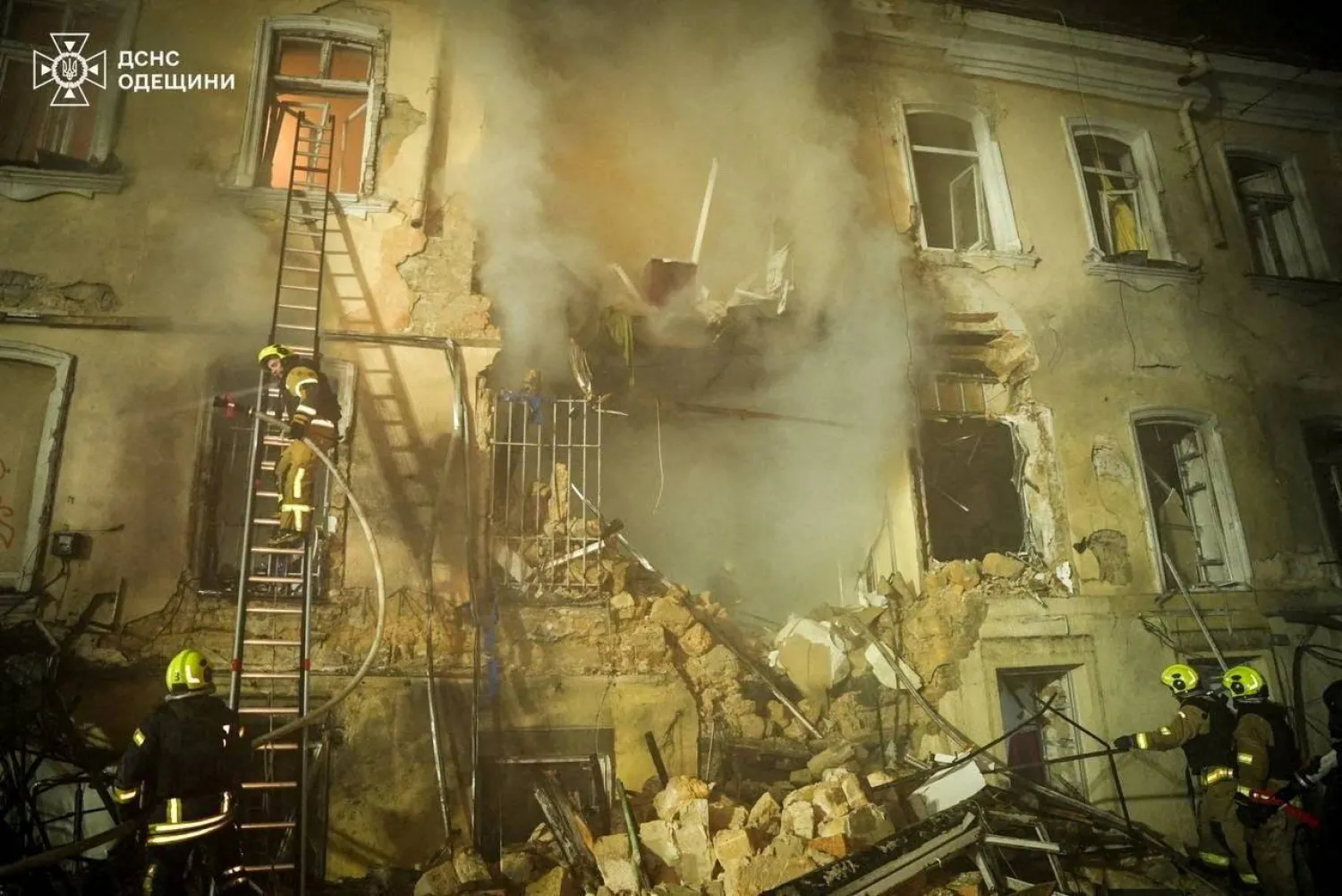
Rescuers work at the site of an apartment building hit by a Russian drone strike, amid Russia's attack on Ukraine, in Odesa, Ukraine in this handout picture released March 19, 2026. (Press service of the State Emergency Service of Ukraine in Odesa region/Handout via Reuters)
TT

Ukraine Peace Talks Paused Amid Iran War, Russia’s Izvestia Says

Rescuers work at the site of an apartment building hit by a Russian drone strike, amid Russia's attack on Ukraine, in Odesa, Ukraine in this handout picture released March 19, 2026. (Press service of the State Emergency Service of Ukraine in Odesa region/Handout via Reuters)

Peace talks between the United States, Russia and Ukraine on ending the Ukraine war, the deadliest European conflict since World War Two, are on pause amid the Iran war, the Izvestia newspaper reported on Thursday, citing Russian officials.

US President Donald Trump, who last year said he wanted to be remembered as a peacemaker, vowed to end the Ukraine war but has since said that efforts to resolve the conflict have been one of his biggest disappointments.

The US and Israeli attack on Iran has diverted US attention away from Ukraine and triggered soaring prices for oil and gas - of ‌which Russia ‌is a major global producer and exporter.

Izvestia, which in Soviet times represented ‌official ⁠state views and is ⁠now under European Union sanctions, said in a front-page story that the Kremlin had confirmed a pause in talks on Ukraine and that the Iran war could push Kyiv towards compromise.

Kremlin spokesman Dmitry Peskov told the paper that Russian presidential envoy Kirill Dmitriev would continue working on investment and economic cooperation, but "the trilateral group is on pause".

Russia invaded Ukraine in February 2022 after eight years of fighting in eastern Ukraine, triggering the biggest confrontation between Moscow and the West since the depths of the ⁠Cold War.

Russia and Ukraine held talks in Türkiye last year, and ‌have conducted several more sessions with US mediation in ‌Abu Dhabi and Geneva this year. But they remain far apart on Russia's demand for Ukraine to cede ‌control of the whole of its eastern Donetsk region.

GABBARD: RUSSIA 'HAS MAINTAINED THE UPPER HAND'

Ukraine and ‌European leaders say that Russia cannot be allowed to achieve its aims after what they cast as an imperial-style land grab. If Russia wins, European powers say, then it will one day attack NATO. Moscow says such claims are ridiculous and that it has no intention of attacking a NATO member.

"During the past year, ‌Russia has maintained the upper hand in its war against Ukraine," US Director of National Intelligence Tulsi Gabbard told the Senate Select Committee ⁠on Intelligence on Wednesday.

"US-led ⁠negotiations between Moscow and Kyiv are ongoing. Until such an agreement is met, Moscow is likely to continue fighting a war of attrition with the aim of degrading Kyiv’s ability and will to resist."

President Vladimir Putin, who has repeatedly said he is open to discussing peace, casts the war as a watershed moment in relations with the West, which he says humiliated Russia after the Soviet Union fell in 1991 by enlarging NATO and encroaching on what he considers Moscow's sphere of influence.

Russia has insisted that Ukraine withdraw from the parts of the Donbas region which it still controls. Russian figures indicate Ukraine controls just under 10% of the Donbas region.

In 2024, Putin said Russia's terms for ending the war were that Ukraine officially abandon its ambition of joining NATO and withdraw entirely from four regions Russia claims as its own territory.

Kyiv says it will not cede land that Moscow's forces have failed to capture in nearly four years of war.



Macron Says France ‘Never Envisaged’ Sending Warships into Strait of Hormuz

This US Navy handout photo released on May 8, 2026 by US Central Command Public Affairs, shows the Arleigh Burke-class guided-missile destroyer USS Rafael Peralta (DDG 115) implementing a maritime blockade against the Iran-flagged crude oil tanker vessel Herby while the latter was attempting to sail toward an Iranian port, on April 24, 2026. (US Navy / AFP)
TT

Macron Says France ‘Never Envisaged’ Sending Warships into Strait of Hormuz

This US Navy handout photo released on May 8, 2026 by US Central Command Public Affairs, shows the Arleigh Burke-class guided-missile destroyer USS Rafael Peralta (DDG 115) implementing a maritime blockade against the Iran-flagged crude oil tanker vessel Herby while the latter was attempting to sail toward an Iranian port, on April 24, 2026. (US Navy / AFP)

President Emmanuel Macron on Sunday said that France had "never envisaged" a naval deployment in the Strait of Hormuz but rather a security mission that would be "coordinated with Iran".

At a news conference in Nairobi, Macron said he was sticking to his position opposing a blockade from either side, and to "reject any toll" to ensure ships are able to pass through the strategic waterway.

Iran on Sunday warned of a "decisive and immediate response" to any French or British deployments in the strait, after both announced they would send military vessels to the region.

"There was never any question of a deployment but we are ready," said Macron.

"We have put together an ad hoc mission, co-led with the British, which has brought together 50 countries and international organisations to enable, in a coordinated way with Iran and by deconflicting the situation with all the countries of the region and the United States, the resumption of maritime traffic as soon as conditions allow," he added.

Macron, in Africa for a summit in Nairobi, said the whole continent was "victim of the blockade" of the strait, through which normally passes most of the oil exported from the Middle East.

France last week announced that its aircraft carrier, the Charles de Gaulle, had passed through the Suez Canal in preparation for such a mission.


Israeli Attorney General Opposes Appointment of Next Mossad Chief

Israeli left-wing activists demonstrate in Tel Aviv's HaBima Square against the ongoing war with Iran and against the Israeli government on May 9, 2026. (AFP)
TT

Israeli Attorney General Opposes Appointment of Next Mossad Chief

Israeli left-wing activists demonstrate in Tel Aviv's HaBima Square against the ongoing war with Iran and against the Israeli government on May 9, 2026. (AFP)

Israel's attorney general on Sunday opposed the appointment of the next head of the Mossad spy agency, due to take office in June, in a letter to the Supreme Court shared with the Israeli media.

The court is due to hear multiple petitions against the appointment of Major General Roman Gofman in the coming days.

Attorney General Gali Baharav-Miara's opposition centers on a case dating back to 2022, in which she says Gofman did nothing to exonerate a teenager arrested for espionage who had in fact been secretly recruited by the military at Gofman's request.

Gofman was a military commander on Israel's northern border at the time.

According to the attorney general's letter, army officers acting "at Gofman's request" recruited 17-year-old Uri Elmakiyes outside any legal framework to conduct "information gathering and influence" operations online with citizens of enemy countries, mainly Syria.

Unaware that the teenager was acting on behalf of the military, the Shin Bet internal security agency arrested and detained him in isolation for nearly two months before moving him to house arrest for over a year.

Prosecutors eventually dropped all charges against Elmakiyes, following an investigation. He is among those petitioning the Supreme Court against the appointment.

Baharav-Miara accused Gofman of doing nothing to exonerate the young man after his arrest. Gofman initially denied any knowledge of the affair.

Prime Minister Benjamin Netanyahu selected Gofman, who currently serves as his military secretary, for the post of Mossad director in December 2025.

An advisory committee for senior appointments was tasked with issuing an opinion on the appointment.

The committee's chairman, a former Supreme Court judge, opposed the nomination, saying Gofman had lied about the affair during his hearing, raising concerns about his "moral integrity".

But he was outvoted by the committee's three other members, who are all known to be supporters of the prime minister.

Netanyahu wrote to the court requesting that the petitions be dismissed, arguing that "responsibility for the security of the state and its citizens rests with the prime minister, and with him alone".

Netanyahu has refused to assume responsibility for the October 7, 2023 attack by Hamas on Israel that sparked the two-year war in Gaza, placing the blame on the security establishment.


Iran War ‘Not Over,’ Uranium Must Be Removed, Says Netanyahu

 Israeli Prime Minister Benjamin Netanyahu speaks during a press conference, amid the US-Israel conflict with Iran, in Jerusalem, March 19, 2026. (Reuters)
Israeli Prime Minister Benjamin Netanyahu speaks during a press conference, amid the US-Israel conflict with Iran, in Jerusalem, March 19, 2026. (Reuters)
TT

Iran War ‘Not Over,’ Uranium Must Be Removed, Says Netanyahu

 Israeli Prime Minister Benjamin Netanyahu speaks during a press conference, amid the US-Israel conflict with Iran, in Jerusalem, March 19, 2026. (Reuters)
Israeli Prime Minister Benjamin Netanyahu speaks during a press conference, amid the US-Israel conflict with Iran, in Jerusalem, March 19, 2026. (Reuters)

Iran's stockpile of enriched uranium must be "taken out" before the US-Israeli war against Iran can be considered over, Israeli Prime Minister Benjamin Netanyahu said in an interview Sunday.

"It's not over, because there's still nuclear material -- enriched uranium -- that has to be taken out of Iran. There's still enrichment sites that have to be dismantled," Netanyahu said in an excerpt of an interview due to air later Sunday on CBS's "60 Minutes" program.

"You go in and you take it out," the Israeli leader said when asked how the uranium could be removed.

Netanyahu said that US President Donald Trump had a similar position.

"I'm not going to talk about military means, but the president, what President Trump has said to me -- 'I want to go in there.'"

However, Netanyahu's statement was in contrast to Trump's public position.

The 79-year-old Republican is under increasing domestic pressure to end the Iran war and he insists that Tehran's nuclear program has been contained.

In an interview aired Sunday but apparently recorded earlier, Trump said Iran was "militarily defeated" and he insisted that the uranium could be removed "whenever we want."

"We'll get that at some point, whenever we want. We'll have it surveilled," he told independent television journalist Sharyl Attkisson.

"We have that very well surveilled. If anybody got near the place we will know about it and we'll blow them up."

Asked by CBS how the uranium stockpiles could be taken out from Iran, Netanyahu said he would prefer an agreement.

"I think it can be done physically. That's not the problem. If you have an agreement and you go in and you take it out, why not? That's the best way."

Pressed on whether there are military options to seize the hidden uranium, Netanyahu said, "I'm not going to talk about our military possibilities, plans, or anything of the kind."

"I'm not going to give a timetable to it, but I am going to say that's a terrifically important mission."

In addition to the unresolved uranium stockpile issue, Netanyahu said there were several other war aims that had yet to be accomplished.

"There's still proxies that Iran supports, their ballistic missiles that they still want to produce. Now, we've degraded a lot of it, but all that is still there and there's work to be done."

Netanyahu's interview with "60 Minutes" was due to air at 7:00 pm (2300 GMT).