


Iran’s True Casualty Figures Unknown as Internet Blackout Hampers Monitors

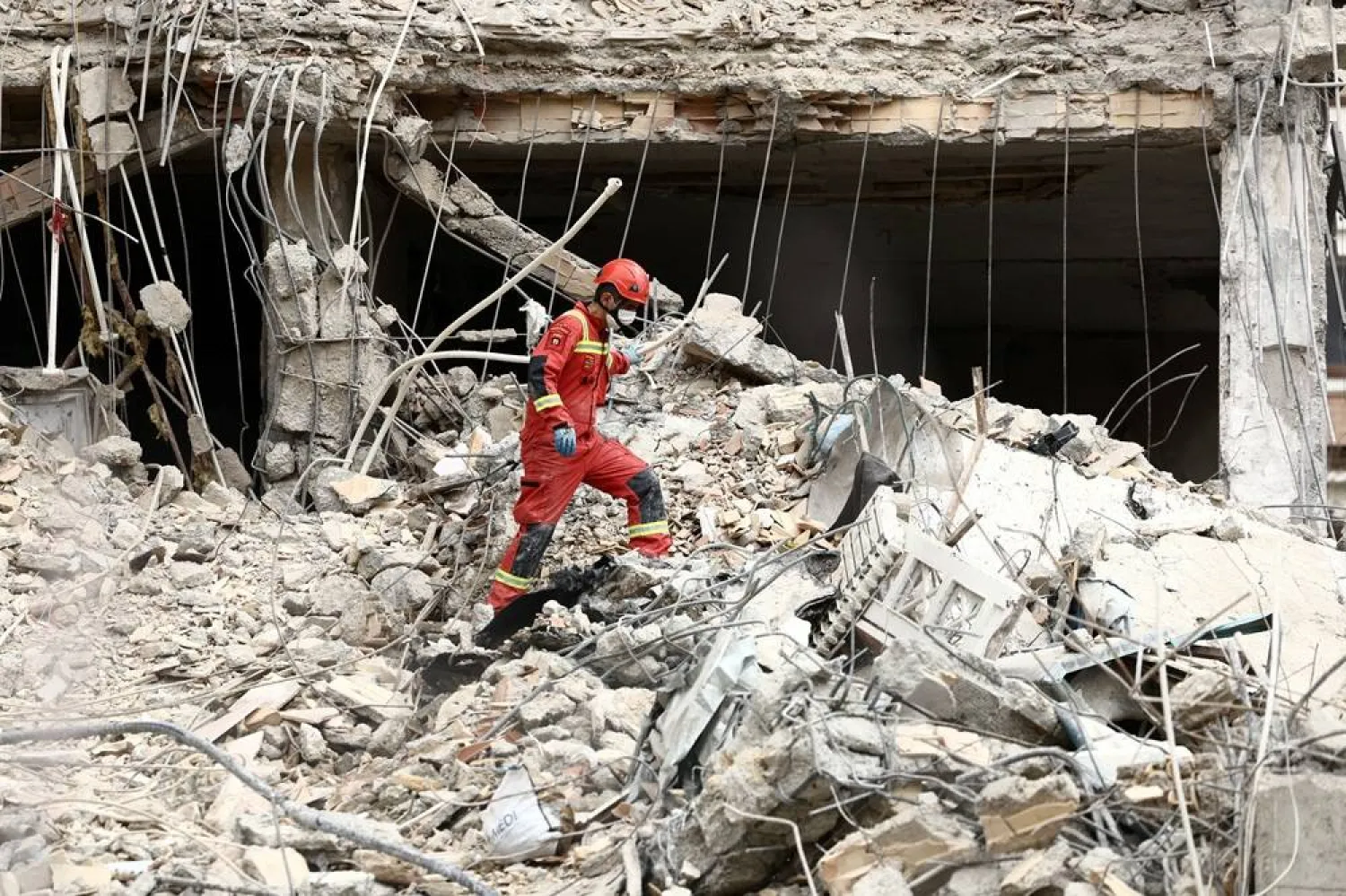
Emergency personnel work at the site of a strike on a residential building, amid the US-Israeli conflict with Iran, in Tehran, Iran, March 23, 2026. Majid Asgaripour/WANA (West Asia News Agency) via Reuters
TT

Iran’s True Casualty Figures Unknown as Internet Blackout Hampers Monitors

Emergency personnel work at the site of a strike on a residential building, amid the US-Israeli conflict with Iran, in Tehran, Iran, March 23, 2026. Majid Asgaripour/WANA (West Asia News Agency) via Reuters

Iran has not updated its official death toll figures for weeks, while human rights groups outside the country are struggling with chronic communication problems, meaning the number of people killed during the war remains largely unknown.

The last time Iran's health ministry gave a full update about casualties was on March 8, the ninth day of the conflict, when it said around 1,200 civilians had been killed in US and Israeli airstrikes across the country.

Overseas human rights groups have long been considered one of the most reliable sources of information about life inside the heavily censored country.

But with Iran's connections to the global internet cut off and phone lines down, they are struggling to reach their networks of contacts who are their eyes and ears on the ground.

The US-based Human Rights Activists News Agency (HRANA), which played an important role corroborating deaths during anti-government protests in January, estimates the civilian death toll at 1,407 people, including 214 children.

"I would say it's an absolute, absolute minimum, and that's simply because we don't have the capacity to be everywhere at one time, understanding the full extent of what's happening," HRANA deputy director Skylar Thompson told AFP.

"With the scale and the speed at which places are being targeted across the country, it's impossible to document it at the same pace," she added.

The Iranian Red Crescent is not providing casualty estimates, but its latest figures indicate 61,555 homes, 19,000 businesses, 275 medical centers, and nearly 500 schools have been damaged.

AFP journalists have been able to confirm that many civilian buildings in Tehran have been damaged, including apartment blocks caught in the blast wave of nearby missile or bomb strikes, but not beyond the city.

Reporters are unable to travel around the country without official authorization.

- Connection problems -

Distrust of Iran's official figures is high among human rights groups, particularly after the bloody crackdown on anti-government protests in January.

Although Iran acknowledged around 3,000 deaths, mostly among security forces, researchers and campaigners outside Iran estimated that anywhere from 7,000 to 35,000 people were killed in the indiscriminate shooting.

"The Islamic republic has a history of not publishing or not collecting data," Awyar Shekhi from the Norway-based human rights group Hengaw told AFP.

The problem for Hengaw and others seeking to provide a credible alternative to the incomplete official data has been the almost-total shutdown of Iran's internet connections to the outside world since the start of the war on February 28.

"The connection is worse than it ever was before, so it's really difficult to get accurate data of how many people have been killed, and the information we get is so little," Shekhi added.

Both she and Thompson stressed that Iranian authorities have been threatening and arresting people who have illegally accessed the global internet to send information abroad, sometimes accusing them of spying.

Making telephone calls to Iran from abroad is also largely impossible.

- 'Focus on the civilian harm' -

The biggest loss of life for civilians in the war so far was the airstrike on an elementary school in Minab on the first day of the war that killed at least 165 people, according to an official toll.

A US Tomahawk cruise missile hit the school because of a targeting mistake, according to the preliminary findings of a US military investigation reported by The New York Times.

Hengaw also documented an airstrike on a flour factory in the city of western Naqadeh on March 7 that killed 11 workers and injured another 21.

"I believe that the US and Israel are using a quite aggressive interpretation of what is a military target," Thompson from HRANA added.

Unlike in January, during the anti-government protests, she said there had so far been relatively little attention in the Western media on the toll of ordinary Iranians.

"There's such a focus on the geopolitics of it all, I think it's really important to have a focus on the civilian harm," she added.

Elsewhere in the region, Lebanon's health ministry said Israeli strikes had killed 1,029 people in the country.


Japan Fires Missile in Joint Drill with US and Allies in Northern Philippines, Facing South China Sea

US and Philippine troops in a foxhole participate in counter-landing live fire exercises during Balikatan, the annual joint military exercises between the US and the Philippines, at Long Point Beach, Brgy. Aporawan, Aborlan, Palawan, Philippines, April 27, 2026. REUTERS/Eloisa Lopez Purchase Licensing Rights
TT

Japan Fires Missile in Joint Drill with US and Allies in Northern Philippines, Facing South China Sea

US and Philippine troops in a foxhole participate in counter-landing live fire exercises during Balikatan, the annual joint military exercises between the US and the Philippines, at Long Point Beach, Brgy. Aporawan, Aborlan, Palawan, Philippines, April 27, 2026. REUTERS/Eloisa Lopez Purchase Licensing Rights

Japan's Self-Defense Forces fired a Type 88 anti-ship missile during a joint maritime exercise with US, Australian, and Philippine forces on Wednesday, hitting a decommissioned Philippine Navy ship in waters facing the disputed South China Sea.

The drill took place as Manila and Tokyo began talks on a potential defense equipment transfer, made possible by Japan's decision to scrap restrictions on military exports, said Reuters.

Discussions include the possible early transfer of Abukuma class ‌destroyers and TC-90 ‌aircraft to the Philippines, Japan's Defense Minister Shinjiro ‌Koizumi ⁠said.

Philippine Defense Secretary ⁠Gilberto Teodoro and Koizumi witnessed the live missile firing on the ground, while Philippine President Ferdinand Marcos Jr. watched the exercise from military headquarters in Manila via a live video feed, the president's office said.

"The exercise showcased coordinated maritime strike operations among allied forces and highlighted the AFP's growing capability to operate alongside international partners in promoting regional security and freedom of ⁠navigation," it said in a statement.

The Philippine military said ‌two Type 88 volleys were fired, hitting ‌the BRP Quezon within six minutes of the launch. The strike took ‌place about 75 km (46.6 miles) off the coast of Paoay in the ‌northern Philippines, which faces the South China Sea.

The Philippine Department of National Defense said Japan's Type 88 missile system was "designed to defend coastal areas and deter maritime threats."

"I'm very, very proud and happy that we were able to ‌pull this off for the first time and it will only get larger in scope with more partners," ⁠Teodoro said.

The ⁠live-fire drill was part of the annual war games held by Manila and Washington, known as "Balikatan", or "shoulder-to-shoulder".

Japan, together with Canada, Australia, France and New Zealand, are joining Balikatan as active participants for the first time, highlighting Manila's widening network of security partnerships.

On May 2, Filipino and American troops also deployed the anti-ship missile NMESIS in Batanes province, near Taiwan, as tensions simmer over the self-governed island that China views as its own territory.

More than 17,000 troops are taking part in this year's exercises, including around 1,400 from defense treaty ally Japan and 10,000 from the United States, even though Washington remains heavily engaged in the Middle East.

Beijing routinely criticizes Manila's joint military exercises with allies, saying they heighten regional tensions.


London Police Set Up Specialist Jewish Protection Team

Members of the Jewish community ride past a memorial wall, dedicated both to the victims of the October 7 attacks in Israel and Iranians killed in recent protests in Iran, on Limes Avenue in Golders Green after a suspected arson attack in London, Britain, April 28, 2026. REUTERS/Toby Melville
TT

London Police Set Up Specialist Jewish Protection Team

Members of the Jewish community ride past a memorial wall, dedicated both to the victims of the October 7 attacks in Israel and Iranians killed in recent protests in Iran, on Limes Avenue in Golders Green after a suspected arson attack in London, Britain, April 28, 2026. REUTERS/Toby Melville

British police are setting up a new team of 100 officers including counter terrorism specialists to help protect Jewish communities across London after a series of antisemitic attacks including the stabbing of two men.

The plan announced on Wednesday for a dedicated protection team comes as officers announced more arrests for antisemitism, including detaining a 35-year old man on Saturday after rocks were thrown at an ambulance belonging to the Jewish community, Reuters reported.

London's top police boss ⁠Mark Rowley said ⁠Jewish communities were facing "sustained threats" from hostile state actors as well as extreme right-wing groups, elements of the extreme left and terrorists.

Detectives are examining whether the arson incidents have possible Iranian links, after British security officials warned that Iran ⁠was using criminal proxies to carry out hostile activity.

Since late March, there have been a number of high-profile arson attacks with four Jewish ambulances burned and synagogues targeted. Last week, two Jewish men were also stabbed. Both victims survived the attack.

Over the past four weeks, police said they had arrested around 50 people for antisemitic hate crimes and charged eight individuals. On top of ⁠that, ⁠28 arrests have been made as part of investigations alongside counter terrorism policing for arson and other serious incidents.

"This new team will be primarily focused on protecting the Jewish community, which faces some of the highest levels of hate crime alongside significant terrorist and hostile state threats," said a statement from London's Metropolitan Police force.

British Prime Minister Keir Starmer convened a meeting on Monday with business, health and cultural leaders aimed at trying to tackle antisemitism.


US Military Strike on Alleged Drug Boat Kills 3 in Eastern Pacific

This screen grab from a video posted on the X account of US Southern Command (SOUTHCOM) on May 5, 2026, shows a vessel before being struck at the direction of Commander General Francis L. Donovan on May 5, 2026. (Photo by US Southern Command / AFP)
TT

US Military Strike on Alleged Drug Boat Kills 3 in Eastern Pacific

This screen grab from a video posted on the X account of US Southern Command (SOUTHCOM) on May 5, 2026, shows a vessel before being struck at the direction of Commander General Francis L. Donovan on May 5, 2026. (Photo by US Southern Command / AFP)

The US military launched another strike Tuesday on a vessel suspected of transporting drugs in the eastern Pacific Ocean, killing three men.

The attack came a day after US forces struck an alleged drug boat in the Caribbean Sea, killing two people.

The Trump administration’s campaign of blowing up alleged drug-trafficking vessels in Latin American waters has persisted since early September and killed at least 191 people in total.

Despite the Iran war, the strikes have ramped up again in recent weeks, showing that the administration’s aggressive measures to stop what it calls “narcoterrorism” in the Western Hemisphere are not letting up. The military has not provided evidence that any of the vessels were carrying drugs.

The attacks began as the US built up its largest military presence in the region in generations and came months ahead of the raid in January that captured then-Venezuelan President Nicolás Maduro. He was brought to New York to face drug trafficking charges and has pleaded not guilty.

In the attack Tuesday, US Southern Command once again said it had targeted the alleged drug traffickers along known smuggling routes. According to The Associated Press, it posted a video on X showing a boat cruising along the water before a huge explosion left the vessel in flames.

President Donald Trump has said the US is in “armed conflict” with cartels in Latin America and has justified the attacks as a necessary escalation to stem the flow of drugs into the United States and fatal overdoses claiming American lives. But his administration has offered little evidence to support its claims of killing “narcoterrorists.”

Critics, meanwhile, have questioned the overall legality of the boat strikes.