


Israel Deploys AI Agents Across Multiple Fronts

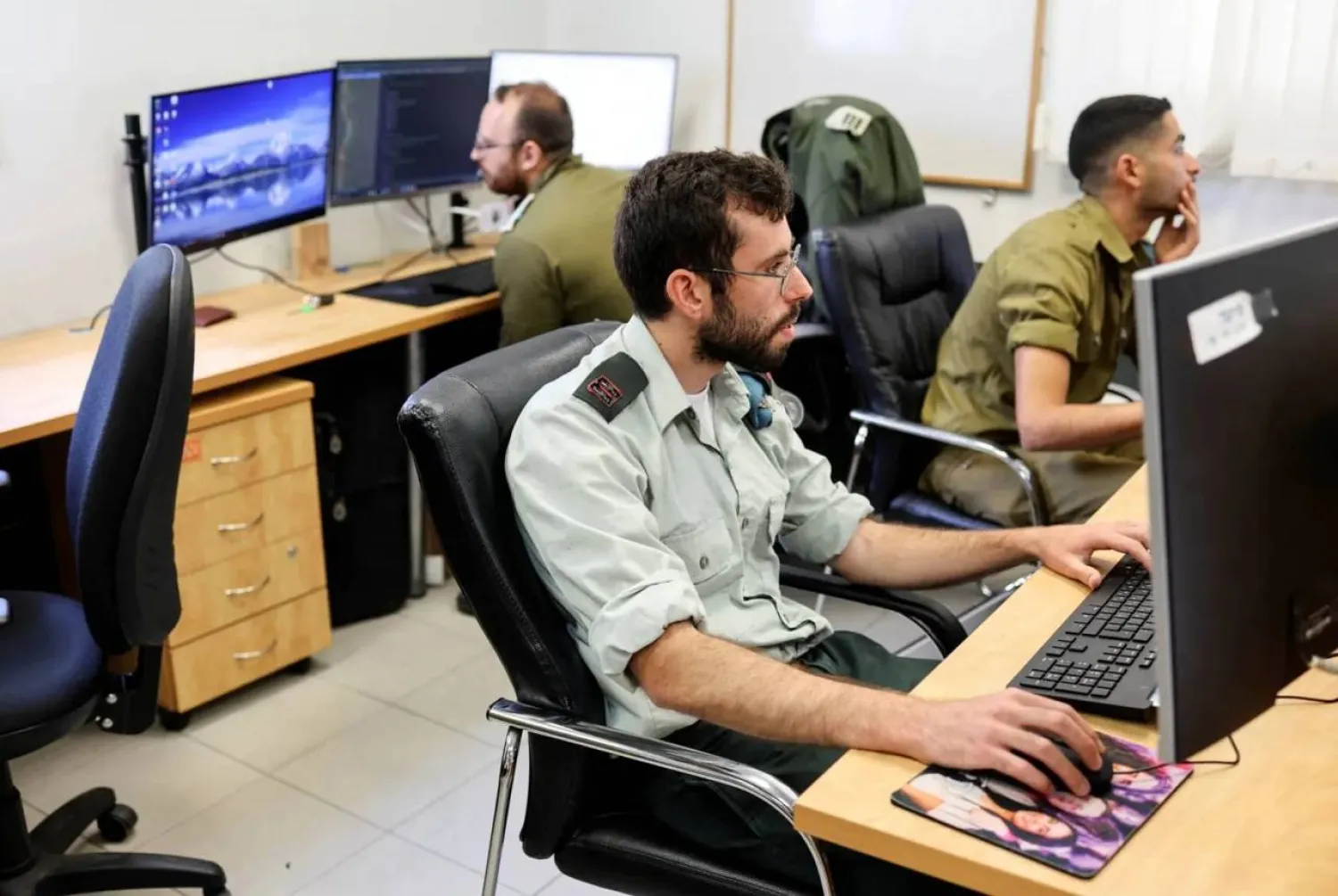
Technologists with the Israeli military’s Matzpen operational data and applications unit work at their stations, at an Israeli Army base in Ramat Gan, Israel. (Reuters)
TT

Israel Deploys AI Agents Across Multiple Fronts

Technologists with the Israeli military’s Matzpen operational data and applications unit work at their stations, at an Israeli Army base in Ramat Gan, Israel. (Reuters)

The Israeli Army has begun deploying “AI agents” to detect missile launchers, generate real-time aerial intelligence and sharpen strike speed and precision across multiple fronts, officials told Haaretz and the Yedioth Ahronoth newspaper on Tuesday.

“The pace, scope and precision of strikes — as well as their overall quality and volume — would not have been possible without human-machine integration and automated tools capable of synchronizing hundreds of actions simultaneously,” an Israeli official told Yedioth Ahronoth.

Such missions, he noted, would have been impossible for the Israeli army just a few years ago, or even months ago.

The senior military official said the army sees the technology as part of its future, with some such agents already in use in undisclosed systems.

According to Yedioth Ahronoth, Israel’s use of artificial intelligence in Operation Roaring Lion is unprecedented.

Integrated into command-and-control systems from the General Staff down, AI is helping the Air Force plan and coordinate strikes in Iran and Lebanon and assist with navigation
The newspaper said in recent weeks, AI has also helped generate real-time situational assessments across multiple theaters — a need underscored by lessons from the failures that led to the October 7 attacks.

One system, known as “Tashan,” is used by the Air Force to identify missile launchers in Iran, Lebanon and Yemen immediately after launches, allowing forces to quickly locate and destroy the source.

Meanwhile, another source told Haaretz on Tuesday that the Israeli military has for the first time confirmed an artificial intelligence infrastructure developed during the war in Gaza is now fully operational in current fighting in Iran and Lebanon.

The system, known internally as the Israeli army’s “Operational Data and AI Factory,” integrates sensor, video, text and audio data into a single real-time operational picture across the military.

A military official told Haaretz that the system is now in use throughout the army. It can process vast amounts of data, including inputs from sensors, as well as video, text and audio.

According to the official, the shift to this AI-based infrastructure creates a comprehensive operational picture of the military's forces, missions and threats – one that is accessible to all branches.

The system is designed to assist with attack planning, targeting and strikes. It also records and transcribes all wireless communications, and compiles real-time data on missile and drone launches and interceptions. This significantly improves both operational and defensive decision-making in a way that was previously unimaginable.

Haaretz has learned that the system is also involved in processing strike plans and targets – confirming for the first time that the infrastructure plays a role in offensive operations, not just defense.

In Lebanon, military sources say, similar capabilities are being used to analyze video feeds from cameras deployed across the sector, identifying people and objects and generating real-time alerts.

Another system, “Lohem” (Fighter), assists commanders – particularly in the Air Force – in planning and synchronizing strikes.

The Israeli army says several AI-based defensive systems are also operational. These include “Rom,” which detects drones and UAVs; “Spatial Control,” which alerts ground forces to rocket and anti-tank fire; and “Tashan,” which identifies launches and impact points and locates the source of fire.

AI has also been integrated into Israel's national alert system, enabling predictions of where interception debris may fall.

The newspaper said a central component of the system is “MapIt,” a platform that displays real-time, three-dimensional operational data to commanders. It has learned that over the past year, the military has developed an additional layer on top of “MapIt,” consolidating all data streams into a single operational map.



Trump Says US Strongly Considering NATO Exit

FILE PHOTO: US President Donald Trump signs documents at the White House in Washington, US, January 20, 2025.  REUTERS/Carlos Barria/File Photo
FILE PHOTO: US President Donald Trump signs documents at the White House in Washington, US, January 20, 2025. REUTERS/Carlos Barria/File Photo
TT

Trump Says US Strongly Considering NATO Exit

FILE PHOTO: US President Donald Trump signs documents at the White House in Washington, US, January 20, 2025.  REUTERS/Carlos Barria/File Photo
FILE PHOTO: US President Donald Trump signs documents at the White House in Washington, US, January 20, 2025. REUTERS/Carlos Barria/File Photo

President Donald Trump said he was strongly considering pulling the United States out of NATO after allies failed to back US military action against Iran, according to an interview with Britain's Daily ⁠Telegraph.

Trump described the ⁠alliance as a "paper tiger" and said removing the United States from the defense pact was ⁠now "beyond reconsideration," the newspaper reported. He said he had long held doubts about NATO's credibility.

"Oh yes, I would say [it’s] beyond reconsideration," Trump told the newspaper when asked about whether he would reconsider US ⁠membership ⁠of the alliance after the conflict.

"I was never swayed by NATO. I always knew they were a paper tiger, and (Russian President Vladimir) Putin knows that too, by the way."

US Defense Secretary Pete Hegseth said on Tuesday other countries needed to "be prepared to stand up" and help reopen the Strait of Hormuz, echoing criticism from Trump, who has singled out NATO members Britain and France.

Rubio told Fox News Washington would not overlook the lack of assistance from other NATO members. "After this conflict is concluded, we ⁠are going to have to reexamine ⁠that relationship," he said.


Iran FM Says Not Responded to US Plan, ‘No Negotiations’

09 September 2025, Egypt, Cairo: Iranian Foreign Minister Abbas Araghchi attends a joint press conference in Cairo. (dpa)
TT

Iran FM Says Not Responded to US Plan, ‘No Negotiations’

09 September 2025, Egypt, Cairo: Iranian Foreign Minister Abbas Araghchi attends a joint press conference in Cairo. (dpa)

Iran's Foreign Minister Abbas Araghchi said there were no negotiations with the United States and that Tehran had not responded to a reported 15-point proposal from Washington to end the war.

"We receive messages from the American side, some direct and some through our friends in the region, and whenever necessary we respond to these messages," Araghchi said in an interview with Al Jazeera aired on Wednesday and dubbed into Arabic from Persian.

"There are no grounds for negotiations," he said, adding however that some messages had been exchanged directly with US special envoy Steve Witkoff.

Iran has been at war with the United States and Israel since February 28, when strikes killed the country's supreme leader and triggered a conflict that has spread across the region.

Diplomatic efforts involving Türkiye, Egypt and Pakistan have recently been launched to try to end the war.

Last week, two senior Pakistani officials said Islamabad had conveyed to Iran a 15-point plan containing US proposals.

Iranian media had reported that Tehran offered a five-point counterproposal calling for an end to what it described as "aggression" and for guarantees that neither the United States nor Israel would resume hostilities.

Araghchi, however, said Tehran "has not offered anything in response" to the US plan and that reported Iranian responses were "merely guesses" from a media outlet.

The war broke out in the middle of negotiations between Iran and the United States over Tehran's nuclear program.

The conflict echoes a 12-day war in June last year, when Israel launched strikes days before a planned round of talks between Tehran and Washington. The United States later joined those attacks, targeting Iranian nuclear facilities.

Araghchi said there was "zero" trust in the United States and that Iran would not accept a ceasefire, instead calling for a "complete end to the war" and reparations.

Since the start of the conflict, now in its second month, Iran has allowed only a trickle of ships to pass through the strategic Strait of Hormuz, disrupting roughly 20 percent of global oil flows.

Iran says the strait is closed to what it describes as "enemy" shipping.

In recent days, Iranian officials have said the US may be plotting a ground attack with the arrival in the region of the USS Tripoli, an amphibious assault ship carrying around 3,500 Marines and sailors.

Araghchi warned that "we are waiting for them... they will incur heavy losses".


King Charles III to Make a State Visit to the US Despite Calls to Cancel Due to the Iran War

US President Donald Trump and Britain's King Charles inspect the Guard of Honor as they attend a welcome ceremony during Trump's state visit, at Windsor Castle, in Windsor, Britain, September 17, 2025. (Reuters)
TT

King Charles III to Make a State Visit to the US Despite Calls to Cancel Due to the Iran War

US President Donald Trump and Britain's King Charles inspect the Guard of Honor as they attend a welcome ceremony during Trump's state visit, at Windsor Castle, in Windsor, Britain, September 17, 2025. (Reuters)

King Charles III is going ahead with a state visit to the United States despite calls for the ceremonial event to be called off due to US President Donald Trump’s repeated criticism of the British government for failing to support the war in Iran.

Buckingham Palace said Tuesday that the king and Queen Camilla would travel to the US in late April to celebrate the 250th anniversary of American independence. Trump put the dates as April 27-30.

“I look forward to spending time with the King, whom I greatly respect,” Trump said on Truth Social. “It will be TERRIFIC!”

The visit follows Trump’s state visit to the UK in September, a glittering occasion that was seen as part of Britain’s effort to shore up the so-called special relationship between the two countries as the president’s America First policies threatened the established global order.

But that hasn’t stopped Trump from chiding the UK for refusing to allow US aircraft to use British bases for offensive operations against Iran. In a post on Truth Social, Trump said that countries who can’t get jet fuel because of restrictions around the Strait of Hormuz should “build up some delayed courage, go the Strait and just TAKE IT.”

He has repeatedly lashed out at Prime Minister Keir Starmer, saying at one point that he is “not Winston Churchill.”

That had led some members of Parliament to demand that Starmer call off the state visit to show Britain’s disapproval and avoid any embarrassment for the king during a time of tension between the two countries.

Ed Davey, leader of the opposition Liberal Democrats, on Tuesday said Starmer had shown “a staggering lack of backbone” by allowing the state visit to go ahead.

“To send the king on a state visit to the US after Trump dismissed our Royal Navy as toys is a humiliation and a sign of a government too weak to stand up to bullies,” Davey said. “What appalling thing does Trump have to do next to make the government see sense and cancel the state visit?”

The monarch hosts state visits at home and travels abroad at the request of the elected government, which uses the pomp and circumstance of such occasions to bolster relations with countries around the world. The decision to proceed with the long-discussed visit may be seen as an effort by Starmer’s government to ease the tensions caused by the war, or at least not enflame them.

Trump is known to be fond of the royal family and reveled in last year’s visit to Windsor Castle, where he was welcomed by a military band. The king hosted a banquet for him in a hall dripping with flowers and gold leaf.

The visit came about after Starmer hurried to Washington in February 2025, just five weeks after Trump began his second term, and hand-delivered the king’s invitation to the president.

It was the first time any world leader received the honor of a second state visit, and the first time the invitation was delivered in a personal letter from the king, which Trump proudly displayed for TV cameras.

“It’s a great, great honor,” Trump said at the time, noting that the letter included an invitation to Windsor Castle. “That’s really something.”

Now the king is heading to Washington for the return engagement.

Charles has visited the US 19 times, but this will be his first state visit to the country since becoming king. His mother, Queen Elizabeth II, made four state visits to the US.

The king also will travel to Bermuda in conjunction with the US trip, his first visit to the overseas territory as monarch.