


Medical Needs Surging in Iran and Supplies Under Threat, Red Cross Warns

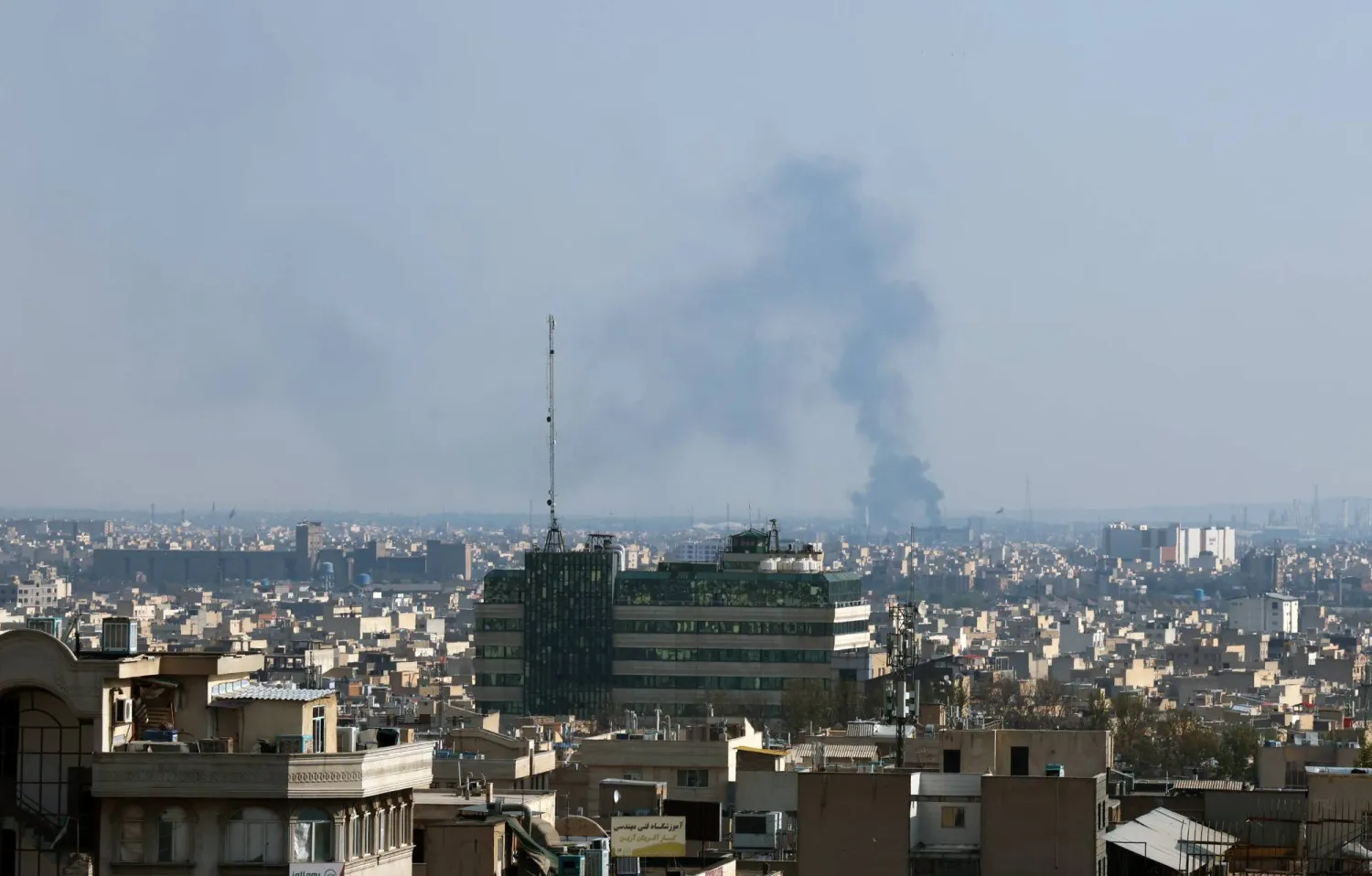
Smoke rises after an airstrike in central Tehran, Iran, 01 April 2026. (EPA)
TT

Medical Needs Surging in Iran and Supplies Under Threat, Red Cross Warns

Smoke rises after an airstrike in central Tehran, Iran, 01 April 2026. (EPA)

Emergency medical needs in Iran are rising exponentially, and stocks of trauma kits and other gear could run low if the war persists, the head of the International Federation of Red Cross and Red Crescent Societies delegation there said on Thursday.

More than 1,900 people have been killed since the US-Israeli airstrikes on Iran began on February 28, and more than 21,000 injured, according to the agency - the only humanitarian group working across the country. Other estimates are higher.

Maria Martinez told Reuters three of the agency's own workers had died on duty, including one during an airstrike on March 31 that hit a medical clinic in Zanjan ‌province. She did not ‌attribute blame for the killings.

'YOU CAN SENSE THE FEAR'

"Our concern ‌is ⁠really how the ⁠humanitarian needs are escalating so rapidly and (over) our ability to bring all the support into the country," Martinez said.

Hopes for a swift end to the conflict faded on Thursday after US President Donald Trump vowed to conduct more aggressive strikes.

Washington has said its Iran strikes are being carried out with precision. Israel's military has said it takes measures to mitigate harm against civilians during its operations.

Martinez said there were no shortages of emergency stocks for now, but the ⁠situation would worsen if the fighting continued, especially as the price ‌of supplies went up and their insufficient funding ran ‌low.

“The needs are exponentially increasing. Resources are not unlimited," she said.

She was concerned that people's fears of ‌bombings would stop them from venturing out to seek aid.

"The streets are completely empty ... ‌You can sense the fear, you can sense the uncertainty in people's eyes,” she said in a video interview from Tehran.

MORE INTERNATIONAL SUPPORT "IS ESSENTIAL"

The aid group says it has 100,000 responders across the country's 31 provinces as well as helicopters and rescue dogs, and provides first aid for those ‌injured by airstrikes and support for the displaced.

One IFRC rescue worker called to help clear rubble discovered his own family were among ⁠the dead buried there. Others ⁠take turns sleeping at the IFRC offices to be on standby in the case of bombings, she added.

Work was frequently disrupted and staff were transcribing documents by hand because of power and Internet cuts.

"We are in the middle of a meeting and the alarms are activated. We need to evacuate immediately and this happens three, four, six times per day," she said.

The agency had been unable to import vital supplies from its Dubai warehouse for weeks amid a logistical quagmire exacerbated by Iran's shutting down of the Strait of Hormuz in retaliation for US-Israeli strikes.

It now aims to ship them overland from Türkiye on April 7, IFRC supply chain director Cecile Terraz said, but it will take weeks.

The IFRC may have to use its 40 million Swiss Franc ($50.05 million) emergency appeal even though it is currently only 6% funded, Martinez said. "Increasing international support is essential to protect civilians and sustain this emergency response operation."



Trump Says Nobody Knows Who Is Running Iran

Iranians walk next to a wall painting of late Iranian Supreme Leader Ali Khamenei on a street in Tehran, Iran, 06 October 2026. (EPA)
TT

Trump Says Nobody Knows Who Is Running Iran

Iranians walk next to a wall painting of late Iranian Supreme Leader Ali Khamenei on a street in Tehran, Iran, 06 October 2026. (EPA)

US President Donald Trump said on Tuesday that nobody knew who was running Iran during the US-Israeli war with Iran, now in its eighth month.

"Their leaders are gone, their second group of leaders are gone, and the biggest problem I have is nobody knows who the hell is running the country," ‌Trump said.

Iran's foreign ministry spokesman said on ‌Sunday Washington ⁠knows very well ⁠who their counterpart is in Iran and how the decision-making system in Iran works.

"The problem is actually the opposite: it lies in the contradictory positions and mixed messaging from US officials," Esmaeil Baghaei said in a news conference.

Iran's Supreme ⁠Leader Ali Khamenei was killed ‌on the first day of ‌the US-Israeli war on Iran, which began on February ‌28. His son, Mojtaba Khamenei, succeeded him but ‌has not been seen in public since he was injured in the same strike that killed his father.

Iran responded with its own strikes on Israel and ‌Gulf states. US-Israeli strikes on Iran and Israeli attacks ⁠on ⁠Lebanon have killed thousands and displaced millions.

Fuel prices that have risen in response to the war are also a risk to Trump's Republican Party ahead of the November US midterm elections in which control of Congress is at stake.

Trump, whose approval rating has held at a record low amid concerns of high cost of living spurred by soaring gasoline and diesel prices, has offered shifting timelines and goals for the war.


Vance Says Iran Must Cut Enrichment to End War

US Vice President JD Vance speaks at a campaign rally at Fairbanks International Airport in Fairbanks, Alaska, US, October 5, 2026. (Jacquelyn Martin/Pool via Reuters)
TT

Vance Says Iran Must Cut Enrichment to End War

US Vice President JD Vance speaks at a campaign rally at Fairbanks International Airport in Fairbanks, Alaska, US, October 5, 2026. (Jacquelyn Martin/Pool via Reuters)

US Vice President JD Vance said in an exclusive interview with Reuters that Iran must make a “meaningful” reduction in its nuclear enrichment capacity to satisfy US demands and end the countries’ seven-month war, even as Washington was unsure how Tehran makes decisions in negotiations.

Vance, a longtime skeptic of US involvement in foreign wars, has taken a leading role in negotiating a settlement to the conflict and brokered a provisional peace agreement in September that quickly fell apart. The war has jolted global energy markets and become a political liability for President Donald Trump and fellow Republicans ahead of November midterm elections.

Speaking on Monday after a campaign trip in Alaska, Vance said any agreement would require Iran to reduce its nuclear enrichment capacity, rather than offer assurances of future nuclear drawdowns.

"If you don't want a nuclear weapon, then why do you need 60% enriched ‌fuel? And if ‌you want to show commitment to not building a nuclear weapon, don't build highly ‌enriched ⁠fuel. That's a very ⁠basic threshold issue," Vance said.

"I think if they want to show a commitment to not building a nuclear weapon, they would do something meaningful on their enrichment capacity."

Iran and the US have exchanged proposals in recent weeks aimed at ending the war and reopening the Strait of Hormuz, a vital global energy shipping route. Trump rejected Tehran's latest offer and has warned that military operations could intensify after the midterms.

Vance said the US remained open to an agreement but would require concrete Iranian nuclear concessions.

"We're not going to trade words for actions," Vance said.

UNCLEAR HOW IRAN MAKES DECISIONS, SAYS VANCE

Complicating matters, Vance said Washington is uncertain ⁠who makes decisions in Tehran.

Vance said the US was in talks with Iranian President ‌Masoud Pezeshkian and Foreign Minister Abbas Araghchi. But it was unclear how much authority ‌they wield within Iran's power structure, he said, after joint US-Israeli strikes at the start of the war killed Supreme Leader ‌Ali Khamenei.

"One of the things we picked up on is it's not totally clear how their country makes decisions," ‌Vance said. Separately, Trump said on Tuesday his "biggest problem" is no one knows who is running Iran.

Iran's Foreign Ministry spokesperson said on Sunday that US officials are well aware of who their Iranian counterparts are and how Iran's decision-making system works.

"The problem is actually the opposite: it lies in the contradictory positions and mixed messaging from US officials," Esmaeil Baghaei told a weekly press conference.

Vance told Reuters he ‌has held personal conversations with field commanders to gauge battlefield conditions. He dismissed concerns over critical munitions shortages and added that while Iranian troops are periodically able to strike ⁠commercial ships in the Strait ⁠of Hormuz, they are largely unable to prevent energy exports through the waterway.

The war — and its $3 billion monthly price tag — has become a key issue on the campaign trail. Higher energy prices have put Trump and Republicans on the defensive in competitive states that will decide control of Congress.

Vance has sought to temper criticism of Trump’s handling of the conflict, telling voters they should not let that issue keep them from backing Republicans in next month's elections.

In Alaska, Vance rallied for Republican Senator Dan Sullivan, who is locked in a tight reelection battle with Democratic challenger Mary Peltola. Trump carried Alaska by 13 percentage points in 2024, but rising everyday costs have put the state in play.

Before speaking with Reuters, Vance focused much of his speech on affordability concerns, especially around energy. Alaska's remote locale makes consumer goods more expensive, and energy production is a key industry.

Rally attendees roared when Sullivan nearly introduced Vance as the president of the US, rather than the vice president. Vance is seen as a leading Republican contender to succeed Trump in the White House.

Vance told Reuters afterward that he had not decided whether to seek the presidency in 2028.

"I'm inherently a procrastinator," he said. "I really haven't thought about it much."


North Korea Warns US Over Taiwan While Kim Pledges Support for Russia

01 October 2026, North Korea, Pyongyang: A photograph released by North Korea's official Korean Central News Agency (KCNA) on September 30, 2026, shows North Korean leader Kim Jong Un addressing a ceremony at Kim Il Sung University in Pyongyang marking the 80th anniversary of the country's top university. (YNA/dpa)
TT

North Korea Warns US Over Taiwan While Kim Pledges Support for Russia

01 October 2026, North Korea, Pyongyang: A photograph released by North Korea's official Korean Central News Agency (KCNA) on September 30, 2026, shows North Korean leader Kim Jong Un addressing a ceremony at Kim Il Sung University in Pyongyang marking the 80th anniversary of the country's top university. (YNA/dpa)

North Korea criticized the United States over its arms sales and military support for Taiwan, accusing Washington of fueling tensions in the Taiwan Strait, state media KCNA said on Wednesday.

A KCNA commentary citing North Korean international affairs analyst Kim Myong Chol said US policy on Taiwan was undermining peace and stability in the region.

The commentary condemned the appearance of US-sold ‌fighter aircraft in ‌Taiwan, saying the US "should think ‌twice ⁠whether it is ready ⁠to stand in frontal confrontation with the powerful national power of the People's Republic of China for the security of Taiwan and whether it can cope with its consequences."

The first two of a batch of 66 new F-16V Block 70 ⁠fighter jets ordered in 2019 arrived in ‌Taiwan last week, as ‌Taiwan faces a rising military threat from Beijing which ‌claims the democratically governed island as its own ‌territory.

Meanwhile, North Korean leader Kim Jong Un pledged continued support for Russia and its war effort in a birthday message to President Vladimir Putin, state media KCNA ‌said on Wednesday.

Kim said Pyongyang would continue to expand joint work under the ⁠countries' comprehensive ⁠strategic partnership, saying he was convinced that Russia's "sacred war of justice" to defend its sovereignty, security interests and territorial integrity would end in victory, KCNA said.

The message did not explicitly mention Russia's war in Ukraine. North Korea has sent an estimated 14,000 to 15,000 troops to support Russia's war in Ukraine since 2024, according to Ukrainian and South Korean estimates.

North Korea and Russia have strengthened ties sharply since Putin and Kim signed a mutual defense pact in June 2024.