


No Sign of War Winding Down in Mideast as Friday Dawns with Attacks across Region

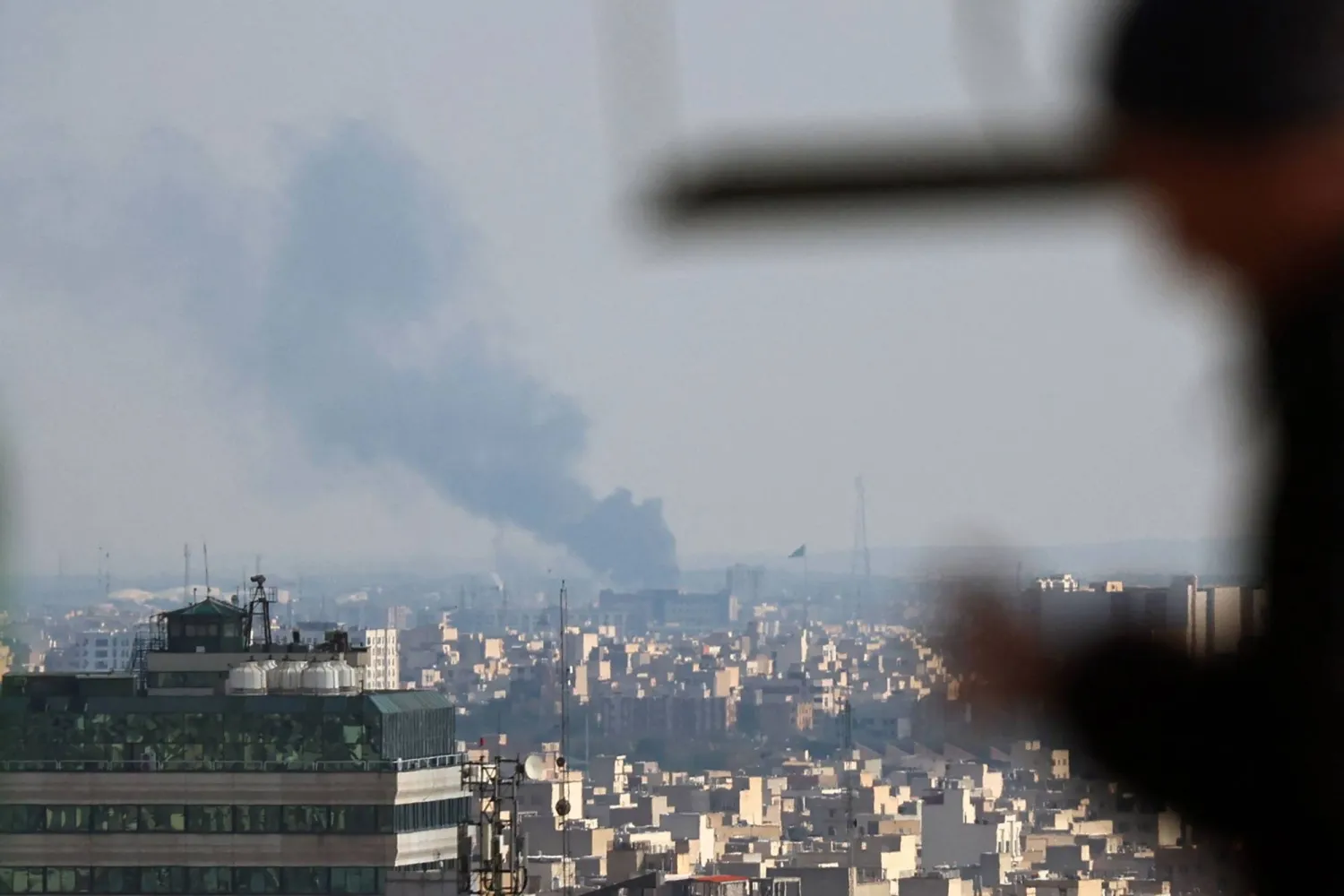
Smoke rises from the site of a strike in Tehran on April 1, 2026.  (Photo by AFP) /
Smoke rises from the site of a strike in Tehran on April 1, 2026. (Photo by AFP) /
TT

No Sign of War Winding Down in Mideast as Friday Dawns with Attacks across Region

Smoke rises from the site of a strike in Tehran on April 1, 2026.  (Photo by AFP) /
Smoke rises from the site of a strike in Tehran on April 1, 2026. (Photo by AFP) /

There was little sign Friday of the war in the Mideast winding down as Israel said it faced incoming fire from Iran, Kuwait and Bahrain reported being under attack, and Iran said eight people were killed while celebrating the close of Persian new year near a major bridge hit by a US strike.

Tehran continued to demonstrate its ability to strike its neighbors even as US President Donald Trump claimed the threat from the country was nearly eliminated and cheered the collapse of the bridge on Thursday, reportedly the tallest in the Middle East.

Iran decried the strike on the bridge, which also injured 95 people celebrating Nature Day, when Iranians gather for picnics and other celebrations outdoors on the last day of Nowruz, the Persian new year.

“Striking civilian infrastructure only conveys the defeat and moral collapse of an enemy in disarray,” Iran’s Foreign Minister Abbas Araghchi wrote Thursday in a post on X.

Iran’s attacks on Gulf states along with its chokehold on the Strait of Hormuz have disrupted the world’s energy supplies with effects far beyond the Middle East. That has proved to be Iran’s greatest strategic advantage in the war. Britain held a call with nearly three dozen countries about how to reopen the strait once the fighting is over.

Trump has insisted the strait can be taken by force — but said it is not up to the US to do that. In an address to the American people Wednesday night, he encouraged countries that depend on oil from Hormuz to “build some delayed courage” and go “take it.”

Before the US and Israel started the war on Feb. 28 with strikes on Iran, the waterway was open to traffic and 20% of all traded oil passed through it.

Iran continues to strike Israel and Gulf countries

Iran responded defiantly to Trump’s speech, in which the American president claimed US military action had been so decisive that “one of the most powerful countries” is “really no longer a threat.”

A spokesman for Iran’s military, Lt. Col. Ebrahim Zolfaghari, insisted Thursday that Tehran maintains hidden stockpiles of arms, munitions and production facilities. He said facilities targeted so far by US strikes are “insignificant.”

Trump, in his address, said US “core strategic objectives are nearing completion.”

Iran state media reported the attack on the B1 bridge, which was still under construction, citing authorities in Alborz province.

Trump posted footage on social media showing what he said was the collapse of Iran's biggest bridge and threatening, “Much more to follow.” It was not immediately clear if the footage Trump shared was the B1 bridge.

In Lebanon — where Israel has launched a ground invasion against Iran-backed Hezbollah militants — Israeli strikes killed 27 people over 24 hours, the Health Ministry said.

More than 1,900 people have been killed in Iran during the war, while 19 have been reported dead in Israel. More than two dozen people have died in Gulf states and the occupied West Bank, while 13 US service members have been killed.

More than 1,300 people have been killed and more than 1 million displaced in Lebanon. Ten Israeli soldiers have also died there.

Nearly three dozen nations talk about securing the Strait of Hormuz Iranian attacks on about two dozen commercial ships, and the threat of more, have halted nearly all traffic in the waterway that connects the Arabian Gulf to the open ocean.

Since March 1, traffic through the strait has dropped 94% over the same period last year, according to the Lloyds List Intelligence shipping data firm. Two ships are confirmed to have paid a fee, the firm said, while others were allowed through based on agreements with their home governments.

Saudi Arabia piped about 1 billion barrels of oil away from the Strait of Hormuz in March, according to maritime data firm Kpler, while Iraq said Thursday that it had started to truck oil across Syria to avoid the strait.

The 35 countries that spoke Thursday signed a declaration last month demanding Iran stop blocking the strait.

Thursday’s talks were focused on political and diplomatic measures, but British Foreign Secretary Yvette Cooper said military planners from an unspecified number of countries will also plot ways to ensure security once fighting ends, including potential mine-clearing work and “reassurance” for commercial shipping.

No country appears willing to try to open the strait by force while the war is raging. French President Emmanuel Macron, while on a visit to South Korea, called a military operation to secure the waterway “unrealistic.”

But there is a concern that Iran might limit traffic through the waterway even after US and Israeli attacks cease.

Oil prices rise again even as Trump suggests the war could end soon

The conflict is driving up prices for oil and natural gas, roiling stock markets, pushing up the cost of gasoline and threatening to make a range of goods, including food, more expensive.

Oil prices remained elevated, however, at $111.54 for a barrel of US crude, having soared following Trump’s address. That's up about 50% from Feb. 28.

Though the oil and gas that typically transits the strait is primarily sold to Asian nations, Japan and South Korea were the only two countries from the region joining Thursday's call about the strait. The supply of jet fuel has also been interrupted, with consequences for travel worldwide.



Russia Accuses Ukraine of Violating US-Brokered Three-Day Truce

A drone engine lies near as Ukrainian rescuers and local people inspect the site of a Russian strike on a residential area in Kharkiv, Ukraine, 07 May 2026, amid the ongoing Russian invasion. (EPA)
TT

Russia Accuses Ukraine of Violating US-Brokered Three-Day Truce

A drone engine lies near as Ukrainian rescuers and local people inspect the site of a Russian strike on a residential area in Kharkiv, Ukraine, 07 May 2026, amid the ongoing Russian invasion. (EPA)

Russia accused Kyiv of breaking a US-brokered ceasefire on Sunday, while Ukrainian officials said that one person had been killed and more injured by Russian drone and artillery strikes in the past 24 hours.

Two people were injured by Ukrainian shelling in the Russian-occupied part of Ukraine's Kherson region, the area's Moscow-installed leader Vladimir Saldo said.

Separately, Russia's Ministry of Defense accused Kyiv of committing more than 1,000 ceasefire violations, state media reported, citing a daily briefing on Sunday. The ministry said Ukrainian forces had attacked civilian targets in several Russian regions and carried out strikes against Russian military positions on the front line.

Russia's military “responded in kind” to the ceasefire violations,” the ministry said.

Ukrainian officials said Russia had launched attacks, although they stopped short of accusing Moscow of violating the US-brokered truce that came into force on Saturday.

Ivan Fedorov, head of Ukraine's southeastern Zaporizhzhia region, said one person had been killed and three more injured by artillery and drone attacks in the past 24 hours.

Oleksandr Prokudin, the head of Ukraine's Kherson, said that seven people had been wounded over the same period.

Five people were also injured when a Russian drone attack damaged a nine-storey apartment block in the industrial district of Ukraine’s second-largest city, Oleh Syniehubov, the head of the Kharkiv regional administration, said late Saturday.

US President Donald Trump said Friday that Russia and Ukraine had bowed to his request for a ceasefire running Saturday through Monday to mark Victory Day, the Russian celebration marking the defeat of Nazi Germany.

Trump said there would also be an exchange of prisoners, declaring that the break in fighting could be the “beginning of the end” of the war.

Ukraine's President Volodymyr Zelenskyy, who had said Russian authorities “fear drones may buzz over Red Square” during the May 9 parade in Moscow, followed up on Trump’s statement by mockingly declaring Red Square temporarily off-limits for Ukrainian strikes to allow the Russian parade to go ahead. The Kremlin shrugged off the comment as a “silly joke.”

Russian presidential aide Yuri Ushakov said on Sunday he expects US envoy Steve Witkoff and Trump's son-in-law, Jared Kushner, who have both taken a leading role in negotiations to end the war, to visit Moscow “soon enough.”

However, he stressed that Moscow would not move from its demand that Kyiv's troops withdraw from Ukraine's eastern Donbas region.

“Until (Ukraine) takes that step, we can hold several more rounds, dozens of rounds (of negotiations), but we’ll be stuck in the same place,” Ushakov was cited by the state news agency Tass as saying.


Iran's Supreme Leader Briefs Military Chief on 'New Guiding Measures'

An Iranian woman walks a mosque decorated with a banner depicting Iran's current leader Mojtaba Khamenei, in the capital Tehran on May 9, 2026. (Photo by ATTA KENARE / AFP) /
TT

Iran's Supreme Leader Briefs Military Chief on 'New Guiding Measures'

An Iranian woman walks a mosque decorated with a banner depicting Iran's current leader Mojtaba Khamenei, in the capital Tehran on May 9, 2026. (Photo by ATTA KENARE / AFP) /

The head of Iran's armed forces unified command met Supreme Leader Mojtaba Khamenei and received from him "new guiding measures to pursue military operations and ‌firmly confront ‌adversaries", the ‌semi-official Fars ⁠news reported on ⁠Sunday.

The Fars report said that Ali Abdollahi, who commands the Khatam al-Anbiya Central ⁠Headquarters, had briefed ‌Khamenei ‌on the readiness of ‌the country’s armed ‌forces. It did not say when their meeting took place, Reuters said.

"The ‌armed forces are ready to confront any ⁠action ⁠by the American-Zionist (Israeli) enemies. In case of any error by the enemy, Iran's response will be swift, severe, and decisive," Abdollahi was reported as saying.


Iran Responds to US Peace Proposal as Drones Hit Gulf

Vessels in the Strait of Hormuz, Musandam, Oman, May 8, 2026. REUTERS/Stringer
TT

Iran Responds to US Peace Proposal as Drones Hit Gulf

Vessels in the Strait of Hormuz, Musandam, Oman, May 8, 2026. REUTERS/Stringer

Iran responded to Washington's latest peace proposal on Sunday, after drones threatened several Gulf region targets and Tehran warned it would not hold back from retaliating against any new US strikes. 

According to state broadcaster IRIB, Tehran's response, passed to Pakistani mediators, focuses on ending the war "on all fronts, especially Lebanon" -- where Israel has kept up its fight with Iran-backed Hezbollah -- as well as on "ensuring shipping security". 

US President Donald Trump had said he was expecting Iran's reply by Friday, but as the wait dragged on, the ceasefire in the Gulf came under increasing strain, including from Sunday's drone strikes, one of which hit and damaged a freighter sailing towards a port in Qatar. 

The United Arab Emirates accused Iran of being behind another attack that targeted its territory in what would be, if confirmed, only the second strike on a Gulf country since the start of the month-old truce. 

"We will never bow down to the enemy, and if there is talk of dialogue or negotiation, it does not mean surrender or retreat," Iranian President Masoud Pezeshkian said on X Sunday. 

Tehran's military chief Ali Abdollahi, meanwhile, met the country's supreme leader Mojtaba Khamenei and received "new directives and guidance for the continuation of operations to confront the enemy", according to Iranian state television. 

- 'Restraint over' - 

Qatar's defence ministry said a freighter arriving in the country's waters from Abu Dhabi was hit by a drone on Sunday off the port of Mesaieed. 

The United Kingdom Maritime Trade Operations centre said the bulk carrier reported being struck by an unknown projectile. 

"There was a small fire that has been extinguished, there are no casualties. There is no reported environmental impact," it said. 

There was no immediate claim of responsibility, but Iran's Fars news agency reported that "the bulk carrier that was struck near the coast of Qatar was sailing under a US flag and belonged to the United States". 

In a social media post on Sunday, the spokesman for the Iranian parliament's national security commission warned the United States: "Our restraint is over as of today." 

"Any attack on our vessels will trigger a strong and decisive Iranian response against American ships and bases," Ebrahim Rezaei said. 

Iran's Revolutionary Guards had threatened the day before to target US interests in the Middle East if its tankers came under fire -- as they did on Friday when a US fighter jet fired on and disabled two Iran-flagged vessels in the Gulf of Oman. 

- Drone strikes - 

The United Arab Emirates said that its territory had also come under attack, and called out Iran by name. 

"UAE air defense systems successfully engaged two UAVs launched from Iran," the defense ministry said, in a social media post. 

Iran's neighbor Kuwait also reported an attempted attack. 

"At dawn today, the armed forces detected a number of hostile drones in Kuwaiti airspace, which were dealt with in accordance with established procedures," the military posted. 

In Seoul, defense ministry spokesman Park Il told reporters that a South Korean cargo vessel had been hit on Monday and was damaged by fire before making its way to port in Dubai. 

"On May 4, two unidentified aircraft struck the outer plate of the port-side ballast tank at the stern of the HMM Namu at roughly one-minute intervals, causing flames and smoke," he said. 

Iran has choked off the Strait of Hormuz -- a vital route out of the Gulf for oil, gas and fertilizer, seeking to wield economic leverage over the United States and its allies. 

The US Navy, meanwhile, is blockading Iran's ports, at times disabling or diverting ships heading to and from them. 

Iran has set up a payment mechanism to extract tolls from shipping crossing the strait, but US officials have stressed it would be "unacceptable" for Tehran to control what had been an international waterway and the route of a fifth of the world's oil exports.