
Polls: Israelis Favor Resuming War with Iran, Netanyahu Likely to Lose Election

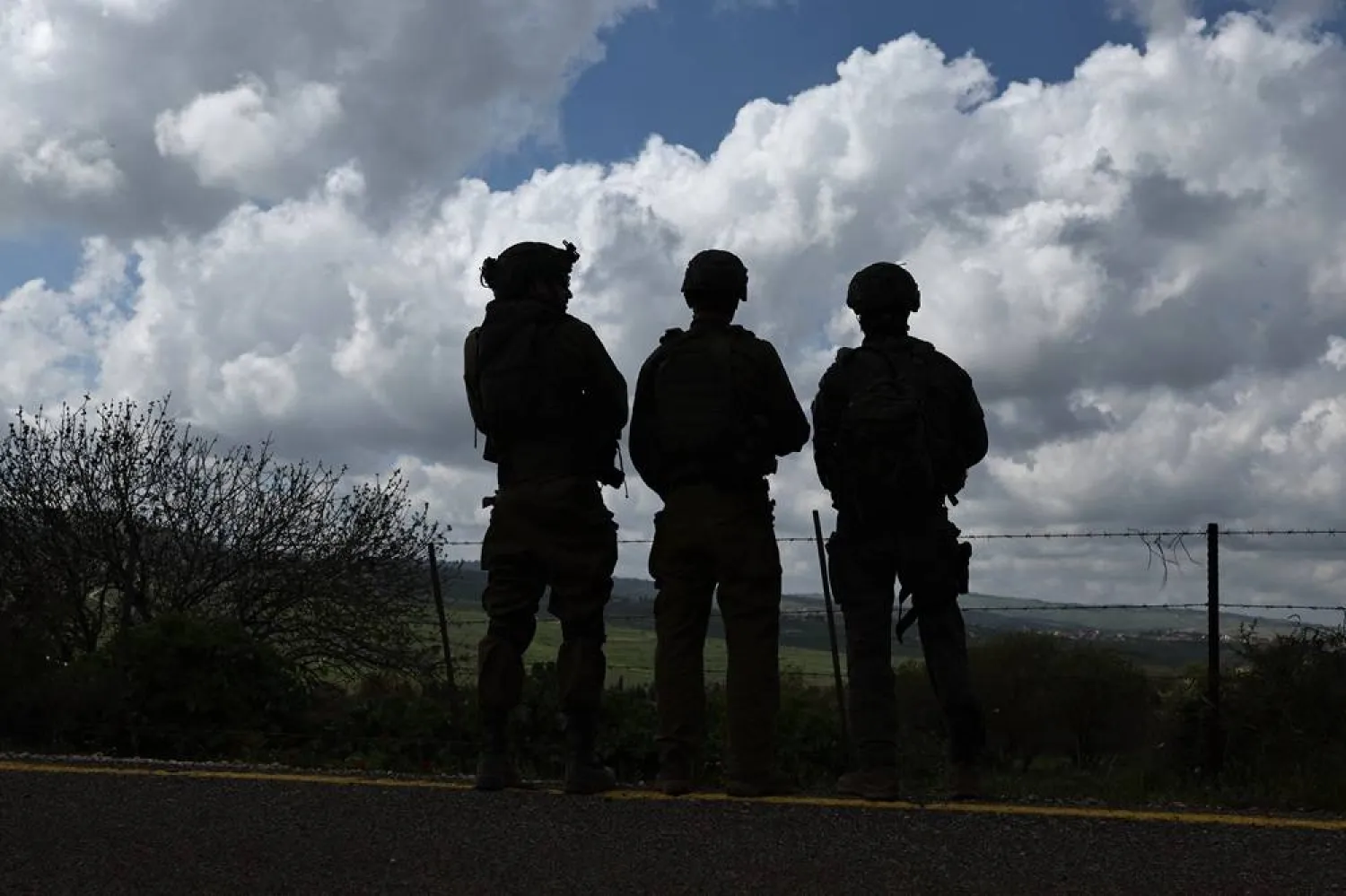
Israeli soldiers on the border with the southern Lebanon village of Bint Jbeil, seen from the Israeli side of the border on 10 April 2026, as the Israeli military continues its targeting operations in southern Lebanon. (EPA)
TT

Polls: Israelis Favor Resuming War with Iran, Netanyahu Likely to Lose Election

Israeli soldiers on the border with the southern Lebanon village of Bint Jbeil, seen from the Israeli side of the border on 10 April 2026, as the Israeli military continues its targeting operations in southern Lebanon. (EPA)

Three opinion polls conducted in Tel Aviv on Friday showed that an overwhelming majority of Israelis view the war against Iran and Lebanon’s Hezbollah as a failure for US President Donald Trump and Israeli Prime Minister Benjamin Netanyahu, while supporting a resumption of the fighting to achieve the objectives announced at the outset.

Most respondents gave low ratings to the political leadership, in contrast to their assessment of the military leadership. On potential Knesset election results, the polls suggested the war would not save Netanyahu from losing power.

The surveys were published by Israel’s public broadcaster Kan 11 and Channel 12, while the third was jointly conducted by Maariv and the Walla news website.

In the Maariv and Walla poll, 46% said the United States and Israel had not won the war, compared with 22% who said they had, while 32% said it was too early to judge.

In the Kan 11 poll, 58% of Israelis said the United States and Israel had not won, while only 25% said they had.

Some 56% of respondents said Tel Aviv should have continued the war, while only about a quarter said the ceasefire had been the right step for Israel.

In the Channel 12 poll, only 30% said Israel and the United States had won, while 19% said Iran had won. About 40% said neither side had prevailed, and 11% said they did not know.

Asked whether they supported a ceasefire with Iran, 53% said they opposed it, compared with 30% who supported it.

Among those intending to vote for the governing coalition, 57% opposed the ceasefire and 25% supported it. Among opposition voters, 62% opposed it and 26% supported it.

Resumption of the war

Asked whether the conflict with Iran would resume, most Israelis said they believed it would, according to the Channel 12 poll.

Some 45% said the war would resume within two weeks after the ceasefire ends, while 26% said it would resume within a few months to a year.

Seven percent said it would resume after more than a year, while only 6% said it would not resume, and 16% said they did not know.

In the same poll, respondents were asked whether Israel should continue the war in Lebanon. An overwhelming majority, about 79%, said it should, while 13% said it should not.

Performance assessment

In the Maariv and Walla poll, respondents were asked about the US president’s performance in the war. Some 52% said they were satisfied, while 43% said they were not.

According to the Kan 11 poll, Israeli military chief Eyal Zamir was seen as having managed the war well, while the prime minister and his defense minister, Israel Katz, were not.

Half of the respondents said Netanyahu had not managed the war well, compared with 45% who said he had. Katz also received a low rating: 52% said his performance was poor, and 37% said it was good.

By contrast, 69% said Zamir had managed the war against Iran well, while 23% disagreed.

David Barnea, head of the Mossad, was rated positively by 57%, while 18% said he had not managed the war well.

In the Maariv poll, 46% said they were satisfied with Netanyahu, while 49% said they were not. Some 71% said they were satisfied with Zamir, 40% with Katz, and 29% with Finance Minister Bezalel Smotrich.

Israeli Air Force commander Tomer Bar received the highest rating, with 77% expressing support, while only 14% said they were dissatisfied.

Election outlook

In the Channel 12 poll, respondents were asked who was best suited to serve as prime minister. The results showed Netanyahu still ahead of all rivals, though former military chief Gadi Eisenkot was narrowing the gap. In a direct contest, Netanyahu led 39% to 35%.

However, if elections were held today, all three polls indicated Netanyahu would lose power. The ruling coalition would fall from its current 68 seats to 49-51, while the opposition would win 59-61 seats, including Arab parties projected to secure 10.


US Fires on and Disables 2 More Iranian Tankers as Tensions Rise in Strait of Hormuz

Vessels in the Strait of Hormuz, Musandam, Oman, May 8, 2026. (Reuters)
TT

US Fires on and Disables 2 More Iranian Tankers as Tensions Rise in Strait of Hormuz

Vessels in the Strait of Hormuz, Musandam, Oman, May 8, 2026. (Reuters)

US forces fired on and disabled two Iranian oil tankers on Friday after exchanging fire with Iranian forces in the Strait of Hormuz overnight. The United Arab Emirates, meanwhile, reported another Iranian missile and drone attack. 

The attacks cast more doubt on a tenuous month-old ceasefire that the United States has insisted is still in effect. Washington is awaiting an Iranian response to its latest proposal for a deal to end the war, reopen the strait and roll back Tehran’s disputed nuclear program. 

US Secretary of State Marco Rubio said he hopes to receive “a serious offer” from Iran later Friday. 

The US military said Friday that its forces had disabled two Iranian tankers that were trying to breach an American blockade of Iran’s ports. Hours earlier, the military said it thwarted attacks on three Navy ships and struck Iranian military facilities in the strait. 

Iran has mostly blocked the critical waterway for global energy since the US and Israel launched the war on Feb. 28, causing a global spike in fuel prices and rattling world markets. The US has imposed its own blockade of Iran's ports. 

The UAE’s Defense Ministry meanwhile said three people were wounded after air defenses engaged two ballistic missiles and three drones launched by Iran. It was not clear if all were successfully intercepted. 

US says it responded to an attack in the strait 

The US military posted video of the two Iranian tankers as their smokestacks were struck by an American fighter jet on Friday. Earlier in the week, an American military jet shot out the rudder of a tanker the US military said was attempting to breach its blockade. 

Late Thursday, the US military said it thwarted Iranian attacks on three Navy ships in the Strait of Hormuz and struck Iranian military facilities in response. It said no American ships were hit. 

“They threaten Americans, they are going to be blown up,” Rubio told reporters Friday. 

Iran's Foreign Ministry condemned what it called “hostile” US military action, saying it violated the ceasefire. “Every time a diplomatic solution is on the table, the U.S. opts for a reckless military adventure,” Iranian Foreign Minister Abbas Araghchi posted on X. 

A US strike overnight killed at least one sailor and injured 10 others aboard a cargo vessel that caught fire, a news agency affiliated with Iran's judiciary reported. It was not clear if the ship was one of the two tankers the US acknowledged striking. 

US President Donald Trump has insisted the ceasefire is holding. He also has reiterated threats to resume full-scale bombing if Iran doesn’t accept an agreement to reopen the strait and roll back its nuclear program. 

Pakistani Prime Minister Shehbaz Sharif said his country has been in contact with the US and Iran “day and night” in an effort to extend the ceasefire and reach a peace deal. 

Images show apparent oil slick off Iranian terminal  

Satellite images reviewed by The Associated Press show what appears to be an oil slick in the Gulf emanating from the western side of Kharg Island, Iran’s main crude export terminal. 

The images taken Wednesday show the slick covering roughly 95 square kilometers (36 square miles). Windward AI, a maritime intelligence firm, said it first detected the spill in satellite images taken Tuesday and the slick was spreading southwest at a rate of about 2 kilometers (1.2 miles) an hour. 

“If the slick continues drifting southward, there could also be risks to ecologically sensitive and protected marine areas in the Gulf,” said Nina Noelle, an international crisis operations expert with Greenpeace Germany. 

The Pentagon declined to comment on whether the US military was tracking the spill or whether there had been recent strikes on the Iranian island. Based on the imagery taken earlier this week, the spill occurred before the most recent round of US strikes. 

Rubio says 'unacceptable' for an Iranian agency to control strait  

Rubio said Friday that it's “unacceptable” for Iran to have a government agency that vets and taxes ships seeking passage through the strait. 

Lloyd’s List Intelligence, a shipping data company, reported Thursday that Iran has created such an agency. 

The Iranian effort to formalize control over the channel raised new concerns about international shipping, with hundreds of commercial vessels bottled up in the Gulf and unable to reach the open sea. 

“Is the world going to accept that Iran now controls an international waterway?” Rubio said. “What is the world prepared to do about it?” 

Iran has effectively closed the strait, a vital waterway for the shipment of oil, gas, fertilizer and other petroleum products, while the US is blockading Iranian ports. 

A Chinese-crewed oil tanker was attacked near the strait. China has continued to import oil from Iran despite the effective closure of the waterway. 

China's Foreign Ministry expressed concern, saying the tanker was registered in the Marshall Islands with Chinese crew on board. There were no casualties reported. 

An oil tanker that passed through the Strait of Hormuz in mid-April arrived off South Korea’s coast on Friday with 1 million barrels of crude. South Korea, which last year imported more than 60% of its crude through the strait, has capped prices of gasoline and other petroleum products. 


Iran Says Redirects US-sanctioned Oil Tanker to Its Shores

FILE PHOTO: An aerial view of the Iranian shores and the island of Qeshm in the strait of Hormuz, December 10, 2023. REUTERS/Stringer/File Photo
TT

Iran Says Redirects US-sanctioned Oil Tanker to Its Shores

FILE PHOTO: An aerial view of the Iranian shores and the island of Qeshm in the strait of Hormuz, December 10, 2023. REUTERS/Stringer/File Photo

Iran said on Friday it redirected a US-sanctioned oil tanker carrying Iranian oil back to its shores, though it was unclear from its statement why it would have returned it, reported AFP.

"The Islamic Republic of Iran's navy, through a specially planned operation in the Sea of Oman, seized the offending tanker Ocean Koi," the army said in a statement carried by state television, adding that the oil belonged to Iran.

It said the ship was redirected to Iran's southern shores after it sought "to damage and disrupt Iran's oil exports," without elaborating.


Rubio Urges Europeans to Share the Iran Burden

Italy's Prime Minister Giorgia Meloni welcomes US Secretary of State Marco Rubio at Palazzo Chigi in Rome on May 8, 2026. (AFP)
TT

Rubio Urges Europeans to Share the Iran Burden

Italy's Prime Minister Giorgia Meloni welcomes US Secretary of State Marco Rubio at Palazzo Chigi in Rome on May 8, 2026. (AFP)

US Secretary of State Marco Rubio concluded a two-day visit to Rome on Friday, where he sought to ease tensions with Pope Leo and urged Europeans to help secure the Strait of Hormuz. 

The task was not easy, given President Donald Trump's recent sharp criticism of both the Catholic leader and Italy's far-right Prime Minister Giorgia Meloni, a close ally of the US leader. 

"The world has to start asking itself, what is it willing to do if Iran tries to normalize a control of an international waterway? I think that's unacceptable," he told reporters after meeting Meloni. 

The appeal was aimed at Italy as well as other European countries, which Trump criticized for not helping the United States to protect the Strait. 

Tehran seized control of the narrow chokepoint to the Gulf, a major transport route for oil, gas and fertilizer, after US and Israeli forces attacked Iran on February 28, triggering the Middle East war. 

After saying 5,000 troops will be withdrawn from Germany, Trump has threatened to pull US troops from Italy and Spain due to their refusal to get involved in the conflict, and has questioned his country's membership in NATO. 

"If one of the main reasons why the US is in NATO is the ability to have forces deployed in Europe that we could project to other contingencies, and now that's no longer the case, at least when it comes to some NATO members, that's a problem, and it has to be examined," Rubio said. 

He added, however that the US president had not yet decided how to reprimand these countries. 

- 'Frank' talks - 

Meloni and Rubio met at her Palazzo Chigi office for almost 90 minutes, after talks with his counterpart, Foreign Minister Antonio Tajani. 

Earlier this week, Meloni said pulling US troops out of Italy was "a decision that does not depend on me, and one that I personally do not agree with". 

Her office said the talks with Rubio were "broad and constructive", but also "frank", covering bilateral relations, the Middle East, Libya and Ukraine. 

"It was a frank dialogue between allies defending their own national interests, but both recognizing the value of Western unity," the statement said. 

In an interview with an Italian newspaper last month, Trump said he was "shocked" at Meloni's attitude, saying: "I thought she had courage, but I was wrong." 

- 'Share points of view' - 

Rubio, a devout Catholic, said on Friday that his meeting the previous day with Pope Leo XIV, the first US pope, was "very good". 

Trump last month accused the head of the world's 1.4 billion Catholics of being "weak on crime and terrible for foreign policy" after Leo made critical comments about the Middle East war. 

Rubio said they discussed topics of common interest, including religious freedom, the threat posed by Iran, and the role of the Catholic Church in delivering American humanitarian aid to Cuba. 

"It's important to share our points of view and an explanation and an understanding of where we're coming from. And I thought it was very positive," he said. 

Rubio, who also met with Vatican Secretary of State Pietro Parolin, said: "I updated them on the situation with Iran, expressed our point of view about why this is important, and the danger that Iran poses to the world." 

The discussions between the pope, Parolin and Rubio addressed "the need to work tirelessly for peace", according to the Vatican. 

Asked whether Trump would call Leo, Rubio said: "Maybe. I don't know, I mean, it could happen." 

At the Italian foreign ministry, Tajani and other officials presented Rubio with documents tracing the US diplomat's Italian origins. 

"It's a true honor and a very special moment to receive all of this information," Rubio said, adding that he was going to learn Italian. 

The Cuban-American, who speaks fluent Spanish, said: "The next time I'm back... I'll give a speech 'in Italiano'."