Trump Says Iranian 'Fast-attack' Ships that Come Close to US Blockade Will Be Eliminated

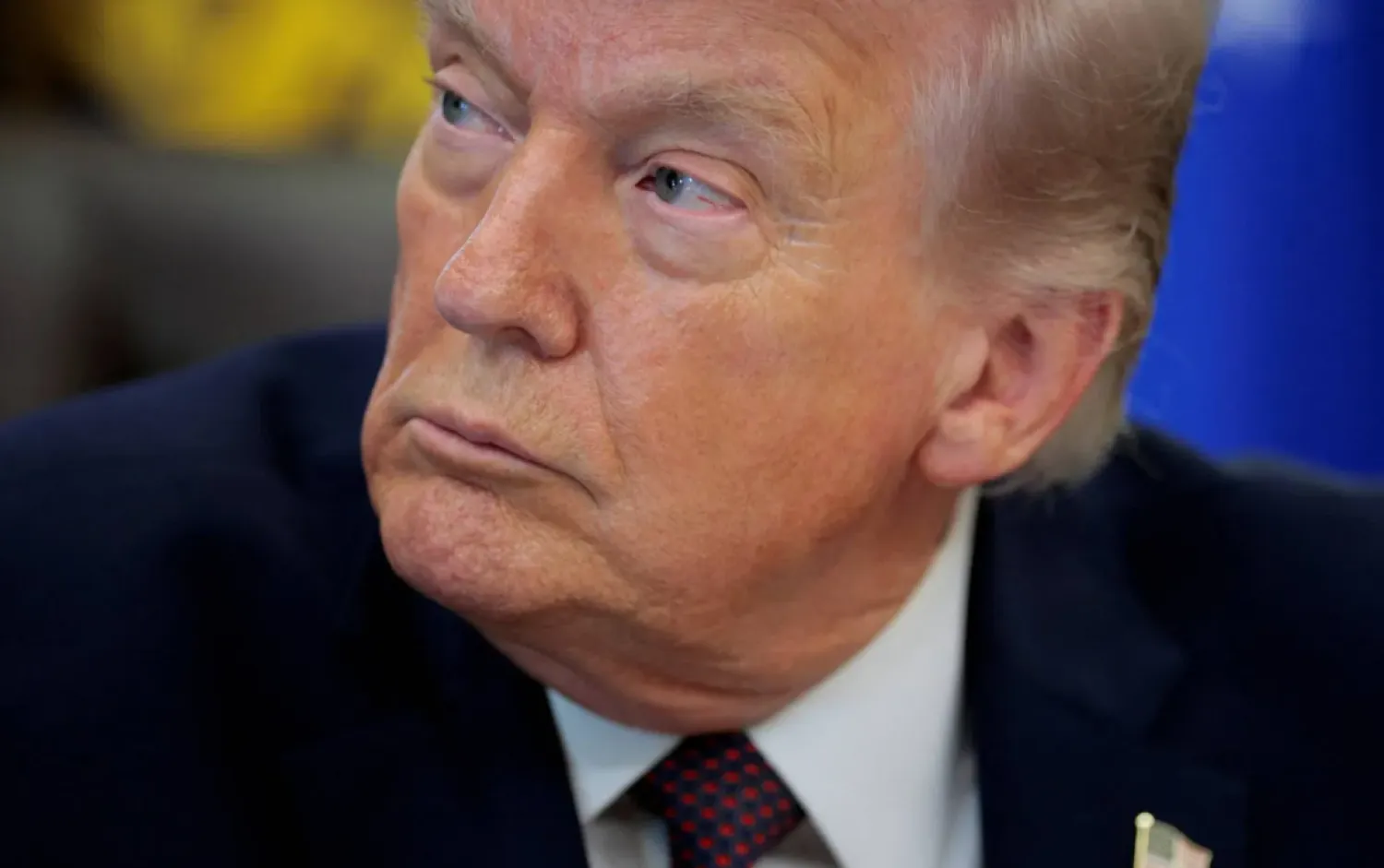
US President Donald Trump attends the signing ceremony for an executive order on mail ballots, in the Oval Office of the White House in Washington, DC, March 31, 2026. (Reuters)
TT

Trump Says Iranian 'Fast-attack' Ships that Come Close to US Blockade Will Be Eliminated

US President Donald Trump attends the signing ceremony for an executive order on mail ballots, in the Oval Office of the White House in Washington, DC, March 31, 2026. (Reuters)

US President Donald Trump warned on Monday that any Iranian "fast-attack" ships that go near a US maritime blockade on Iran would be eliminated.

"What we have not hit are their small number of, what they call, 'fast attack ships,' because we did not consider them much of a threat.

Warning: If any of these ships come anywhere close to our BLOCKADE, they will be immediately ELIMINATED, using the same system of kill that we use against the drug dealers on boats at Sea. It is quick and brutal," Trump wrote in a post on Truth Social.


Hegseth Announces 'Major' Defense Partnership with Indonesia

Defense Secretary Pete Hegseth, right, welcomes Minister of Defense for Indonesia Sjafrie Sjamsoeddin to the Pentagon, Monday, April 13, 2026 in Washington. (AP Photo/Kevin Wolf)
TT

Hegseth Announces 'Major' Defense Partnership with Indonesia

Defense Secretary Pete Hegseth, right, welcomes Minister of Defense for Indonesia Sjafrie Sjamsoeddin to the Pentagon, Monday, April 13, 2026 in Washington. (AP Photo/Kevin Wolf)

US Defense Secretary Pete Hegseth announced Monday a "major" defense partnership with Indonesia following a meeting with the Southeast Asian nation's defense minister at the Pentagon.

"We are elevating our relationship to a Major Defense Cooperation Partnership, in recognition of the strength and potential of our bilateral defense ties," Hegseth said in a statement on X.

The partnership covers "military modernization and capacity building,training and professional military education" and "exercises and operational cooperation," according to a joint statement.

"Both nations reaffirm their shared commitment to maintaining peace and stability in the Indo-Pacific," AFP quoted the statement as saying.

Jakarta said the partnership was an "opportunity to reinforce national defense capacity," but insisted that "free and active foreign policy, national interests, and full respect for state sovereignty" would be maintained.

It said that a US proposal to grant American military aircraft access over Indonesian airspace was being "carefully reviewed".

"It still requires further discussion through technical mechanisms and applicable national procedures," the Indonesian Ministry of Defense statement added.

Indonesia has the strongest military in Southeast Asia, according to the Global Firepower defense analysis site.

While Jakarta says it maintains a non-aligned diplomatic posture, last year it joined the BRICS bloc of emerging economies that includes Russia and China.

Indonesian President Prabowo Subianto met with Russian counterpart Vladimir Putin on Monday for oil talks.

But Prabowo has also signed a trade deal with US President Donald Trump and joined his so-called "Board of Peace".

The country is strategically located on the Malacca Strait -- the world's busiest chokepoint for oil and petroleum liquids, according to the US Energy Information Administration (EIA).


US Says Ball in Iran’s Court as Push Grows to End War

A billboard with a graphic design about the Strait of Hormuz on a building in Tehran, Iran, April 13, 2026. Majid Asgaripour/WANA (West Asia News Agency) via Reuters
TT

US Says Ball in Iran’s Court as Push Grows to End War

A billboard with a graphic design about the Strait of Hormuz on a building in Tehran, Iran, April 13, 2026. Majid Asgaripour/WANA (West Asia News Agency) via Reuters

The United States said "the ball is in the Iranian court" on ending the Middle East war, as diplomats accelerated efforts on Tuesday towards a new round of peace talks after weekend negotiations failed to produce a deal.

US Vice President JD Vance had left talks hosted by Pakistan on Sunday, saying he had handed Tehran the "final and best offer".

Iran has blamed Washington for making maximalist demands, but its leaders have in the last hours not dismissed efforts by world leaders to get both sides back to the negotiating table.

Crucially, a fragile two-week truce agreed last Wednesday to give time to find a lasting ceasefire remained in place, even though a US naval blockade of Iranian ports began at the Strait of Hormuz, which had been effectively closed by Tehran.

The standoff at the strait, through which one-fifth of global oil transits, failed to dampen optimism at global markets, with Asian equities rallying while oil continued a downward slide.

President Donald Trump insisted Iranian representatives had called Washington since a US delegation returned empty-handed from negotiations in Islamabad.

"I can tell you that we've been called by the other side. They'd like to make a deal. Very badly, very badly," Trump told reporters outside the Oval Office.

Diplomatic efforts were also accelerating elsewhere, with Russian Foreign Minister Sergei Lavrov landing in Beijing on Tuesday, hours after Iran's state news agency reported that he had spoken about the crisis in a phone call with his Iranian counterpart Abbas Abbas Araghchi.

Moscow has offered to hold Iran's enriched uranium safely as part of any deal.

Trump has insisted that an agreement must include stopping Iran from ever getting its hands on a nuclear weapon, having launched the war under the pretext that Tehran was developing an atomic bomb -- which it denies.

During weekend talks, the United States reportedly sought a 20-year suspension of Iran's uranium enrichment program, according to media reports on Monday.

Iran in turn proposed to suspend its nuclear activity for five years, which US officials rejected, according to The New York Times.

- 'Full efforts' underway -

Pakistan's Prime Minister Shehbaz Sharif said on Monday that "full efforts are underway" to reach an agreement to stop the fighting and that US-Iran ceasefire was "holding".

Iranian state TV reported on Monday that Tehran "will continue to talk only within the framework of international law" in a phone call to his French counterpart Emmanuel Macron.

"We have clearly announced the terms of the ceasefire and we will adhere to it," Pezeshkian said, according to IRIB.

"I really think the ball is in the Iranian court, because we put a lot on the table. We actually made very clear what our red lines were," Vance said in an interview with Fox News on Monday.

Washington has "no flexibility" on US control of Iran's enriched uranium, and a verification mechanism to ensure it does not develop a nuclear weapon in the future.

"It's one thing for the Iranians to say that they're not going to have a nuclear weapon. It's another thing for us to put in place the mechanism to ensure that's not going to happen," Vance said.

Meanwhile, Araghchi blamed the United States for the impasse in the talks. "Unfortunately, we witnessed the continued excessive demands of the American side in the negotiations, which led to the failure to achieve a result," his ministry quoted him as saying.

- Freedom of navigation -

The push for new talks came as a US naval blockade began around Iranian ports, an action announced by Trump on Sunday and slammed by Iran as a "grave violation of its sovereignty".

Iran had already closed the Strait of Hormuz to what it regards as enemy shipping, allowing only vessels serving countries it deems friendly -- such as China -- to cross.

With his blockade of Iranian ports, the US president was trying to starve Iran of funds but also pressure Beijing, the biggest buyer of Iranian oil, to lean on Tehran to reopen Hormuz, according to analysts.

In a social media post, Trump said the bulk of Iran's navy had already been destroyed during the war, but that if any of what he said were Tehran's few remaining "fast attack ships" approach the blockade "they will be immediately ELIMINATED."

Qatari Foreign Minister and Premier Sheikh Mohammed bin Abdulrahman Al Thani urged both sides to guarantee freedom of navigation and refrain from using maritime routes "as a tool for pressure," encouraging Tehran and Washington to remain in touch with mediators.

Beijing criticized the blockade, with foreign ministry spokesman Guo Jiakun emphasizing the strait's importance to trade and saying that "maintaining its security, stability, and unimpeded flow is in the common interest of the international community."

UN chief Antonio Guterres also called for freedom of navigation to be respected and pointed to the 20,000 mariners trapped in the Gulf.

US Central Command said the blockade included "vessels of all nations entering or departing Iranian ports and coastal areas, including all Iranian ports on the Arabian Gulf and Gulf of Oman."

US forces would not impede vessels transiting the strait to and from non-Iranian ports, it added.

Iran's military command issued a statement branding the blockade an act of piracy, and warned that if the security of its harbors "is threatened, no port in the Persian Gulf and the Arabian Sea will be safe".

French President Emmanuel Macron said that France and Britain would host a conference with countries prepared to join a "peaceful multinational mission" to secure the strait, but it would be "strictly defensive" and only operational once circumstances permit.


How Would a Blockade of the Strait of Hormuz Work?

Two US Navy guided-missile destroyers conduct operations in the Strait of Hormuz on Saturday (CENTCOM)
TT

How Would a Blockade of the Strait of Hormuz Work?

Two US Navy guided-missile destroyers conduct operations in the Strait of Hormuz on Saturday (CENTCOM)

Washington: Ephrat Livni

After weekend peace talks in Pakistan between the United States and Iran ended with no agreement, President Trump on Sunday said the US Navy would impose a blockade in the Strait of Hormuz, a vital shipping waterway that Iran has mostly choked off since the war began in late February.

“Effective immediately, the United States Navy, the Finest in the World, will begin the process of BLOCKADING any and all Ships trying to enter, or leave, the Strait of Hormuz,” Trump said in a post on social media. “At some point, we will reach an ‘ALL BEING ALLOWED TO GO IN, ALL BEING ALLOWED TO GO OUT’ basis.”

The statement came as traffic in the strait, through which a major portion of the world’s seaborne oil and natural gas passes, has ground to a practical halt for more than a month amid Iranian strikes on commercial vessels in the region.

While Iran has allowed some ships to pass through the waterway — possibly for a fee — it has used control over the strait, including threats that it has been mined, to disrupt the global economy and to pressure the Trump administration.

The United States Central Command, known as CENTCOM, said on Sunday that a blockade would be enforced “impartially against vessels of all nations entering or departing Iranian ports and coastal areas, including all Iranian ports on the Arabian Gulf and Gulf of Oman.”
Here’s what to know about the US plan for a blockade.

How might it be enforced?

American forces will not impede freedom of navigation for vessels transiting the strait to and from non-Iranian ports, CENTCOM said. The blockade will begin Monday at 10 am Eastern Time, it said.

Parties at war can exercise the right of “visit and search,” meaning that they can stop and inspect even private vessels in waters that are not neutral and decide whether or not they may pass, said James Kraska, a professor of international maritime law at the US Naval War College and a visiting professor at Harvard Law School.

A US blockade of the Strait of Hormuz would mean that any ship that attempts to transit the waterway would have to submit to a search if asked to do so and US forces would be able to determine whether or not to allow it to proceed, he said.

Such a blockade could inflict economic damage on Iran that would undermine its ability to keep fighting over the long term by denying it the ability to export oil and earn revenue. But it could also leave countries that rely on Iranian oil, like China, in a bind, Kraska said.

But there still may be mines in the strait and Iran maintains the ability to fire missiles and drones, Kraska noted.

What would a blockade mean for Iran?

A US blockade on Iranian ports would quite likely mean that Iranian vessels, which have been able to transit the Strait of Hormuz amid the war, would no longer be able to do so and that other ships that have been stuck at port or at sea could begin to move supplies in and out through this route.

This would be a reversal of the US approach so far. Even as the United States has been attacking Iran, American officials have taken steps that enabled Iranian oil to flow to limit pressure on energy prices around the world.

Last month, Scott Bessent, the Treasury secretary, said that the United States was allowing Iranian oil tankers to traverse the strait to keep up global supplies. The United States also temporarily lifted sanctions on Iranian oil at sea, allowing it to be sold to most countries, including the United States, for a month.

Some economic analysts have called on the United States to block the flow of Iranian oil as a means to end its effective control of the strait.

Robin J. Brooks, a senior fellow at the Brookings Institution, has argued that Iran’s dependence on oil exports means it will not be able to afford to keep attacking ships once its own economy takes a hit. On Sunday, he said in a post on social media that a blockade “collapses Iran’s business model.”

But Iranian officials, who have been keenly aware of the pressure on Trump as a result of spikes in energy prices, appear unconcerned. In a post on social media on Sunday, the speaker of Iran’s Parliament and the country’s top negotiator, Mohammad Bagher Ghalibaf, wrote: “Enjoy the current pump figures. With the so-called ‘blockade’, Soon you’ll be nostalgic for $4–$5 gas.”

What would the consequences be for the world?

Normally about 150 vessels transit through the Strait of Hormuz daily. In March, a little more than 150 passed through the waterway all month, according to data from S&P Global Market Intelligence. Those that did transit had made arrangements with the Iranian authorities and may have paid a toll or fee for passage, shipping intelligence firms have reported.

The halt in traffic has led to a spike in oil prices. If an American blockade on ships to and from Iran leads to freedom of navigation for vessels transiting the waterway with oil from Arabian Gulf countries, it could mean lower prices, though how quickly that could happen is not clear.
Trump said on Sunday that “any Iranian who fires at us, or at peaceful vessels, will be BLOWN TO HELL!”

But much remains unclear. Whether vessel operators will run the risk of transiting the strait at this point could depend on how Iran responds to the blockade. And whether the United States will be able to control vessel passage is also an open question.

After CENTCOM announced that it would not impede freedom of navigation for vessels transiting the Strait of Hormuz to and from non-Iranian ports, vessel trackers expressed doubts about enforcement, pointing to tricks ships have used, like changing their identification data, to evade notice.

“This will get tricky as a number of Iran-linked tankers make bogus port calls in the region with the help of AIS spoofing,” the company Tanker Trackers posted, referring to Automatic Identification Systems. “Good luck with that, CENTCOM.”

A retired Navy admiral, James Stavridis, welcomed the blockade announcement a post on social media on Sunday. “In recent days,” he wrote, “the ONLY people benefiting from Gulf transit were the Iranians,” He said that the United States and its allies “are no worse off than we were after the Iranians started holding the Strait hostage.”

The New York Times