IEA Chief Says Europe Has 'Maybe 6 Weeks or So' of Jet Fuel Left

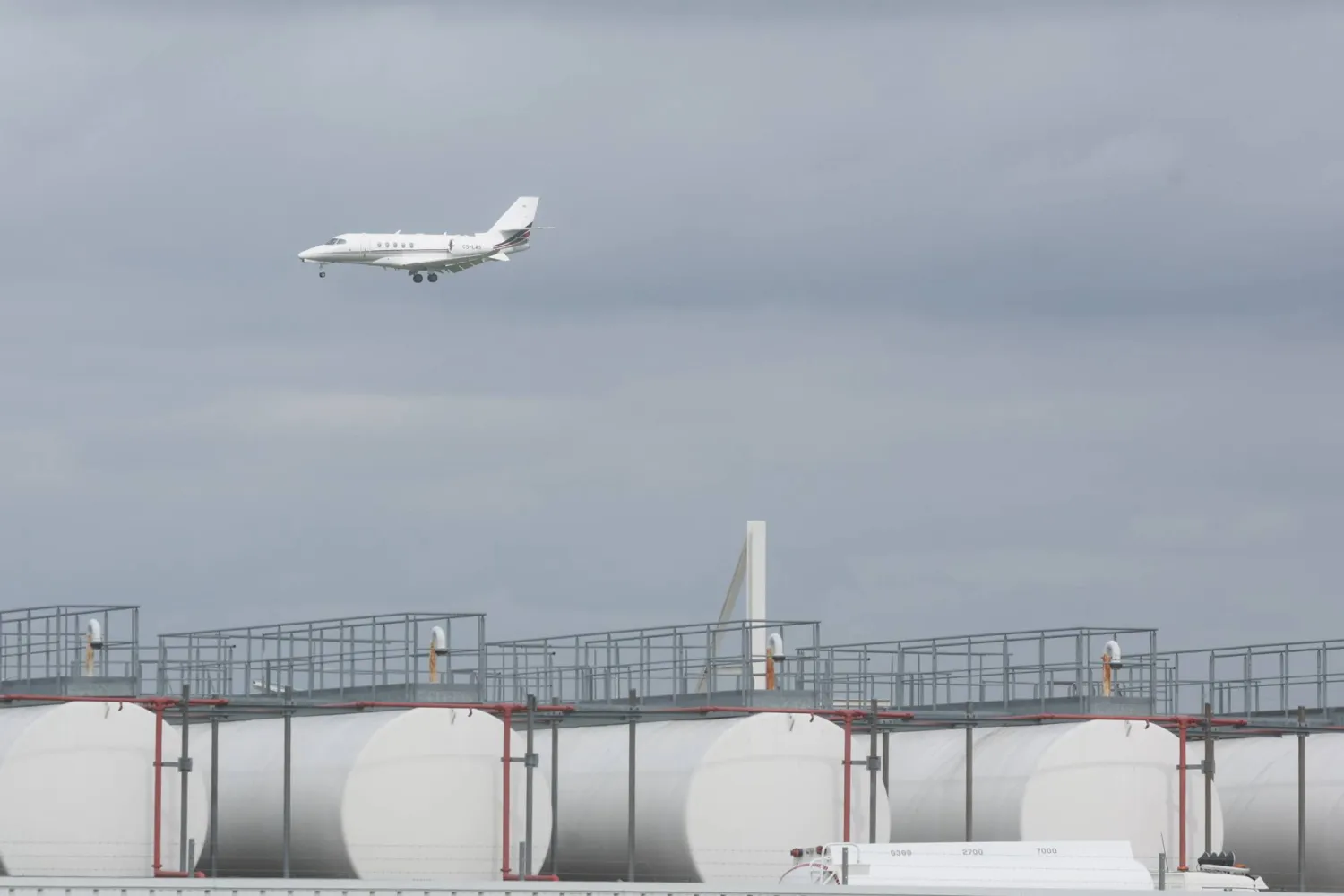
 Aircraft pass behind kerosene storage facilities at Liege Airport in Liege, Belgium, 16 April 2026.  EPA/Olivier Hoslet
Aircraft pass behind kerosene storage facilities at Liege Airport in Liege, Belgium, 16 April 2026. EPA/Olivier Hoslet
TT

IEA Chief Says Europe Has 'Maybe 6 Weeks or So' of Jet Fuel Left

 Aircraft pass behind kerosene storage facilities at Liege Airport in Liege, Belgium, 16 April 2026.  EPA/Olivier Hoslet
Aircraft pass behind kerosene storage facilities at Liege Airport in Liege, Belgium, 16 April 2026. EPA/Olivier Hoslet

Europe has “maybe six weeks or so (of) jet fuel left,” the head of the International Energy Agency said Thursday in a wide-ranging Associated Press interview, warning of possible flight cancellations “soon” if oil supplies remain blocked by the Iran war.
IEA Executive Director Fatih Birol painted a sobering picture of the global repercussions of what he called “the largest energy crisis we have ever faced,” stemming from the pinch-off of oil, gas and other vital supplies through the Strait of Hormuz.
“In the past there was a group called ‘Dire Straits.’ It’s a dire strait now, and it is going to have major implications for the global economy. And the longer it goes, the worse it will be for the economic growth and inflation around the world,” he said.
The impact will be “higher petrol (gasoline) prices, higher gas prices, high electricity prices,” Birol told the AP, speaking in his Paris office looking out over the Eiffel Tower.
No country is immune Economic pain will be felt unevenly and "the countries who will suffer the most will not be those whose voice are heard a lot. It will be mainly the developing countries. Poorer countries in Asia, in Africa and in Latin America,” said the Turkish economist and energy expert who has led the IEA since 2015.
But without a settlement of the Iran war that permanently reopens the Strait of Hormuz, “Everybody is going to suffer,” he added.
“Some countries may be richer than the others. Some countries may have more energy than the others, but no country, no country is immune to this crisis," he said.
Without a reopening of the waterway, some oil products may dry up, he warned.
In Europe, “I can tell you soon we will hear the news that some of the flights from city A to city B might be canceled as a result of lack of jet fuel," he said.
Hormuz tolls a risk for the future Birol spoke out against the so-called “toll booth” system that Iran has applied to some ships, letting them travel through the strait for a fee. He said allowing that to become more permanent would run the risk of setting a precedent that could then be applied to other waterways, including the vital Malacca Strait in Asia.
“If we change it once, it may be difficult to get it back,” he said. “It will be difficult to have a toll system here, applied here, but not there.”
“I would like to see that the oil flows unconditionally from the point A to point B,” he said.
Even with a peace deal, strikes on energy facilities means it could be many months before pre-war production levels are restored, he said.
“Over 80 key assets in the region have been damaged. And out of these 80, more than one third are severely or very severely damaged,” he said.
“It will be extremely optimistic to believe that it will very quick," Birol said. “It will take gradually, gradually, up to two years to come back where we were before the war.”



Trump Warns 'Won't be Anything Left' of Iran Unless it Agrees to Deal

US President Donald Trump waves after stepping off Marine One on the South Lawn of the White House in Washington, DC, on May 15, 2026. (Photo by Alex WROBLEWSKI / AFP)
TT

Trump Warns 'Won't be Anything Left' of Iran Unless it Agrees to Deal

US President Donald Trump waves after stepping off Marine One on the South Lawn of the White House in Washington, DC, on May 15, 2026. (Photo by Alex WROBLEWSKI / AFP)

President Donald Trump on Sunday warned Iran "there won't be anything left of them," if Teheran does not quickly agree to a peace deal with the United States.

"For Iran, the Clock is Ticking, and they better get moving, FAST, or there won't be anything left of them," Trump wrote on his Truth Social platform.

"TIME IS OF THE ESSENCE!"

Trump is expected to hold a ‌Situation ‌Room ​meeting ‌on ⁠Tuesday ​with his top ⁠national security advisers to ⁠discuss ‌the options ‌for military ​action ‌regarding ‌Iran, Axios reported on ‌Sunday, citing two US officials.

Iranian media that the US had failed to make any concrete concessions in its latest response to Iran's proposed agenda for negotiations to end the war.


US Presents Five-point List that Iran Describes as 'No Tangible Concessions'

A mural depicting the late leader of the Iranian Revolution Ruhollah Khomeini is reflected in a bookshop window display in Tehran, Iran, May 12, 2026. Majid Asgaripour/WANA (West Asia News Agency) via REUTERS
TT

US Presents Five-point List that Iran Describes as 'No Tangible Concessions'

A mural depicting the late leader of the Iranian Revolution Ruhollah Khomeini is reflected in a bookshop window display in Tehran, Iran, May 12, 2026. Majid Asgaripour/WANA (West Asia News Agency) via REUTERS

Iranian media said Sunday that the United States had failed to make any concrete concessions in its latest response to Iran's proposed agenda for negotiations to end the war.

The Fars news agency said Washington had presented a five-point list which included a demand for Iran to keep only one nuclear site in operation and transfer its stockpile of highly enriched uranium to the United States.

The US also refused to release "even 25 percent" of Iran's frozen assets abroad or pay any reparations for the damage inflicted on Iran during the war which broke out on February 28, according to Fars.

The report added that the US had conditioned the cessation of hostilities on all fronts on the start of negotiations.

The Mehr news agency, meanwhile, said: "The United States, offering no tangible concessions, wants to obtain concessions that it failed to obtain during the war, which will lead to an impasse in the negotiations."

In its proposal, Iran had called for an end of the war on all fronts including Israel's campaign in Lebanon, as well as a halt to the US naval blockade on Iranian ports in place since April 13.

It also called for lifting all of the US sanctions and the release of Iranian assets frozen abroad under longstanding US sanctions, according to the Iranian foreign ministry in a press conference last week.

Fars said the Iranian proposal had emphasized that Tehran would continue to manage the strategic Strait of Hormuz, a vital energy conduit which it has largely kept closed since the start of the war.

On Sunday, Iranian armed forces spokesman Abolfazl Shekarchi warned US President Donald Trump against restarting attacks on Iran.

"The desperate American president should know that if his threats are carried out and Islamic Iran is attacked again, his country's resources and military will be confronted with unprecedented, offensive, surprising and tumultuous scenarios," he said, according to state television.

Similarly, deputy speaker of parliament Hamidreza Hajibabaei warned against attacking Iranian oil infrastructure.

"If Iranian oil is harmed, Iran will take measures that will prevent the United States and the world from accessing oil from the region for an extended period," he said, according to the news agency ISNA.


Iran Chief Negotiator Ghalibaf Appointed to Oversee Ties with China

FILED - 12 October 2024, Lebanon, Beirut: FILE PHOTO - Iranian Parliament Speaker Mohammad Bagher Ghalibaf speaks during a press conference in Beirut. Photo: Hassan Ibrahim/Lebanese Parliament/dpa -
TT

Iran Chief Negotiator Ghalibaf Appointed to Oversee Ties with China

FILED - 12 October 2024, Lebanon, Beirut: FILE PHOTO - Iranian Parliament Speaker Mohammad Bagher Ghalibaf speaks during a press conference in Beirut. Photo: Hassan Ibrahim/Lebanese Parliament/dpa -

Iran's Parliament Speaker Mohammad Bagher Ghalibaf, who recently emerged as a chief negotiator in talks with the United States, has been appointed to oversee relations with China, Iranian media reported on Sunday.

"Mohammad Bagher Ghalibaf has recently been appointed as a special representative of the Islamic republic of Iran for China affairs," Tasnim news agency reported, citing "informed sources,” with other media carrying similar reports.

It was not immediately clear who appointed Ghalibaf to the role, but Tasnim said he would "coordinate various sectors of relations between Iran and China.”

Pakistan's Interior Minister arrived in Tehran on Saturday "to facilitate" the peace talks between Iran and the US that have stalled despite a fragile ceasefire, Iranian media reported.

Islamabad has been actively mediating in the peace talks and last month hosted a high stakes meeting between delegations from both sides.

A ceasefire that began on April 8 has largely halted the fighting that erupted when US and Israeli forces attacked Iran on February 28.

Iranian Foreign Minister Abbas Araghchi said on Friday that Tehran had received messages from Washington indicating that President Donald Trump's administration was willing to continue negotiations.