


Iran Says It Wants a 'Comprehensive Agreement' with US

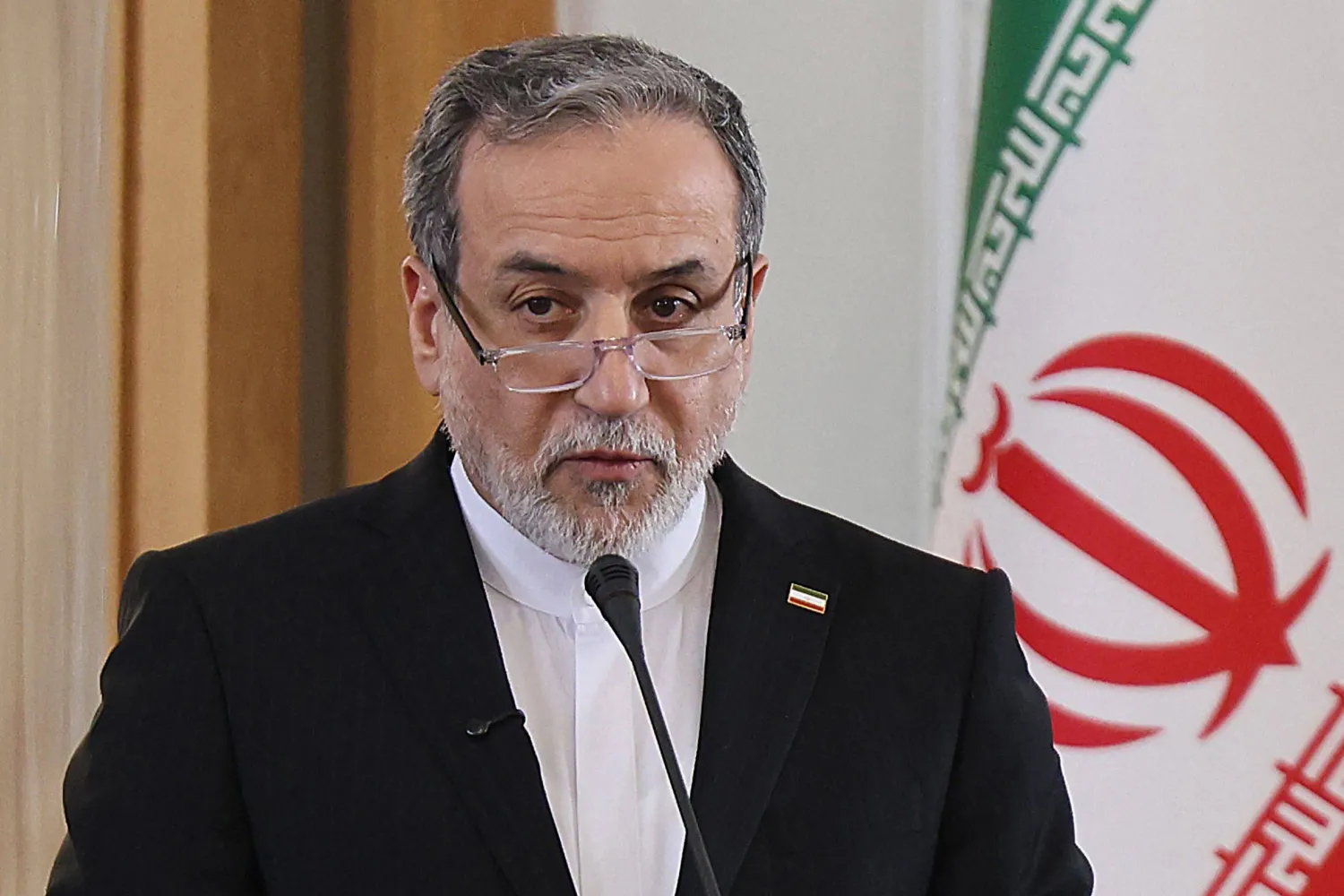
(FILES) Iranian Foreign Minister Abbas Araghchi attends a joint press conference with his Iraqi counterpart Fuad Hussein in Tehran on January 18, 2026. (Photo by ATTA KENARE / AFP)
TT

Iran Says It Wants a 'Comprehensive Agreement' with US

(FILES) Iranian Foreign Minister Abbas Araghchi attends a joint press conference with his Iraqi counterpart Fuad Hussein in Tehran on January 18, 2026. (Photo by ATTA KENARE / AFP)

Iran will only accept "a fair and comprehensive agreement" in its negotiations with the US on ending the war in the Middle East, its foreign minister said on Wednesday, as President Donald Trump cited "great progress" in the process. 

"We will do our best to protect our legitimate rights and interests in the negotiations," Foreign Minister Abbas Araghchi said in Beijing after a meeting with China's top diplomat Wang Yi, Iranian media reported. "We only accept a fair and comprehensive agreement." 

He did not directly address Trump's offer of a pause in the US operation to escort ships through the Strait of Hormuz, offered earlier as an incentive to help reach an agreement between the two sides. 

The strait has been virtually shut since the conflict began on February ‌28 with air ‌attacks on Iran by the US and Israel, blocking about 20% of ‌world ⁠oil supplies and ⁠igniting a global energy crisis. 

"We have mutually agreed that, while the Blockade will remain in full force and effect, Project Freedom ... will be paused for a short period of time to see whether or not the Agreement can be finalized and signed," Trump wrote on social media. 

Following Trump's post, Brent crude oil futures fell 1.2%, to $108.60 a barrel, after dropping 4% in the previous session. US West Texas Intermediate futures eased 1.2% to $101.06 a barrel, after settling down 3.9% the day before. 

The White House did not immediately reply ⁠to a request for comment on what progress had been made, or ‌how long the pause would last. 

US Secretary of State Marco ‌Rubio and other senior administration officials said earlier on Tuesday that Iran could not be allowed to control traffic ‌through the strait. 

Iran has effectively sealed off the strait by threatening to deploy mines, drones, missiles ‌and fast-attack craft. The United States has countered by blockading Iranian ports and mounting escorted transits for commercial vessels. The US military said on Monday it had destroyed several small Iranian boats, as well as cruise missiles and drones. 

However, a fragile ceasefire agreed four weeks ago is holding. 

TRUMP SAYS IRAN WANTS PEACE 

The war has killed thousands ‌as it has spread beyond Iran to Lebanon and the Gulf, and roiled the global economy. The head of the International Monetary Fund said on ⁠Tuesday that even ⁠if the conflict ended immediately, it would take three to four months to deal with the consequences. 

Trump told reporters in the Oval Office that Iran's military had been reduced to firing "peashooters" and Tehran wanted peace, despite public sabre-rattling. 

"Great Progress has been made toward a Complete and Final Agreement with Representatives of Iran," he said on his Truth Social platform. 

The conflict is also pressuring Trump's administration ahead of crucial midterm elections in November, as rising gas prices hit voters' pockets. 

Trump has said the US-Israeli attacks aimed to eliminate what he called imminent threats from Iran, citing its nuclear and ballistic missile programs and its support for the Hamas and Hezbollah militias. 

Iran has called the attacks a violation of its sovereignty and said that it has the right to develop nuclear technology for peaceful purposes, including enrichment, as a party to the Nuclear Non-Proliferation Treaty. 

Diplomatic efforts to end the conflict have yet to yield results. US and Iranian officials have held one round of face-to-face peace talks, but attempts to set up further meetings have failed. 


Iran's Top Negotiator: No US Deal Without Tangible Results

Iran's Parliament Speaker Mohammad Bagher Qalibaf, right, shakes hands with Pakistan's Army Chief Field Marshal Gen. Asim Munir during their meeting in Tehran, Iran, Sunday, May 23, 2026. (Hamed Malekpour/ICANA via AP)
TT

Iran's Top Negotiator: No US Deal Without Tangible Results

Iran's Parliament Speaker Mohammad Bagher Qalibaf, right, shakes hands with Pakistan's Army Chief Field Marshal Gen. Asim Munir during their meeting in Tehran, Iran, Sunday, May 23, 2026. (Hamed Malekpour/ICANA via AP)

Iran will not accept any agreement ending its conflict with the US unless there is certainty that the Iranian people's rights ⁠are secured, top negotiator ⁠Mohammad Baqer Qalibaf said on Sunday according to state media.

"There ⁠is no trust in the enemy's words and promises. Our only criterion is to achieve tangible results before we fulfill our commitments in ⁠return," ⁠he added after taking an oath as the re-elected speaker of parliament alongside its presidium.

Hours earlier, US President Donald Trump said he had secured guarantees from Iran that it would not develop nuclear weapons.

Trump has said his priorities for any deal include stopping Iran from any nuclear weapon development and re-opening the blockaded Strait of Hormuz.


Ukraine Says it Received New IRIS-T Launcher from Germany

FILED - 26 May 2023, Baden-Wuerttemberg, Ueberlingen: An Iris-T missile defense system stands on the premises of Diehl Defense in Ueberlingen. Photo: Christoph Schmidt/dpa
TT

Ukraine Says it Received New IRIS-T Launcher from Germany

FILED - 26 May 2023, Baden-Wuerttemberg, Ueberlingen: An Iris-T missile defense system stands on the premises of Diehl Defense in Ueberlingen. Photo: Christoph Schmidt/dpa

Ukraine received a new Iris-T air defense launcher from Germany on Saturday, President Volodymyr ⁠Zelenskiy said on ⁠Sunday, asking for more ⁠provision of air defense ammunition.

"We also need missiles for air defense systems to have sufficient capabilities ⁠to ⁠repel Russian attacks," Zelenskiy said on Telegram.

On Sunday, Ukraine's military said it had struck Russia's Saratov oil refinery overnight, causing ⁠a large fire ⁠to break out at ⁠the facility.

The military said in a post on Telegram that it had also hit the ⁠Lazarevo ⁠oil pumping station in Russia's Kirov region.


Japan Rejects 'New Militarism,’ Accuses China of Rapidly Arming

Shinjiro Koizumi, Japan's defense minister, speaks at the Shangri-La Dialogue security summit in Singapore, May 31, 2026. REUTERS/Caroline Chia
TT

Japan Rejects 'New Militarism,’ Accuses China of Rapidly Arming

Shinjiro Koizumi, Japan's defense minister, speaks at the Shangri-La Dialogue security summit in Singapore, May 31, 2026. REUTERS/Caroline Chia

Japan's Defense Minister Shinjiro Koizumi on Sunday rejected accusations of "new militarism" by Tokyo and criticized China for rapidly expanding its military with little transparency, underscoring mounting tensions between the two countries.

China continues to increase its defense spending at a high level, Koizumi said at the Shangri-La Dialogue in Singapore, adding: "China's external approach and military activities are matters of serious concern for Japan and the international community at the same time."

Rebutting criticism that Japan was embracing new militarism, he said: "Think about it. There's a country that has a huge arsenal of nuclear weapons and strategic bombers. Japan has neither of such ⁠weapons, and yet ⁠Japan is labelled 'new militarism'?"

Koizumi said Japan's record since World War Two "speaks for itself", citing its adherence to international law and commitment to the United Nations Charter, alongside efforts to uphold a "free and open international order."

In May, China's foreign ministry called on Asia-Pacific countries to be vigilant and "jointly resist the reckless actions of Japan's neo-militarism".

At the Singapore forum, Chinese delegate Major General Meng Xiangqing also criticized Japan.

"I deeply doubt whether ⁠a country that has not thoroughly eradicated the toxic legacy of militarism is qualified to talk extensively about defense cooperation on international occasions, and whether it can win the trust of the international community, especially the Asian countries it once invaded," he said.

Ties between Japan and China sank to their worst level in years after Japanese Prime Minister Sanae Takaichi warned in November that a hypothetical Chinese attack on Taiwan could draw a Japanese military response.

China claims Taiwan as its own territory, over the objections of Taipei's government.

Koizumi said he was "sad" he could not meet his Chinese counterpart at the dialogue, Asia's premier defense forum, but insisted Japan remains open to ⁠engagement. "We keep ⁠the door open," he said, reaffirming Japan's commitment to dialogue with China and other regional players to foster stability.

For the second year running, Chinese Defense Minister Dong Jun has given the free-wheeling Singapore security meeting a miss, skipping opportunities to meet his counterparts.

Koizumi said Japan is "determined" to play a new role in defense equipment cooperation in the Asia-Pacific and aims to tangibly strengthen deterrence in the region.

"We seek a region that can stand against coercion. We seek a region that is not misled by falsehoods. We seek a region that is not influenced by pressure," he said.

In April, Tokyo unveiled its biggest overhaul of defense export rules in decades, scrapping restrictions on overseas arms sales and opening the way for exports of warships, missiles and other weapons.
