


End of the ‘People’s Army’ Myth: Israel Weighs Resorting to Mercenaries

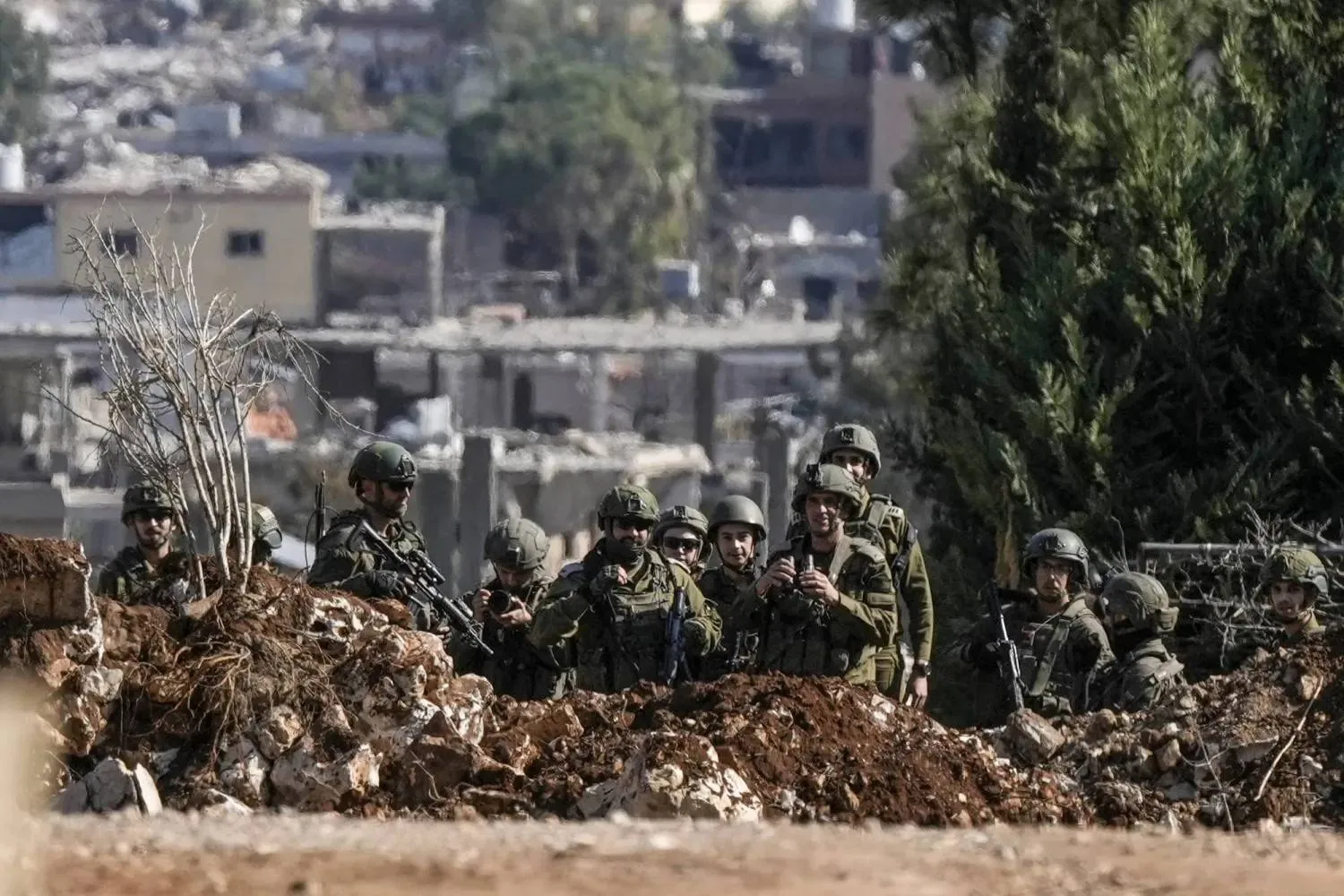
Israeli soldiers seen in the village of Aitaroun in southern Lebanon, January 27, 2025. (AP)
TT

End of the ‘People’s Army’ Myth: Israel Weighs Resorting to Mercenaries

Israeli soldiers seen in the village of Aitaroun in southern Lebanon, January 27, 2025. (AP)

As Israel’s military grapples with a severe manpower shortage estimated at 15,000 troops — a situation Chief of Staff Eyal Zamir has described as “dangerous for the future of the Jewish state” —

Israeli ultra-Orthodox parties continue to reject military service in favor of Torah study even as Israel’s military grapples with a severe manpower shortage estimated at 15,000 troops - a situation Chief of Staff Eyal Zamir has described as “dangerous for the future of the Jewish state”.

Former senior government official Shlomo Maoz has proposed recruiting 12,000 mercenary soldiers with generous pay packages to address the shortage.

Maoz presented the idea as a personal initiative inspired by Ukraine’s recruitment of 10,000 foreign fighters, however, he said the Israeli army has long relied on a similar force known as “lone soldiers,” currently numbering 7,365.

According to Maoz, 52 percent are soldiers from Jewish families living abroad, while the remaining 48 percent are effectively mercenaries “in every sense of the word.” They come from several countries, including 30 percent from the US, 12 percent from France and 7 percent from Ukraine, while the rest come from Spain, Italy, Germany, Canada and Britain.

These soldiers receive salaries equivalent to $4,000 a week and they currently serve through “secret” arrangements, he revealed.

His new proposal is aimed at bringing these arrangements into the open and formalize the system publicly through the creation of an “Israeli Foreign Legion” composed of four brigades operating under Israeli officers.

Speaking to Israel’s Maariv daily, Maoz stressed that the main problem with the proposal was moral rather than military, as it would mark Israel’s abandonment of the “people’s army” myth.

He described the Israeli military as historically built on the integration of Israelis from more than 100 cultural backgrounds — Ashkenazi and Mizrahi Jews, urban and rural communities, native-born Israelis and new immigrants, people from Europe and Western countries, as well as from Arab and Muslim states, alongside Jews, Muslims, Christians, Druze and Circassians — into what he called a cohesive force that overcame social divisions.

But Maoz argued that the benefits of recruiting mercenaries outweigh the symbolic costs.

He said the military faces an acute shortage, with even conservative estimates pointing to a need for 15,000 additional troops, including at least 9,000 combat soldiers, while religious Jews remain adamantly opposed to conscription.

At the same time, he said, the government is waging an ongoing war on seven fronts, pursuing further occupation and expansion, and establishing 134 new settlements and outposts that all require protection.

“To fill this need, solutions outside the box must be explored,” Maoz urged.

He added that hundreds of thousands of retired military officers from around the world, including fighters, snipers, tank operators, drone specialists and even pilots, could be recruited easily, particularly from Eastern European countries.

Maoz, an economist by background, said financing the project was one of its key challenges. He estimated each soldier would cost between $8,000 and $10,000 a month, with additional state expenses amounting to roughly half that figure.

He revealed that the total cost of a mercenary force would reach around $2.5 billion — a manageable amount given Israel’s foreign currency reserves of $236 billion, equivalent to about 38 percent of gross domestic product.

Pointing to the Ukrainian model, Maoz said around 600 mercenaries join Ukraine’s army every month, bringing the total number of foreign fighters there to 10,000 from 75 nationalities. Kyiv pays them an average of $4,000 per month.

Maoz added that Israel was particularly suited to integrating mercenaries because it has millions of citizens who speak foreign languages as their mother tongue, such as Russian, Slavic languages, English and Spanish.


Torrential Rain and Floods Batter China, Killing at Least 12 and Forcing Mass Evacuations

Cars partially submerged in floodwaters after heavy rainfall in Duyun, Guizhou Province, China, May 19, 2026, in this still image obtained from a social media video. (Social Media/via Reuters)
TT

Torrential Rain and Floods Batter China, Killing at Least 12 and Forcing Mass Evacuations

Cars partially submerged in floodwaters after heavy rainfall in Duyun, Guizhou Province, China, May 19, 2026, in this still image obtained from a social media video. (Social Media/via Reuters)

Torrential rain and floods hit parts of China this week, killing at least 12 people and forcing tens of thousands of people to evacuate, state media reported.

State broadcaster CCTV reported on Wednesday five deaths and 11 people missing in Shimen County of Hunan province in central China after rain battered the region. A rescue operation is underway. By Tuesday evening, more than 19,000 had been relocated, Chinese official news agency Xinhua reported.

Xinhua said the county recorded a cumulative rainfall of 339 millimeters (about 13 inches) within a 24-hour period ending at 7 a.m. on Monday. One of its towns once received a rainfall of 240 millimeters (about 9 inches) within just a few hours, breaking historical records, it said.

In nearby Hubei province, some streets were turned into rivers and rescuers had to deploy inflatable boats to help stranded residents. Some houses were flooded or collapsed, Xinhua reported. Three people were killed and four others were missing as of Tuesday morning, it said.

CCTV on Tuesday also reported that heavy rain and floods have caused four deaths and left five others missing in Guizhou Province in southwestern China. In some areas, houses flooded, roads were damaged, and communications were disrupted, it said. One area had to relocate more than 3,700 people, Xinhua added.

Flood-induced casualties are common in China. Last July, rains and flooding killed dozens of people in Beijing.

Separately, 10 people were killed after a pickup truck fell off a bridge in the southern region of Guangxi on Saturday, Xinhua reported.


Ebola, Hantavirus Show World’s Risk Preparedness Lagging, Says Pandemic Expert

A health worker monitors visitors arriving at the Rodolphe Merieux Laboratory, National Biomedical Research Institute (INRB) in Goma, on May 19, 2026. (AFP)
TT

Ebola, Hantavirus Show World’s Risk Preparedness Lagging, Says Pandemic Expert

A health worker monitors visitors arriving at the Rodolphe Merieux Laboratory, National Biomedical Research Institute (INRB) in Goma, on May 19, 2026. (AFP)

The deadly hantavirus and Ebola outbreaks show that while the response to declared public health crises has improved, awareness of pandemic risks still lags, a leading pandemic expert warned Tuesday.

Over six years after the World Health Organization declared the Covid-19 pandemic, global efforts to revamp public health crisis response have improved the reaction to the hantavirus and Ebola outbreaks, said Helen Clark, a former New Zealand prime minister and the co-chair of the Independent Panel for Pandemic Preparedness and Response.

"The new international health regulations are working," she told AFP in an interview in Geneva.

As soon as the alert was sounded last Friday over the new Ebola outbreak in the Democratic Republic of Congo, and once the world learned a few weeks ago of the rare hantavirus outbreak on the MV Hondius cruise ship in the Atlantic, "the response has gone quite well", she said.

"Our issue is now really upstream from that," she said, insisting that far more work needed to go into identifying risks and how "these outbreaks get away".

"I think we need a lot more knowledge around risk-informed preparedness," she said, urging more focus on knowing your risk and "what could crop up", and "be ready to deal with that".

"Those basic issues of surveillance, early detection... We're not there yet."

Clark said the hantavirus species behind the cruise ship outbreak that triggered a global health scare after three people died was known to be endemic in the area of Argentina where the ship departed from.

"But we're not clear how much was known about that by ships who depart regularly from there," she said.

Meanwhile, the outbreak of the Bundibugyo strain of Ebola believed to have killed more than 130 people in a remote province of DRC seems to have spread under the radar for weeks, with tests focused on another strain showing up negative.

"How could this have gone for four to six weeks, ... spreading while not getting the testing results that we needed to show that it was a particular variant?" Clark asked.

She called for thorough investigation of "the chain of events here, and what we can learn from it, and what it says about the capacities we need".

- 'Perfect storm' -

Clark highlighted that the Ebola outbreak especially had laid bare the dire impact dramatic global aid cuts had on disease prevention efforts.

"There's a perfect storm," she warned, pointing to how countries had been "very suddenly expected to make up a lot of investment in the health system which previously came from donors".

"With the best will in the world, the poorest and most fragile countries just haven't got money sitting in the bank to do that, so things will get neglected across a range of areas."

Clark insisted that "global solidarity remains extremely important".

"We're talking global public goods," she stressed, pointing to a confirmed Ebola case in a US national and how hantavirus had "popped up in places where people (disembarked) from the ship".

"We're in this together, and so we have to look to ways of financing preparedness or response which reflect our shared interests."


Xi and Putin Meet to Reaffirm China-Russia Ties Days After Trump’s Visit to Beijing

 Russian President Vladimir Putin and Chinese President Xi Jinping pose for a picture during a meeting at the Great Hall of the People in Beijing, China May 20, 2026. (Sputnik/Maxim Stulov/Pool via Reuters)
Russian President Vladimir Putin and Chinese President Xi Jinping pose for a picture during a meeting at the Great Hall of the People in Beijing, China May 20, 2026. (Sputnik/Maxim Stulov/Pool via Reuters)
TT

Xi and Putin Meet to Reaffirm China-Russia Ties Days After Trump’s Visit to Beijing

 Russian President Vladimir Putin and Chinese President Xi Jinping pose for a picture during a meeting at the Great Hall of the People in Beijing, China May 20, 2026. (Sputnik/Maxim Stulov/Pool via Reuters)
Russian President Vladimir Putin and Chinese President Xi Jinping pose for a picture during a meeting at the Great Hall of the People in Beijing, China May 20, 2026. (Sputnik/Maxim Stulov/Pool via Reuters)

Chinese leader Xi Jinping welcomed Russian President Vladimir Putin in Beijing on Wednesday in a meeting meant to reaffirm ties and that takes place only days after a visit by US President Donald Trump to China.

Xi welcomed Putin with a ceremony at the Great Hall of the People. The two delegations later held bilateral talks, to be followed by a ceremony for signing cooperation agreements.

Putin’s visit comes just days after Trump’s own trip to Beijing – in a sequence that is meant to cement Beijing’s image as an influential superpower, experts say.

“The message is clearly one that China maintains friendship and strategic partnership with whichever power it likes, and the USA is just one of them,” said Steve Tsang, director of the SOAS China Institute at the University of London.

Russian presidential aide Yuri Ushakov said earlier that there was “no connection” between Trump and Putin’s visits, noting the trip by the Russian leader was agreed several days after Putin and Xi spoke via videoconference on Feb. 4.

The Russian and Chinese leaders are set to discuss energy and security as well as their overall ties. The two sides agreed to extend a friendship treaty first signed in 2001, Chinese state media reported.

China became Russia's top trading partner following after Moscow’s full-scale invasion of Ukraine in 2022. Beijing has said it is neutral in the conflict while maintaining trade ties with the Kremlin despite economic and financial sanctions by the US and Europe.

China is the top customer for Russian oil and gas supplies, and Moscow expects the war in Iran to increase the demand. China also has ignored demands from the West to stop providing high-tech components for Russia’s weapons industries.

Ushakov said Russia’s oil exports to China grew by 35% in the first quarter of 2026 and that Russia is one of the biggest exporters of natural gas to China.

During “the crisis in the Middle East,” Russia remains a reliable energy supplier and China is a “responsible consumer,” Ushakov said.

Putin noted earlier this month that Moscow and Beijing have reached “a very substantial step forward in our cooperation in the oil and gas sector.”

“Practically all the key issues have been agreed upon,” he said. “If we succeed in finalizing these details and bringing them to a conclusion during this visit, I will be extremely pleased.”

Putin also praised their bilateral relationship as a crucial, balancing force in international relations.

“Interaction between such nations as China and Russia undoubtedly serves as a factor of deterrence and stability,” he said.

Moscow welcomes China’s dialogue with the US as another stabilizing element for the global economy, Putin added.

“We stand only to benefit from this, from the stability and constructive engagement between the US and China,” he said.
