


Iran Says New US Strikes Violate Ceasefire

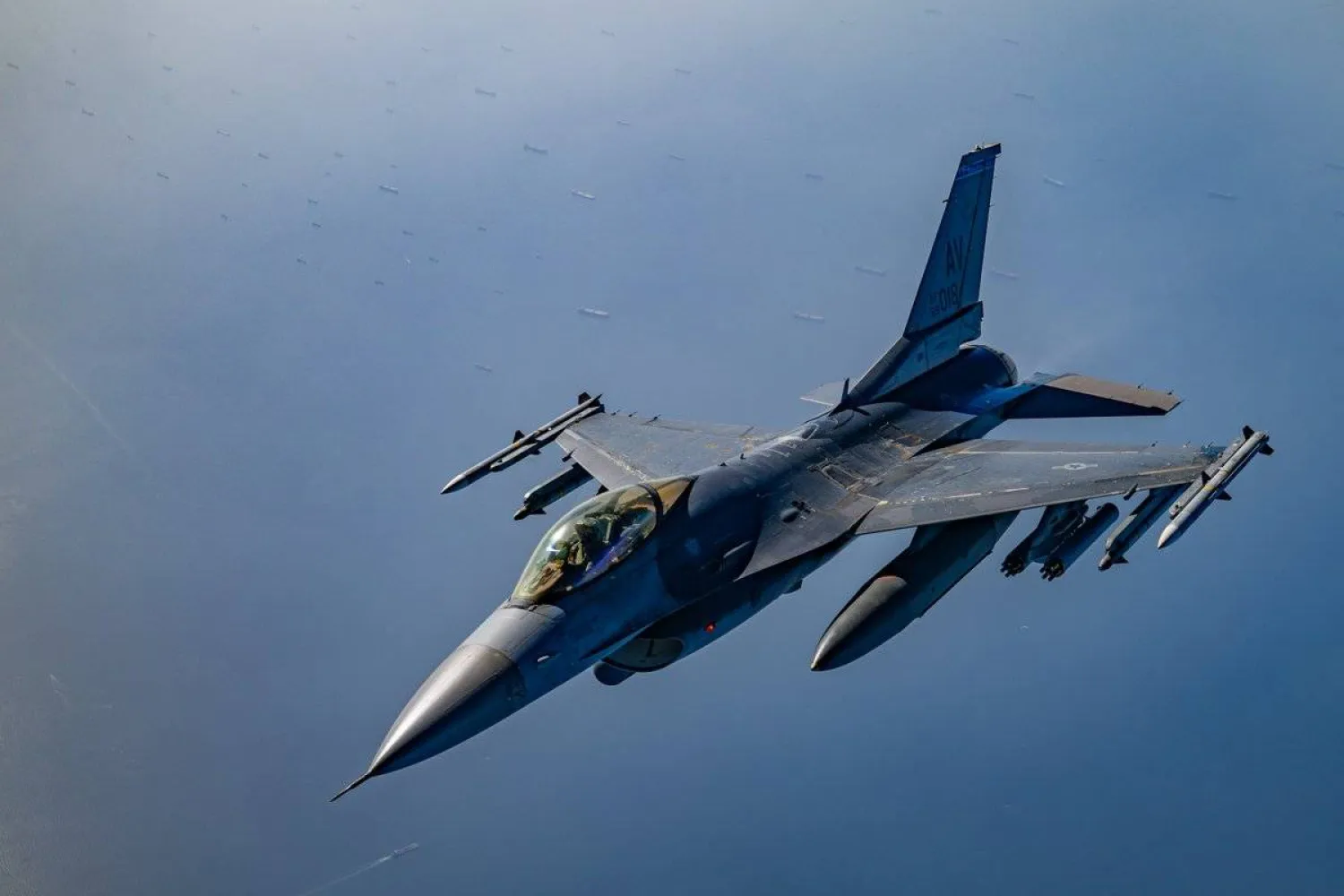
A US F-16 fighter jet conducts a patrol near the Strait of Hormuz last month. (CENTCOM)
TT

Iran Says New US Strikes Violate Ceasefire

A US F-16 fighter jet conducts a patrol near the Strait of Hormuz last month. (CENTCOM)

Iran said the United States had violated a ceasefire after the US conducted what it called defensive strikes in southern Iran, while US Secretary of State Marco Rubio said negotiating a deal to halt the conflict could "take a few days". 

Iran's foreign ministry said US strikes in Iran's southern Hormozgan province, where Iranian media reported sounds of explosions early on Tuesday, represented a "gross violation" of a tenuous ceasefire in place for nearly seven weeks. 

Both sides had previously indicated progress on a memorandum of understanding that could halt the war and restart shipping through the blockaded Strait of Hormuz, while giving negotiators 60 days to negotiate more complex issues including Iran's nuclear program. 

Iranian media reported that Iran's negotiators had been pushing for the memorandum to include the release of billions of frozen assets at talks in Qatar. 

OIL RISES AGAIN 

Following strikes against targets that the US said included boats attempting to lay mines and missile launch sites, Rubio told reporters on his plane in India's Jaipur that the Strait of Hormuz had to be open "one way or the other". 

The war, which began with US and Israeli ‌strikes on Iran on ‌February 28, has caused an unprecedented oil supply shock, pushing up the costs of fuel, fertilizer and food. ‌Iran responded to ⁠the strikes by ⁠launching drones and missiles at Gulf states that host US bases. 

Traffic through the Strait of Hormuz, which normally carries about a fifth of global trade in oil and liquefied natural gas, has been a fraction of its usual level since the war began. 

Global benchmark Brent crude oil rose about 3.5% on Tuesday to more than $99 a barrel following news of the US strikes. 

'CLOCK CANNOT BE TURNED BACK' 

US Central Command said late on Monday it had carried out the fresh strikes designed "to protect our troops from threats posed by Iranian forces." 

Iran's Revolutionary Guards said on Tuesday they reserved the right to retaliate. They said air defense units had downed a US drone and fired at another drone and a fighter jet which they said had entered Iranian airspace over the Gulf region. 

In comments posted on his Telegram channel on the occasion of the ⁠annual hajj pilgrimage, Iran's Supreme Leader Mojtaba Khamenei said: "The clock cannot be turned back, and the nations and ‌lands of the region will no longer be a shield for American bases." 

"From now on, the slogans 'Death ‌to America' and 'Death to Israel' will be the slogans of the nation and the oppressed people of the world, especially the youth," he added. 

US President Donald Trump has previously ‌cited the slogans while justifying military action against Iran. 

Trump had said talks with Iran were going "nicely" in a lengthy post on Truth Social on Monday, ‌but warned of attacks if they failed. It "will only be a Great Deal for all, or no Deal at all," he wrote. 

DOHA TALKS 

Iranian and US officials have indicated that recent indirect talks made progress on a memorandum of understanding, or initial deal, that would lead to further negotiations over a final agreement. 

Iran's top negotiator, Mohammad Baqer Qalibaf, its foreign minister and its central bank governor were in Doha on Monday for talks with Qatar's prime minister on a potential deal, an official briefed on the visit said. 

Qalibaf returned to Iran ‌after seeking agreement on the release of around $24 billion of frozen Iranian funds as part of the memorandum of understanding, Iranian media reported. 

Iran's Fars news agency cited a source saying that the unfreezing of the funds was ⁠the last serious sticking point for the memorandum ⁠of understanding to be finalized. 

According to Iranian sources, an initial deal would cover ending the war on all fronts, establishing a 30-day framework for restarting movement through the Strait of Hormuz, and possibly providing some financial relief - with more complex issues such as Iran's nuclear program to be negotiated in a second phase. 

Iran has been letting some ships through the strait, giving preference to vessels linked to countries with which it has alliances or close ties, and striking government-to-government agreements, Reuters has reported. 

Trump has said his key aim in the war is to prevent Iran from developing a nuclear weapon with its highly enriched uranium. Tehran denies any such plans. 

After a warning of escalated strikes, Israeli forces had expanded their operations in southern Lebanon, Israeli media reported on Tuesday. 

Thousands have been killed in the wider conflict, mostly in Lebanon and Iran. Inside Iran, internet monitoring group Netblocks reported a partial restoration of connectivity after a near 90-day blackout. 


EU Supports Ebola Response with €493 Million in Vaccines, Treatment and Health Aid

An ambulance transports a patient accompanied by a doctor wearing personal protective equipment (PPE) to the Ebola Virus Disease Treatment Center, one month after cases were confirmed in Bunia, eastern Democratic Republic of Congo, June 15, 2026. REUTERS/Gradel Muyisa Mumbere
TT

EU Supports Ebola Response with €493 Million in Vaccines, Treatment and Health Aid

An ambulance transports a patient accompanied by a doctor wearing personal protective equipment (PPE) to the Ebola Virus Disease Treatment Center, one month after cases were confirmed in Bunia, eastern Democratic Republic of Congo, June 15, 2026. REUTERS/Gradel Muyisa Mumbere

The European Commission said on Wednesday it will fund the response to the Ebola outbreak in Central Africa with a €493 million ($572 million) financial aid package.

The amount comprises frontline medical support for the immediate outbreak response, humanitarian assistance in the Great Lakes region ⁠and Uganda, vaccine ⁠and treatment research for filoviruses as well as longer-term work to improve preparedness and health systems.

The Commission response to ⁠the outbreak has been coordinated from day one with Member States, international bodies and partners.

"Ebola is a test of our global solidarity. As some turn inward, the EU remains present, engaged, and a reliable partner," Commissioner for Crisis Management ⁠Hadja ⁠Lahbib said in a statement.

The Commission continues to monitor the outbreak closely in cooperation with its partners though the European Centre for Disease Prevention and Control currently assesses the risk to people in Europe as very low.


UN Food Aid Agency Gets $800 Million Grant from US after Funding Cuts

(FILES) Workers load food commodities onto World Food Programme (WFP) SHERPs at the WFP logistics base in Bentiu, Unity State, South Sudan, on November 3, 2025. (Photo by Rian COPE / AFP)
TT

UN Food Aid Agency Gets $800 Million Grant from US after Funding Cuts

(FILES) Workers load food commodities onto World Food Programme (WFP) SHERPs at the WFP logistics base in Bentiu, Unity State, South Sudan, on November 3, 2025. (Photo by Rian COPE / AFP)

The United Nations World Food Programme said on Wednesday it welcomed an $800 million contribution from the United States, following previous funding cuts from President Donald Trump's administration.

The funds will help scale up assistance and respond rapidly to emerging crises at a time when global hunger is at record levels and the number of people facing acute hunger is expected to rise ⁠this year, WFP ⁠said.

The US is the WFP's biggest donor, but its contribution more than halved from 2024 to around $2 billion in 2025.

WFP said the new funding would allow it to ⁠pre-position food supplies, expand cash assistance programs and maintain supply chains in crisis-hit areas such as Lebanon, Haiti and the Democratic Republic of Congo.

The US has long been the world's largest humanitarian donor, though its contributions have fluctuated sharply in recent years amid shifts in foreign aid policy.

In 2025, US humanitarian funding ⁠to ⁠the UN fell to about $3.38 billion from $14.1 billion a year earlier after major spending cuts.

On Tuesday, the US State Department also announced $218 million in assistance to the UN children's agency UNICEF, Reuters reported.

The WFP is under temporary leadership while the US seeks to place another American at the agency's helm, following the resignation of Cindy McCain on health grounds.


G7 Leaders Demand Ceasefire in Lebanon, Welcome Iran Deal

US President Donald Trump, French President Emmanuel Macron, Canadian Prime Minister Mark Carney, Italian Prime Minister Giorgia Meloni, Japanese Prime Minister Sanae Takaichi, European Commission President Ursula von der Leyen, European Council President Antonio Costa, German Chancellor Friedrich Merz, Egyptian President Abdel Fattah al-Sisi, South Korea's President Lee Jae Myung, India's Prime Minister Narendra Modi, Brazilian President Luiz Inacio Lula da Silva, Kenya's President William Ruto and British Prime Minister Keir Starmer pose during a family photo at the G7 summit in Evian, France, on Tuesday June 16, 2026. (Pool via Reuters)
TT

G7 Leaders Demand Ceasefire in Lebanon, Welcome Iran Deal

US President Donald Trump, French President Emmanuel Macron, Canadian Prime Minister Mark Carney, Italian Prime Minister Giorgia Meloni, Japanese Prime Minister Sanae Takaichi, European Commission President Ursula von der Leyen, European Council President Antonio Costa, German Chancellor Friedrich Merz, Egyptian President Abdel Fattah al-Sisi, South Korea's President Lee Jae Myung, India's Prime Minister Narendra Modi, Brazilian President Luiz Inacio Lula da Silva, Kenya's President William Ruto and British Prime Minister Keir Starmer pose during a family photo at the G7 summit in Evian, France, on Tuesday June 16, 2026. (Pool via Reuters)

Leaders of the G7 countries demanded a ceasefire in Lebanon on Wednesday and said they will diversify energy supply routes to reduce dependence on the Strait of Hormuz in response to the war in Iran, as they welcomed an interim deal to end the conflict.

The leaders met for a summit in the French town of Evian-les-Bains on Lake Geneva, while details of the US-Iran ceasefire agreement trickled out of Washington and Tehran ahead of its formal unveiling, expected on Friday across the nearby Swiss border.

The US-Iran agreement is expected to launch negotiations towards a final settlement to end the war, which has killed more than 7,000 people, mostly in Iran and Lebanon.

"We underline the need for the negotiation ... to address the threats posed by Iran in the region and beyond and ensure that they never obtain a nuclear weapon," the leaders said in a statement.

The summit gave US President Donald Trump a chance to present his deal with Iran to major allies Britain, Canada, France, Germany, Italy and Japan.

They ‌mostly share Washington's ‌concerns about Iran's nuclear program and other issues, but never endorsed his decision to go to war and ‌worry that ⁠Tehran gained leverage ⁠by withstanding the superpower onslaught and asserting control over the strait.

The leaders said they were ready to contribute to the implementation of the accord, with a coalition led by Britain and France set to help secure shipping once the Strait of Hormuz reopens as expected on Friday.

The memorandum of understanding signed by Washington and Tehran this week, though yet to be made public, extends a ceasefire announced in April by another 60 days to allow the warring countries to negotiate a permanent truce.

The US president appears to have achieved little of what he said he wanted at the outset of the war. Iran's theocratic government remains in place, its stockpile of highly enriched uranium has not been surrendered, its ballistic missile capabilities have not been destroyed and it has not ended its support for anti-Israel groups ⁠like Hezbollah in Lebanon.

Trump said the agreement states that Iran will not have a nuclear weapon - a ‌restatement of Iran's official position since the 1970s - and US officials say further discussions will lead to ‌the removal or destruction of its enriched uranium stockpile.

But ending the war on such terms could still expose Trump to criticism, including from hawks within his ‌own Republican party, ahead of midterm elections in November.

TRUCE IN LEBANON?

One of the biggest questions still hanging over the truce is the fate of ‌Lebanon, which Israel invaded in March to root out Hezbollah after the group fired across the border in solidarity with Tehran following US-Israeli strikes on Iran.

Israeli forces still occupy a swathe of southern Lebanon, where more than a million people have been driven from their homes, while Hezbollah remains undefeated.

Iran says the ceasefire must also end hostilities in Lebanon, and that a permanent deal must lead to an Israeli withdrawal. Israel, which was excluded from the US-Iran peace negotiations, says it will not withdraw ‌and reserves the right to use military force.

That has opened up a rift between Israel and the United States, with Trump publicly berating his wartime ally Israeli Prime Minister Benjamin Netanyahu. On Tuesday Trump said ⁠at the summit that he was "not happy" ⁠with the way Israel had handled itself.

"Without us, without the United States, there would be no Israel. Without me, there would be no Israel, because no other president was willing to do what I did," Trump said.

In their statement, the G7 leaders called for an "immediate robust ceasefire" in Lebanon and the disarmament of Hezbollah.

A Hezbollah spokesperson told Reuters the group believed Iran would not agree to a permanent truce if the Israeli occupation did not end.

After decades of US and international financial sanctions that pushed Iran's economy to the brink, a peace deal could deliver economic benefits. The memorandum includes a $300 billion reconstruction fund if Iran complies with other terms.

In the coming 60 days, negotiators will return to difficult issues such as the future of Iran's nuclear program. But Iran's support for regional armed groups and its missile arsenal do not appear to be on the agenda, in what would amount to major US concessions.

Oil prices fell again on Wednesday on prospects for the reopening of the Strait of Hormuz, with Brent crude futures below $80, at their lowest level since the opening salvos of the US-Iran conflict.

A senior US official said the US will waive sanctions on Iranian oil under the deal to end the war, raising the prospect of millions of additional barrels of supply, though industry officials say Middle East oil and gas output will take months to fully recover.

The G7 leaders said they had committed to "accelerate the diversification of energy supply routes in order to reduce global vulnerability to the Strait of Hormuz and to increase our energy stocks."
