
Report: Iran Regaining Access to its Missile Facilities

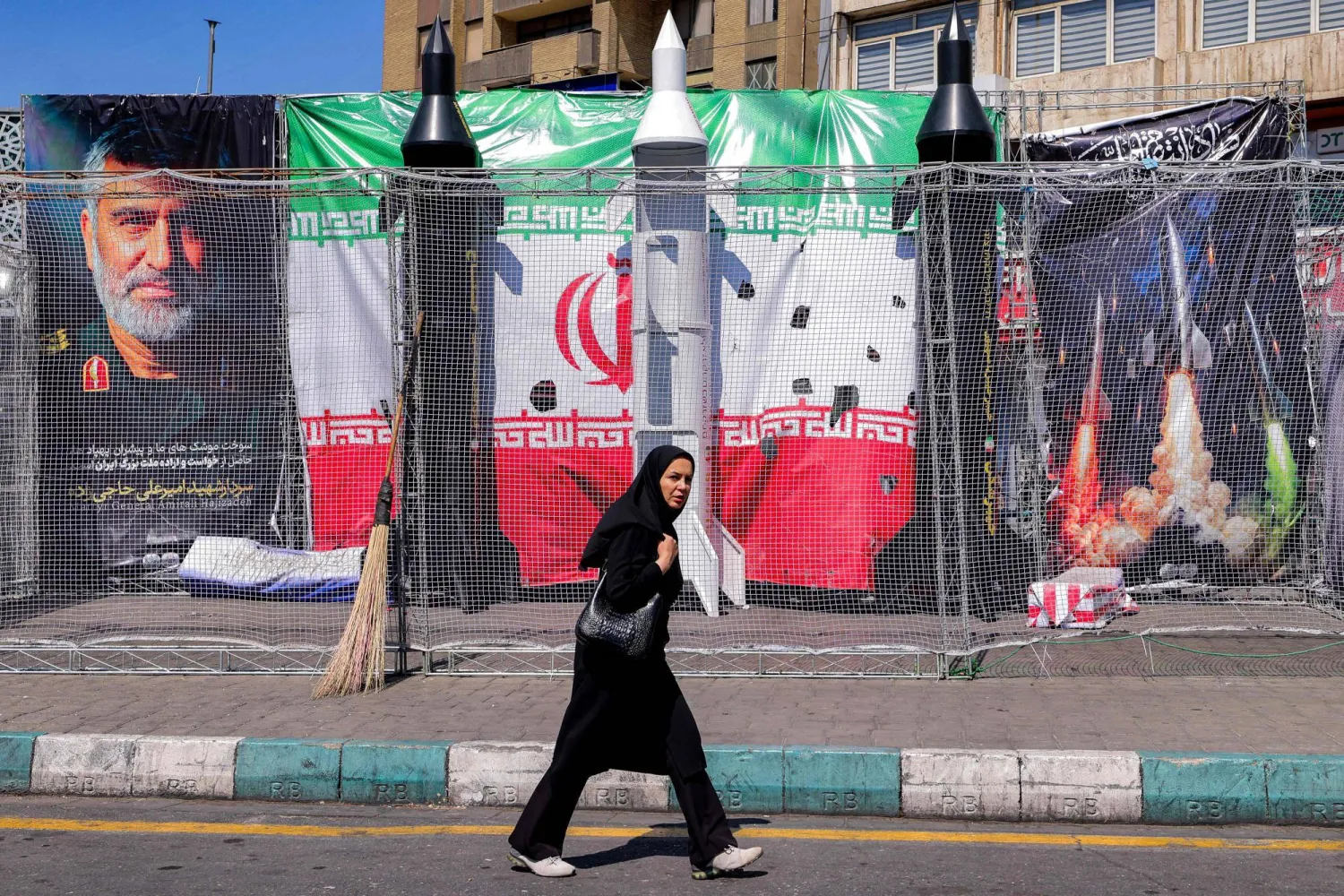
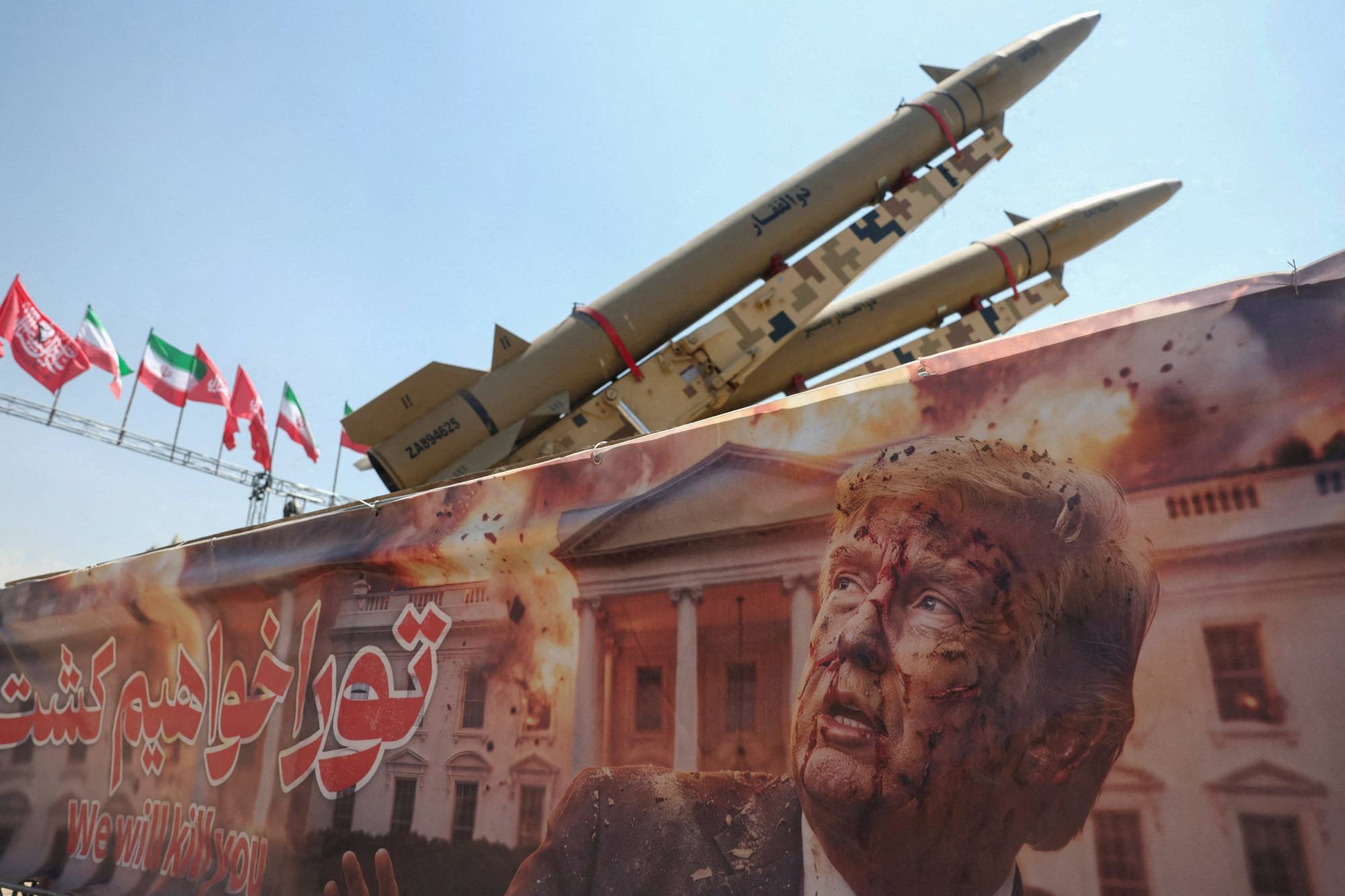
A woman walks past Iranian missile models in Tehran’s Valiasr Square on April 6, 2026. (AFP)
TT

Report: Iran Regaining Access to its Missile Facilities

A woman walks past Iranian missile models in Tehran’s Valiasr Square on April 6, 2026. (AFP)

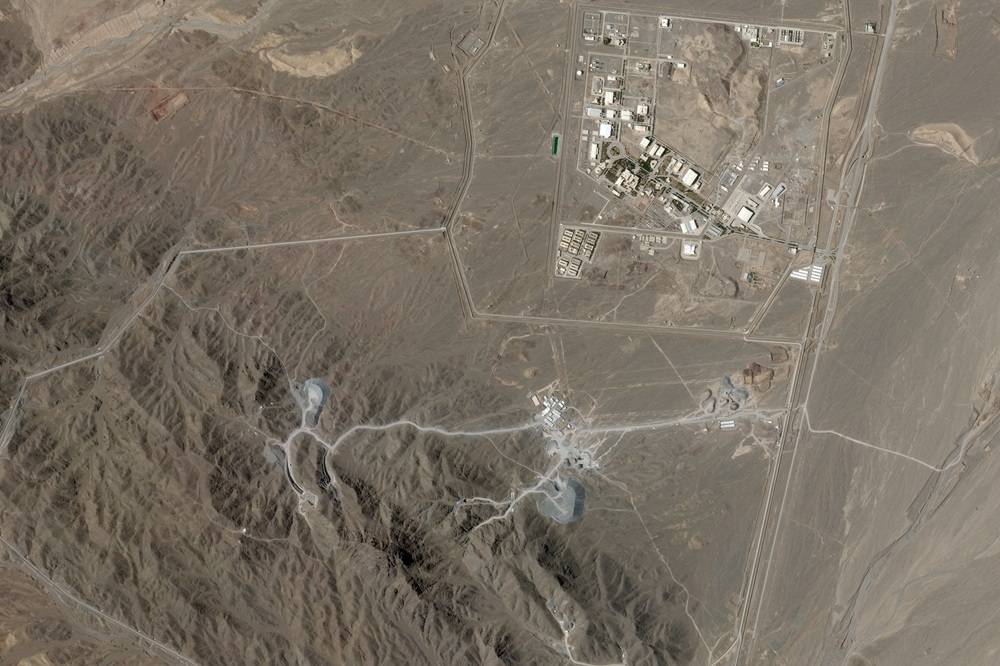
Satellite imagery has revealed that Iran has started regaining access to its underground missile facilities, reported CNN based on figures from Airbus Defence and Space.

The development casts doubt on US President Donald Trump’s claims of having all but obliterated Tehran’s arsenal, said CNN.

During the war, Israeli-US strikes put many of these complexes out of commission by blocking their entry points, trapping a large portion of Iran’s launchers and crippling its ability to fire missiles.

“Now, using just bulldozers and dump trucks, Iran is undoing the effects of a strategy that involved an enormous amount of Israeli-US firepower,” added CNN.

According to the report, since the ceasefire between Iran and the United States began, Iran has cleared at least 50 access points at 18 missile sites.

Airbus satellite images from April 10 showed efforts to remove debris from the blocked entrance to a tunnel at a missile base south of Tabriz.

Additional satellite imagery showed debris being cleared at a missile base in Khomein, where a truck was seen removing rubble from a tunnel entrance while waste-removal trucks waited nearby.

The Pentagon stands by the success of its campaign.

CNN also reported that Iran has already restarted some of its drone production during the six-week ceasefire that began in early April, one sign it is “rapidly rebuilding certain military capabilities” degraded by US-Israeli strikes, according to two sources familiar with US intelligence assessments.

Four sources told CNN that US intelligence indicates Iran’s military “is reconstituting much faster than initially estimated.”

The rebuilding of military capabilities, including replacing missile sites, launchers and production capacity for key weapons systems destroyed during the current conflict “calls into question claims about the extent to which US-Israeli strikes have degraded Iran’s military in the long term.”

While the time to restart production of different weapons components varies, some US intelligence estimates indicate Iran could fully reconstitute its drone attack capability in as soon as six months, one of the sources, a US official, told CNN.

“The Iranians have exceeded all timelines the IC had for reconstitution,” the US official said.

Trump has repeatedly threatened to resume combat operations against Iran if the two countries fail to reach a deal to end the war.

“Iran has been able to rebuild much faster than expected due to a combination of factors, ranging from support it is receiving from Russia and China to the fact that the US and Israel did not inflict as much damage as the two countries had hoped,” one of the sources told CNN.

For example, China has continued to provide Iran with components during the conflict that can be used to build missiles, two sources familiar with US intelligence assessments told CNN, though that has likely been curtailed by the ongoing US blockade.

Israeli Prime Minister Benjamin Netanyahu told CBS last week that China is giving Iran “components of missile manufacturing” but declined to elaborate further.

Chinese Foreign Ministry spokesperson Guo Jiakun denied the allegation during a press conference, calling it “not based on facts.”
As Ebola Scourges Congo, Experts Warn of Link to Eating Wild Animals

A healthcare worker takes a visitor's temperature at Rwampara Hospital in Ituri, in the eastern Democratic Republic of the Congo, on May 26, 2026. (Photo by Glody MURHABAZI / AFP)
TT

As Ebola Scourges Congo, Experts Warn of Link to Eating Wild Animals

A healthcare worker takes a visitor's temperature at Rwampara Hospital in Ituri, in the eastern Democratic Republic of the Congo, on May 26, 2026. (Photo by Glody MURHABAZI / AFP)

The vendors of wild meat at the sprawling Masina Market in the Congolese capital don’t always display their goods openly. Customers must ask for whatever they're looking for, whether it is a giant swamp rodent or the severed parts of an antelope.

Others occasionally sell in the open, like the women who preside over impossibly large baskets of squirming caterpillars at the market in Kinshasa.

For many in Congo and elsewhere in Central and West Africa wild meat is a craving and a key part of the cultural milieux. Even a disease as punishing as Ebola, currently ravaging a remote part of eastern Congo, has failed to stem demand for wild meat from the Congo Basin, an expansive forested ecosystem sometimes called Earth’s second lung.

The Congo Basin is rich in all kinds of wildlife, from great apes to serpents — both of which are hunted for their meat. One consequence for locals is exposure to zoonotic diseases such as Ebola, The Associated Press said.

Although Ebola is generally not spread by food, cases in Africa have been associated with hunting, butchering and processing meat from infected animals, the US Centers for Disease Control and Prevention has said.

“Once there is human, animal and environment interface. We have these kinds of outbreaks on a frequent level,” said Dr. Tolbert Geewleh Nyenswah of the Africa Centers for Disease Control and Prevention. “And this is why one health approach in dealing with virus outbreaks is important, because we still interact with the bats, and our hunters are still killing monkeys, and we are close to the environment.”

The link between wild meat and Ebola

The Congolese government has confirmed more than 1,000 suspected cases, with at least 220 deaths, since it declared an outbreak of Ebola on May 15. It appears the virus spread undetected for weeks, and the World Health Organization suspects it is much larger than what has been reported.

Ebola, named for a tributary of the Congo River, was first discovered in 1976 in simultaneous outbreaks in Congo and present-day South Sudan. Outbreaks are believed to start with the virus spilling over into humans from an infected animal such as a fruit bat. These cross-species infections often happen when people handle and eat wild meat, experts say.

But since Ebola outbreaks happen only sporadically in communities that regularly eat wild meat, some people “don't believe the linkage” and others are “totally ignorant” of the health threat from eating wild meat, said Dr. Misaki Wayengera, a microbiologist who advises Uganda's Ministry of Health on epidemics.

“It is very difficult to change some of these core practices,” he said.

Locals have paid a heavy price for occasional outbreaks of Ebola, whose bloody symptoms can terrorize entire villages and cause many to believe they are under an evil spell.

The Ebola virus is responsible for 17 outbreaks in Congo and many others elsewhere in the region. The deadliest outbreak, in West Africa between 2014 and 2016, infected an estimated 28,000 people and killed more than 11,300.

According to the Food and Agriculture Organization — which studied the Ebola risk stemming from the eating and handling of wild meat after West Africa’s epidemic — animal-to-human spillovers of Ebola are rare, but "their consequences are nonetheless disastrous.”

Once Ebola has infected one person, the virus then spreads through close contact with sick or deceased patients’ bodily fluids, such as sweat, blood, feces, or vomit. Health workers without sufficient protective gear are seen as highly vulnerable.

The current outbreak in eastern Congo is caused by the Bundibugyo virus, a rare type of Ebola that has no approved medicines or vaccines.

The outbreak is occurring in a part of Congo that also faces armed violence by rebel groups and the displacement of large numbers of people fleeing the violence.

A need for education While Congolese authorities have prohibited hunting endangered wildlife, including great apes sent to the brink of extinction by poachers, there is no blanket ban on the wildlife trade and illegal hunting persists for totemic creatures like the bonobo.

Many in and around the Congo Basin have wild meat as their primary source of animal protein. The yearly extraction rate of wild meat from the Congo Basin is estimated at 4.5 million tons, according to the Center for International Forestry Research.

Viande de brousse, as wild meat is known in French, is a popular food, even served in trendy restaurants. That's intensified pressure on the dwindling resources of the Congo Basin. Despite the ongoing biodiversity losses, the Congo Basin remains the world's largest carbon sink, surpassing the Amazon in its ability to capture and store carbon.

Public health campaigners need to step up education campaigns on how Ebola starts and is spread among communities that face recurring outbreaks, said Gladys Kalema-Zikusoka, founder of the Uganda-based Conservation Through Public Health group.

People need to be told that “eating meat from an unknown source, or a dead animal, is a no-no,” Kalema-Zikusoka said. “It’s a very cultural thing.”

Some fruit bats are believed to be natural hosts of the viruses that cause Ebola, according to the WHO. Yet bats are known to be a delicacy in many parts of Central and West Africa. The soup of a roasted fruit bat is highly sought after, as are the parts of a wide range of monkeys.

In Kinshasa’s Masina Market one recent morning, before the latest Ebola outbreak, traders said they sold antelope, rodent and snake meat sourced from the Congo Basin.

They said they long ago stopped selling the meat of monkeys, possible reservoirs of the Ebola virus.

One vendor, Guyva Mputu, was selling python, whose frozen flesh started to steam in the humid weather.

Another, Charles Ntanga, wielded a flywhisk to swat flies that settled on the rancid carcass of a giant rodent, with a kilogram going for about $17. Ntanga said he gets clients from all walks of life.

“We sell wild meat," he said. “We make our lives through this business.”


Pentagon Chief Says US Seeks 'Stable Equilibrium' with China in Asia

US Secretary of Defense Pete Hegseth speaks during a plenary session of the 23rd Shangri-La Dialogue summit in Singapore on May 30, 2026. JAM STA ROSA / AFP
TT

Pentagon Chief Says US Seeks 'Stable Equilibrium' with China in Asia

US Secretary of Defense Pete Hegseth speaks during a plenary session of the 23rd Shangri-La Dialogue summit in Singapore on May 30, 2026. JAM STA ROSA / AFP

Pentagon chief Pete Hegseth struck a measured tone towards China at a major defense forum on Saturday, noting "rightful alarm" over Beijing's military build-up but saying the United States sought a "stable equilibrium" in Asia.

Hegseth's headline speech at Singapore's Shangri-La Dialogue, which brings together top defense officials and experts from about 45 countries, contrasted with his strongly confrontational remarks on China at last year's gathering.

Unlike Beijing, which has sent a panel of military experts and scholars instead of Defense Minister Dong Jun for the second year running, Hegseth is leading a bumper US delegation to the event that provides chances for both open debate and behind-closed-doors diplomacy.

"When we look across the region today, there is rightful alarm regarding China's historic military build-up and the expansion of its military activities in the region and beyond," Hegseth said.

Washington does not seek "needless confrontation in the region", but rather "a genuinely stable equilibrium (in Asia) that works for Americans as well as our allies", he said.

That means "a favorable but durable balance of power in which no state, including China, can impose its hegemony and hold the security or prosperity of our nation and our allies in question", he added.

Hegseth said the United States sought "respectful" and "good-faith" engagement with Beijing, adding: "I wish my counterpart was here at this conference, but I look forward to other options when we can cross paths."

Trump visited China this month, talking up "fantastic" trade deals but giving few details and later suggesting Washington could use its arms sales to self-ruled Taiwan as a bargaining chip with Beijing.

There had been "no change" in Washington's stance towards Taiwan, but "any decision about future Taiwan arms sales... will rest with" Trump, Hegseth said.

- Vibe shift -

The remarks contrasted sharply with last year's event, when Hegseth painted China as a potentially "imminent" threat to security and outlined a swaggering vision of muscular American deterrence.

He also took potshots at Beijing's absent minister last year, saying: "We are here this morning, and somebody else isn't."

Chinese delegate Da Wei, director of the Center for International Security and Strategy at Beijing's Tsinghua University, said this year's address was "much more moderate".

However, he found Hegseth's depiction of China "ironic", adding: "Everyone in the room must have been thinking: who is really hegemonic?

"Given what the US is doing in Iran and has done in Venezuela, I think it's clear to everyone," Da said.

US delegate Tammy Duckworth, a Democratic senator and strong Trump critic, said she was "somewhat disturbed" by Hegseth's remarks, viewing them as overly conciliatory towards China.

"I worry that this administration is being distracted into wars that they've started in other parts of the world at the expense of our commitment here in the Indo-Pacific," she told reporters.

Instead of Dong, China has sent experts and scholars from its army's academic institutions, led by Major General Meng Xiangqing of the National Defense University.

Analysts have said Dong's no-show reflects Beijing's confidence as an established power with little inclination to answer publicly for its assertive moves in the region.

But some argue that China is also running the risk of having no senior policymaker present if two major security issues come up: reopening the Strait of Hormuz, and Beijing's claim to Taiwan.

Hegseth again urged US allies to spend more on their own defense, singling out South Korea, Japan, Australia and the Philippines for praise while threatening consequences for nations that "free-ride on the generosity of the American taxpayer".

"Those days are over. Allies who refuse to step up and carry their own weight for our collective defense will face a clear shift in how we do business."

- Iran threat -

Hegseth's remarks came as a peace deal between the United States and Iran to end their war remained elusive.

A White House official told AFP on Friday that Trump, who is weighing a final decision on a potential accord, would only commit if Iran met all his conditions.

But Iran has said "no final agreement" is in place, and its state media has rebutted parts of Trump's characterization of the deal.

Hegseth said Washington was "more than capable" of restarting the war if it wanted.

The head of the Pentagon is also due to meet his British and Australian counterparts as part of the AUKUS security alliance.

Australian media outlets have reported, citing unidentified sources, that the AUKUS nations are expected to announce a major project, perhaps involving uncrewed underwater vehicles.


Trump Insists on Red Lines as Iran Deal Remains Elusive

 Vessels anchored at the Strait of Hormuz, as seen from Musandam, Oman, May 29, 2026. (Reuters)
Vessels anchored at the Strait of Hormuz, as seen from Musandam, Oman, May 29, 2026. (Reuters)
TT

Trump Insists on Red Lines as Iran Deal Remains Elusive

 Vessels anchored at the Strait of Hormuz, as seen from Musandam, Oman, May 29, 2026. (Reuters)
Vessels anchored at the Strait of Hormuz, as seen from Musandam, Oman, May 29, 2026. (Reuters)

US President Donald Trump will only make a peace deal with Iran if it meets all of his conditions, a White House official told AFP on Friday, as questions swirled about the state of negotiations to end the war.

The White House had indicated Trump was close to a decision on a potential deal, even as Tehran insisted there was still "no final agreement" on ending the Middle East conflict.

An Iranian state media report also rebutted several key elements of Trump's characterization of the deal, with sources calling his remarks a "mixture of truth and lies."

US sources had told AFP the deal was waiting on Trump's sign-off following weeks of halting negotiations over a conflict that has engulfed the Middle East and shaken the global economy.

Trump attended a two-hour meeting in the White House Situation Room on Friday but did not reach a decision.

"President Trump will only make a deal that is good for America and satisfies his red lines," a White House official told AFP afterward.

"Iran can never possess a nuclear weapon," the official added.

Trump had announced the meeting in a lengthy social media post, reiterating long-held demands that Iran agree never to develop nuclear weapons and reopen the vital Strait of Hormuz shipping lane.

Iranian foreign ministry spokesman Esmaeil Baqaei pushed back, telling state media that Tehran "said goodbye to the language of 'must' 47 years ago."

Exchanges of messages were continuing, he added, but "no final agreement has been reached yet."

In a phone call with the Emir of Qatar, Iranian President Masoud Pezeshkian said Iran was ready to achieve a "dignified framework" to end the war, according to state news agency IRNA.

In his post, Trump said Tehran would remove mines from the Strait of Hormuz and end its blockade of the waterway with "no tolls," while the US would lift its parallel blockade of Iranian ports.

The two countries would also coordinate on removing and destroying Iran's enriched uranium, he said, adding that "no money will be exchanged, until further notice."

Iran's Fars news agency, however, cited sources as saying Tehran was demanding "the immediate release of $12 billion in frozen Iranian assets" before moving to the next phase of negotiations.

On the toll-free reopening of Hormuz, the sources said "no such clause appears in the text of the agreement," while Trump's comment on destroying Iran's nuclear material "is fundamentally baseless."

Baqaei also told state TV there were currently "no negotiations" taking place on Iran's nuclear program, as Iran's top diplomat suggested the US was holding up a deal with its approach to the talks.

- 'Telling the truth'? -

Ali, a resident of the city of Tonekabon north of Tehran, said that whatever the deal was, there would likely be more strife to come.

"Both sides are speaking in a way that keeps their supporters satisfied. It's not clear who is telling the truth," the 49-year-old said.

Hopes of an agreement had risen on Thursday after US officials voiced optimism about the diplomatic progress.

Energy markets have whipsawed this week as investors parse the chances of an agreement that could potentially resume normal shipping through the crucial Strait of Hormuz.

Washington and Tehran have accused each other of violating the truce in and around the strait as recently as this week, with US strikes on the southern Iranian port of Bandar Abbas countered by retaliatory Iranian fire.

Iranian state TV said Friday that 24 ships had transited the strait in the past 24 hours, in coordination with the Revolutionary Guards and the foreign ministry.

But it warned that "ships from hostile countries face a severe response" from Iran's military.

- Lebanon fighting -

On the war's Lebanon front, Israeli Prime Minister Benjamin Netanyahu said Friday that his country's forces had pushed deeper inside Lebanon, while Iran-backed Lebanese group Hezbollah claimed responsibility for a series of drone attacks on military targets in northern Israel, including troop gatherings and barracks.

It also said its forces were attacking Israeli troops trying to advance in the area of the medieval Beaufort fortress, near the city of Nabatieh.

The attacks came as Israeli and Lebanese military delegations held security talks in Washington, which were called "productive" by Elbridge Colby, the Pentagon's second-in-command.

Israel kept up its heavy bombardment of southern Lebanon, where the Lebanese health ministry said a rescuer was among the 11 killed.

A ceasefire between Israel and Hezbollah was supposed to have taken effect on April 17, but has never been observed.

Both sides accuse each other of violating it and justify their attacks by the other camp's alleged breaches.

Lebanon was drawn into the war in early March when Hezbollah launched rockets at Israel over the killing of Iran's supreme leader in US-Israeli attacks, prompting Israeli strikes and a ground invasion.